Skip to content

A sustainable self-care routine for beginners is a repeatable set of low-effort habits that support your physical and mental well-being without creating extra waste, overspending, or decision fatigue. In technical terms, it is a behavior system: small actions, organized into a realistic sequence, that you can maintain long enough to produce benefits. In plain language, it is self-care that fits your actual life, not an idealized routine built for a perfect morning and a limitless budget.
This matters now because a lot of self-care advice is overbuilt. People buy products they do not finish, create long routines they cannot keep, then interpret inconsistency as failure. In practice, that usually means the problem is not discipline; the problem is design. When the routine is too expensive, too elaborate, or too rigid, it breaks under normal stress. A better approach is to use fewer items, fewer steps, and more repetition.
There is also a sustainability angle that goes beyond recycling. A routine becomes more sustainable when it reduces unnecessary packaging, avoids duplicate purchases, uses consumables fully, and supports habits that are easy to repeat on low-energy days. That is where consistency comes from. The goal is not to do more. The goal is to build a system you can actually keep.
Key Takeaways
- Begin with one or two habits that solve a real problem, because self-care fails fastest when it starts as a shopping list instead of a behavior plan.
- Choose refillable, multi-use, or already-owned items first; the lowest-waste option is often the one you already have.
- Consistency matters more than length, so a five-minute routine done most days beats a perfect routine done once a week.
- Track energy, sleep, hydration, and recovery before adding more products, because those four inputs shape how sustainable a routine feels.
- Expect some trial and error: a routine that works on calm weeks may need a smaller version for busy weeks.
Sustainable Self-Care Routine for Beginners: Start with the Fewest Moving Parts
Define the Routine as a System, Not a Vibe
The most useful definition is this: a self-care routine is a scheduled cluster of supportive behaviors that lower strain and improve recovery. Sustainability adds two constraints—low waste and low friction. That means the routine should be simple enough to repeat and light enough not to produce its own stress.
Beginners often make the mistake of trying to “cover everything” at once: skincare, journaling, supplements, meditation, meal prep, candles, and a new organizer. That stack looks impressive, but it is fragile. A better system usually has one morning action, one evening action, and one weekly reset. That is enough to build momentum without turning your day into a maintenance project.
Pick Outcomes Before Products
Start by naming the outcome you want. Do you need better sleep, less mental clutter, more hydration, calmer mornings, or cleaner-feeling evenings? The outcome tells you which habit matters. Without that filter, sustainable living gets confused with shopping for reusable containers and bamboo everything.
For example, if the real issue is screen fatigue, the best first step may be a 20-minute device cutoff and a paper book, not a new wellness tool. If dry skin is the concern, a gentle cleanser and a fragrance-free moisturizer may do more than a 10-step routine. This is where beginner routines become durable: they solve one problem at a time.
Use the “one in, One Out” Rule for Habits and Items
The one-in, one-out rule protects both your time and your storage. If you add a new habit, remove or simplify another. If you buy a new product, finish or replace an existing one instead of stacking duplicates. This keeps the routine lean and prevents the slow drift into clutter.
Who works with behavior change knows that excess choice is expensive. It makes follow-through harder. A bathroom shelf full of half-used products is not a self-care system; it is friction. By constraining options, you reduce decision fatigue and increase the odds that the routine survives a stressful week.
Build a Low-Waste Morning Routine That Still Feels Good
Keep the Morning Sequence Short and Repeatable
A good beginner morning routine should take 5 to 15 minutes. That is enough time for water, hygiene, and a quick mental reset. Any longer, and the routine starts competing with work, kids, transit, or sleep. The point is not to optimize every minute. The point is to create a stable start.
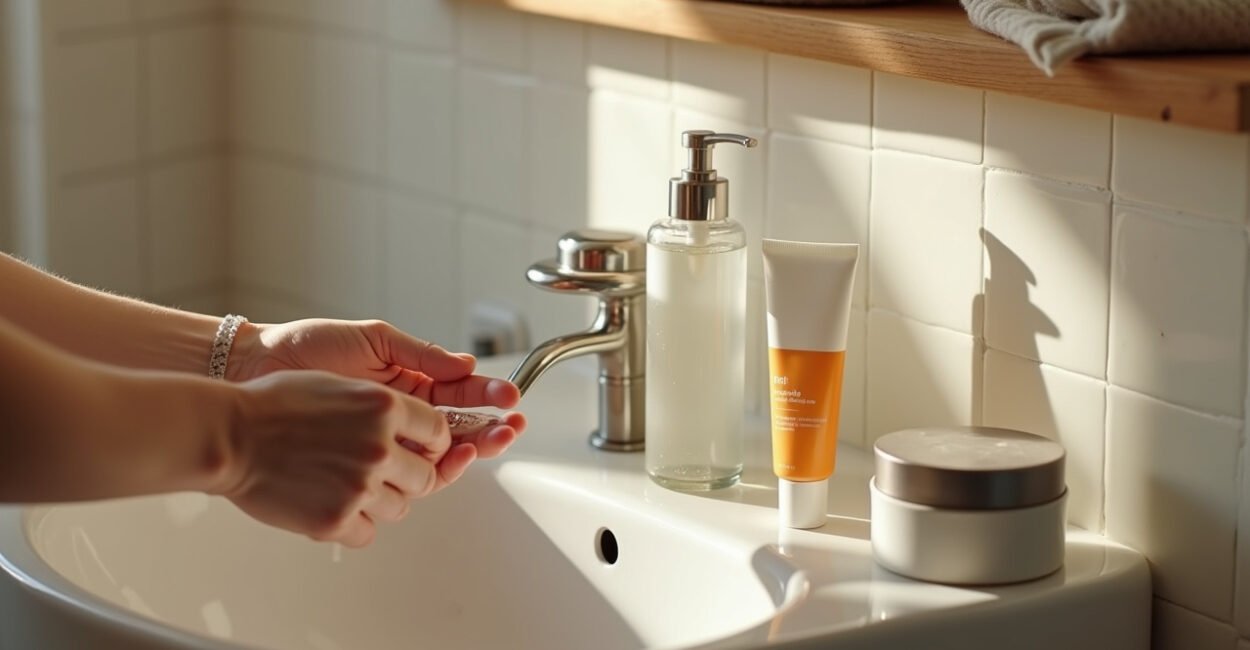
A practical sequence looks like this: drink water, wash your face, use a moisturizer you will actually finish, and spend one quiet minute planning the day. If you like structure, place the items in the order you use them. That reduces branching decisions, which is one of the easiest ways to make a routine feel lighter.
Choose Products That Do More Than One Job
Multi-use products reduce waste and simplify inventory. A moisturizer with broad utility, a bar soap that works for hands and body, or a sunscreen-moisturizer combination can replace separate products when the formula suits your skin. The goal is not to reduce everything to the minimum at all costs; it is to eliminate redundancy.
This approach works best when your skin is not highly reactive. If you have eczema, acne, rosacea, or sensitivities, fewer products still helps, but the formula choice matters more than the number of steps. A simple routine can be both gentle and effective, as long as you match the product to the need instead of chasing labels.
Use Water, Light, and Breath Before Buying More Tools
Many people reach for purchases when a free or nearly free intervention would solve the problem. Open a window. Step into daylight for a few minutes. Drink water before coffee if you wake up dehydrated. Take three slow breaths before checking messages. These actions are not glamorous, but they work because they address the body’s basic state.
The CDC’s stress resources and NIH health guidance both reinforce a simple point: recovery starts with habits that lower physiological load. You do not need a large toolkit to do that. You need a routine that respects how humans actually function.

Create an Evening Reset That Helps Recovery Without Extra Consumption
Build a “close the Day” Ritual
An evening self-care routine works best when it signals completion. That can be as simple as putting your phone on charge, clearing one surface, washing up, and preparing tomorrow’s first item. The ritual matters because the brain responds to cues. When the same actions happen in the same order, they become a boundary between work and rest.
That boundary is especially useful for beginners because it reduces nighttime drift. Instead of wandering into random tasks, you end the day with a clear handoff. The routine does not need to be long. It needs to be consistent enough that your body starts recognizing it as a transition.
Reduce Waste with Reusable Basics
Night routines are a good place to cut disposable consumption. Reusable cotton pads, a washable face towel, a refillable hand soap dispenser, and a durable water bottle can replace a surprising number of single-use items. This is one of the simplest forms of sustainable design: keep the tool, eliminate the repeat purchase.
Still, do not buy reusable items just to be “eco” if they will sit unused. That creates a different kind of waste. The better question is whether the item replaces something you already use often. If the answer is yes, it probably earns its place.
Protect Sleep Before Adding Relaxation Products
Sleep hygiene is the highest-return part of most routines. Dim the lights, keep the room cooler if possible, and set a consistent bedtime window. If you want a relaxation cue, use one small thing: a tea, a stretch, a page of reading, or a brief journal entry. Too many sleep products can become another source of clutter.
The Sleep Foundation has extensive guidance showing that sleep quality depends heavily on routine and environment, not just products. That is the part beginners should trust. Better sleep usually comes from repetition and reduction, not from collecting more items.
Choose Affordable Swaps That Lower Waste and Stress
Prioritize Refillable, Durable, and Concentrated Formats
When you do need to buy something, choose formats that last longer. Refillable hand soap, concentrated cleaners, bar shampoo, and durable containers often reduce packaging over time. These products are not automatically superior in every category, but they are usually better than repeatedly buying small single-use packages.
One useful rule: if two products perform similarly, pick the one with less packaging and fewer components. That said, performance comes first. A sustainable item that irritates your skin, leaks, or sits untouched is not a good swap. The most responsible choice is the one you will actually use.
Compare Options Using a Simple Decision Table
A beginner does not need a complex sustainability framework. Use a plain comparison: price, durability, packaging, refillability, and fit. That is enough to avoid impulse buys and marketing-driven upgrades. It also keeps the routine aligned with your budget, which is critical if you want it to last.
| Option | Waste | Cost Over Time | Best For |
|---|---|---|---|
| Single-use wipes | High | Higher over time | Emergency-only convenience |
| Reusable cloths | Low | Lower over time | Regular daily use |
| Refillable soap dispenser | Low | Moderate to lower over time | Frequent handwashing |
| Travel-size duplicates | High | Higher over time | Short trips only |
Avoid “green” Purchases That Add Clutter
Some purchases are marketed as sustainable but function like novelty items. A bamboo lid does not fix a product you never use. A refill pouch does not matter if you keep replacing items before finishing the first one. Marketing can hide the fact that the habit is still wasteful.
EPA guidance on waste reduction is a useful reality check here. Their recycling and waste reduction resources emphasize source reduction first: use less, buy less, and extend the life of what you already own. That is the hierarchy that makes the biggest difference.
Make the Routine Stick on Busy or Low-Energy Days
Design a “minimum Viable” Version
A routine is only sustainable if it survives bad days. Build a stripped-down version that takes under three minutes: drink water, wash your face or hands, and do one reset action such as opening a window or clearing a surface. This is not a failure mode. It is the maintenance version of the system.
Many people quit because they think the routine must be all or nothing. That is a mistake. On difficult days, the goal is continuity, not completeness. If you preserve the habit loop, you keep the identity and the structure alive even when energy is low.
Attach Habits to Existing Cues
Habit stacking works because it uses what is already happening. After brushing your teeth, you apply moisturizer. After making coffee, you fill a water bottle. After shutting down your laptop, you clear your desk. The cue matters more than motivation because cues reduce the need to decide.
This method is one reason beginner routines improve faster when they are tied to fixed events. People rarely forget things they do after a highly reliable action. They forget what floats without structure. That is why placement and sequence are part of sustainability, not just convenience.
Use Weekly Review, Not Constant Self-correction
Checking the routine every day can become another burden. A weekly review is usually enough. Ask three questions: What worked, what felt annoying, and what needs to be removed? That final question is important. A good routine gets simpler over time, not more crowded.
There is one limitation here: a weekly review works well for ordinary schedules, but it can fail during major life changes, illness, travel, or caregiving stress. In those periods, treat the routine as temporary and adaptable. Consistency still matters, but flexibility matters more than precision.
Use Real-World Metrics to Know Whether the Routine is Working
Measure Behavior, Not Aspiration
Do not measure success by how polished the routine looks. Measure it by repetition. Did you do the morning version four days this week? Did you replace a disposable item with a reusable one? Did you stick to the same two or three steps without adding more? Those are operational metrics, and they are much more useful than mood-based judgments.
This is where beginners often get misled. A “good” routine is not one that feels impressive. It is one that lowers effort over time. If the process becomes easier to start, the design is working.
Track Waste Reduction in Simple Terms
You do not need a formal audit. Count what changes: fewer wipes used, fewer duplicate products purchased, fewer nearly empty bottles sitting around, or fewer impulse buys. That gives you a practical picture of whether your self-care system is also lower waste.
If you want a more structured benchmark, use one month as a baseline. Compare it to the next month. The goal is not perfection; it is directional improvement. That method is reliable because it reflects actual consumption instead of good intentions.
Know When to Adjust or Stop
Not every habit deserves to stay. If a product irritates your skin, if a habit creates guilt, or if a step only works on ideal days, it probably needs revision. Sustainable routines are edited, not defended at all costs. That kind of honesty keeps the system from becoming performative.
Advice in this space can conflict. Some experts push maximal simplicity; others prefer a slightly richer routine with more sensory pleasure. Both can be right, depending on the person. If your routine is too bare, it may feel punishing. If it is too elaborate, it may collapse. Find the middle that you can maintain without resentment.
Tools, Sources, and a Starter Plan You Can Use This Week
Choose a Starter Kit with Only Essentials
A practical starter kit does not need a lot of objects. Begin with a water bottle, a gentle cleanser, a moisturizer, a reusable cloth or towel, and one notebook or notes app for tracking. If those items already exist in your home, use them before buying anything else. The point is to assemble a functioning set, not a perfect kit.
For beginners, fewer products reduce both cost and decision fatigue. They also make it easier to notice what actually helps. That signal matters, because product overload can disguise the habits that create the biggest gains.
Use Trustworthy Guidance, Not Trend Cycles
General wellness claims spread quickly, but not all of them hold up. When you need a reality check, rely on public health and science-based resources. The National Institute on Aging’s health resources, the CDC stress guidance, and the EPA’s waste reduction information are useful starting points because they focus on measurable behaviors, not trends.
That kind of sourcing matters. It keeps your routine grounded in evidence, especially when wellness marketing tries to make every purchase sound like a necessity.
Follow This Seven-day Starter Plan
Day 1: choose one morning action and one evening action. Day 2: remove one unnecessary product or duplicate item. Day 3: place your essentials where you can reach them without thinking. Day 4: test the minimum version of the routine. Day 5: adjust timing, not complexity. Day 6: note one thing that felt easier. Day 7: decide whether to keep, simplify, or replace one step.
This is the shortest path to a real sustainable self-care routine for beginners. It avoids the trap of overdesign. More important, it gives you something repeatable before you spend time or money on extras.
Próximos Passos Para Implementação
The smartest move is to treat the next two weeks as a field test. Build a routine that is small enough to survive a rough morning and clean enough to avoid unnecessary waste. If a step is hard to start, cut it. If a product sits unused, do not replace it with a prettier version. The best beginner system is the one that fits inside ordinary life.
Focus on sequence, not perfection. One morning cue, one evening cue, and one weekly review are enough to create momentum. If those hold, you can add texture later. If they do not hold, adding more will only create friction.
Your next action is straightforward: choose the smallest routine you can repeat for seven days, measure what you actually used, and remove whatever did not earn its place. That is how a sustainable habit becomes real.
Perguntas Frequentes
How Long Should a Beginner Self-care Routine Take?
A strong beginner routine usually takes 5 to 15 minutes in the morning and 5 to 10 minutes at night. That range is short enough to survive busy days but long enough to create a real cue for behavior change. If it regularly exceeds that, simplify the number of steps before adding more. The best duration is the one you can repeat without negotiating with yourself every day.
What Makes a Self-care Routine Sustainable Instead of Just “eco-friendly”?
Sustainability here has two parts: low waste and low friction. A routine can use fewer disposables and still fail if it is too expensive, too complex, or too dependent on motivation. A truly sustainable routine is one you can maintain, afford, and adapt over time. That is why behavior design matters as much as product choice.
Do I Need to Buy Special Products to Start?
No. Start with what you already own, then replace only what proves useful. Buying a special product before you know the habit usually adds clutter and weakens follow-through. If you later identify a clear need, choose durable, refillable, or multi-use options. The habit should justify the product, not the other way around.
What If I Miss Several Days in a Row?
Missing days does not mean the routine failed. It means the design needs a better fallback version. Return to the minimum viable routine: one hydration step, one hygiene step, and one reset action. That keeps the habit alive without turning a lapse into a reset of your identity.
How Do I Know Whether My Routine is Actually Helping?
Watch for fewer skipped days, less decision fatigue, and less clutter from unused products. Those signals tell you the routine is doing useful work. If you feel more burdened than supported, the routine is probably too large or too product-heavy. Good self-care should feel stabilizing, not like another job.