Skip to content

Healthier family routines do not have to come with a bigger environmental footprint. In fact, the most effective sustainable family wellness tips usually save time, money, and energy because they cut waste at the source: food, water, plastic, electricity, and decision fatigue.
At the technical level, sustainable family wellness means building daily habits that support physical, mental, and social well-being while reducing resource use and environmental harm. In plain English, that means the home runs a little smarter: fewer disposable products, more whole-food meals, better airflow and light, and routines that are easier to repeat on busy days. This guide breaks that down into practical choices you can actually keep up with.
What You Need to Know
- Sustainable family wellness starts with systems, not motivation; the easiest wins come from routines that remove friction from healthy choices.
- Low-waste habits work best when they are tied to existing anchors, such as breakfast, school drop-off, laundry day, and bedtime.
- The biggest household gains usually come from food planning, reusable basics, safer cleaning products, and simpler energy use.
- Not every green habit is worth the effort; the right change is the one your family can repeat under real-life pressure.
- Good indoor air quality, sleep, and predictable meals often deliver more health value than trendy wellness products.
Sustainable Family Wellness Tips for Greener Homes and Healthier Routines
The term sounds broad, but the strategy is narrow: pick habits that improve family health and reduce waste at the same time. That overlap is where progress feels easiest, because the home stops fighting you.
Think of it as a design problem. If the water bottle is always visible, kids use it. If the snack shelf is stocked with real food, people grab it. If the laundry routine avoids over-washing and harsh fragrances, the house feels calmer and often healthier too.
In practice, sustainable wellness works when the healthiest option is also the most convenient one. If a habit depends on constant willpower, it usually breaks by the second week.
Start with the Household Levers That Move the Most
For most families, food, water, energy, and cleaning products create the biggest combined impact. Those are the places where small changes compound. A reusable lunch system reduces packaging. A tighter meal plan lowers grocery waste. A lower-toxicity cleaning routine can reduce unnecessary fragrance exposure and clutter under the sink.
This is also where the U.S. Environmental Protection Agency’s recycling guidance becomes useful. Recycling helps, but the EPA is clear that reduction and reuse come first. That order matters more than most people think.
Use the “One Swap Per Category” Rule
Families often stall because they try to overhaul everything at once. That rarely lasts. A better approach is one swap per category: one reusable food container system, one non-toxic cleaner, one energy habit, one water-saving routine. The point is not perfection; the point is a lower-friction default.
Who works with households on behavior change knows this well: the win is not the best idea on paper, it is the habit that survives a chaotic Tuesday.
Build a Food Routine That Cuts Waste and Stress
Meal planning is one of the most underrated wellness tools in the house. It lowers the odds of last-minute takeout, reduces food spoilage, and makes it easier to keep meals balanced without turning dinner into a project.
Plan Around Repeatable Building Blocks
Instead of designing seven completely different dinners, build meals from repeatable parts: a grain, a protein, a vegetable, and a sauce or seasoning. That structure is flexible enough for different ages and tastes, but simple enough to shop for once.
- Pick 3 breakfasts your family actually eats.
- Rotate 5 dinners with shared ingredients.
- Use leftovers as tomorrow’s lunch, not as a guilty afterthought.
- Keep one freezer meal for the week that starts badly.
Reduce Food Waste Before It Starts
Food waste is not just a budget issue. When edible food gets thrown out, so do the water, fuel, fertilizer, and labor that produced it. The U.S. Department of Agriculture’s food waste resources explain why prevention matters more than cleanup. Freezing extra bread, using “eat first” bins, and shopping with a short list all reduce waste faster than vague intentions.
Meal planning fails when it tries to be a lifestyle performance. It works when it protects the family from decision overload and keeps usable food from disappearing into the back of the fridge.

Choose Healthier Materials for Sleep, Air, and Daily Contact
Some wellness advice gets too focused on supplements and too little on the environment people live in for 12 to 16 hours a day. Bedding, ventilation, flooring, and cleaning choices all affect what a family breathes and touches. That is not a niche concern; it is daily exposure.
Pay Attention to Indoor Air Quality
Indoor air can trap dust, volatile organic compounds, and fragrance-heavy residues, especially in tightly sealed homes. A practical response is simple: ventilate when possible, vacuum with a HEPA filter, avoid unnecessary aerosol products, and choose low-fragrance or fragrance-free cleaners when someone in the home has asthma or sensitivity.
The CDC’s asthma guidance is a good reminder that household triggers can matter as much as outdoor ones. If someone in the family has breathing issues, this is where sustainability and health overlap in a very real way.
Buy Fewer, Better Basics
Organic cotton sheets, refillable soap dispensers, durable food storage, and repairable toys usually create less waste over time than cheap replacements. That does not mean every purchase has to be premium. It means choosing items with a longer useful life and fewer hidden disposal problems.
One nuance: sustainable does not automatically mean safer. A wooden board can still hold bacteria if it is poorly maintained; a natural cleaner can still irritate skin. Labels matter less than proper use, cleaning, and storage.
Make Movement and Screen Time Work for Real Family Life
Families do not need elaborate fitness plans to stay active. They need movement that fits the school schedule, work schedule, and energy level of the house. Walking after dinner, bike rides on weekends, and active chores all count.
Replace “Exercise Goals” with Movement Anchors
When exercise is treated like a separate appointment, it gets crowded out. When it is attached to existing routines, it survives. Try a walk after lunch, stretching before bed, or a ten-minute “reset” where everyone clears the floor, carries laundry, or tidies outside gear.
That approach also reduces the need for more stuff. You do not need a room full of equipment to be active. You need a routine that keeps bodies moving without making the house feel cluttered.
Set Screen Rules That Protect Sleep
Wellness and sustainability intersect here too. More screen time often means more impulse buying, less outdoor time, and worse sleep. A family rule like “chargers stay outside the bedrooms” can improve rest and cut energy use at the same time. Sleep is one of the least glamorous health tools, but it is a major one.
| Habit | Health Benefit | Environmental Benefit |
|---|---|---|
| Evening walk | Supports mood and sleep | No equipment, no fuel |
| Screen cutoff before bed | Improves sleep quality | Less device charging and idle use |
| Active chores | Builds baseline movement | Combines fitness with daily tasks |
Use Energy and Water Habits That Don’t Fight the Family
If a green habit feels annoying, it will not last. That is why energy and water changes should be quiet, automatic, and easy to remember. The best ones barely feel like “doing sustainability” at all.
Pick Low-Effort Home Adjustments First
Switch to LED bulbs, seal drafty windows, wash clothes in cold water when appropriate, and run full loads in the dishwasher and washing machine. Those are boring moves, which is exactly why they work. They save resources without demanding a personality change.
For utility-focused guidance, the U.S. Department of Energy’s Energy Saver resources are useful because they focus on measurable household behavior, not trends. The same logic applies to water use: shorter showers, aerators, and fixed leak checks are small changes with real impact.
Teach Kids the Why Without Turning It Into a Lecture
Kids usually respond better to visible cause and effect than abstract rules. Show them the power bill, point out a dripping faucet, or let them see how much water is used while brushing teeth with the tap running. Once they understand that resources are finite, the habit stops feeling arbitrary.
Household sustainability gets easier when it is framed as care, not sacrifice. Families adopt changes faster when they can see a direct benefit to comfort, health, or budget.
Choose Cleaning and Organization Systems You Can Maintain
A cluttered, overstocked home often creates more stress than people admit. Too many products, duplicate purchases, and half-used bottles make routines harder to maintain. Simpler systems usually feel cleaner for longer.
Reduce Product Overlap
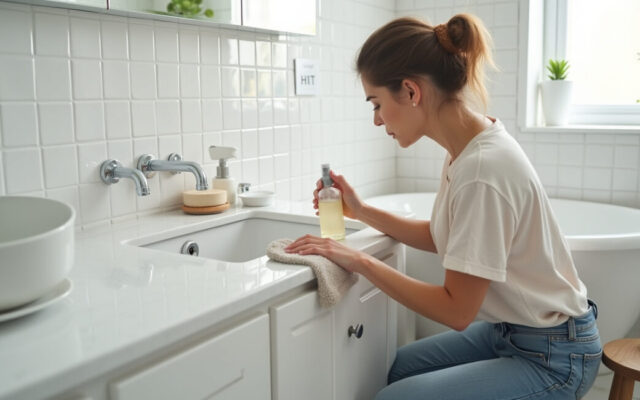
One multipurpose cleaner, one disinfecting product for true high-touch needs, one laundry detergent, and one set of storage containers is often enough for an average home. More products do not always mean better results; they often mean more plastic, more confusion, and more expired bottles under the sink.
If someone in the house has allergies, eczema, or asthma, test cleaning products cautiously. Even “natural” labels can hide strong essential oils or allergens. This is one area where a smaller product set is safer than a bigger one.
Build a Weekly Reset
A 20-minute weekly reset beats a heroic deep clean that only happens once a month. Put away food, empty the trash, refill basics, check the pantry, and scan for items that can be reused or donated. That rhythm keeps the home functional and reduces the urge to buy duplicates.
Here’s a real-world example: a family with two kids switched from buying random snacks and five different surface sprays to one planned snack basket and two cleaners. Within a month, the kitchen felt calmer, the trash can filled slower, and grocery trips became shorter because they could see what they already had. Nothing dramatic changed. The system did.
Keep the Routine Realistic Through Busy Weeks
Any wellness plan fails if it only works on good weeks. Busy seasons expose the weak points fast: overcomplicated meal plans, unrealistic cleaning goals, and habits that depend on perfect timing. A sustainable household has to survive illness, overtime, school projects, and plain exhaustion.
Expect Weak Spots and Plan for Them
Every family has a pressure point. For some it is mornings, for others it is dinner, laundry, or bedtime. Choose one backup plan for each pressure point: a frozen meal, a laundry day shortcut, a no-cook breakfast, or a ten-minute tidy. That is not lowering standards. It is designing for reality.
Know Where the Strategy Breaks Down
This approach works best when the household has at least modest control over schedule and budget. It can be harder for shift workers, families with chronic illness, or homes with very limited space. In those cases, the goal shifts from optimization to stability: fewer decisions, fewer purchases, fewer steps, and more predictability.
That limit matters. Not every family can implement every change at once, and no single routine solves health, cost, and sustainability simultaneously. The point is to choose the most durable improvement, not the most impressive one.
What to Do Next Without Overcomplicating It
Pick one area and tighten it for two weeks: food, cleaning, sleep, movement, or energy use. If the change sticks, build the next one on top of it. If it fails, the problem is usually design, not discipline. That is a useful distinction because it tells you what to fix.
For most homes, the best next step is a short audit: what gets wasted, what gets bought twice, what causes the most stress, and what habit would improve both health and footprint at the same time. Use that to choose one change, then make it the default before adding anything else.
FAQ
What Makes a Family Wellness Habit Sustainable?
A sustainable family wellness habit is one that improves health while using fewer resources over time. It usually saves money, reduces waste, or lowers effort in a way that can be repeated during normal, busy weeks. If a habit needs constant motivation or special products to keep going, it usually is not sustainable in practice. The best habits are the ones that fit naturally into existing routines.
Do Sustainable Wellness Changes Have to Cost More?
No. Many of the highest-impact changes cost less, not more, because they reduce waste and duplication. Meal planning, repairing items, using reusable containers, and washing full laundry loads all tend to save money over time. The expensive version of sustainability is usually the optional one: premium gadgets, specialty products, and trendy upgrades that are not necessary for real results. Start with low-cost habits first.
How Do I Get Kids to Stick with Greener Routines?
Kids usually follow routines that are visible, simple, and rewarded by convenience. If the water bottle is easy to grab, the snack system is predictable, and the bedtime routine is calm, they adapt faster. It helps to explain the reason in concrete terms, like saving water or keeping the kitchen cleaner, instead of using abstract environmental language. Repetition matters more than persuasion.
What is the Biggest Mistake Families Make with Sustainable Wellness?
The biggest mistake is trying to change everything at once. That creates friction, and friction kills consistency. Families often buy too many products, over-plan meals, or set rules that break the first time life gets messy. A better approach is one change at a time, chosen for high impact and low effort. Small systems usually outperform big intentions.
Are Natural Products Always Better for Family Health?
Not always. “Natural” is not a safety guarantee, and some plant-based ingredients can still irritate skin or trigger allergies. What matters more is how a product performs, whether it is used correctly, and whether it creates unnecessary exposure or waste. For families with asthma, eczema, or fragrance sensitivity, the safer option is often fragrance-free and simple, not automatically natural.