Skip to content

There’s a strange moment in every small apartment: the walls are blank, the furniture is in place, and yet the room still feels unfinished. That’s usually when people start overfilling the space with frames, shelves, mirrors, and “one more thing.” And that’s exactly how small apartment walls go from polished to noisy.
The trick is not to decorate less. It’s to decorate with intention. When you style small apartment walls well, the room reads as calm, layered, and expensive in the best possible way—without using a single extra square foot.
Think of walls as visual real estate. In a compact home, every object you hang competes for attention, so the goal is to create a rhythm the eye can follow. That’s the difference between a wall that feels curated and one that feels like a storage closet for art.
Why “Less” Usually Looks Better in Small Apartment Walls
The formal idea here is visual density: how much visual information a surface carries at once. On small apartment walls, high visual density makes a room feel tighter, even when the furniture itself is minimal. In plain English: too many tiny things on one wall make the whole apartment feel busier than it is.
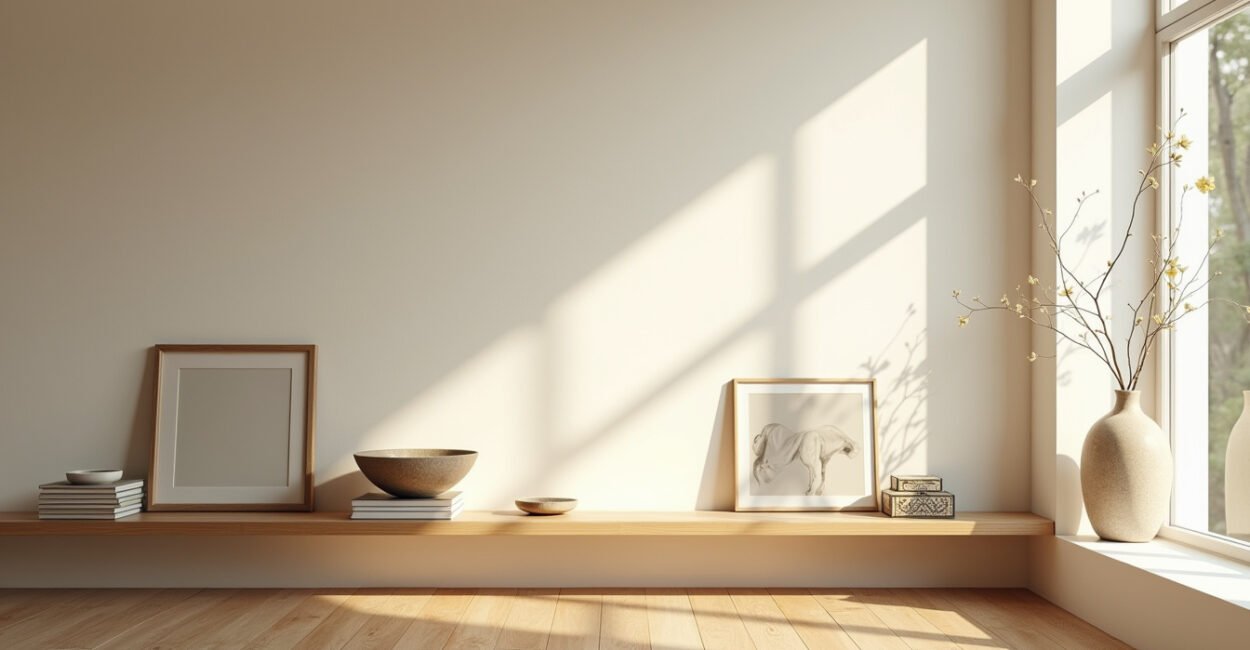
That’s why one large framed piece often beats four small ones. A single anchor gives the eye rest. A cluster of small objects can work too, but only if the spacing is disciplined and the frames share a common thread—same tone, same finish, or the same level of contrast.
In small spaces, empty space is not wasted space; it’s part of the design. People who work with compact interiors know this because the room starts to breathe the moment you stop trying to cover every inch.
- Choose one focal point per wall.
- Leave breathing room around art and mirrors.
- Repeat one material or color to create order.
- Let a blank section stay blank if it helps the composition.
The Frame Rule That Makes Small Apartment Walls Feel Curated
Frames are not just borders. They are visual infrastructure. On small apartment walls, the frame finish matters almost as much as the image inside it. A matte black frame feels sharper and more graphic; a light oak frame softens the room; a thin metal frame can disappear, which is useful when you want the art to do the talking.
A good rule: limit yourself to two frame finishes in one room. Any more and the wall starts to look like a sample board. If you want a collected look, mix art styles instead of frame chaos—photography, line drawings, one textured print, one personal object.
One of the most common mistakes is treating every wall like a gallery wall. In practice, the best small apartment walls usually have one strong statement, one supporting piece, and a lot of disciplined space around them.
Here’s the surprise: a larger frame can make a small room look more sophisticated than a dozen tiny objects. It reads as deliberate, not crowded. That’s the difference between “decorated” and “designed.”

Mirrors Work Like Magic—Until They Don’t
Mirrors are often recommended for small apartment walls because they reflect light and expand sightlines. That part is true. But a mirror placed carelessly can also double clutter, reflect a messy corner, or bounce a harsh view right back into your line of sight.
The best mirror is one that reflects something worth seeing. A window, a lamp, a plant, a clean opposite wall—those are wins. A pile of dishes, cords, or the back of a chair? Not so much.
In one studio apartment I saw, a round mirror above a narrow console transformed a dark entryway almost instantly. The owner had been adding more art to the wall for months, but the space only started working when the mirror took over and the extra pieces came down. The room looked larger without looking decorated to death.
- Use mirrors to bounce natural light, not mess.
- Pick one strong shape: round, oval, or rectangular.
- Avoid mirror-on-mirror combinations unless the room is very controlled.
- Hang them where they improve the view, not just where the wall is empty.
There’s a limit, though. Mirrors can fail in rooms with too many shiny surfaces or heavy glare. In those cases, they amplify the chaos instead of easing it.
The Accent Layer That Makes Small Apartment Walls Look Finished
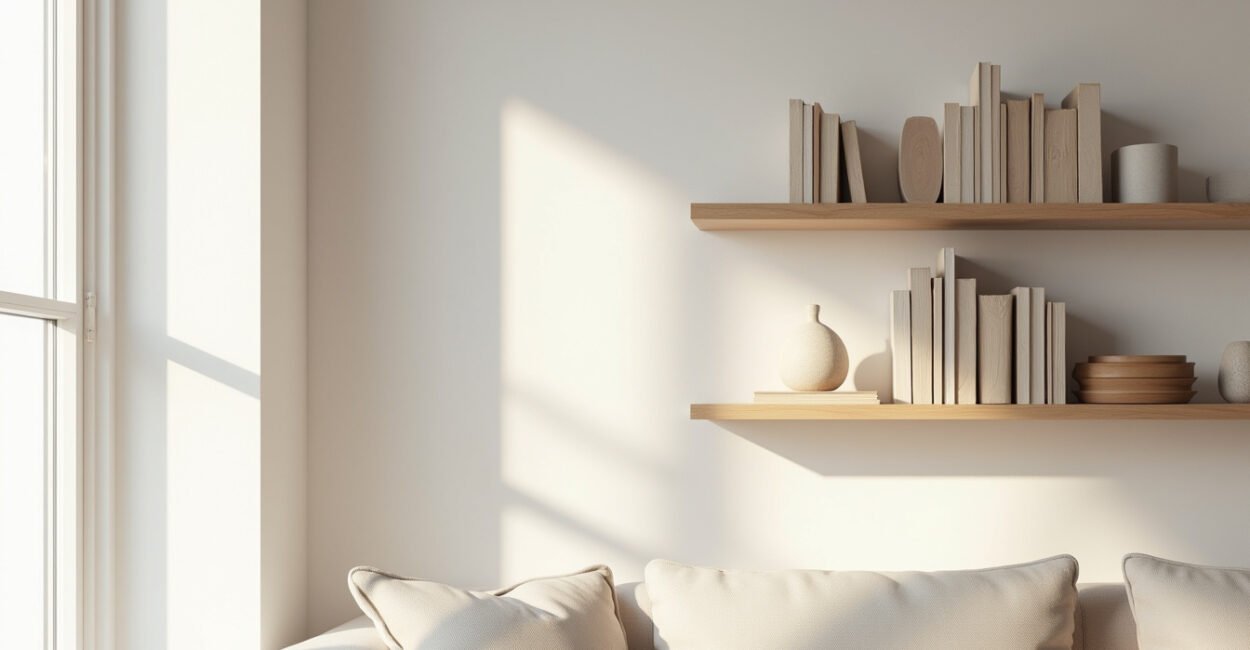
Accent pieces are the smallest part of the composition, but they carry a lot of pressure. On small apartment walls, these are the details that make the space feel personal: a sconce, a shelf with one object, a small textile, a hook rail with real utility. The best accents do two jobs at once—they look good and earn their place.
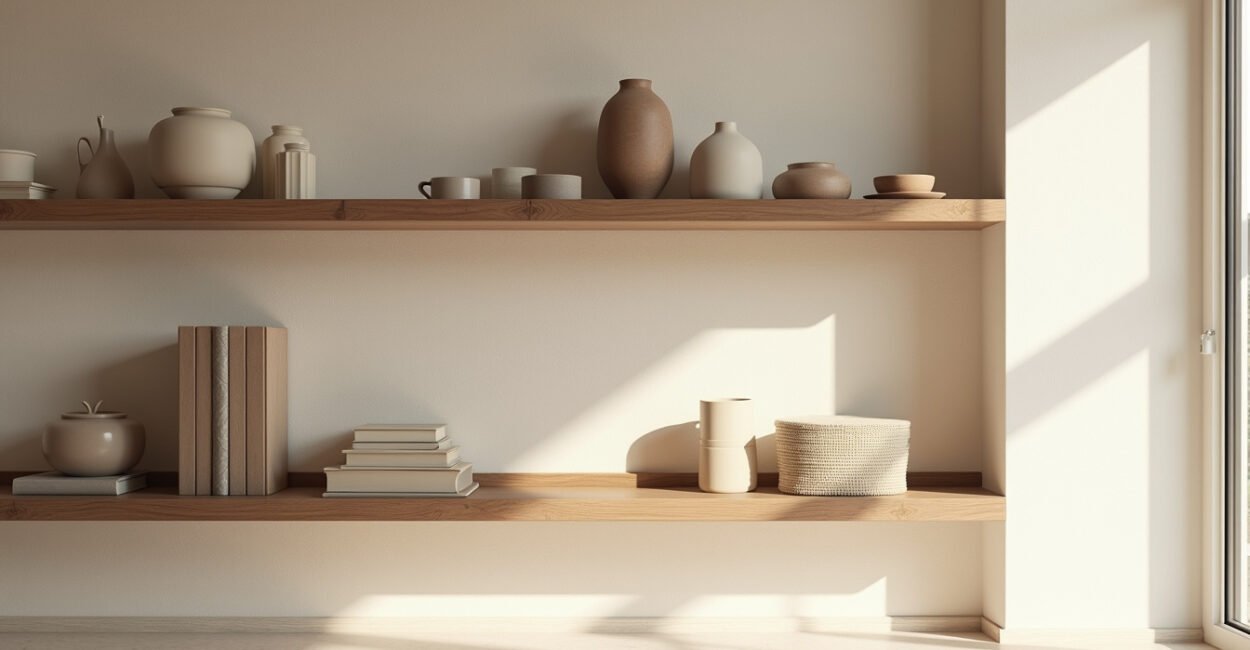
That’s why restraint matters. If everything is “decor,” nothing feels intentional. A tiny wall ledge with a candle and one book can feel more polished than a row of decorative trinkets that all arrived in the same shopping cart.
Accents should whisper, not shout. They work best as punctuation, not paragraphs.
- One sculptural object is stronger than five small ones.
- Mix texture before you mix color.
- Use wall-mounted lighting to free up surfaces.
- Choose pieces with some negative space around them.
If you want a room to look finished fast, this is where to focus. A carefully placed accent can make the entire wall composition feel intentional, even if the rest of the apartment is still evolving.
The Layout Formula for Style Small Apartment Walls Without Clutter
Layout is where good intentions either hold up or fall apart. The most reliable method is to build around a visual triangle: one anchor, one secondary element, one smaller supporting detail. This keeps small apartment walls from turning into a random field of objects.
Think of the wall as a conversation. The anchor speaks first. The secondary piece responds. The accent adds a final sentence and stops there.
| Wall Type | Best Anchor | What to Avoid |
|---|---|---|
| Living room | Large art or mirror | Too many tiny frames |
| Entryway | Mirror + slim shelf | Deep shelves that protrude |
| Bedroom | One calm artwork | Bright, high-contrast clusters |
| Dining nook | Single composition | Mixed finishes with no theme |
The cleanest layouts usually follow a simple rhythm: large, medium, small. When the scale shifts in a controlled way, the wall feels edited instead of crowded. That’s the part people notice, even if they can’t explain why.
The Common Mistakes That Make Small Apartment Walls Feel Cheaper
Most bad wall styling comes from overcorrection. People move into a compact place, worry it looks empty, and start adding objects until the wall loses its shape. The result is not warmth. It’s noise.
Here’s what to avoid if you want style small apartment walls to look intentional:
- Too many small frames: they fragment the wall.
- Random spacing: uneven gaps make even nice pieces look messy.
- Overly theme-driven decor: beach signs, “live laugh love” energy, or anything too literal usually dates fast.
- Reflective overload: mirrors, glass, and metallic accents can start competing with each other.
- No visual anchor: when nothing leads, the eye wanders and the wall feels unfinished.
There’s disagreement among designers about how much symmetry a small room should have. Some love perfect balance; others prefer a looser composition that feels more lived-in. Both can work, but only if you commit. Half-symmetry is where small spaces start to wobble.
One rule holds up across styles: if you remove one piece and the wall still looks better, the composition was too crowded to begin with.
What Makes a Wall Look Intentional Instead of Busy
Intentional walls share one trait: every object has a reason to be there. That reason might be visual balance, light control, memory, or function. On small apartment walls, that logic matters more than trend. Trendy clutter still looks like clutter.
According to the National Institute on Aging’s home safety guidance, clear pathways and uncluttered surroundings support safer movement at home. While that source focuses on safety, the design lesson is obvious: visual and physical breathing room both make interiors feel calmer.
For a broader look at how people are living in tighter quarters, the U.S. Census Bureau’s housing data shows how household patterns continue to shape the way spaces are used. Smaller homes demand more from every wall, which is exactly why restraint pays off.
The most polished small walls usually look edited, not decorated. That difference is subtle, but it changes everything.
The final test is simple: step back and ask whether the wall gives you a feeling of calm. If it doesn’t, something is probably competing for attention.
How to Style Small Apartment Walls When You Want a Quiet, Polished Look
If your taste runs more refined than maximalist, aim for a low-contrast palette, repeated finishes, and a few carefully chosen objects with real visual weight. In small apartment walls, quiet design often looks more expensive because it avoids the “I bought everything at once” effect.
Start with one anchor, then add only what improves the composition. A mirror can lift the room. A frame can ground it. A single accent can keep it from feeling sterile. Put those pieces in conversation, and stop before the wall starts talking over itself.
What makes this approach work is not perfection. It’s discipline. And in a small apartment, discipline is the thing that makes limited square footage feel like a choice instead of a compromise.
How Many Frames Should I Put on One Small Wall?
There’s no perfect number, but one to three pieces is usually enough for small apartment walls. The real test is whether the arrangement has breathing room. If the wall starts to look fragmented or the frames compete instead of support each other, you’ve gone too far. A larger single piece often works better than a cluster of small ones because it creates calm rather than visual noise.
Should I Use Mirrors in Every Room?
No. Mirrors are powerful, but they’re not mandatory. On small apartment walls, they work best where they reflect light or a clean view, like an entryway, dining nook, or a wall opposite a window. If a mirror reflects clutter, harsh glare, or another mirror, it can make the room feel more chaotic instead of open.
What’s the Safest Way to Mix Art and Decor on a Small Wall?
Use one dominant element and keep the rest supporting. For example, pair one framed artwork with a small shelf or a single accent object, rather than trying to build a full gallery. On small apartment walls, mixing works best when the colors, frame finishes, or materials share one clear thread. That creates cohesion without making the wall feel heavy.
How Do I Make My Walls Feel Personal Without Cluttering Them?
Choose pieces that tell a story, but don’t force every memory onto the wall at once. One personal photo, one object with texture, and one functional accent can feel more meaningful than a packed display. The key is editing. Small apartment walls look most personal when the objects seem chosen, not accumulated.
What Should I Do If My Walls Already Feel Too Busy?
Remove one-third of what’s hanging and step back before adding anything new. Busy walls usually improve fast when you reduce the number of competing shapes, finishes, and colors. Then rebuild with one anchor, one supporting piece, and open space around them. Most people are surprised by how much calmer the room feels after subtracting rather than adding.