 Skip to content
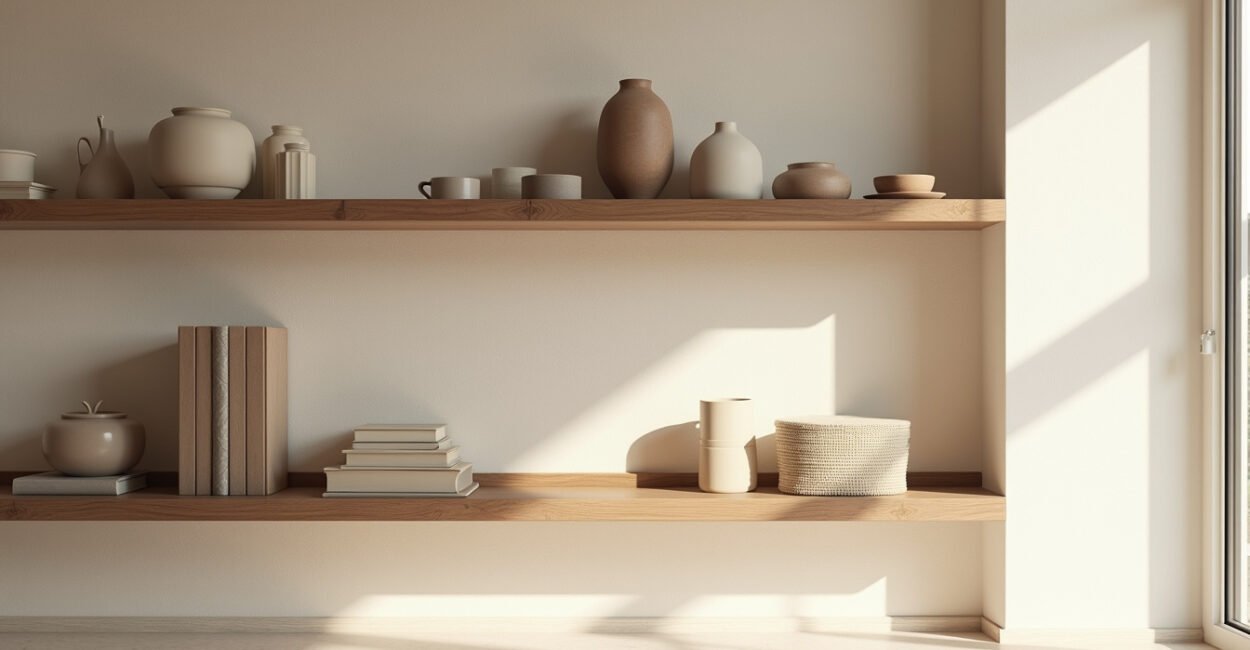
A neutral palette can make shelves feel bigger, but only if you balance it like a room, not a showroom.
Neutral Palette Tips for Softer, Airier Shelf Styling
Neutral shelves look calm when they have contrast, texture, and a little negative space.
That’s the whole trick: a neutral palette is not “all beige, all the time.” In design terms, it’s a restrained color group built from whites, creams, taupes, grays, clay tones, and muted browns. In plain English, it’s the difference between a shelf that breathes and one that feels like a dusty catalog page.
If you’ve ever arranged wood, ceramics, and metal on one shelf and thought, “Why does this still feel heavy?”—the answer is usually color temperature and texture, not the number of objects. Let’s fix that first.
Why a Neutral Palette Feels Lighter Right Away
A neutral palette works because the eye stops fighting for attention. Bright or highly saturated colors create visual stops; soft neutrals let the eye move across the shelf without hitting a wall.
That doesn’t mean boring. It means your materials get to do the talking. A matte ceramic bowl, a pale oak tray, and a brushed brass frame can feel richer together than five loud objects ever will.
Designers often lean on color theory for this. When adjacent items share a similar value range—the lightness or darkness of a color—the shelf reads as one composition instead of a stack of separate pieces. For a quick primer, the basics of color theory explain why low-contrast groupings feel calmer to the eye.
In shelf styling, the quiet colors do the heavy lifting. The real job of the neutral palette is not to disappear. It’s to make wood grain, shadow, and shape easier to notice.
The Best Neutral Palette for Wood, Ceramics, and Metal
Not every neutral behaves the same. Warm neutrals like ivory, oat, sand, mushroom, and camel tend to flatter wood. Cooler neutrals like stone, dove gray, and soft charcoal make metal and black accents feel sharper.
- With light wood: use creamy whites, flax, and pale taupe.
- With medium wood: try putty, oatmeal, soft gray, and clay.
- With dark wood: add warm white, greige, and a touch of matte black.
- With ceramics: mix glazed and unglazed finishes so the shelf doesn’t flatten out.
- With metal: keep the metal finish consistent, or it starts to feel busy.
Here’s the comparison most people miss: a shelf styled with five similar neutrals often looks more colorful than a shelf with one beige object and four random accents. That’s because texture creates variation without visual noise.
Modern interior editors have been talking about this shift for a while, and you can see it reflected in broader design coverage from outlets like Architectural Digest, where mixed natural materials keep replacing loud color blocking in small spaces.

The 3 Mistakes That Make Neutral Shelves Feel Flat
The easiest way to ruin a neutral palette is to treat every piece like it needs to match. Matching is not the goal. Layered restraint is.
These are the mistakes that flatten shelf styling fast:
- Using the same beige everywhere. One tone across every object makes the shelf look tired.
- Ignoring texture. Matte, woven, glazed, linen, raw wood, and brushed metal keep the eye engaged.
- Filling every inch. Air is part of the composition. Empty space makes the palette feel softer.
I once saw a shelf styled with nearly identical cream vases, a pale wood box, and two white frames. It should have looked serene. Instead, it felt oddly stiff. The fix was tiny: one charcoal vessel, one amber glass piece, and a little more breathing room. Suddenly the neutral palette had shape.
That’s the part people forget. Neutral does not mean identical. It means the transitions are gentle enough that the shelf feels intentional.
How to Build a Softer Shelf in 10 Minutes
Start with three layers: base, mid-height, and accent. That gives the shelf rhythm before you worry about color.
Use one dominant neutral, one supporting neutral, and one grounding tone. For example: warm white, natural wood, and a muted brown or black. If your shelf already has a lot of wood, keep the accessories lighter. If the shelf is white or painted, let the objects bring in warmth.
- Base: stack books with light covers or a wood tray.
- Middle: add ceramics in cream, stone, or clay.
- Top: use a small metal frame, vase, or candleholder for contrast.
- Finish: leave one zone visibly open so the arrangement can breathe.
The best shelf styling rule is the one that sounds almost too simple: repeat the color, change the material. That’s how a neutral palette stays calm without becoming dull.
According to the North Carolina Department of Health and Human Services, muted environments can support a sense of visual calm, though individual reactions still vary. That last part matters—some people love cool gray, others need warmth or the room starts to feel cold.
When to Add Contrast, and When to Leave It Alone
Neutral palette styling works best when the shelf has one small point of tension. Without contrast, everything blends into fog. Too much contrast, and you lose the softness you were trying to create.
Think of contrast as seasoning. A little black, deep brown, or dark bronze makes the lighter items glow. A little clear glass can do the same because it breaks the visual mass. But if you add too many strong accents, the shelf stops feeling airy.
A good neutral shelf is not empty. It is edited.
That’s why this style keeps showing up in homes right now: it’s easy to live with, easy to refresh, and forgiving when your décor changes season to season. You can swap one object and completely reset the mood without rebuilding the whole shelf.
So if your shelves are already full, don’t buy more decor first. Remove one thing, lighten one surface, and let the neutral palette do its quiet work.
FAQ
What Colors Work Best in a Neutral Palette for Shelves?
The safest choices are warm white, ivory, taupe, greige, sand, soft gray, and muted brown. If your shelves already have wood, lean warm; if they have metal or dark finishes, a cooler neutral can sharpen the look. The best palette depends on the surrounding material, not just the paint on the wall.
How Many Neutral Colors Should I Use on One Shelf?
Three is usually enough: one dominant color, one supporting neutral, and one darker anchor. More than that can still work, but the shelf needs stronger spacing and better texture contrast. The goal is to avoid a row of nearly identical objects that all disappear into each other.
Can a Neutral Palette Still Feel Interesting?
Yes, if you vary texture, shape, and finish. A glazed vase, raw wood bowl, linen-bound book, and brushed metal object can feel more dynamic than bright decor because the differences are subtler. Interest comes from contrast in material, not just color.
Does a Neutral Palette Work in a Small Room?
It usually works especially well in small rooms because it reduces visual clutter. Light neutrals can make shelves feel less dense, while a few darker accents keep the arrangement from looking washed out. Just avoid making every item the same shade of beige.
What Should I Avoid When Styling Shelves in a Neutral Palette?
Avoid matching everything too closely, filling every gap, and using only one texture. Those three habits are what make neutral styling look flat instead of refined. If the shelf feels bland, the problem is usually repetition, not the color family itself.


