Skip to content

Good lighting changes a neutral living room faster than new furniture does. The right neutral living room lighting ideas can warm up beige, gray, ivory, and taupe spaces without fighting the palette, which is exactly why lighting deserves more attention than most people give it.
In a neutral room, light does three jobs at once: it sets the mood, it shows texture, and it keeps the space from feeling flat. The goal is not “more brightness” in the abstract; it is layered illumination that makes linen, wood grain, boucle, matte paint, and metallic accents read as intentional rather than washed out. Below, you’ll find beginner-friendly ways to do that without turning the room harsh or busy.
Quick Take
- Neutral rooms look best when ambient, task, and accent lighting work together instead of relying on one ceiling fixture.
- Warm-white bulbs in the 2700K to 3000K range usually soften beige and gray interiors without making them look yellow.
- Diffused shades, linen lampshades, and frosted glass reduce glare and make a living room feel calmer at night.
- Light placement matters as much as fixture style; uplighting and wall washing can make textures and art stand out.
- A layered scheme often feels more expensive than a single oversized chandelier, even when the fixtures are modest.
Neutral Living Room Lighting Ideas That Add Warmth Without Changing the Palette
Technically, neutral lighting design means balancing color temperature, light distribution, and contrast so the room reads as cohesive under both daylight and artificial light. In plain English, it means your lamps and fixtures should make a neutral room feel inviting, not cold, flat, or showroom-bright.
The easiest mistake is choosing lights that look beautiful off but create harsh shadows or a bluish cast once they are on. I’ve seen plenty of rooms with expensive sofas and carefully chosen rugs still feel unfinished because the lighting was too cool, too direct, or too sparse. The fix is not one magic fixture; it is a layered plan.
What makes neutral interiors work is not brighter light — it is softer contrast, warmer color temperature, and enough layers to shape the room at eye level.
Think in Layers, Not Single Fixtures
Most living rooms need three layers: ambient lighting for general brightness, task lighting for reading or hobbies, and accent lighting for artwork, shelves, or architectural details. When all three are present, the room feels complete even if the finishes stay understated. A neutral space depends on that balance more than a bold room does, because there is less color to carry the visual interest.
Use Warm Bulbs to Keep Grays, Beiges, and Whites from Feeling Cold
Bulb choice is the fastest win. For living rooms, warm white bulbs around 2700K are the safest starting point, while 3000K can work if the room gets little daylight or leans modern. Cooler bulbs often make taupe look muddy and white walls look clinical. The U.S. Department of Energy’s LED guidance is a useful reference for choosing efficient bulbs with the right output and quality.
When 2700K Beats 3000K
Choose 2700K when the room already has strong daylight, warm wood tones, brass accents, or creamy upholstery. Choose 3000K when the space feels dark, the walls are cooler gray, or you want a slightly cleaner look at night. There is no universal winner here. The best choice depends on your paint color, window exposure, and how often you use the room after sunset.
Look at CRI, Not Just Watts
Color Rendering Index, or CRI, tells you how accurately a bulb shows color. In a neutral living room, a CRI of 90+ helps wood, textiles, and artwork look natural instead of dull. That matters more than many people expect. If a cream sofa turns gray under your bulb, the room will feel off even if the fixture itself is attractive.

Choose Shades and Diffusers That Soften the Glow
One of the most reliable neutral living room lighting ideas is to diffuse the light source. Linen shades, silk-like drum shades, frosted glass, and paper lantern-style fixtures spread light more evenly and reduce the “spotlight” effect that makes a room feel stiff.
This is where style and comfort overlap. A bare bulb can look editorial in photos, but in everyday life it often creates glare, especially in rooms with glossy tables, framed glass art, or polished metal. Diffusion is not a design compromise; it is how you make the room pleasant to live in.
- Linen shades give a warm, textured glow that suits organic neutral interiors.
- Frosted glass works well for modern spaces that need a cleaner silhouette.
- Drum shades are versatile and usually flatter both floor lamps and table lamps.
One caution: very heavy shades can over-dim a room that already lacks natural light. In that case, pair a diffused fixture with a brighter bulb or add a second light source nearby. Soft does not have to mean underlit.
Layer Table Lamps, Floor Lamps, and Sconces for Depth
If your living room only has one overhead fixture, the room will probably look flatter than it should. Layering with table lamps, floor lamps, and wall sconces creates depth by lighting the room from different heights. That is especially helpful in neutral spaces, where texture does much of the visual work.
Where Each Fixture Type Works Best
- Table lamps are ideal on sideboards, consoles, and end tables near seating.
- Floor lamps fill dark corners and make reading chairs feel intentional.
- Wall sconces free up surface space and add a finished architectural feel.
For renter-friendly setups, plug-in sconces and arc floor lamps can make a huge difference without rewiring. That’s also why interior designers often start with portable fixtures first: they reveal the room’s weak spots before you commit to permanent changes. The National Park Service’s lighting guidance is surprisingly useful here because it explains how light affects surfaces, shadows, and visual emphasis.
A neutral room feels richer when light comes from multiple heights, because the eye reads contrast, texture, and distance more clearly.
Highlight Texture, Art, and Architecture Instead of Flooding the Whole Room
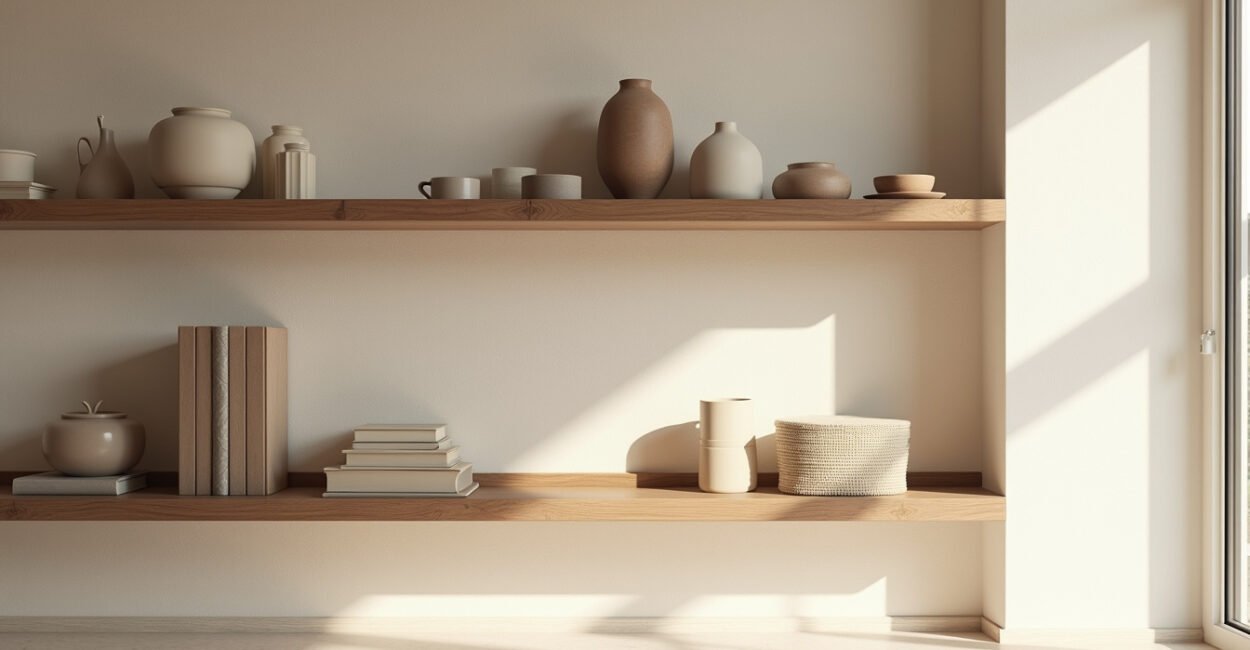
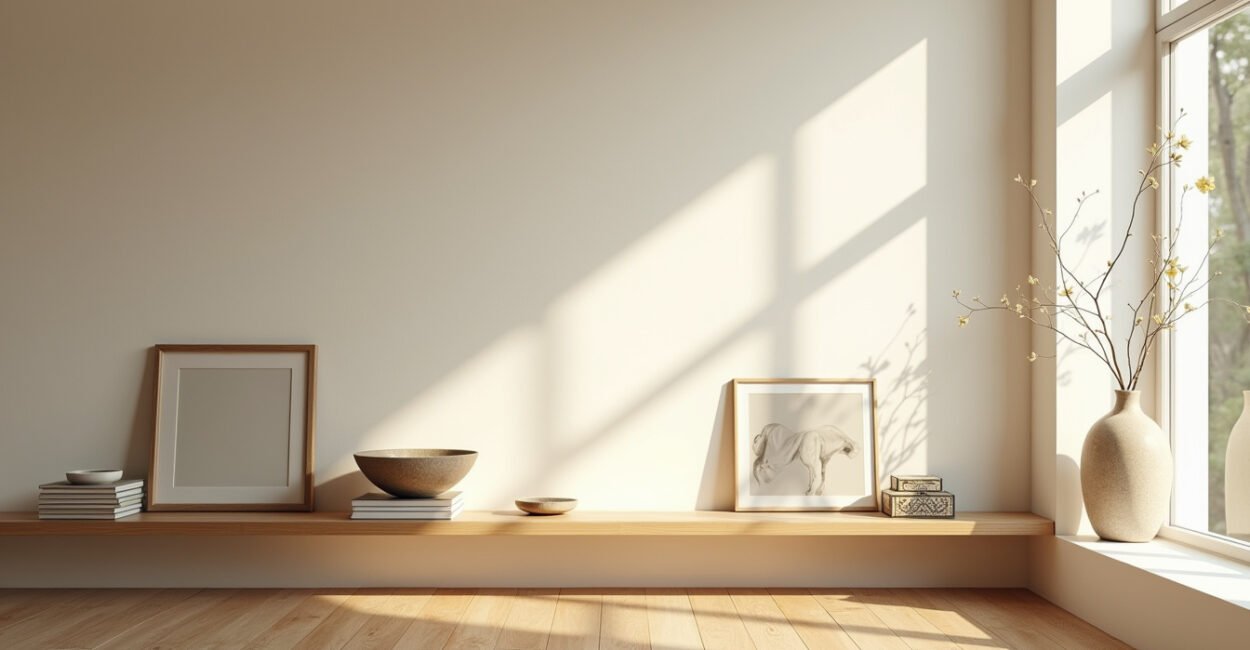
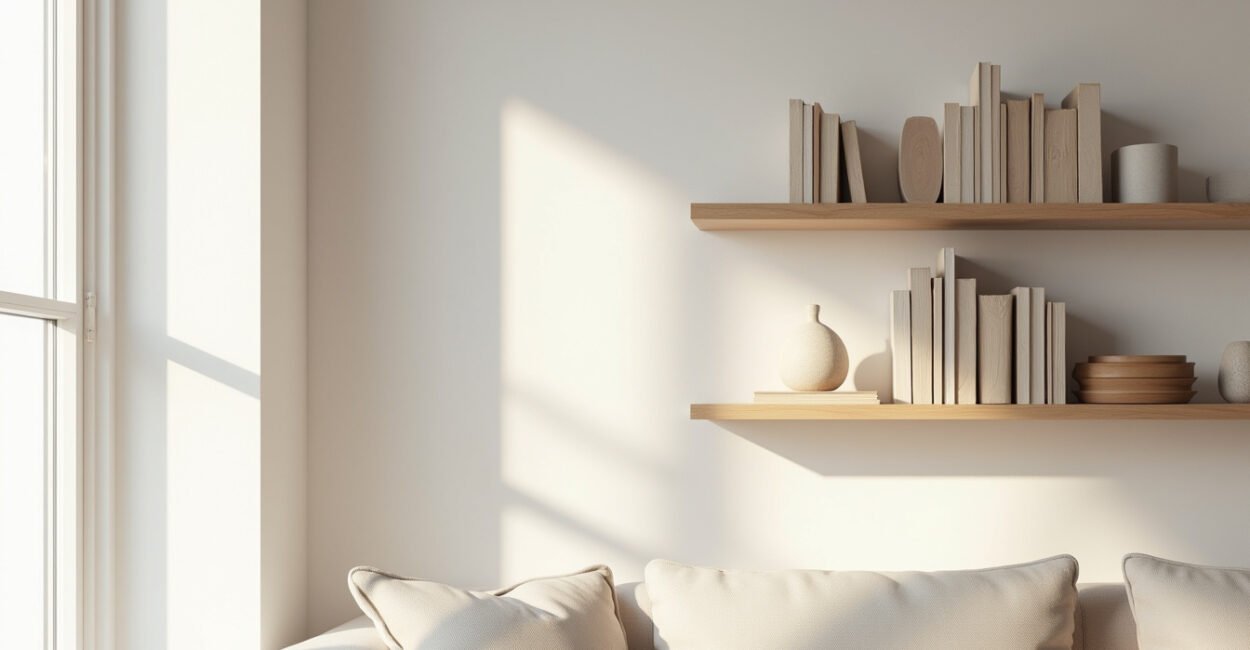
Neutral spaces get their character from surfaces: plaster, boucle, oak, travertine, ribbed ceramics, woven baskets, and framed prints. Accent lighting helps those details show up at night. Wall washing, picture lights, and small uplights are all useful because they shift attention to texture instead of simply increasing brightness.
Here’s the practical part: if a room already feels calm during the day, do not destroy that balance with light that is too broad or too intense. Aim light where you want the eye to land. A shelf with books and ceramics, a large canvas, or a paneled wall can suddenly become the room’s focal point.
A Small Example from a Real Setup
A client once had a soft gray living room with a cream sectional and oak side table, but the space always felt unfinished at night. We added a linen-shade table lamp, a floor lamp in the reading corner, and a narrow beam aimed at a framed print above the sofa. Nothing else changed. The room went from “nice but empty” to warm, layered, and lived-in within one evening.
Use Dimmers and Smart Controls to Adjust the Mood by Time of Day
Dimmers are one of the most effective upgrades you can make because they let the room shift from daytime brightness to evening softness. In a neutral living room, that flexibility matters. The same beige wall that looks crisp at noon can look far more inviting at 8 p.m. if you lower the intensity.
Why Dimming Solves More Than Brightness
Brightness alone does not equal comfort. A dimmable setup lets you keep the room functional for cleaning, working, or reading, then soften it for conversation or downtime. Smart bulbs and smart switches add convenience, but a basic wall dimmer is often enough if you want reliability over features. Some LEDs are not dimmable, so check compatibility before buying.
There is one limit here: dimming cannot fix a poorly planned lighting layout. If the room has only one central light, turning it down may make the space gloomy instead of cozy. Dimming works best after the room already has layered illumination.
| Lighting Choice | Best Use | Effect in a Neutral Room |
|---|---|---|
| 2700K LED bulb | General evening lighting | Warm, calm, and forgiving |
| Diffused table lamp | Seating areas | Softens shadows and adds texture |
| Floor lamp | Dark corners | Adds height and depth |
| Picture light | Art or shelving | Creates a focal point without clutter |
Match Fixture Finishes to the Materials Already in the Room
Lighting is not only about the bulb. Fixture finish changes how neutral interiors feel. Brass brings warmth, black adds structure, nickel leans cleaner, and wood details make the whole room feel more grounded. In a neutral scheme, the finish should either echo the room’s existing materials or give a deliberate contrast.
Finishes That Usually Work Best
- Brass or antique brass pairs well with cream, camel, oak, and warm gray.
- Black works when the room needs visual definition or a modern edge.
- Matte white blends in if you want the fixture to disappear.
- Natural wood feels cohesive in Scandinavian or organic modern rooms.
One thing designers notice fast: mixed metals can work, but only when the room has a clear base finish and the second metal appears on purpose. A brass lamp, black picture frame, and chrome side table can look edited or chaotic depending on how much repetition you create. Repetition is what makes the mix feel intentional.
Bring It Together with a Simple Lighting Plan You Can Actually Maintain
The best neutral room lighting plan is the one you will keep using. That usually means one ceiling source, one or two table lamps, one floor lamp, and one accent light if the room has art or shelves worth showing off. You do not need a designer budget. You do need consistency in color temperature, thoughtful placement, and enough softness to keep the room comfortable after dark.
For more technical context on how home lighting affects energy use and fixture choice, the U.S. Census Bureau’s housing data and the Department of Energy’s lighting advice are useful starting points. The details change by room, but the core principle does not: layered, warm, and diffused light almost always flatters neutral interiors better than a single bright source.
If you want a practical next step, audit your living room at night and identify the darkest corner, the harshest glare source, and the one surface you most want to show off. Replace one bulb, add one lamp, and adjust one fixture placement before you buy anything else. That small test usually tells you more than a full redesign.
What Bulb Color is Best for a Neutral Living Room?
For most neutral living rooms, 2700K is the safest starting point because it creates a warm, comfortable glow without making whites look overly yellow. If the room gets very little natural light, 3000K can look cleaner and more balanced. The best choice depends on your wall color, flooring, and how warm the rest of the decor already is.
Do I Need a Chandelier in a Neutral Living Room?
No. A chandelier can work, but it is not required, and it is often not the best first choice. In many neutral spaces, a chandelier alone creates style without enough practical light. A better approach is to combine a ceiling fixture with lamps and at least one accent source.
How Do I Make a Gray Living Room Feel Warmer?
Use warm bulbs, add layered lamps with fabric or frosted shades, and bring in finishes like brass, oak, or aged bronze. Texture matters too: boucle, wool, linen, and woven materials reflect light in a softer way than glossy surfaces. If the room still feels cold, the problem is usually too much direct light or not enough contrast.
Can I Mix Warm and Cool Light in the Same Room?
You can, but it takes discipline. Mixing temperatures too casually often makes a room feel disjointed, especially when lamps are visible together. If you do mix them, keep the difference subtle and separate functions by zone so the room still feels unified.
What is the Biggest Lighting Mistake in Neutral Rooms?
The biggest mistake is relying on one bright overhead fixture and calling the room finished. That setup flattens texture, creates glare, and makes neutral colors feel lifeless. The stronger solution is layered light at different heights, with soft diffusion and a warm color temperature.