Skip to content

Small apartments expose every cleaning choice fast: one harsh spray can hang in the air, one bulky bottle can take up half a cabinet, and one “green” label can still hide ingredients you do not want in a closed space. That is why eco friendly cleaning products for apartments are not just about sustainability; they are about fit, air quality, storage, and how real people clean when space is tight.
The right products do three jobs at once: they clean well, they reduce clutter, and they avoid unnecessary chemical load. In a compact home, that usually means concentrated formulas, refill systems, unscented or lightly scented options, reusable tools, and a short list of products that cover most surfaces without turning a bathroom shelf into a supply closet. Here, you will get a practical buying guide, product types worth keeping, and the trade-offs that matter when you live in a smaller space.
What You Need to Know
- In apartments, the best cleaning setup is usually fewer products, not more. One good all-purpose cleaner, one disinfecting option for high-touch areas, and one bathroom product often cover most needs.
- “Eco-friendly” is not a single standard. A safer choice usually means biodegradable surfactants, low-VOC formulas, refill packaging, and fewer synthetic fragrances, not just a leaf on the label.
- Concentrates and tablets save the most space because you store less water, fewer bottles, and less plastic.
- Microfiber cloths and scrub pads reduce the need for extra sprays and paper towels, which matters in small homes where storage is limited.
- The products that look cheapest often cost more over time if they are heavily diluted or require repeated application.
Eco Friendly Cleaning Products for Apartments: What Actually Works in Small Spaces
In a small apartment, the definition of a good cleaning product changes. Technical term first: an eco-friendly cleaning product is a formula designed to reduce environmental impact through lower toxicity, lower volatile organic compounds (VOCs), biodegradable ingredients, minimal packaging waste, or refillable systems. In plain English, it should clean the room without creating a bigger problem in the air, the trash, or your storage cabinet.
The Core Formula Most Apartments Need
If you want a lean setup, build around four categories: an all-purpose cleaner, a bathroom cleaner, a glass cleaner, and a disinfecting product for high-touch areas. That sounds simple because it is. The mistake most renters make is buying a specialty bottle for every surface. In practice, that fills cabinets fast and leads to half-used products.
For day-to-day cleaning, concentrates matter more than branding. A concentrate gives you more uses per ounce and less packaging to store. Tablets and refill pouches do the same job with less shelf space. That is one reason apartment dwellers often prefer brands built around refill systems rather than one-off bottles.
In a small apartment, the best cleaner is not the one with the longest ingredient list; it is the one that covers the most surfaces with the fewest bottles.
For ingredient screening, look for third-party cues such as EPA Safer Choice or Green Seal. Those labels are not perfect, but they are far more useful than vague marketing language. You can verify what those standards mean through the EPA Safer Choice program and the Green Seal standards.
What to Skip in a Closed Space
Apartments amplify smell and residue. Heavy aerosols, strongly perfumed disinfectants, and overly acidic or bleach-heavy mixes can be overkill for everyday use. That does not mean bleach has no place at all. It does mean you should reserve it for specific sanitation needs and keep the ventilation strong. Overusing it in a tight kitchen or bathroom usually creates more irritation than cleanliness.
Ingredients That Deserve a Close Read on the Label
The label matters more than the color of the bottle. A lot of products marketed as natural still rely on fragrance blends, dyes, or unnecessary stabilizers that do nothing for performance. When space is limited, you want products that are transparent about ingredients and realistic about what they can clean.
Better Ingredient Signals
- Plant-derived surfactants help lift grease and dirt without relying on harsher degreasers.
- Citric acid works well on mineral buildup in bathrooms and around faucets.
- Hydrogen peroxide can be a useful oxidizing cleaner for stains and some disinfecting tasks.
- Unscented or low-fragrance formulas reduce the chance of lingering odors in apartments with poor airflow.
- Refillable packaging lowers waste and cuts cabinet clutter over time.
Ingredients That Need Context
Fragrance is the biggest one. Some people tolerate it fine; others get headaches or irritation. That variation is real, and it is why “smells clean” is not the same thing as “is clean.” Also, not every natural cleaner disinfects. Vinegar can help with some mineral deposits and light cleaning, but it is not a universal sanitizer, and it should not be treated like one.
For anyone who wants a formal reference point on greener household products, the FTC Green Guides explain how environmental claims should be interpreted. That helps when a product says “non-toxic,” “planet-friendly,” or “clean,” but gives you little else to verify.
“Natural” and “effective” are not the same claim. A product earns trust when it shows a clear use case, not when it leans on mood language.

Storage-Smart Picks: Concentrates, Tablets, and Refill Systems
If you live in a studio or one-bedroom, storage is not a side issue. It is the issue. The most useful eco-friendly cleaning products are often the ones that shrink your footprint before they shrink waste. Concentrates, tablets, and refill pouches do exactly that.
| Format | Best For | Apartment Advantage | Main Trade-Off |
|---|---|---|---|
| Concentrate | All-purpose and glass cleaning | Fewer bottles, lower shipping weight | Needs dilution or a reusable spray bottle |
| Tablet | Multi-surface cleaning | Very small storage footprint | May take time to dissolve fully |
| Refill pouch | Frequent cleaners | Reduces plastic and cabinet clutter | Still creates some packaging waste |
| Ready-to-use bottle | Convenience cleaning | Simple and familiar | Uses the most plastic and shelf space |
When a Refill System is Worth It
Refills are worth it when you use the product often enough to justify the upfront bottle or dispenser. For a kitchen counter spray, that is usually yes. For a niche cleaner you reach for twice a year, probably not. This is where a lot of “eco” shopping goes wrong: people buy into the idea of sustainability but end up with too many specialized products they do not use enough to matter.
Na prática, o que acontece is that one reusable bottle plus one or two refills usually beats four separate cleaners in both cost and storage. If you want less clutter, a good bottle and a predictable refill cycle matter more than any single marketing claim.
Room-by-Room Choices That Fit Apartment Life
Different rooms create different messes, and apartment cleaning gets easier when you match the product to the surface. A bathroom product that cuts soap scum may be unnecessary in a bedroom, while a gentle dusting spray can be a better fit for shelves, baseboards, and electronics.
Kitchen
Choose a degreasing all-purpose cleaner, a scrub brush, and a microfiber towel set. That combination handles counters, cabinet fronts, stovetops, and sink surrounds without crowding your cabinet. For food-contact surfaces, rinse when needed and avoid leaving residue behind. That matters more in a small kitchen where surfaces get used constantly.
Bathroom
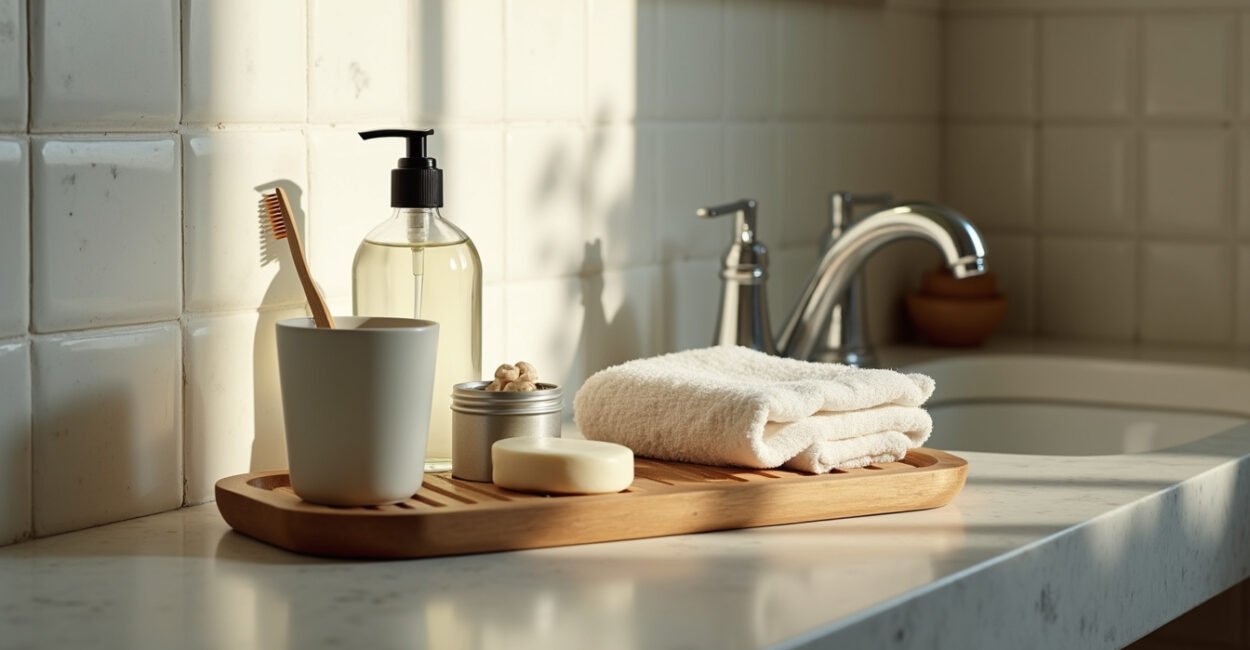
Look for a product that handles soap scum and mineral buildup. Citric-acid-based cleaners often work well on fixtures, glass, and tile, while a separate disinfecting wipe or spray can be reserved for handles and other high-touch spots. Good ventilation is part of the system here, not an optional extra.
Living Room and Bedroom
Dry dusting tools do more than most people think. Microfiber traps dust instead of pushing it around, and a low-residue spray can help with shelves, tables, and window ledges. If you have pets, that becomes even more useful because fur and dander collect fast in tight spaces.
Why This Matters in Practice
I once saw a renter keep six different “green” cleaners under a bathroom sink that barely fit one extra towel. None of them were bad products, but they were redundant. Once she switched to one concentrate, one bathroom spray, and reusable cloths, she cleaned faster and stopped buying duplicates she forgot she already had.
How to Compare Brands Without Falling for Greenwashing
Greenwashing is common in this category because cleaning products are easy to market and hard to verify at a glance. The packaging says “plant-based,” but the formula may still contain high fragrance loads, unnecessary dyes, or vague proprietary blends. That is why buyers need a simple decision filter.
A Practical Buying Checklist
- Check whether the product is concentrated, refillable, or ready-to-use.
- Look for recognizable third-party certifications, not just eco-themed graphics.
- Read the fragrance statement if you are sensitive to smells.
- Match the product to the surface and soil level you actually clean.
- Compare cost per ounce or cost per diluted use, not sticker price alone.
Trust Signals Worth Prioritizing
For household cleaners, EPA Safer Choice, Green Seal, and clear ingredient disclosure are stronger signals than buzzwords. If a brand avoids specifics, that is a warning sign. Transparency is not a bonus feature; it is the minimum standard for a product you are putting on counters, floors, and bathroom fixtures.
There is one exception worth noting. Some excellent cleaners do not carry a major certification simply because the brand has not paid for the process yet. So the absence of a seal does not automatically mean a bad product. It means you need stronger scrutiny of the ingredient list, packaging, and use instructions.
Simple Buying Rules That Keep Clutter Down
The cleanest apartment setup is usually the one with the fewest decision points. That means buying products that overlap in a smart way and refusing the temptation to stock “just in case” bottles. If you live in a compact place, your cleaning shelf should behave like a tool kit, not a shopping cart.
The right apartment cleaning kit is small on purpose: one bottle should earn its place by solving a real problem, not by looking friendly on a shelf.
Use These Rules Before You Buy
- Buy one cleaner for a room, not one cleaner per surface.
- Prefer refillable formats if you clean weekly or more often.
- Avoid products with strong fragrance unless you know you tolerate them well.
- Choose microfiber over disposable wipes whenever you can.
- Keep one disinfecting product for targeted use, not all-purpose use.
That last point matters. Disinfectants are not the same as general cleaners. People often spray them on everything, but that is unnecessary for routine dust, crumbs, and fingerprints. For regular apartment cleaning, a low-tox all-purpose cleaner does most of the work; disinfectant is for high-touch or higher-risk situations.
Best Low-Tox Cleaning Setup for a Small Apartment
If I had to build a compact starter kit from scratch, I would keep it brutally simple: one all-purpose concentrate, one bathroom cleaner, one glass cleaner, one targeted disinfectant, two microfiber cloths, one scrub brush, and one reusable spray bottle. That setup covers almost every apartment without taking over the under-sink space.
The goal is not to chase a perfect label. It is to build a system that fits your actual life: limited storage, repeat cleaning, mixed surfaces, and a desire to keep chemicals and waste lower without making chores harder. That is where eco friendly cleaning products for apartments earn their keep — not by being trendy, but by being practical.
Practical Next Step
Audit what you already own, remove the duplicates, and replace the noisiest, bulkiest products with one concentrate and one refillable bottle. Then track what you use for two weeks. If a product sits untouched, it probably does not deserve space in a small home.
Frequently Asked Questions
Are Eco-friendly Cleaning Products Strong Enough for Apartment Messes?
Yes, if you match the product to the job. Most everyday apartment messes are dust, grease, soap residue, and fingerprints, which a good all-purpose cleaner can handle. The key is choosing products with real surfactants, not just nice packaging. For tougher buildup, use a bathroom-specific cleaner or a targeted degreaser instead of expecting one bottle to do everything.
What Should I Avoid If My Apartment Has Poor Ventilation?
Avoid heavy aerosols, strong fragrance blends, and high-bleach routines unless you can open windows or run exhaust fans. In small rooms, airborne residue matters more because it lingers longer. Unscented concentrates, microfiber tools, and wipe-on sprays tend to be a better fit. If a product smells intense in the store, it will usually feel stronger in a closed apartment.
Is Vinegar a Good All-purpose Cleaner for Apartments?
Vinegar is useful for some mineral buildup and light cleaning, especially on glass and faucets. It is not a universal cleaner, and it should not be treated as a disinfectant. It also can damage some surfaces, including natural stone. For apartment use, vinegar works best as one tool in a broader kit, not as the only product you own.
How Many Cleaning Products Do I Really Need in a Small Apartment?
Most people can manage well with four core products: an all-purpose cleaner, a bathroom cleaner, a glass cleaner, and a targeted disinfectant. Add microfiber cloths, a scrub brush, and a reusable spray bottle, and you can handle most spaces without clutter. If you are buying more than that, ask whether you are solving a real cleaning problem or just collecting bottles.
Are Concentrates Better Than Ready-to-use Cleaners?
Usually yes, especially in apartments. Concentrates save shelf space, reduce packaging, and often lower the cost per use. The trade-off is that you need to dilute them properly or use a refill bottle. If you want convenience above all else, a ready-to-use cleaner may still make sense, but it is rarely the best choice for compact storage.