Skip to content

Secondhand pieces look random only when they lack a visual plan. The real skill behind thrifted decor styling tips for beginners is not finding “good stuff”; it is editing what you buy so the room feels intentional, even if every object came from a different store, decade, or price point.
That matters because thrifted decor can save money, add character, and keep a room from looking showroom-flat. But beginners often make the same mistake: they collect interesting objects instead of building a composition. The result is clutter, not style. Below, I’ll walk through the practical rules that make thrifted finds look cohesive—color, scale, texture, grouping, and a few judgment calls that save a lot of regret.
O Que Você Precisa Saber
- A thrifted room looks intentional when a few repeating elements connect the pieces: one color family, one finish family, or one shared material.
- Scale matters more than “matching.” A large lamp, a small vase, and a medium bowl can work together if the visual weight is balanced.
- Texture is what keeps vintage and secondhand decor from feeling flat; wood, glass, ceramic, brass, and linen create depth fast.
- Grouping objects in odd numbers usually looks more natural, but the rule fails when one item is much taller or heavier than the others.
- Cleaning, tightening, and minor repairs often do more for a thrifted piece than a new purchase ever would.
Thrifted Decor Styling Tips for Beginners: Start with a Cohesive Visual Plan
The first thing to know is that styling secondhand decor is a compositional problem, not a shopping problem. In design terms, composition is the arrangement of shape, color, texture, and spacing so the eye reads the whole display as one unit. In plain English: the room needs a reason for the pieces to be together.
When I see a thrifted shelf go wrong, it is usually because every object is competing for attention. The fix is not buying more. The fix is choosing one clear direction: warm and aged, airy and collected, earthy and handmade, or graphic and high-contrast. That single decision does more work than any trend list.
Choose One Style Anchor
Pick one anchor piece first: a framed print, a ceramic lamp, a brass mirror, a wooden tray, or a vintage rug. Then let the rest of the objects support it. This is the fastest way to avoid the “good things, bad room” problem that happens when every item is individually cute but collectively noisy.
What makes thrifted decor feel curated is not sameness; it is repetition with variation. One repeated color, material, or finish is enough to make mixed pieces read as a set.
Use a Simple Rule for First-Time Buyers
If you are new to thrifting, buy in threes: one statement piece, one support piece, and one filler piece. The statement item gives the grouping identity. The support item echoes its shape or color. The filler fills the gap without stealing attention. This is how designers build balance without making a room look staged.
How Color Repetition Makes Mixed Pieces Feel Intentional
Color is the fastest way to make thrifted finds look connected. You do not need everything to match; you need enough overlap that the eye keeps moving. A room can tolerate a lot of variety when 60 to 70 percent of the objects sit within the same color family or undertone.
That does not mean every thrift store buy has to be beige. It means you should notice undertones before you buy. A cream vase, a yellowed ivory frame, and a true white bowl can clash badly even though all three are “neutral.” The same issue shows up with wood tones: reddish oak and pale pine can fight if they are too close in the same display.
Repeat One Neutral and One Accent
A reliable beginner formula is one anchor neutral plus one accent color. For example: warm white + olive green, or black + amber, or walnut + muted blue. Repeating that pair across pillows, pottery, books, and frames keeps the room grounded without making it look matchy-matchy.
Check Undertones Before You Checkout
In practice, lighting changes the decision. Fluorescent store lighting can make an ivory ceramic look colder than it will at home, and daylight can reveal a yellow cast you did not notice under the thrift-store bulbs. If the undertone bothers you in the store, it will bother you more on your shelf.
For a practical reference on color perception and lighting, the National Institute of Standards and Technology has accessible material on color measurement and illumination. It is not a decor blog, but the science behind color consistency is the same one interior stylists rely on.

Scale, Proportion, and the Shelf Rule That Saves Most Displays
Scale is the relationship between an object and the space around it. Proportion is the relationship between objects placed together. Beginners often confuse the two and end up with tiny decor scattered across big surfaces, which makes the room feel underdressed rather than styled.
Here is the rule I use most often: every surface needs at least one item that is visually heavy, one item that is medium, and one item that is light or airy. On a mantel, that might be a tall lamp, a medium framed photo, and a small bud vase. On a console, it could be a stack of books, a bowl, and a branch arrangement.
Think in Visual Weight, Not Price
A cheap object can look expensive if it has the right scale. A heavy stone bowl reads as substantial even when it costs little. A delicate glass candleholder can disappear unless it is paired with something solid. Weight is about how much space the eye thinks an object occupies, not how much it weighs physically.
The Shelf Rule: Tall, Mid, Low
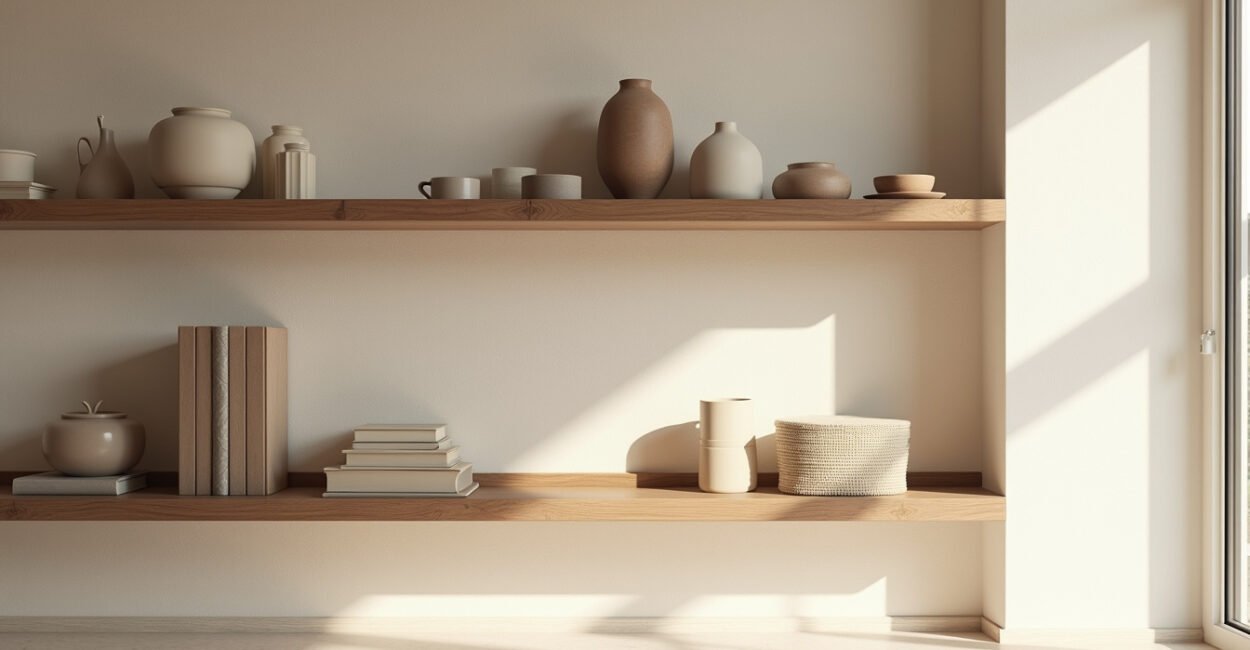
One of the easiest formulas for beginners is tall, mid, low. Place the tallest object at one end or slightly off-center, use a medium-height object to bridge the gap, and keep the lowest item near the front edge. That creates a clean silhouette and prevents the display from looking flat.
| Display Problem | What Usually Causes It | Better Fix |
|---|---|---|
| The shelf looks crowded | Too many items at the same height | Vary tall, mid, and low pieces |
| The console looks empty | Too many tiny objects | Add one larger anchor object |
| The vignette feels stiff | Perfect symmetry with no movement | Shift one piece slightly off-center |
Texture is What Makes Thrifted Decor Look Collected, Not Cheap
Texture gives secondhand decor depth. Without it, even good objects can look flat and costume-like. A room becomes more interesting when smooth surfaces sit beside rough ones: glazed ceramic next to woven rattan, brass next to linen, dark wood next to clear glass.
This is where thrift stores are strong. They often have materials that are hard to replicate cheaply in new decor: aged wood, old stoneware, handwoven baskets, cut glass, and patinated metal. Those imperfections are not flaws to hide. They are the reason the pieces feel lived-in.
Mix Hard and Soft Materials
If a room has a lot of hard surfaces already—glass tables, metal frames, polished floors—thrifted textiles can make it warmer fast. Think wool throws, linen runners, vintage pillow covers, or even a small handwoven mat on a shelf. The contrast keeps the room from feeling severe.
Use Patina as a Feature
Patina is the surface aging that develops on wood, brass, leather, and metal over time. In thrifted decor, it often signals authenticity. But there is a limit: surface wear that looks dirty or unstable is different from graceful aging. If the piece sheds, smells musty, or feels brittle, treat it as a repair project rather than a styling win.
The difference between vintage charm and visual mess is often texture control: too many shiny surfaces feel new and sterile, while too many worn surfaces can feel dusty and tired.
For cleaning and conservation, the Smithsonian’s conservation resources are a useful starting point. They are especially helpful when a thrifted object needs gentle cleaning instead of aggressive scrubbing.
Grouping and Editing: The Part Most Beginners Skip
Good styling is editing. The fastest way to improve a thrifted arrangement is to remove one or two objects after you think you are finished. That is not a trick; it is how the eye gets room to rest.
Vi casos in which a beginner had bought twelve great objects for one bookshelf, and the shelf still looked unfinished. The problem was not the items. It was the density. Once we removed the smallest two pieces and grouped the rest by color and height, the shelf looked more expensive immediately.
Use Odd Numbers, Then Break the Rule If Needed
Groups of three or five often feel natural because they create asymmetry. But if one piece is much larger than the rest, a pair can work better. For example, a large vase and a stack of books can look cleaner than forcing in a third object that does not belong.
Leave Negative Space on Purpose
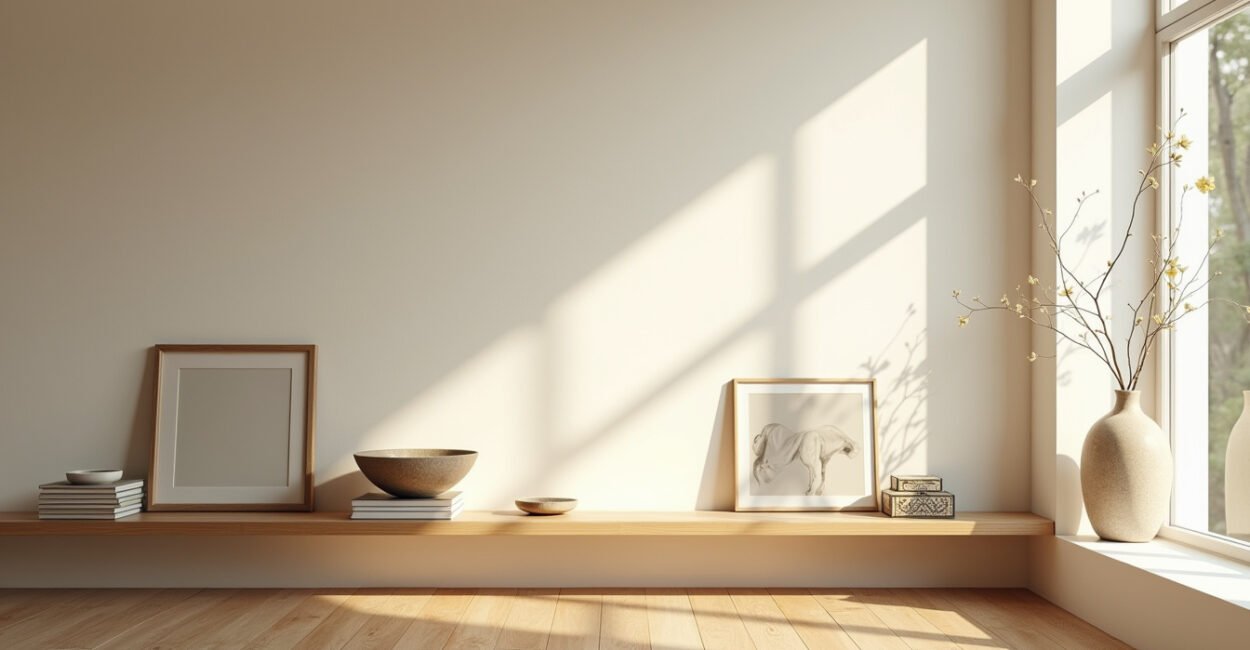
Negative space is the empty area around objects. It gives the eye structure. On a coffee table or shelf, a little open space makes each piece look more deliberate. If everything touches, the display stops feeling curated and starts feeling accidental.
A practical guideline: on a tabletop, let at least one-third of the surface stay visually open. That is not a law, and it fails in maximalist interiors, but it works very well for beginners who tend to overfill every corner.
Cleaning, Repair, and Small Upgrades That Change Everything
Before you style a thrifted piece, make it presentable. Dust, sticky residue, loose screws, and oxidized hardware all change how the object reads in a room. A lamp with a slightly wobbly base or a frame with missing backing will drag down the whole vignette, even if the shape is good.
Most beginner upgrades are small: wipe, tighten, rehang, reline, replace felt pads, or swap a dated knob. Those fixes are not glamorous, but they are the difference between “find” and “finished.”
Know What is Worth Restoring
Restore pieces with solid structure and good materials. Skip anything with active mold, deep water damage, crumbling veneer, or a smell that will not lift. That is where thrift store optimism gets expensive. Some items are cheap because they are genuinely past their useful life, and there is no design workaround for that.
A Quick Pre-Style Check
- Test stability by shaking the piece gently.
- Wipe every surface before bringing it into the home.
- Check edges, seams, and joints for chips or looseness.
- Replace missing hardware if the piece depends on it visually.
For furniture safety and repair basics, the U.S. Consumer Product Safety Commission has clear guidance on household product hazards. It is worth checking when a thrifted lamp, chair, or child-facing item seems questionable.
Room-by-Room Styling That Helps Secondhand Pieces Land Well
Different rooms demand different levels of visual noise. A bedroom usually needs softness and restraint. A living room can handle more layered decor. A kitchen shelf needs function first, while a hallway console can be more playful because nobody sits there for long.
That is why one styling formula does not fit every room. A thrifted basket that looks perfect on a bookshelf may feel cluttered on a bathroom counter. Context changes the read.
Living Room: Build One Strong Focal Point
Use a mirror, art piece, or lamp as the focal point, then add supporting thrifted objects around it. Keep the largest visual weight near the center or slightly off-center. That makes the room feel anchored instead of scattered.
Bedroom: Keep the Story Quiet
Bedrooms usually do better with fewer objects and softer materials. Think ceramic lamp, woven tray, framed print, and one small vase. If the room already has patterned bedding, keep the thrifted decor calmer so the space does not feel restless.
Kitchen and Entryway: Blend Utility with Style
In kitchens, use thrifted decor that earns its place: crocks, wooden bowls, glass jars, and small art that survives humidity and grease. In entryways, the best pieces are often practical ones—baskets, trays, hooks, and a mirror with character. If decor also solves a daily problem, it is easier to keep.
Beginners usually need less variety, not more. A room looks more designed when the same few materials show up in different forms than when every object is trying to be unique.
Próximos Passos for Building Your First Thrifted Display
The best next move is not a full-room makeover. Start with one surface: a shelf, dresser, coffee table, or entry console. Pick a color pair, choose three to five objects with different heights, and edit until one-third of the surface still breathes. That single exercise teaches more than collecting another cartful of pieces.
If you are buying secondhand decor this week, use a short checklist: does it repeat a color already in the room, does it add texture, does its scale make sense, and is it worth cleaning or repairing? That is the fastest way to separate a good find from an expensive distraction. For more design guidance, look at museum and conservation resources alongside decorating examples; the strongest rooms borrow from both taste and restraint.
FAQ
What Should a Beginner Buy First When Thrifting Decor?
Start with one anchor piece, not a dozen small ones. A lamp, mirror, framed art piece, or textured bowl gives the room a visual starting point. After that, add supporting objects that repeat one color or material. That order matters because it keeps the display from turning into a pile of unrelated finds. It is much easier to style around a strong focal piece than to rescue a shelf full of random extras.
How Do I Make Thrifted Decor Look Expensive?
Focus on restraint, not price tags. Clean the piece well, remove anything broken or overly busy, and pair it with one higher-quality-looking material such as wood, brass, ceramic, or linen. Expensive-looking displays usually have fewer objects, better spacing, and more consistency in color. If the item has a strong shape and a believable finish, it can look elevated even when it cost very little.
Can I Mix Old Thrifted Pieces with Modern Decor?
Yes, and that combination often looks better than trying to make everything match the same era. The trick is to keep one bridge element consistent, such as color, material, or silhouette. For example, a vintage brass lamp can work with a modern sofa if both share warm tones. The room reads as designed when the contrast feels deliberate instead of accidental.
What is the Easiest Way to Avoid a Cluttered Thrifted Shelf?
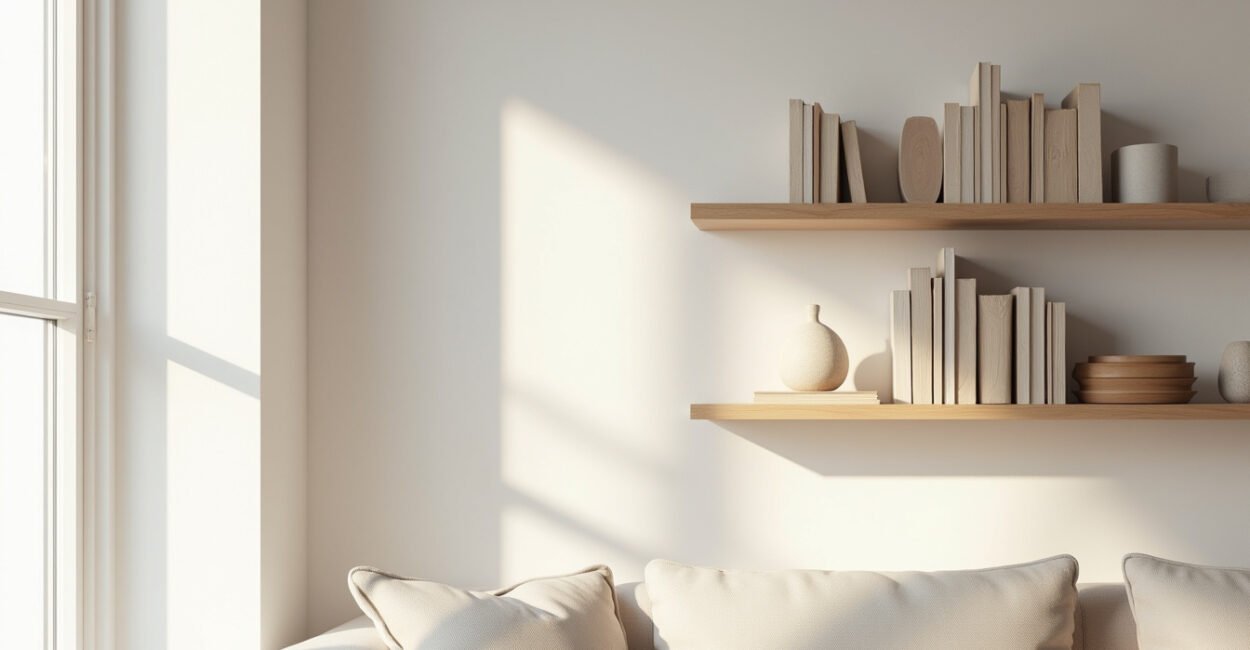
Remove more than you think you need. Begin by placing your items, then take one away and step back. If the shelf looks calmer and clearer, you were overfilled. Shelves usually improve when they have a mix of tall, medium, and low objects with visible space between them. Negative space matters because it gives the eye a place to rest and makes each object look chosen.
Which Thrifted Materials Are the Safest Bets for Beginners?
Solid wood, ceramic, glass, brass, and woven natural fibers are reliable choices because they tend to age well and pair easily with other styles. These materials also have enough texture or weight to read as intentional in a room. Avoid anything with active damage, strong odors, or unstable construction unless you plan to repair it. A durable piece with a simple shape is usually easier to style than a trendy item that falls apart quickly.