Skip to content

Shade changes the equation for patio surfaces. In a compact yard, the wrong hardscape can stay damp, grow algae, shift under foot traffic, and look tired fast. The right porous patio materials for shade solve a different problem: they let water drain, stay stable under daily use, and still look finished instead of improvised.
The technical idea is simple. A porous patio surface has voids, joints, or open structure that allow rainwater to pass through the surface or between units instead of pooling on top. In plain English, that means less standing water, fewer slippery spots, and less stress on the soil below. The catch is that shade brings its own set of trade-offs, especially in small yards where airflow is limited and moss loves a quiet corner.
O Que Você Precisa Saber
- Permeable pavers are the most balanced choice when you want drainage, a clean finish, and a patio that still feels permanent.
- Open-graded gravel and decomposed granite handle shade well, but they need edging and occasional maintenance to avoid migration and compaction.
- Natural stone works best in shaded patios when the joints are built to drain and the surface texture is not too polished.
- Shade does not make a patio “bad”; it changes the failure mode from drying too fast to staying damp too long.
- The best material is usually the one that matches your tolerance for weeding, sweeping, and minor upkeep.
Porous Patio Materials for Shade: The Best Balance of Drainage, Durability, and Clean Lines
For compact yards, the strongest option is rarely the most decorative one. It is the material that keeps water moving, holds its shape, and does not turn the space into a maintenance project after the first wet season. That is why I usually start with permeable systems, then compare stone and gravel blends based on how shaded the site really is.
The best patio surface in shade is the one that drains well enough to stay clean without requiring a full overhaul every season.
Why Shade Changes the Material Choice
Shade slows evaporation. If a patio only gets morning sun or dappled light, moisture can sit in the surface longer, which encourages algae, dark staining, and fine organic buildup. That is why glossy stone, tight grout, and sealed surfaces often look worse in shaded yards than in sunny ones. On the other hand, materials with open joints or voids give that moisture a path downward instead of letting it linger on top.
What Matters More Than the Material Name
Two patios made from the same paver can perform very differently depending on the base, bedding layer, joint fill, and slope. A well-built permeable patio on a compacted open-graded base will outperform a prettier surface sitting on the wrong subbase. This is where many homeowners get surprised: the finish material gets the credit, but the drainage assembly does most of the work.
If you want a practical reference for stormwater performance, the EPA’s Green Infrastructure guidance explains why infiltration-based surfaces reduce runoff and improve water management around homes.
Permeable Pavers in Small Yards
Permeable pavers are usually my first recommendation for shaded compact patios because they solve two problems at once. They create a polished look, and they let water move through the joints into a stone reservoir below. That combination is hard to beat when you want the patio to look intentional, not like a temporary patch of gravel.
Where Permeable Pavers Shine
- They work well in yards where runoff has nowhere to go.
- They handle furniture and foot traffic better than loose-fill materials.
- They can be laid in patterns that make a tiny patio feel larger.
- They pair well with shade because the surface dries more evenly than dense concrete.
Where They Can Disappoint
Permeable pavers are not magic. If the joints clog with silt or leaf debris, performance drops. In a heavily shaded yard under mature trees, you may need more sweeping than you expected. They also cost more upfront than gravel or a simple stone blend, and they need a properly engineered base. The material is durable; the system only works if the installation is disciplined.
Permeable pavers fail most often from poor base prep, not from the pavers themselves.

Natural Stone and Open Joints for a Finished Look
Natural stone gives a shaded patio a quiet, permanent feel that fabricated surfaces sometimes miss. Flagstone, bluestone, and sawn stone all have their place, but the key in a shady yard is not just the stone itself. It is how you space and fill the joints. Tight, cement-rich joints can trap moisture and create slick buildup, while open joints with gravel or permeable filler allow better movement of water.
Best Stone Choices for Shade
Textured stone tends to perform better than honed or polished stone in low-light areas. Bluestone with a thermal finish, rough-cut flagstone, and sawn stone with a non-slip surface are all safer bets than anything glossy. In practice, the tactile finish matters more than the color, because shade already mutes the patio visually.
The Honest Trade-off
Stone looks upscale, but it can also become unforgiving if the base is not right. I have seen patios with beautiful stone surfaces fail because water sat under the slab edges and pushed joints apart over time. Stone is a strong choice for shade when you want permanence, but it is not the lowest-maintenance path.
For design and installation basics on exterior hardscape safety, the National Park Service’s masonry guidance is useful because it explains why drainage and material behavior matter in exterior stone work.
Gravel, Decomposed Granite, and Mixed Infill Systems
Loose mineral surfaces still make sense in shade, especially when the yard is small and you want the patio to read as light, breathable, and informal. Gravel, decomposed granite (DG), and mixed stone blends can drain quickly and fit tight spaces without the visual heaviness of large pavers. But they behave differently, and the differences matter once foot traffic and humidity enter the picture.
Gravel
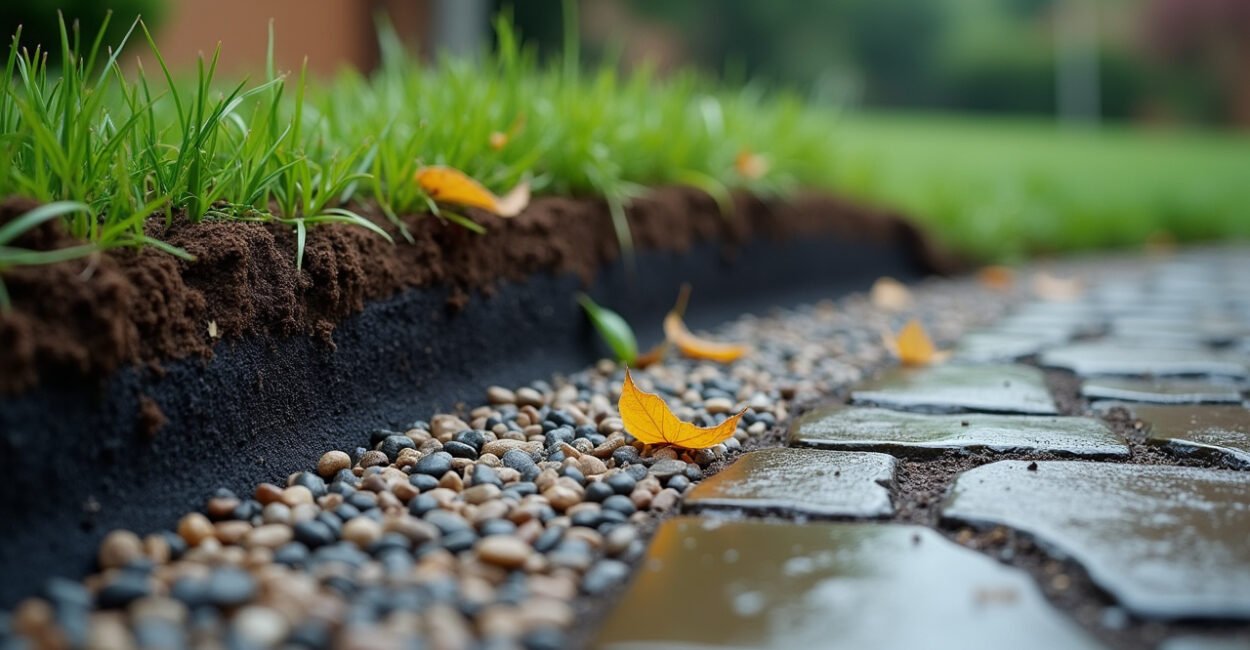
Gravel is the fastest-draining option here. It is forgiving, easy to install, and can look excellent when paired with steel or stone edging. The downside is movement. Without a proper border and compacted base, gravel migrates, spreads into planting beds, and can feel unstable under chairs or a table.
Decomposed Granite
DG gives a smoother finish than loose gravel. When stabilized correctly, it can create a cleaner patio plane and hold furniture better. In shade, though, DG can compact and darken faster if the area stays damp. It is a good choice when you want a softer look, but it is less durable than pavers in high-use zones.
Mixed Infill Systems
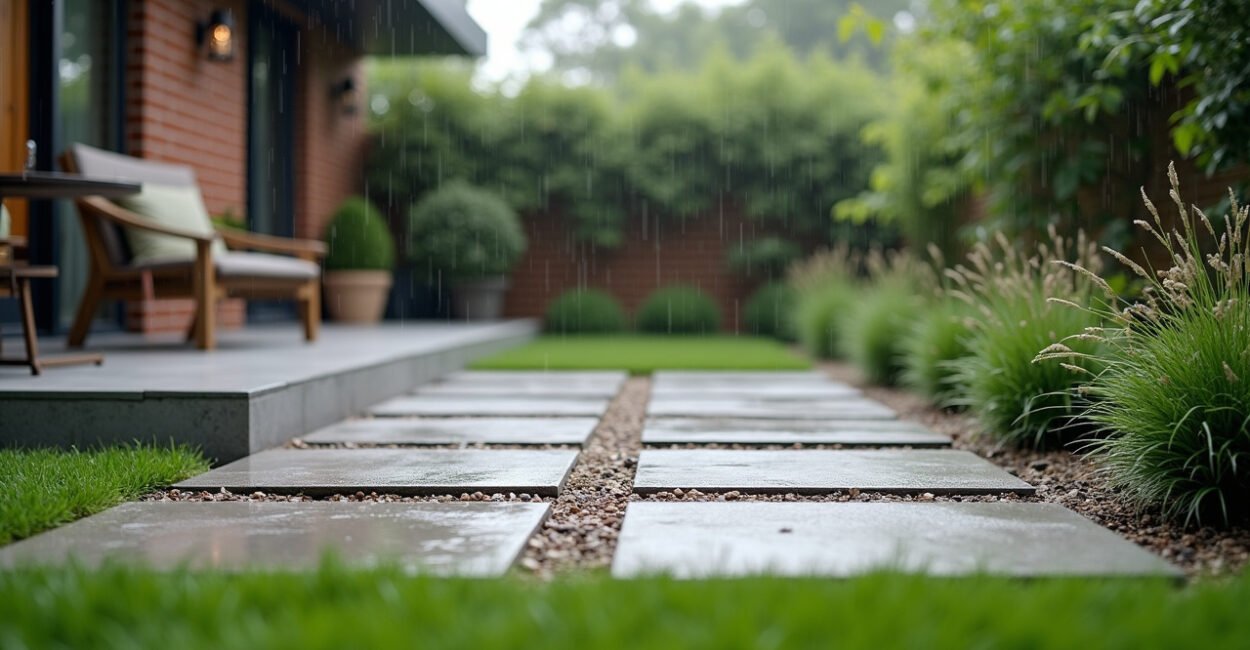
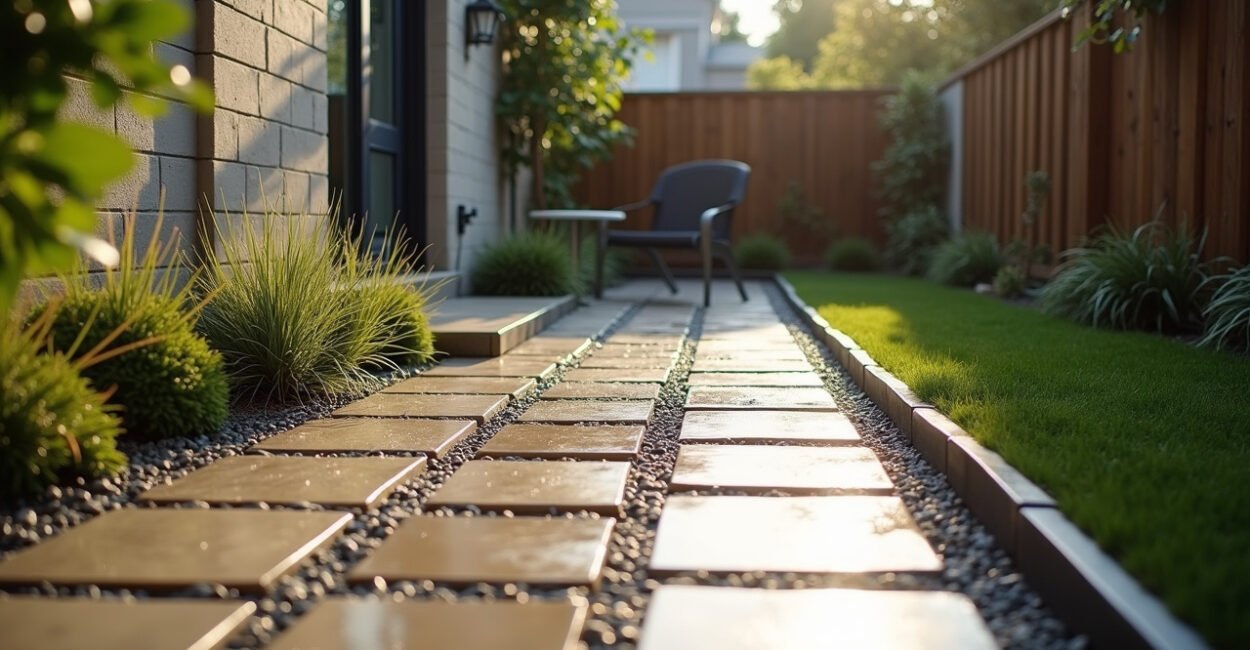
Some of the best-looking compact patios use a hybrid approach: pavers or stepping stones set into gravel, or stone slabs surrounded by open aggregate. That mix gives you structure where you need it and permeability where you want it. It also breaks up the visual mass, which is helpful in a narrow yard.
- Use gravel when drainage and budget come first.
- Use DG when you want a more refined, walkable feel.
- Use mixed infill when the patio must look finished but still breathe.
Base Prep, Edging, and Slope Decide Whether the Patio Works
The visible surface gets the attention, but the base decides the life span. For porous patio systems, the foundation usually includes compacted subgrade, an open-graded aggregate reservoir, and a bedding layer suited to the selected material. If that stack is wrong, even a good surface will settle unevenly or stop draining as designed. In small shaded yards, where water lingers longer, that mistake shows up sooner.
Why Edges Matter More Than People Think
Edging keeps gravel from escaping and pavers from creeping apart. Steel edging gives a crisp line, while stone borders create a more traditional finish. Either way, the patio reads cleaner when the perimeter is restrained. Without it, the whole space starts to look soft and unfinished, especially after a few storms.
Slope is Not Optional
A patio still needs positive drainage, even if the surface itself is porous. The goal is not to leave water sitting anywhere in the structure. A subtle slope away from the house, along with a permeable base, keeps the system working. If you flatten everything because you want a seamless look, you usually pay for it later with puddles and algae.
A porous patio surface is only half the system; the base, edging, and slope determine whether it drains or just looks like it should.
Maintenance in Shaded Conditions: What Actually Holds Up
Shade changes maintenance in a very predictable way: organic debris sticks around longer, and moisture gives algae more time to settle in. That is why a patio that looks great in July can look neglected by October if it never gets swept. The good news is that maintenance is manageable if you choose the right material for your tolerance level.
Low-maintenance Choices
Permeable pavers and textured stone are the easiest to keep looking intentional. They tolerate sweeping, occasional rinsing, and seasonal cleanup without losing their structure. They also age better when a yard gets regular foot traffic.
Higher-maintenance Choices
Gravel and DG need more attention. You may need to rake, top off, or recompact sections over time. In exchange, you get easier drainage and a softer visual effect. That trade can be worth it in small yards where a heavy patio would overwhelm the space.
For a general look at how water-sensitive landscapes behave over time, the University of Minnesota Extension has practical guidance on shade, moisture, and garden conditions that also applies to nearby hardscape planning.
How I’d Choose for Different Compact Yards
When the yard is small, the choice gets more specific than “best material.” A side yard used as a passage needs different performance than a back patio used for dining. The right answer depends on how much you care about drainage, how often the surface gets used, and how clean you want the finished look to feel.
For the Neatest Finish
Choose permeable pavers with a restrained border. This is the safest recommendation for homeowners who want the patio to look complete year-round and do not want loose material tracking indoors.
For the Most Natural Look
Choose flagstone or bluestone with open joints and a permeable base. It fits shaded gardens well and feels more relaxed than a rigid grid of pavers.
For the Lowest Upfront Cost
Choose gravel or a DG blend, but be honest about maintenance. If you dislike sweeping or periodic top-ups, the low sticker price can disappear quickly in daily frustration.
Mini-story: one shaded 10-by-12-foot courtyard I saw had handsome concrete slabs installed tight against each other. By the second wet season, the joints were holding grime and the surface had become slick in the morning. The owner switched to permeable pavers with a gravel reservoir and steel edging. The patio did not just drain better; it started looking cleaner because the water finally had somewhere to go.
What to Choose When Shade and Drainage Both Matter
If you want the shortest answer, here it is: choose permeable pavers when you want the best overall balance, choose textured stone when appearance matters most, and choose gravel or DG when flexibility and budget matter more than polish. That is the real decision triangle. Everything else is detail.
The smartest next step is to compare two or three materials against your actual site conditions, not against a mood board. Check how much sun the patio gets, whether tree roots are nearby, and whether you can tolerate seasonal upkeep. Then test a small sample under the same light your patio gets at midday and after rain. That is the fastest way to see whether the surface will stay attractive in real conditions, not just in photos.
Perguntas Frequentes
Do Porous Patio Materials Work Well in Full Shade?
Yes, but full shade raises the maintenance bar. The surface will dry more slowly, so you need better drainage, more sweeping, and a material that resists algae and staining. Permeable pavers and textured stone usually perform better than polished stone or flat concrete in these conditions. The key is not the lack of sun; it is whether moisture can leave the system quickly enough.
Is Gravel a Good Choice for a Shaded Patio?
Gravel can work very well in shade because it drains quickly and stays visually light in a small yard. The trade-off is movement and upkeep. Without edging and a stable base, it spreads and gets messy fast. If you want a low-cost porous patio surface and do not mind periodic raking, it is a practical option.
What is the Most Durable Porous Surface for a Small Patio?
Permeable pavers are usually the most durable all-around choice. They handle furniture, foot traffic, and changing weather better than loose-fill materials, and they can look very clean when installed with the right base. Natural stone is also durable, but it depends more heavily on the joint system and installation quality. For pure stability, pavers tend to win.
Can Natural Stone Become Slippery in the Shade?
Yes, especially if the stone has a smooth finish or the area stays damp for long periods. Shade encourages algae and fine organic buildup, and that can make the surface slick. Textured finishes such as thermal bluestone or rough-cut flagstone are safer choices. Regular sweeping and rinsing also matter more than people expect.
Do I Still Need Slope If the Patio is Porous?
Yes. Porosity helps water move through the surface, but it does not replace proper grading. A slight slope prevents water from lingering in weak spots and helps the entire assembly perform the way it should. Even a permeable patio needs a drainage plan underneath it, not just open joints on top.