Skip to content
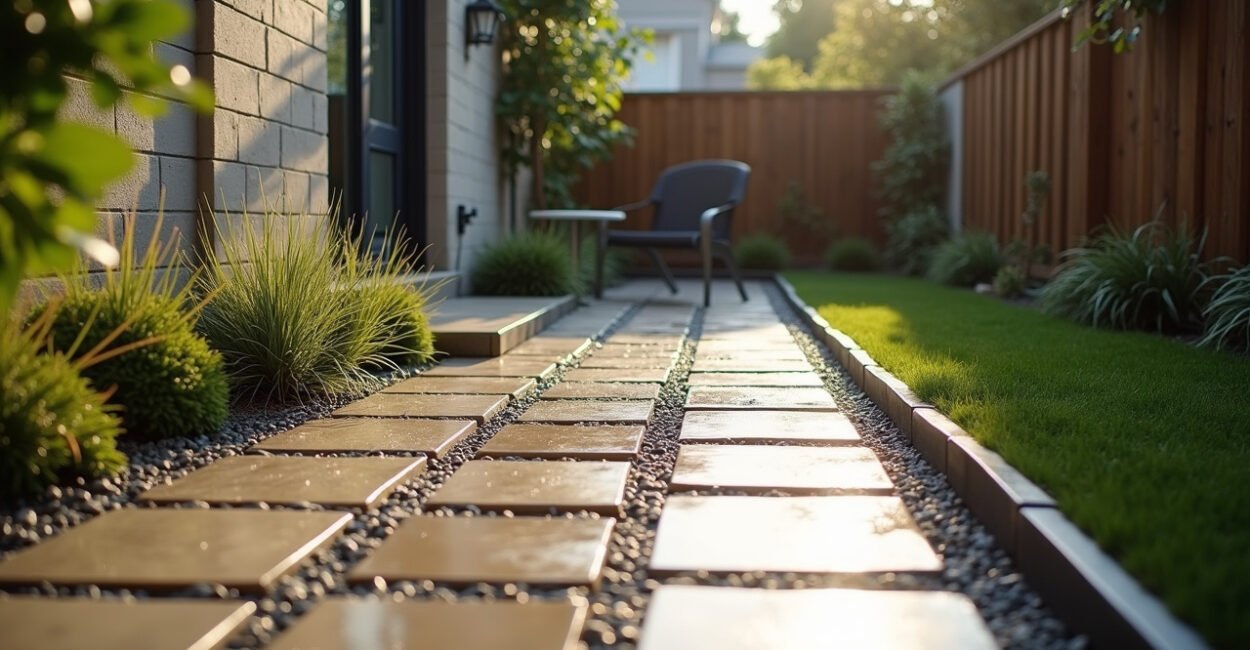
Water pooling on a patio is usually a layout problem before it becomes a drainage problem. With permeable paver patio layouts, the pattern, spacing, base, and edge treatment all work together so rain can move through the surface instead of sitting on top of it.
That matters even more in small backyards, where every inch has to earn its keep. The right layout can make a narrow yard feel wider, reduce runoff, and avoid the cramped look that happens when pavers are packed into one oversized slab. Below, you’ll find the practical design choices that make a permeable patio work in the real world, not just on a plan sheet.
What Matters Most
- A permeable patio is defined by the whole system, not just the paver shape; the base, joints, and slope determine whether water infiltrates or sheds.
- In small yards, rectangular grids, staggered runs, and diagonal layouts can visually expand the space without making installation complicated.
- Joint width, stone size in the base, and edge restraint are the details that usually decide whether the patio performs well after the first heavy storm.
- Narrow or awkward yards often look better with one clear “main zone” plus a secondary strip or landing, instead of forcing one large rectangle into a bad footprint.
- Permeability works best when the design matches the soil, roof runoff, and maintenance habits of the homeowner.
Permeable Paver Patio Layouts That Fit Small Spaces and Move Water Through the Surface
Technically, a permeable paver patio is a surface built to let stormwater pass through the joints and into an open-graded aggregate base, where it can infiltrate into the soil or be stored temporarily. In plain language, the patio is designed like a controlled filter: the pavers carry the load, and the layers below handle drainage.
The layout matters because permeability is not only about material choice. A tight, awkward footprint can force poor cuts, create dead zones for drainage, and make the patio feel smaller than it really is. A clean layout reduces visual clutter and helps the base perform evenly across the full area.
What separates a patio that drains well from one that fails is not the paver itself — it is the combination of joint design, base structure, and edge restraint.
The Technical Pieces Behind the Surface
Most permeable systems use open-graded stone, larger joint gaps than standard patios, and pavers with spacer bars or intentional joint spacing. That setup lets water pass vertically and sometimes laterally through the base. The system needs a stable edge, though, because if the border shifts, the joints open unevenly and the drainage pattern becomes inconsistent.
For a simple reference on stormwater principles and permeable pavement functions, the U.S. EPA’s permeable pavement guidance is a solid starting point.
Layout Patterns That Make a Narrow Yard Feel Wider
In small backyards, the smartest move is often the least obvious one. Instead of filling the entire space with one big square, use a layout that directs the eye across the width of the yard. That might mean a diagonal field, a running bond pattern set perpendicular to the long side, or a patio split into two connected rectangles.
Patterns That Tend to Work Best
- Running bond: Good for long, narrow yards because it softens the tunnel effect and keeps the field from feeling rigid.
- Herringbone: Strong under load and visually active, which helps when you want the patio to feel intentional rather than leftover.
- Diagonal layout: A strong choice when the yard is oddly shaped, since angled lines can make the perimeter feel less confined.
- Modular grid: Best when you want a calm, modern look and need to minimize complicated cuts.
Who works with patios every day knows this: the “best” pattern is the one that reduces bad cuts. A pattern that looks elegant on paper can become expensive and awkward when the yard has a fence jog, a downspout, or a retaining wall interrupting the field.
Use the Eye, Not Just the Tape Measure
A wider-feeling patio usually comes from line direction. Horizontal joints make a narrow space feel broader. Long uninterrupted runs make a short yard feel deeper. If the space is both narrow and short, a diagonal layout often does more visual work than a standard rectangle.
A small patio feels larger when the layout gives the eye a path to follow instead of a hard stop at every edge.

Spacing, Joints, and the Base Depth That Keep the Patio Permeable
Spacing is where many DIY installations lose performance. If the joints are too tight, they clog faster and move less water. If they are too wide, the patio can feel loose and may shed aggregate into the gaps. The goal is controlled permeability, not a gravel bed that wanders underfoot.
Practical Spacing Targets
| Element | Typical Practical Range | Why It Matters |
|---|---|---|
| Joint width | About 1/8 to 3/8 inch | Allows infiltration while keeping the field stable |
| Base stone | Open-graded aggregate, usually angular and clean | Creates storage voids for water movement |
| Base depth | Depends on soil and rainfall, often 6 to 18+ inches | Controls storage, support, and drainage capacity |
Those numbers are not universal. Clay soil, freeze-thaw conditions, roof runoff, and local code requirements can change the build-up. In some places, a shallow base will work fine for a small seating area; in others, the same depth would be too weak or too slow to drain.
For design standards and drainage context, the USDA Natural Resources Conservation Service offers useful soil and infiltration references, and Minnesota Pollution Control Agency guidance has practical permeable pavement details that translate well to residential projects.
Shape Ideas for Awkward Yards, Corners, and Tight Side Spaces
Awkward yards usually punish rigid thinking. If the space has a corner cutout, a side gate, or a utility box in the way, the best layout often combines one main shape with a smaller companion zone. That keeps the patio usable without wasting space on strange slivers that are hard to furnish.
Shapes Worth Considering
- Rectangle with clipped corners: Easier to build around obstacles while keeping a clean outline.
- L-shape: Good for wrapping around a house corner or creating a dining zone plus a fire pit zone.
- Two-zone layout: A main patio connected to a smaller landing, which works well for side yards and rear additions.
- Curved edge with straight interior: Softens a tight yard without making the installation too complicated.
Viable design often comes down to where the furniture goes. A 10-by-12-foot patio may sound small, but if the dining table is centered wrong, it becomes awkward fast. Shift the layout to preserve walking paths first, then size the seating area around what actually fits.
In a small yard, the right shape is the one that protects circulation and furniture clearance before it tries to look impressive.
A Concrete Example from a Tight Lot
A homeowner with a 14-foot-wide side yard wanted a place for two chairs and a grill. A full rectangle would have left little room to walk past. The better solution was a narrow L-shaped patio that widened near the back door and tapered near the gate. The layout preserved access, fit the grill away from the wall, and used fewer awkward cuts than a forced square.
How to Handle Drainage, Slope, and Runoff from the House
Permeable does not mean slope-free. The patio still needs a plan for roof water, hard runoff, and the way the site naturally moves water. If the area receives a concentrated downspout discharge, the patio should either capture it intentionally or keep it from overwhelming one section of the base.
Design Rules That Prevent Avoidable Problems
- Keep surface grading consistent enough that water does not pond on the pavers.
- Direct downspouts away from the foundation before they enter the patio zone.
- Use an underdrain if the soil drains slowly or the base sits over a compacted subgrade.
- Protect the perimeter with a solid edge restraint so runoff does not wash the joints apart.
The Federal Highway Administration’s low-impact development resources are worth a look if you want a plain-language explanation of how permeable surfaces manage runoff. The principles apply to homes, even if the scale is smaller.
One thing that trips people up: permeability helps with infiltration, but it does not excuse bad drainage planning. If your yard sits in a low basin or collects water from a neighbor’s slope, the patio can still be overloaded. That’s where underdrains, deeper stone, or a slight reconfiguration of the layout become necessary.
Material Choices That Match the Design Instead of Fighting It
The best-looking permeable patio usually feels quiet, not busy. Pavers with a restrained profile, consistent module size, and enough color variation to avoid streaking tend to age well. Oversized units can work too, but they are less forgiving in small yards because every cut becomes more visible.
What to Choose, and Why
- Small or medium-format units: Easier to fit around tight corners and utility lines.
- Textured finishes: Improve traction and soften glare in compact outdoor spaces.
- Neutral color blends: Make the field feel larger and help dirt and leaf litter blend in.
- Permeable-rated pavers: Useful when you want known spacer geometry and a system built for infiltration.
There is some disagreement among installers about oversized pavers in small patios. Some like the calm, modern look. Others avoid them because the scale can overwhelm a narrow yard and make slope corrections harder to hide. Both views are valid; the right answer depends on the footprint, not the trend.
Building Details That Separate a Clean Patio from a Maintenance Headache
A good layout is only half the job. A patio that looks elegant on day one can become frustrating if the edges shift, the joints clog with fine sediment, or the furniture footprints create uneven wear. That is why installation details matter as much as the drawing.
Watch These Failure Points
- Edge restraint failure: Once the border moves, the whole field begins to drift.
- Subgrade compaction problems: Soft spots show up fast where seating and traffic are concentrated.
- Joint contamination: Soil, mulch, and leaf debris reduce infiltration over time.
- Poor transitions: A patio that meets a lawn or path badly will always feel unfinished.
Na prática, what happens is this: most maintenance issues start at the edges, not in the middle. A border next to a planting bed collects mulch. A border near a grill collects grease and ash. A border by a downspout gets hammered by water. If those transition zones are ignored, the patio will age unevenly even if the center section is built well.
Permeable pavers are low-maintenance, not no-maintenance; the difference shows up first in the joints and edges.
How to Choose the Right Layout for Your Backyard
Pick the layout by starting with the site, not the pattern catalog. Measure the usable footprint after subtracting doors, steps, utilities, trees, grill clearances, and walking paths. Then choose the simplest shape that gives you furniture space, drainage capacity, and visual breathing room.
If your yard is long and thin, favor a layout that stretches across the width. If it is a strange wedge, use a diagonal or a two-zone composition. If it is tiny, keep the number of pattern changes low so the patio feels intentional instead of chopped up. That is the real trick behind effective permeable paver patio layouts: the design should make the yard easier to use, not just more expensive to install.
Make the Decision in This Order
- Confirm where water enters and where it should go.
- Map the furniture and circulation zones.
- Choose the simplest pattern that fits the shape cleanly.
- Check whether the soil and base depth support infiltration.
- Finalize borders, transitions, and edge restraint before buying materials.
The smartest next step is to sketch the space at real scale and test two or three layout options against it. If one version creates cleaner cuts, better movement, and fewer drainage conflicts, that is the one to build. A good patio starts with a layout that respects the yard you actually have.
FAQ
How Wide Should Joints Be in a Permeable Paver Patio?
For most residential permeable patios, joints are commonly kept around 1/8 to 3/8 inch wide, depending on the paver system and the aggregate used in the joints. The goal is to let water pass through while keeping the surface stable enough for chairs, foot traffic, and regular cleaning. If the joints are too tight, infiltration drops; if they are too wide, the field can feel loose and collect debris faster.
What Pattern Works Best for a Narrow Backyard?
Running bond and diagonal layouts usually perform best in narrow yards because they reduce the tunnel effect and make the space feel more open. Herringbone is a strong structural choice, but it can look busier in a small footprint. The best option depends on how much visual movement you want and how many awkward cuts the yard geometry creates.
Do Permeable Pavers Still Need a Slope?
Yes. Even though water moves through the joints, the patio still needs a slight, well-planned grade so water does not pond on the surface. The slope should be designed with the site’s soil, downspouts, and drainage conditions in mind. A permeable surface helps manage runoff, but it does not replace proper grading.
Can a Permeable Patio Work in Clay Soil?
It can, but clay soil often slows infiltration and may require a deeper stone base or an underdrain. In some clay-heavy sites, the patio is still useful because it stores water temporarily and releases it more slowly. The design has to match the soil instead of assuming the ground will absorb water quickly.
What Maintenance Does a Permeable Paver Patio Need?
Maintenance usually includes sweeping off sediment, removing leaves, and keeping the joints from clogging with soil or mulch. The edges matter a lot because they tend to collect debris first. If the patio is near planting beds or a downspout, it may need more frequent cleaning in those zones than in the center of the field.