Skip to content

📅 Updated on June 12, 2026
Dry shade, hot summers, and a garden budget that cannot support constant watering are exactly where evergreen groundcover earns its keep. The right plants stay low, cover bare soil, reduce erosion, and keep a yard from looking scorched when the lawn gives up in August.
In practical terms, evergreen groundcover is any low-growing plant that holds foliage year-round, or close to it, while asking for far less water than turf grass or thirsty perennial beds. Some spread by runners, some by creeping stems, and some form tight mats that suppress weeds on their own. This guide breaks down the best low-water options, how to plant them, and where they work best so the result looks designed, not improvised.
In a Nutshell
- Evergreen groundcover is most useful where grass struggles: slopes, dry beds, shaded borders, and areas with poor soil.
- The best low-water choices are usually plants with small leaves, silvery foliage, or thick, waxy leaves that lose less moisture.
- Establishment matters more than the plant label; even drought-tolerant groundcovers need regular water until roots move deep.
- Dense planting and good soil contact do more to suppress weeds than mulch alone in the long run.
- The plants that thrive in one climate zone can fail in another, so USDA hardiness and local summer heat both matter.
Evergreen Groundcover for Dry Gardens: What It Is and Why It Works
Evergreen groundcover is a category of low, spreading plants used to cover soil while keeping live foliage through most or all of the year. The best drought-friendly versions conserve water by growing close to the ground, shading soil, and reducing evaporation with small leaves, fine texture, or waxy surfaces.
That matters because bare soil heats up fast. Once the top inch dries out, weeds move in, roots take a beating, and irrigation costs climb. Groundcover does not eliminate maintenance, but it does shift the job from constant rescue watering to occasional shaping, weeding, and seasonal cleanup.
Why some plants stay green with less water
Plants that handle drought well usually share a few traits: narrow or leathery foliage, a low profile, and root systems that spread wider than they grow tall. Creeping thyme, bearberry, sedum, and some junipers all manage moisture differently, but the pattern is the same—they limit water loss and make use of every bit of rainfall.
Low-water groundcover succeeds when plant form matches the site: the flatter and drier the space, the more valuable a dense, shallow canopy becomes.
If you want a source-backed reference point on plant hardiness, the USDA Plant Hardiness Zone Map is still the most practical starting line for climate fit in the United States.
Best Evergreen Groundcover Choices for Low-Water Landscapes
The strongest performers are not always the prettiest in a nursery tray. They are the plants that survive heat, close in quickly, and keep their shape without weekly intervention. Here are the most reliable types to consider for drought-prone sites.
Sun-loving options
- Creeping thyme — compact, fragrant, and tough in full sun once established.
- Sedum — succulent foliage stores water and handles lean soil well.
- Ice plant — useful in dry coastal or rock-garden settings with excellent drainage.
- Juniper groundcovers — ideal for slopes where erosion is the real problem.
Shade-tolerant options
- Pachysandra — dependable in partial to deep shade with consistent moisture during establishment.
- Sweet woodruff — better in cool, shaded areas than in hot, dry exposure.
- Vinca minor — persistent and fast-spreading, though invasive concerns vary by region.
Where the plant choice changes the outcome
Who works with these plants every day knows the same rule holds up again and again: full-sun groundcover in clay soil needs a different strategy than shade groundcover under maple trees. For example, sedum can roast happily in a berm, while pachysandra may sulk in the same spot and never fill in.
Before buying, check whether a plant is considered invasive or restricted in your area. Local extension services are usually the most useful filter for that, and many university extensions publish plant-specific guidance. A good place to start is Penn State Extension, which offers practical plant and landscape advice grounded in field conditions rather than marketing claims.
How to Plant for Drought Success Instead of Patchy Failure
The first year decides almost everything. Most failures with evergreen groundcover happen because people plant too shallowly, space too widely, or skip the establishment watering that lets roots move downward. Drought tolerance is not automatic on day one.
Site prep matters more than fertilizer
Start by removing perennial weeds, loosening compacted soil, and checking drainage. Groundcover planted into hardpan or rubble rarely fills in evenly. If the area puddles after rain, fix drainage first; if the soil is very sandy, mix in compost to improve moisture retention.
Planting density sets the tone
Spacing depends on the cultivar, but the goal is simple: close the gaps before weeds do. Faster spreaders can be set farther apart, while slow growers need tighter spacing. If the label says 12 inches on center, that is not a suggestion to stretch it to 20.
- Water deeply at planting.
- Mulch lightly between plants, not over the crowns.
- Keep the root zone evenly moist for the first season.
- Reduce irrigation gradually once growth becomes steady.
The biggest mistake is treating drought-tolerant plants like they are drought-proof; they are resilient after establishment, not before it.
Design Moves That Make Low-Water Planting Look Intentional
Good groundcover design is about repetition and edges. One plant mass looks cohesive; three random patches look unfinished. The cleanest results usually come from using one dominant species per zone, then repeating it in drifts that follow the shape of the bed or slope.
Use texture, not color alone
Silver foliage, fine needles, and glossy leaves all read differently from a distance. That gives you more design leverage than flowers alone. Creeping thyme softens stone, juniper anchors slopes, and sedum creates strong contrast near gravel or paving.
Pair groundcover with hardscape
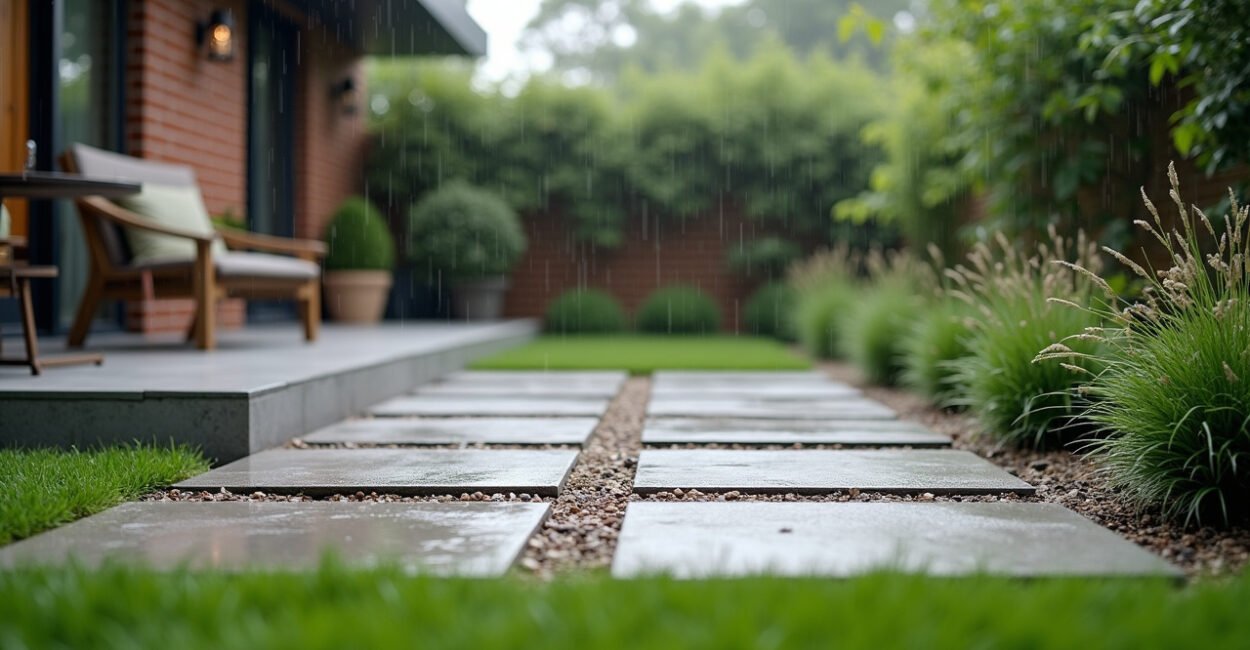
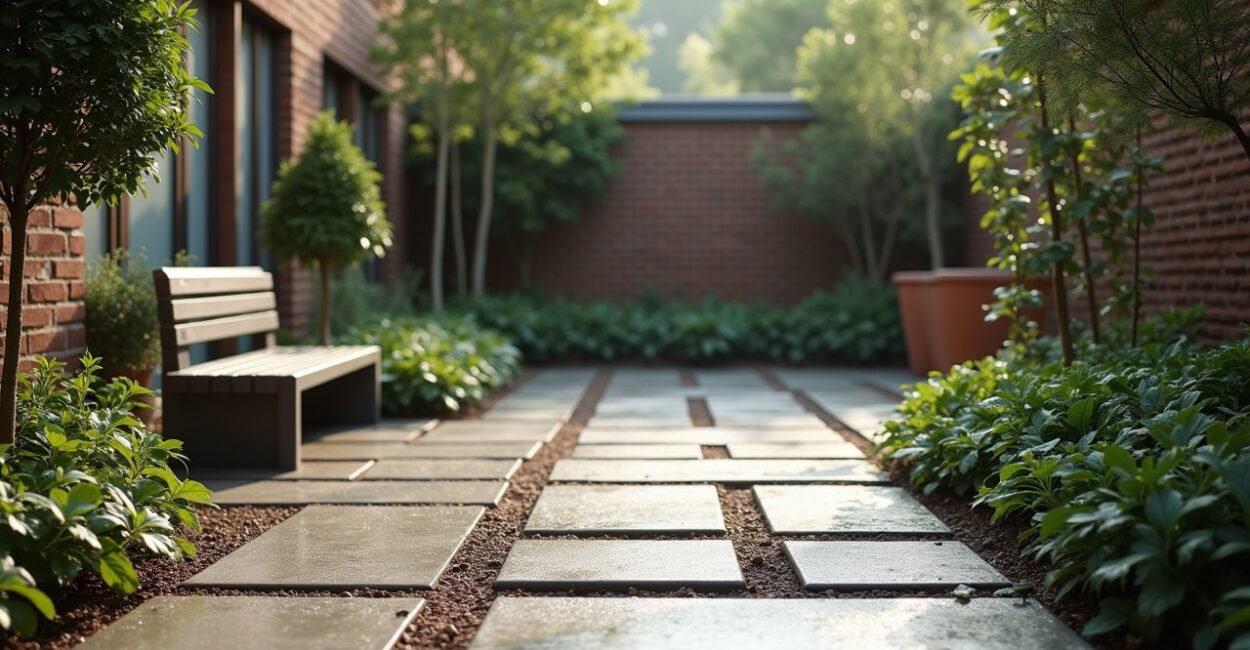
Rock, gravel, stepping stones, and edging make low-water plantings look deliberate. In dry front yards, that combination often performs better than trying to force a lawn replacement into a space that never really supported turf in the first place.
For climate and water-use context, the EPA WaterSense program offers practical guidance on reducing outdoor water waste without guessing at irrigation needs.
Maintenance That Keeps Evergreen Groundcover Healthy
Maintenance is lighter than lawn care, but it is not zero. The best-looking groundcover gets trimmed, checked for weeds, and corrected before it drifts into walkways or smothers smaller neighbors. A little attention keeps the planting dense and healthy.
What to do seasonally
- Cut back dead or leggy growth in late winter or early spring.
- Pull weeds while the canopy is still filling in.
- Watch for bare spots after heat waves or frost heave.
- Refresh mulch only where soil is still visible.
When a patch starts failing
If a section turns brown, do not assume the entire planting failed. Often the problem is compacted soil, reflected heat from pavement, root competition from nearby trees, or irrigation that wets the leaves but never reaches the roots. In mixed shade, tree roots can outcompete shallow groundcover faster than pests do.
The Missouri Botanical Garden is a strong reference for plant-specific growing habits, especially when you want a second opinion on spread rate, light requirements, and mature size.
Common Mistakes People Make with Evergreen Groundcover
Most problems are predictable. People choose a plant for its photo, not its site. They expect quick coverage in year one. Or they match the wrong species to the wrong microclimate and then blame the plant when the real issue is sun, drainage, or space.
Three mistakes that show up again and again
- Using the wrong groundcover for the light level. Sun plants in shade thin out; shade plants in hot sun burn or stall.
- Skipping irrigation during establishment. Drought-tolerant does not mean rootless and self-sufficient from day one.
- Ignoring spread habits. Some plants creep politely, while others spread aggressively and need containment.
There is also a tradeoff that gets glossed over: a plant that covers ground quickly can be harder to control later. Vinca minor, for example, solves bare-soil problems fast, but it can outgrow its welcome in some regions. That is where local extension advice beats generic garden advice.
How to Choose the Right Plant for Your Site
The smartest choice comes from matching plant behavior to site conditions, not from chasing the lowest-water label alone. Start with four questions: How much sun does the area actually get? How fast does the soil drain? How much foot traffic will the planting take? How much maintenance are you willing to do each season?
A quick decision framework
| Site Condition | Best Fit | Why It Works |
|---|---|---|
| Full sun, dry slope | Juniper, sedum, creeping thyme | Handles heat, sheds water, and holds soil |
| Partial shade, average soil | Pachysandra, sweet woodruff | Fills in under trees without demanding heavy irrigation |
| Rock garden or border edge | Creeping thyme, ice plant | Prefers drainage and looks intentional in tight spaces |
| Problem area with erosion | Low juniper | Root structure helps stabilize soil on inclines |
Na prática, the right plant is the one that matches the site you actually have, not the site you wish you had. That is why a dry, windy front strip and a shaded foundation bed should never be planted the same way.
Próximos passos
If you want evergreen groundcover to do real work, treat it like a site-specific system, not a decorative afterthought. Pick one plant for the main conditions, install it densely, water it well in the first season, and let the design do the heavy lifting after that.
The best next move is to walk your yard at two times: midday sun and late afternoon. Mark the places that bake, pool, or stay shaded, then choose plants for those exact conditions instead of shopping by color alone. That one habit prevents most expensive planting mistakes.
FAQ
What is the best evergreen groundcover for full sun and low water?
Creeping thyme, sedum, and low-growing juniper are among the most dependable choices for hot, sunny, low-water areas. The best option depends on soil drainage and whether the space is flat or sloped. For poor drainage, choose differently; sun tolerance alone is not enough.
Does evergreen groundcover need watering after it is established?
Usually yes, but much less often than turf or bedding plants. Most drought-tolerant groundcovers still need deep watering during long dry spells, especially in extreme heat. The first year matters most because roots are still shallow.
Can evergreen groundcover replace grass?
In some areas, yes, but not everywhere. It works best in low-traffic zones, slopes, and difficult-to-mow spaces. If the area gets heavy foot traffic, a groundcover that tolerates walking or a mixed hardscape design will perform better.
How fast does evergreen groundcover spread?
Spread rate varies a lot by species. Creeping thyme and vinca fill in faster than many junipers, while slow growers may take several seasons to close gaps. Plant spacing and soil quality also affect how quickly coverage develops.
What is the biggest mistake with drought-tolerant groundcover?
The most common mistake is assuming the plant can handle drought immediately after planting. Establishment watering is not optional. Another frequent issue is choosing a plant that fits the climate on paper but fails in the actual sun, shade, or soil conditions of the site.