Skip to content

📅 Updated on June 12, 2026
A small studio does not need more things; it needs better decisions. The most effective decor ideas for a compact apartment are the ones that make the room feel larger, calmer, and more intentional without adding visual clutter.
In a 350-square-foot studio, scale matters more than shopping. One correctly sized rug, one mirror with placement that bounces light, and one lamp with a warm bulb can change how the entire room reads. This article breaks down the choices that actually work, why they work, and where people usually get them wrong.
In a Nutshell
- The fastest way to improve a studio is to reduce visual noise, not to fill empty corners.
- Large-format pieces with clean lines usually make a small room feel more expensive than a collection of tiny accents.
- Mirrors, layered lighting, and a tight color palette do more for spaciousness than decorative overload.
- Smart storage that looks intentional is part of the decor, not separate from it.
- The best rooms repeat shape, color, and finish so the eye moves smoothly instead of stopping everywhere.
Smart Decor Ideas For A Studio Apartment That Make The Space Feel Larger
Good studio apartment decor is the practice of shaping how a room is perceived through scale, placement, light, and repetition. In plain English: you are not decorating a tiny room so much as editing what the eye notices first.
That distinction matters because cramped spaces usually fail from too many competing visual cues, not from square footage alone. If the layout feels crowded, the fix is often one large anchor piece, one reflective surface, and a restrained palette that lets the room breathe.
The difference between a cramped studio and a polished one is rarely the amount of decor; it is the consistency of line, color, and scale.
Start With One Anchor Piece
Choose one item that sets the tone: a sofa, bed frame, rug, or dining table. In small rooms, an anchor piece gives the eye a reference point, which makes the rest of the space feel organized instead of improvised. A low-profile sofa with visible legs, for example, creates more openness than a bulky piece that sits heavy on the floor.
Use A Tight Color Palette
Three to five coordinated colors are enough for most studios. That does not mean the room has to look flat; it means the variations should come from texture, not random color choices. Warm white, soft beige, muted gray, natural wood, and one accent tone can carry an entire room without making it feel busy.
Repeat Shapes And Finishes
Matching one metal finish across a lamp, curtain rod, and picture frame creates visual order. The same idea applies to shape: if your mirror is round, a round side table or curved chair can make the room feel intentional. Repetition is one of the most underrated decor ideas because it quietly calms the space.
Why Scale Matters More Than Buying More Accessories
Small rooms punish mismatch. A tiny rug under a full-size sofa makes the furniture look stranded, while oversized accessories can dominate the room and make it feel even tighter. The right proportion makes the space read as designed, not improvised.
When people decorate a studio, they often buy many small objects because they seem safer. In practice, that usually creates a scattered look. One larger artwork, one substantial planter, or one statement lamp tends to work better than five small decorative pieces competing for attention.
Think In Visual Weight
Visual weight is how heavy an object feels to the eye, not how much it literally weighs. A glass coffee table feels lighter than a dark wood trunk, and a slender floor lamp feels lighter than a chunky arc lamp. Use that to balance the room so one corner does not feel overloaded.
A Mini Example From A Real Studio Setup
Vi cases where someone had a bed, a desk, and a dining chair all in the same open room, but the space still felt chaotic. The fix was not adding decor. It was replacing a too-small rug with a larger one, hanging one oversized mirror near the window, and removing three decorative objects that were creating clutter on the shelf.
Lighting That Makes Small Rooms Feel Intentional
Layered lighting changes a studio faster than almost any other design choice. A single overhead light tends to flatten the room, while a combination of ambient, task, and accent lighting creates depth and makes the apartment feel more finished.
The U.S. Department of Energy notes that lighting choice affects both comfort and energy use, which is why lamp placement and bulb temperature matter in compact living spaces: Lighting Choices to Save You Money.
Use Three Light Levels
- Ambient light for overall brightness, usually from a ceiling fixture or large lamp.
- Task light for reading, working, or cooking.
- Accent light to highlight art, shelves, or a corner you want to warm up.
Choose Bulbs With A Warm, Soft Tone
Warm white bulbs usually feel better in studios than harsh cool lighting because they soften edges and make the room more comfortable after dark. Cool white can work in a workspace, but used everywhere it often makes a small apartment feel more clinical than cozy.
In a studio apartment, lighting is not decoration on top of the room; it is part of the room’s structure.
Mirrors, Curtains, And Other Space-Shaping Details
These are the details that do quiet, practical work. Mirrors expand sight lines, curtains change the perceived height of the room, and a few well-chosen textiles can make hard edges feel less abrupt.
The key is placement. A mirror across from a window can pull daylight deeper into the apartment, while curtains hung close to the ceiling make the walls appear taller. The U.S. Department of Housing and Urban Development regularly addresses housing conditions and compact living realities, and the same basic principle applies here: in small homes, every visual choice has outsized impact.
Hang Curtains High
Mount curtain rods several inches above the window frame, not directly on it. That small shift creates a longer vertical line, which makes the ceiling feel higher. If you can, let the panels skim the floor instead of stopping awkwardly above it.
Place Mirrors With A Purpose
Mirrors work best when they reflect something worth seeing: daylight, a clean wall, a plant, or an art piece. If a mirror reflects clutter, it doubles the problem. That is one of those cases where the standard rule fails; mirrors are helpful, but only when the reflected view is controlled.
Storage That Doubles As Decor
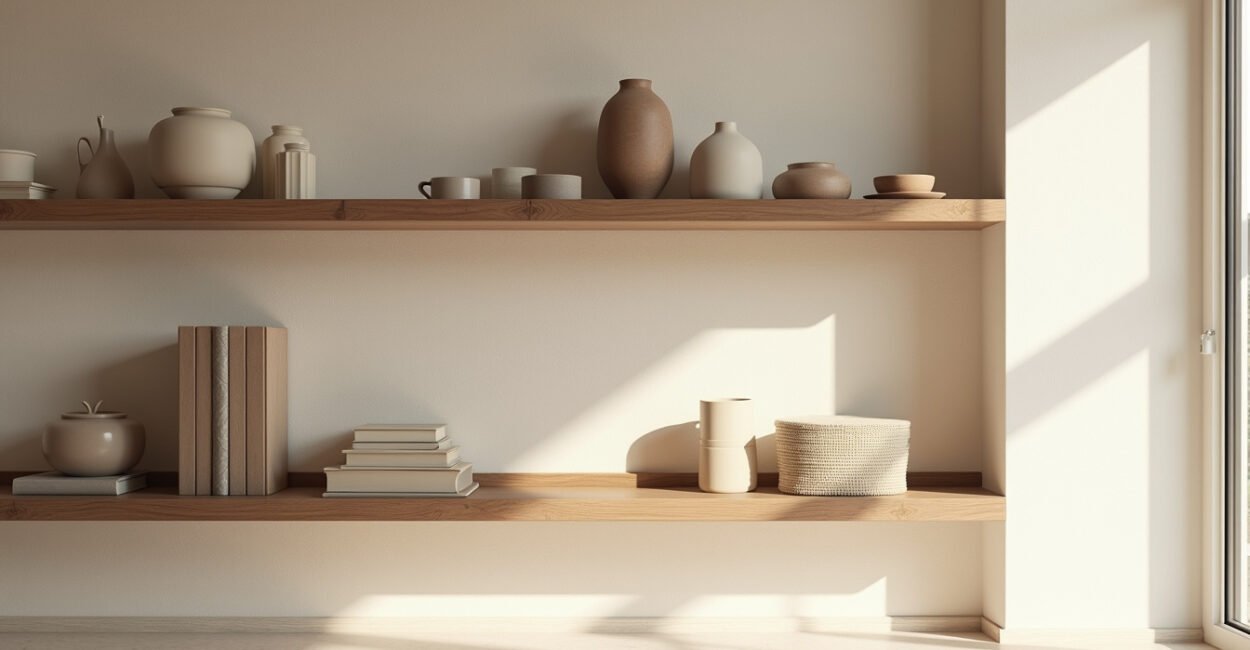
In a studio, storage is part of the design language. Open shelves, under-bed bins, woven baskets, and ottomans with hidden storage can reduce clutter while still looking deliberate. The trick is to make utility feel edited rather than purely practical.
Who works with small interiors knows that visible organization is often better than closed storage everywhere. A few coordinated baskets on a shelf can look calmer than a random stack of boxes, especially when the containers share material, color, or texture.
Choose Storage You Would Not Hide
- Woven baskets for blankets or cables.
- Bench seating with hidden storage for seasonal items.
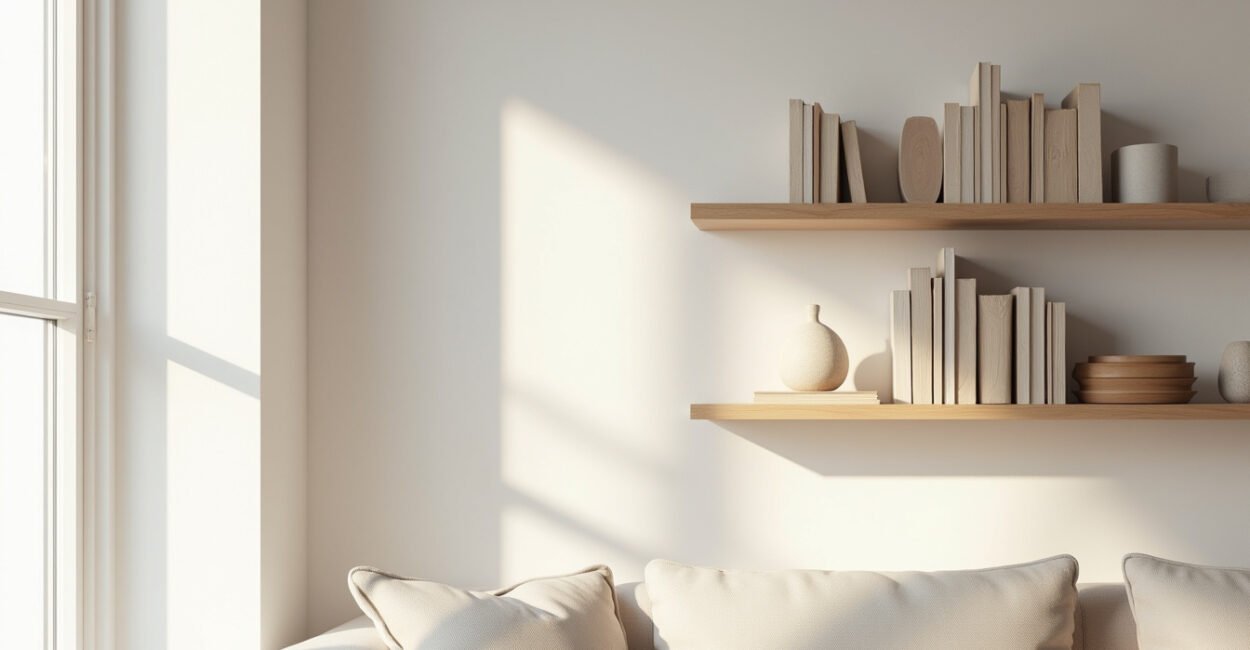
- Wall-mounted shelves that hold books and a few objects.
- Nightstands with drawers instead of exposed clutter.
Avoid The “Temporary Pile” Problem
If a storage solution is inconvenient, the room will drift back into clutter. That happens fast in studios because there is no separate room to absorb the mess. Good storage has to be easy enough that you actually use it every day.
Texture, Art, And The Details That Add Warmth
Once the layout is under control, texture gives the room personality. Linen, boucle, wood grain, matte ceramics, and woven textiles add depth without adding noise. This is where a studio stops feeling bare and starts feeling lived in.
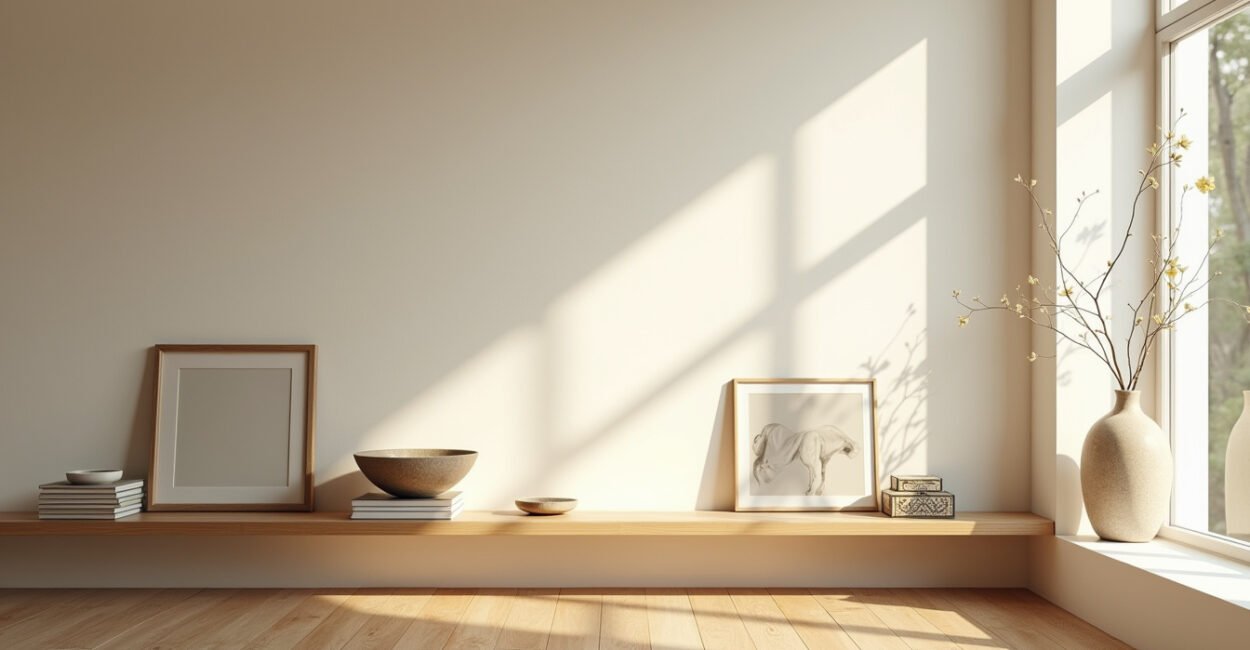
Art matters too, but one piece with presence usually beats several small prints scattered around. Larger art creates a focal point and can anchor a wall the way furniture anchors the floor.
Mix Hard And Soft Surfaces
A room filled only with smooth surfaces can feel sterile. Add something tactile: a throw blanket, a textured pillow, a natural-fiber rug, or a ceramic lamp base. Texture makes a limited color palette feel richer.
Use Plants Strategically
One tall plant can soften a corner better than a cluster of small ones. Plants are useful decor ideas because they add a living element without requiring much visual explanation. A snake plant, pothos, or fiddle-leaf fig can each work, depending on the light in the room.
Common Mistakes That Make A Studio Feel Smaller
Most studio mistakes are not dramatic. They are accumulations: too many tiny objects, oversized furniture with no legroom, mismatched finishes, and decor that looks chosen in isolation rather than as part of a single plan.
There is also a limit to minimalism. A room can become too sparse and start feeling cold, especially if the lighting is flat and the textiles are thin. The goal is balance, not emptiness.
| What Usually Goes Wrong | Why It Feels Off | Better Move |
|---|---|---|
| Too many small accessories | The eye has nowhere to rest | Use fewer, larger pieces |
| Furniture that is too bulky | It blocks movement and light | Choose slimmer profiles with legs |
| Random color choices | The room feels disconnected | Stick to a tight palette |
| Flat overhead lighting only | Everything looks harsh and compressed | Add layered lamps and softer bulbs |
For safety and comfort, it is worth checking home layout choices against practical guidance as well. The National Institute on Aging explains how clutter and poor room setup can increase household risks, which is a useful reminder that beautiful spaces also need clear paths and stable placement.
How To Build A Studio Look That Feels Finished
The strongest studio spaces usually follow a simple sequence: define the largest visual anchor, control the palette, layer light, and then add texture in a restrained way. That order matters because it keeps decor from becoming random shopping.
If you want a room that feels calm and expensive without a big budget, start with the room’s lines before you buy accessories. Then add only the items that improve proportion, brightness, or warmth. That is the practical version of good decorating: a few smart moves, repeated with discipline.
Action step: audit your studio room by room, remove one source of visual clutter, and upgrade one high-impact element first — usually the rug, lighting, or mirror. That one pass often does more than a full weekend of decoration.
FAQ
What decor works best in a small studio apartment?
The best choices are pieces that improve scale, light, and organization. A larger rug, a mirror that reflects daylight, and layered lighting usually have more impact than lots of small accessories. Keep the palette tight so the space reads as one room, not many competing zones.
How can I make a studio apartment look more expensive?
Focus on proportion, finish, and restraint. One strong anchor piece, coordinated metals, and a few textured materials will usually look more polished than a crowded room full of cheap decor. Clean lines and consistency do most of the heavy lifting.
Should I use dark colors in a studio?
Yes, but selectively. Dark colors can add depth on one wall, in a rug, or through accents, but using them everywhere can make a small room feel tighter. Balance them with lighter surfaces and enough lighting so the room does not close in visually.
How many decorative items should a studio have?
There is no fixed number, but fewer, better-chosen items usually work best. If an object does not improve function, comfort, or visual balance, it probably does not need to stay. In a studio, editing is part of decorating.
What is the biggest mistake people make when decorating a studio?
The biggest mistake is buying pieces before deciding how the room should feel. Without a clear plan, the apartment fills up with disconnected items that fight each other. Start with layout, then choose decor that supports that layout.
Do mirrors really help in studio apartments?
Yes, when they are placed with intent. A mirror that reflects light or a clean focal point can make the room feel deeper and brighter. A mirror that reflects clutter, however, can make the space feel busier instead of larger.