Skip to content

A patio can look finished on day one and still fail in the first heavy rain if the edges trap water, let pavers drift, or let gravel spill into the lawn. That is why permeable patio edging ideas matter: the right border keeps the layout crisp while still allowing water to move through the surface and away from trouble spots.
In practical terms, permeable edging is any border system that defines a patio without sealing it off from drainage. That can mean steel edging, concrete restraints with open joints, stone set on a permeable base, or even timber used in a way that does not block runoff. The goal is simple: hold the material in place, separate zones cleanly, and keep maintenance predictable in a small outdoor area.
Quick Takeaways
- Permeable edging works best when it supports drainage first and looks decorative second.
- Rigid borders fail most often when they are installed too shallow or on an unstable base.
- Materials like steel, natural stone, gravel stops, and modular paver restraints each solve a different problem.
- The best edging choice depends on whether your patio surface is gravel, permeable pavers, decomposed granite, or a mixed layout.
- Small yards benefit most from edging that visually narrows the space without creating a hard drainage barrier.
Permeable Patio Edging Ideas That Keep Drainage and Design Working Together
The technical definition is straightforward: permeable patio edging is a border that contains the patio surface while preserving water movement through or around the assembly. In plain English, it is the edge detail that keeps your patio neat without turning it into a puddle trap. That matters most with permeable pavers, gravel patios, decomposed granite, and mixed-material zones where runoff has to go somewhere.
What people often miss is that edging is doing two jobs at once. It is a structural restraint and a visual frame. If either job fails, the patio starts to look messy fast. I have seen nice patios lose their shape because the border was chosen for appearance alone, not load handling or drainage behavior. That mistake shows up after the first freeze-thaw cycle or the first season of wheelbarrow traffic.
The best patio edge is not the one that looks strongest on day one; it is the one that keeps the surface stable after repeated wet-dry cycles and foot traffic.
What Permeability Means in a Patio Border
Permeability in edging does not always mean the edging itself passes water through it. In most patio builds, it means the edge detail does not create an impermeable dam. The patio system still relies on the base layer, joint material, and slope for drainage. If the border is too deep, too tight, or set against compacted soil with no relief, water gets trapped where you least want it.
Where the Rule Fails
A fully sealed edge can still work in some hardscape designs, but it becomes risky when the patio sits beside clay soil, a foundation, or a low spot in the yard. In those cases, the border should help guide water away, not hold it in place. That is where a gravel trench, open joint detail, or raised restraint becomes more useful than a heavy curb.
Steel, Aluminum, and Hidden Restraints for Clean Lines
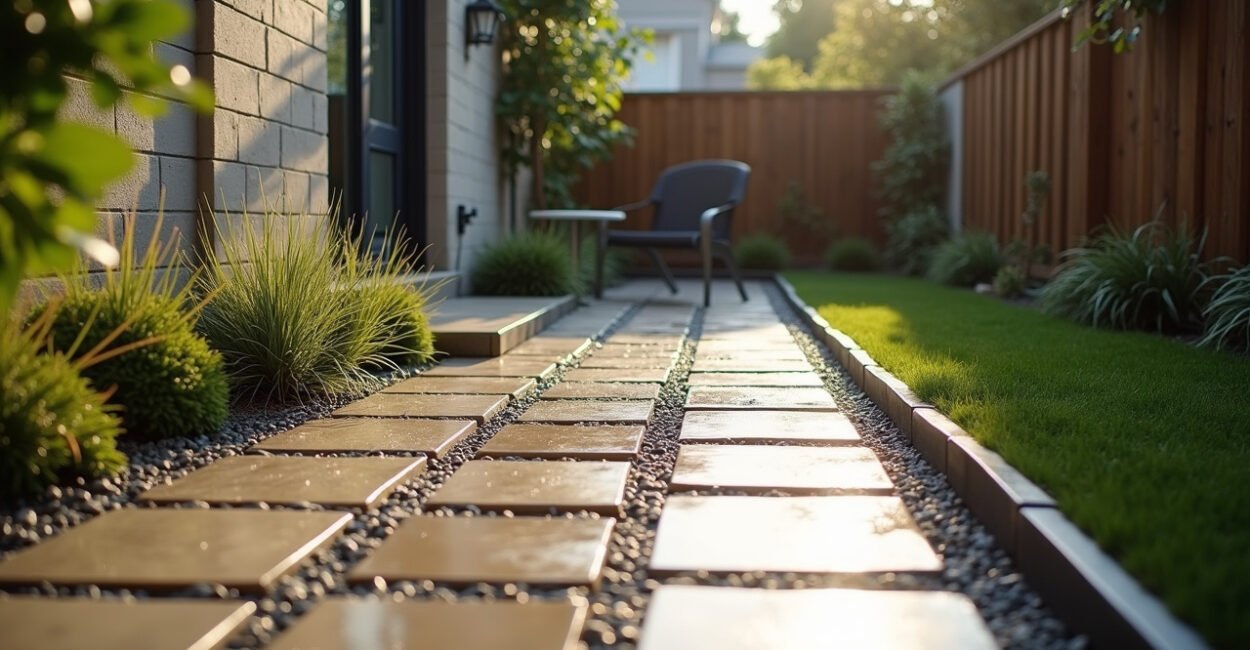
For small patios, steel edging is often the smartest choice. It creates a thin visual line, takes up very little space, and does a good job holding gravel or permeable pavers in place. Aluminum edging is lighter and easier to handle, but steel usually feels more substantial and holds its shape better over time, especially along curves.
Hidden restraints are another solid option when you want the border to disappear. These are installed below the surface and keep pavers from migrating without shouting for attention. They work best in modern layouts where the patio edge should not compete with the planting beds or the architecture.
Best Use Cases
- Steel edging: best for sharp, modern lines and gravel containment.
- Aluminum edging: useful for lighter-duty projects and easier bends.
- Hidden restraints: ideal when you want the patio edge to feel nearly invisible.
According to the U.S. EPA’s Soak Up the Rain guidance, keeping rainwater moving into soil or permeable surfaces helps reduce runoff problems in small residential spaces. That is one reason thin restraint systems are often better than bulky concrete borders when drainage is the priority.

Stone and Brick Borders That Look Permanent Without Blocking Water
Natural stone and brick can give a permeable patio real weight and character. The key is how they are installed. If you set them on a compacted, permeable base with open joints or gravel-filled seams, they can support drainage while still defining the space. If you mortar everything tight and continuous, you are no longer working with a permeable edge in any meaningful sense.
This is where taste and performance need to meet in the middle. A dry-laid stone edge looks relaxed and fits gardens beautifully. A tighter brick soldier course reads more formal and pairs well with rectilinear patios. Either way, the border should sit high enough to hold material in place but not so high that it becomes a trip edge.
Stone and brick become drainage-friendly only when the base and joints are designed to drain; the material alone does not make the edge permeable.
Dry-Laid Vs. Mortared Edges
Dry-laid borders are easier to repair and usually better for permeable systems because water can move through the joints. Mortared borders are stronger in some structural settings, but they can interrupt drainage unless the whole assembly is engineered with relief points. That is why many residential patios use dry-laid stone with gravel backfill instead of a rigid mortared cap.
A Small Yard Example
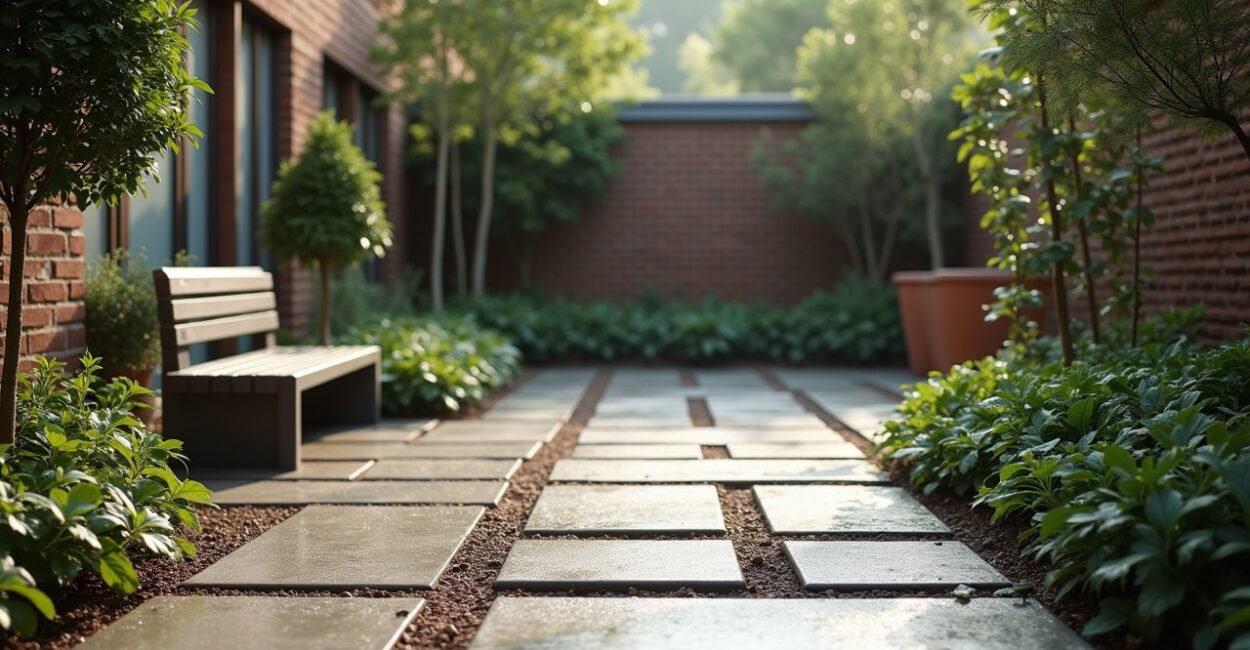
A compact courtyard with a permeable paver patio can feel unfinished if the edge dissolves into lawn. One homeowner I saw solved that by using a thin limestone soldier course on a gravel base, then tucking low sedges against the outside edge. The patio stayed crisp, the water still drained, and the planting softened the hard line without swallowing the space.
Gravel, Decomposed Granite, and Other Flexible Edge Materials
Flexible materials are underrated because they behave more honestly with the ground. Gravel patios and decomposed granite surfaces shift a little with weather, use, and seasonal movement. A border that can tolerate that movement without cracking or popping apart tends to age better than a rigid one trying to force a perfect line.
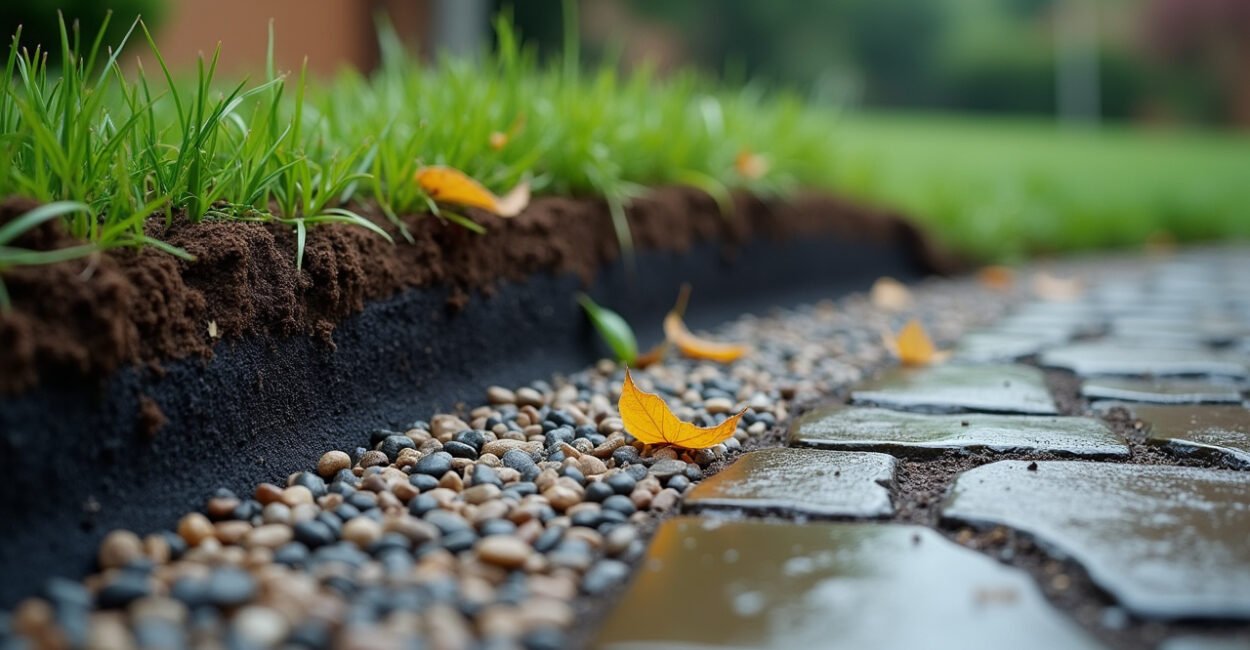
For these surfaces, edging often works as a containment system more than a decorative frame. Timber, composite edging, compacted gravel trenches, and planted edges all can work if the detail is thoughtful. The failure point is almost always the same: the edge does not have enough depth, so the surface migrates outward over time.
Flexible Edging Options
- Timber edging: works well in informal gardens, but needs protection from rot and ground contact issues.
- Composite edging: resists decay and can be a good middle ground for low-maintenance yards.
- Gravel trench edges: help visually separate zones while preserving drainage.
- Planted edges: soften the border, though they need trimming discipline to stay clean.
For drainage-focused projects, the USDA Natural Resources Conservation Service is a useful reference point for soil infiltration and site conditions. Soil type matters more than most people expect, because a border that works on sandy loam may fail in dense clay.
How to Choose the Right Edge for a Small Outdoor Zone
Choosing among permeable patio edging ideas comes down to three questions: how much water the area handles, how much visual structure you want, and how much maintenance you are willing to do. A small patio near a kitchen door usually benefits from a crisp restraint. A garden-side seating nook may look better with stone or planted edging. A gravel lounge area almost always needs a stronger containment edge than people first assume.
| Patio Surface | Best Edging Type | Main Advantage | Main Tradeoff |
|---|---|---|---|
| Permeable pavers | Steel or hidden restraint | Sharp lines, strong containment | Less natural-looking |
| Gravel | Steel, stone, or gravel trench | Great material control | Requires periodic top-up |
| Decomposed granite | Timber, steel, or composite | Flexes with subtle movement | Can erode if drainage is poor |
| Mixed planting + patio | Stone or planted border | Soft transition between zones | Needs regular trimming |
If you want the patio to feel larger, use the thinnest border that still contains the material. If you want it to feel more room-like, use a stronger edge or a color contrast that clearly defines the perimeter. The mistake is choosing a border that is too decorative for the job and then watching it fail under everyday use.
Installation Details That Make or Break the Border
Most edging failures are installation failures, not material failures. The base has to be compacted, the edge has to be anchored below the movement zone, and the patio surface has to have somewhere to shed water. A border that is set on loose soil or shallowly pinned will shift even if it looks perfect during the first week.
Whoever installs the edge should think about traffic, freeze-thaw conditions, and maintenance access. If a mower, snow shovel, or cart will cross the area, the edge needs enough strength to survive impact. If the patio is against a slope, the uphill side may need more restraint than the downhill side.
Installation Checklist
- Compact the base before setting the edging.
- Match edge depth to expected traffic and material movement.
- Preserve drainage paths instead of sealing every gap.
- Use backfill that supports the edge instead of pulling it outward.
- Check transitions at doors, drains, and planting beds carefully.
The University of Minnesota Extension has practical guidance on soil, drainage, and landscape design at extension.umn.edu. That kind of local site-condition advice matters because a border that works in one climate may need deeper anchoring somewhere else.
Design Moves That Make a Compact Yard Feel Intentional
Good edging does more than hold material in place. It helps divide a small yard into readable zones, which makes the whole property feel calmer and more deliberate. A slim border can separate dining from lounging. A curved edge can soften a narrow patio. A repeated material, like the same stone used in a low seat wall and the patio border, can unify a cramped backyard without cluttering it.
There is a limit, though. Too many border changes can make a small space feel chopped up. That is the point where restraint matters more than creativity. In a compact yard, one strong edge detail repeated well is usually better than three different ones fighting for attention.
In a small yard, edging is not decoration first; it is spatial editing.
What to Avoid If You Want the Patio to Last
Some edge choices look fine in photos and age badly in real use. Tall rigid curbs can interrupt drainage and create awkward cleanup lines. Untreated timber can rot near damp soil. Loose decorative stones without containment migrate into beds and walkways. And any border that sits too high becomes a toe-stubber, especially near seating areas and doors.
One more caution: not every “permeable” solution is truly permeable. A border with gaps is not automatically a drainage system. If the base below is compacted clay and water has nowhere to move, the edge is still part of the problem. That is why site conditions matter as much as the finish material.
Practical Next Steps for a Cleaner, Draining Patio Edge
The smartest way to use permeable patio edging ideas is to start with the site, not the style. Decide how water moves, how the patio will be used, and how much border you actually need. Then choose the thinnest, most stable edge that solves the containment problem without choking drainage. That approach saves maintenance later and usually looks better too.
Before you build, mark the patio perimeter, test the slope, and compare two or three edge types against the actual surface you are using. Then pick the detail that balances drainage, durability, and visual clarity. If the edge choice supports the base system instead of fighting it, the patio will stay neater for longer with less correction work.
FAQ
What is the Best Edging for a Permeable Patio?
The best edging is usually steel, hidden restraint, or dry-laid stone, depending on the patio surface and the amount of traffic. Steel works especially well for gravel and permeable pavers because it is thin, strong, and easy to keep aligned. Dry-laid stone is a better fit when you want a more natural look. The right answer depends on drainage, soil movement, and whether the edge needs to stay visually quiet or become part of the design.
Can Brick Edging Work with Permeable Pavers?
Yes, brick edging can work if it is installed with a permeable base and joints that do not seal the patio into a rigid shell. A mortared edge can still be used in some builds, but it needs careful drainage planning. For most residential patios, a dry-laid or restrained brick border is easier to maintain. The weak point is usually the base, not the brick itself, so installation details matter more than the material label.
How Deep Should Patio Edging Be Installed?
Depth depends on the edging type, but the general rule is that the restraint should extend below the active movement layer of the patio surface. For gravel or decomposed granite, shallow edging often fails because the material keeps pushing outward. For permeable pavers, the edge should be anchored firmly enough to resist lateral creep. If the border is only decorative and not structural, it will not last through seasonal movement or repeated foot traffic.
Do Planted Borders Count as Permeable Edging?
Planted borders can support a permeable patio, but they are not a replacement for structural containment. They work best as a soft outer layer after the actual edge restraint is already doing its job. Low grasses, sedges, or compact shrubs can hide a hard edge and improve drainage by keeping soil open. The downside is maintenance: without trimming, the border can quickly blur into the patio and make the layout look neglected.
What is the Biggest Mistake People Make with Patio Edging?
The most common mistake is choosing the edge based on appearance alone. People see a clean line in a catalog or photo and forget to ask how that edge handles water, soil movement, and maintenance. Another frequent problem is underbuilding the base, which causes the border to shift even when the material is strong. A good edge should support the patio system, not just frame it. If it blocks drainage or lacks depth, it will fail sooner than expected.