Skip to content

Sunlight on the water looks beautiful at 8 a.m., but the same glare can turn a living room into a fishbowl by noon. The smartest lake house window treatment ideas do one thing well: they protect the view while giving you control over brightness, heat, and privacy. That balance matters more near a lake than it does in a typical home, because reflections off water amplify glare and neighboring shorelines often sit closer than you expect.
If you choose the wrong treatment, you end up with a room that feels either too exposed or too dark. If you choose the right one, the windows disappear into the experience: the lake stays the star, and the room still works at breakfast, after sunset, and on weekends when every seat is occupied. Below, I’m breaking down the best options room by room, what each one does well, and where each one falls short in real life.
What You Need to Know
- In a lake house, the best window treatment is usually the one that softens glare without blocking the sightline to the water.
- Sheer shades, woven wood shades, top-down/bottom-up cellular shades, and layered drapery solve different problems, not the same one.
- Privacy is usually a nighttime issue, while UV control and glare are daytime issues; one treatment rarely solves both perfectly.
- Room function matters more than style trends: bedrooms need privacy first, while great rooms usually need view preservation first.
- Materials with UV-resistant finishes and moisture tolerance perform better near windows that get strong sun, condensation, or seasonal humidity.
Lake House Window Treatment Ideas That Keep Views, Light, and Privacy in Balance
Technically, a window treatment is any covering that modifies daylight, privacy, heat gain, and interior aesthetics. In plain English, it’s the layer that decides whether your lake view feels framed, filtered, hidden, or washed out. The best choice depends on three variables: direction of the window, how close neighbors are, and whether the room needs softness, blackout coverage, or just glare control.
That’s why the “best” option is rarely one product for the whole house. A great room facing open water often wants something nearly invisible during the day, while a bedroom facing another dock may need more privacy after dark. National data on residential energy use from the U.S. Department of Energy also backs this up: window coverings affect both comfort and cooling load, so the visual choice has practical consequences.
Start with the Room, Not the Style
In lake houses, I usually sort windows by job before I think about color or texture. A south- or west-facing window needs stronger solar control than a north-facing one. A guest room with afternoon naps needs a different solution than a screened porch or a breakfast nook. That order saves you from buying a pretty treatment that works beautifully for photos and badly for actual daily life.
Match Openness to the View
The farther the window sits from direct neighbors, the more freedom you have to keep treatments minimal. If the view is the reason you bought the house, start by asking how little fabric you can live with, not how much. Sometimes a sheer layer is enough. Sometimes a dual-layer system earns its keep. The goal is to preserve the feeling that the lake is part of the room.
In a lake house, the best window treatment is the one that disappears during the day and shows up only when privacy, glare, or sleep demands it.
Sheer Shades and Solar Shades for Wide Water Views
Sheer shades are a strong first choice when you want filtered daylight without making the window feel heavy. They soften brightness, reduce harsh contrast on screens and flooring, and still let you read the horizon line. Solar shades go a step further for glare control, and they’re often the better pick for a wall of glass that faces open water or direct afternoon sun.
Why Sheer Shades Work So Well
Sheer shades use fabric vanes or woven panels to diffuse light while keeping a soft visual connection to the outdoors. They’re ideal in great rooms, dining areas, and sitting spaces where you want the lake visible all day. Their weakness is nighttime privacy: once the interior lights are on, silhouettes can show through. That’s the tradeoff, and it’s not a small one.
When Solar Shades Beat Sheers
Solar shades make more sense when glare is the real problem. A tighter weave, such as 3%, 5%, or 10% openness, cuts brightness more aggressively while still allowing a view. The lower the openness, the more privacy and UV protection you get, but the less detail you see outside. For a lake-facing room that doubles as a TV space, I’d usually favor solar shades over delicate sheers.
Fabric openness is not a style detail; it is a performance spec that changes how much of the lake you actually see.
For a technical reference on solar heat gain and glazing behavior, the National Renewable Energy Laboratory is a reliable source on how window systems affect indoor comfort and solar control.

Roman Shades, Woven Wood Shades, and the Case for Texture
When a lake house needs warmth, flat surfaces can feel a little cold. Roman shades and woven wood shades solve that by adding texture, which helps balance all the glass, stone, and wood that waterfront homes often use. Roman shades bring a cleaner, tailored look. Woven wood shades add a natural, resort-like feel that works especially well with cedar, oak, rattan, and linen upholstery.
Roman Shades for a Polished Look
Roman shades stack into soft folds when raised, so they give you a cleaner profile than drapery panels. In a primary bedroom or a formal sitting room, they can make the window feel dressed without overpowering the view. If you choose a light-filtering lining, you get daytime softness. If you choose a blackout lining, they become far more useful in sleeping spaces.
Woven Wood Shades for a Casual Waterfront Mood
Woven wood shades, often made from bamboo, grasses, or jute blends, create shadow and texture that feel right at home near the water. They look relaxed, but they’re not invisible; the weave provides partial privacy even when the shade is down. The downside is edge light and uneven filtering, so they’re not the best option if you need full darkness. They also vary a lot in quality, which is why material sourcing matters.
- Choose Roman shades when you want a tailored finish and better lining options.
- Choose woven wood shades when the room needs warmth, texture, and a softer natural look.
- Choose light-filtering linings for living areas and blackout linings for sleeping areas.
Layered Drapery When Privacy Matters More After Dark
Drapery earns its place in a lake house when you need flexibility. Sheer panels during the day keep the room airy, and lined side panels or blackout curtains close at night for privacy. This is the most forgiving option if you entertain often, host guests, or have windows that face a neighboring dock or road. It also helps rooms feel finished, which matters in homes with lots of hard surfaces.
Use Drapery as a Second Layer, Not the Only Layer
I rarely recommend heavy drapes as the only treatment for a lake-facing room. They can swallow the view and make a bright space feel smaller than it is. They work best when paired with shades, especially in bedrooms and family rooms. That layered setup lets you keep the window open visually during the day and shut it down at night.
Where Drapery Makes the Most Sense
Drapery is strongest in rooms where comfort and softness matter more than an uninterrupted panorama. Think primary suites, guest rooms, and lower-level living spaces. It also helps with echo in rooms that have plank floors and high ceilings. If you want the most resort-like effect, mount the rod high and wide so the panels frame the glass rather than crowd it.
| Treatment | Best For | Main Tradeoff |
|---|---|---|
| Sheer shades | Daytime view with soft light | Limited nighttime privacy |
| Solar shades | Glare reduction and screen comfort | Less view detail at lower openness levels |
| Roman shades | Tailored style and flexible lining | Bulkier than minimal treatments |
| Layered drapery | Privacy, softness, and insulation | Can hide the architecture if overused |
Top-Down/Bottom-Up Shades for Bedrooms and Bathrooms
Top-down/bottom-up shades are one of the most practical solutions in a lake house because they solve a real conflict: you want daylight, but you don’t want to feel exposed. The formal idea is simple. The shade can lower from the top, raise from the bottom, or do both at once, which gives you privacy on the lower half of the window and light from above.
Why They Work So Well in Sleeping Areas
Bedrooms face the hardest privacy test because nighttime lighting changes everything. A top-down/bottom-up cellular shade lets morning light in while keeping sightlines from the lake path, dock, or neighboring lot under control. In bathrooms, they’re even more useful because they preserve daylight without creating a direct view from outside. That combination is hard to beat.
Cellular Shades Add an Energy Benefit
Cellular shades, also called honeycomb shades, trap air in pockets that improve insulation. That matters in four-season lake homes where windows can feel hot in July and drafty in January. The U.S. Department of Energy’s window coverings guidance explains how blinds, shades, and drapes influence heat loss and solar gain. This option is less about drama and more about comfort that shows up on the utility bill.
What Materials and Colors Hold Up Best Near Water
Lake houses deal with more humidity, more direct sun, and more seasonal swings than many vacation homes. That means material choice matters as much as style. Natural woven fibers look beautiful, but if the room gets condensation or salt air nearby, they can age faster than synthetic alternatives. Polyester blends, lined fabrics, and UV-stable finishes usually last longer and keep their shape better.
Color Choices That Don’t Fight the Landscape
Soft whites, sand, fog gray, driftwood, muted green, and pale blue usually work well because they echo the shoreline without stealing attention from it. Dark treatments can be useful when you want contrast, but they absorb more light and can make a room feel smaller. If the walls are already busy with wood grain or stone, a quiet neutral almost always wins.
What I’d Avoid in High-Sun Rooms
Unlined delicate fabrics, cheap faux wood that warps, and overly heavy blackout panels in rooms that need daytime brightness all create problems. I’ve seen beautiful treatments fail within a season because nobody accounted for UV exposure on the water side of the house. The design looked right, but the sun won the argument. That’s the hidden cost people don’t factor in early enough.
Near a lake, durability is not a bonus feature in window treatments; it is part of the design brief.
Room-by-Room Picks for a Lake House That Feels Lived In
The right treatment changes by room because the daily use changes. A breakfast nook wants morning light and a casual mood. A primary bedroom wants privacy and sleep control. A great room needs glare management without killing the view. When you think in zones instead of buying one style for the whole house, the home feels more intentional and less showroom-like.
Great Room
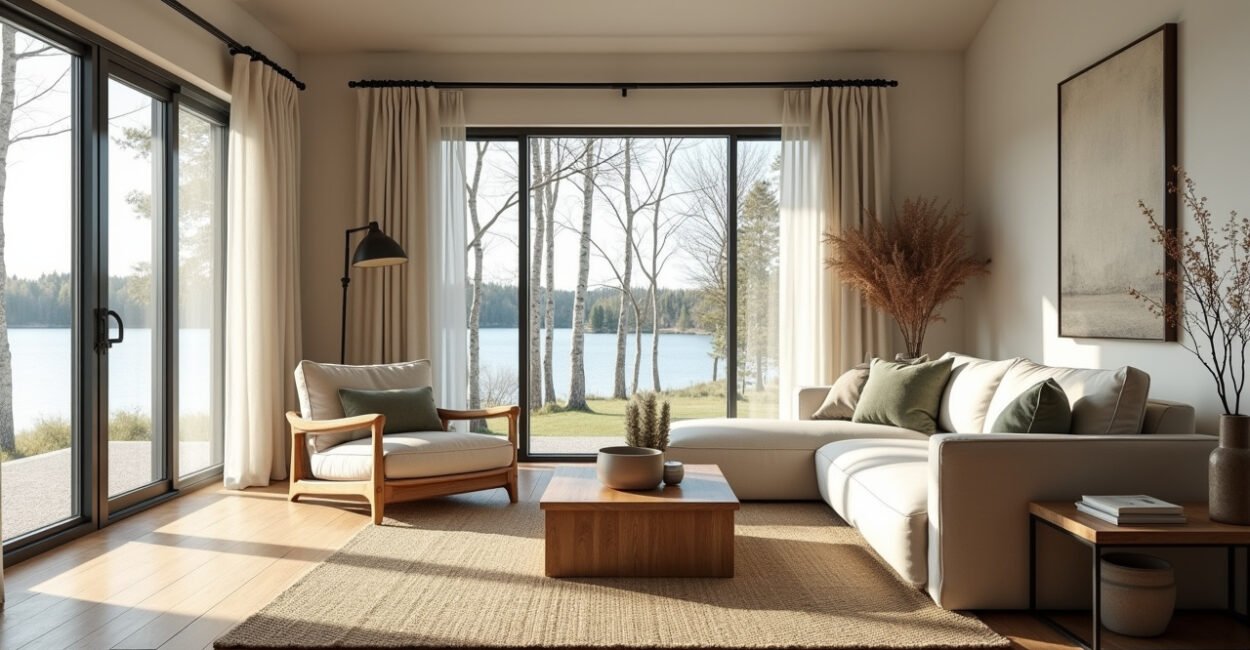
Use solar shades, sheer shades, or layered panels with a light hand. This is usually the most visible room in the house, so the treatment should frame the view rather than dominate it.
Bedrooms
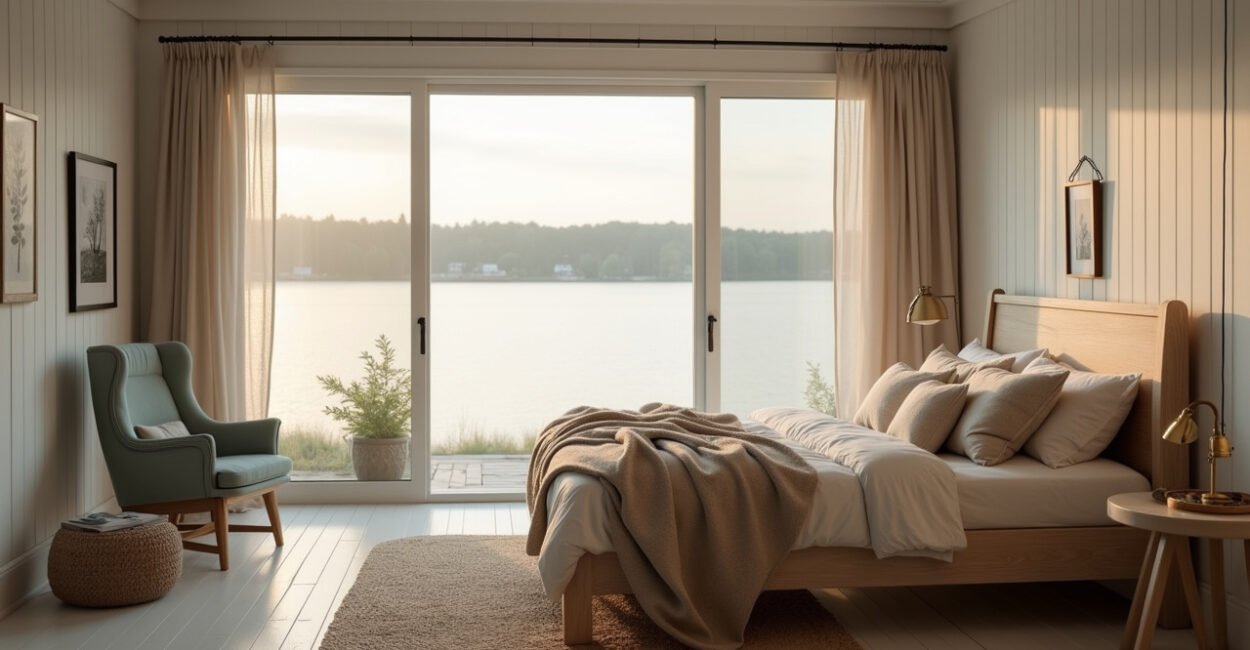
Top-down/bottom-up cellular shades or Roman shades with blackout lining give you the best mix of privacy and sleep control. If the room faces the water, add drapery only if you need extra softness or insulation.
Kitchen and Dining Areas
Choose washable, low-profile treatments that don’t collect grease or moisture. Light-filtering shades work well here because they keep the room bright without throwing harsh shadows across counters and tables.
Porches and Sunrooms
Moisture-tolerant materials, solar shades, and outdoor-rated fabrics make more sense than delicate textiles. These rooms need resilience first. Style matters, but durability protects the investment.
Here’s a real-world example: a family I know renovated a small lake cabin with huge west-facing windows. They started with heavy curtains because they loved the look in the store. By the first July weekend, the room felt cave-like by 3 p.m., and everyone kept pulling the panels aside. They replaced them with 5% solar shades in the main space and lined Romans in the bedroom. The house looked lighter, and the view finally felt usable all day.
How to Choose the Right Treatment Without Second-Guessing Yourself
The cleanest way to decide is to rank the window by priorities: view, privacy, glare, insulation, and style. If view comes first, start with sheers or solar shades. If privacy comes first, move toward lined Roman shades, cellular shades, or layered drapery. If you want both, pair two treatments instead of trying to force one product to do everything.
One caution: there is no universal winner. A treatment that works in a glassy family room can fail in a low-light bedroom, and a natural woven look that feels perfect in summer may not be the smartest choice in a damp shoulder season. The strongest result usually comes from mixing products across the house instead of treating every window the same way.
For a final check before ordering, compare samples at morning, midday, and evening. Look at them with lights on and lights off. That simple test catches most mistakes before they become expensive ones. If the sample blocks too much view, it will do the same in the installed room. If it feels too transparent at dusk, privacy will be an issue later.
Próximos Passos
Measure each room by function first, then test two or three fabric samples on-site for at least one full day. Prioritize the windows that face direct water, direct neighbors, or the strongest sun, because those are the ones that reveal flaws fastest. Then choose the least visible solution that still solves the room’s real problem. That approach usually leads to a better result than picking one beautiful treatment and forcing it everywhere.
FAQ
What is the Best Window Treatment for a Lake House Living Room?
For most lake house living rooms, solar shades or sheer shades are the strongest options because they preserve the view while controlling glare. If the room faces strong afternoon sun, choose solar shades with a low openness factor such as 3% to 5%. If privacy is less of a concern and the goal is a soft daytime look, sheer shades usually feel lighter and more decorative.
Are Curtains or Shades Better for a Lake House?
Shades are usually better when the main goal is preserving the view and managing brightness. Curtains work better when you need softness, insulation, or nighttime privacy. In many lake homes, the best answer is a layered setup: shades for daytime control and curtains for evening coverage. That gives you more flexibility than relying on one treatment alone.
How Do I Keep Privacy Without Blocking the Lake View?
Top-down/bottom-up shades are one of the best solutions because they let light enter from above while blocking sightlines from below. Solar shades and sheer shades also help during the day, though they offer less privacy at night. If the room faces neighbors or a dock, consider layering with drapery so you can close up the space after dark without losing the daytime view.
What Window Treatments Hold Up Best in Humid Lake Houses?
Moisture-tolerant materials such as polyester blends, lined fabrics, and some synthetic woven products tend to perform better than untreated natural fibers. Cellular shades and solar shades also hold up well because they resist sagging and are easy to maintain. In very damp rooms, avoid materials that warp, mildew, or stain easily. Humidity tolerance matters more than people expect.
Should All the Windows in a Lake House Match?
No, and forcing a match often makes the house less functional. A bedroom, great room, kitchen, and porch all have different privacy and light needs. Matching can work within a visible zone, but the smartest design usually mixes products while keeping a consistent color family. That gives the home a cohesive feel without making every room solve the same problem in the same way.