Skip to content

A lake house living room works best when it feels easy to live in, not staged. The right lake house living room decor should brighten the space, handle real-life use, and keep the room connected to the water, the trees, and the changing light outside. That means choosing materials, colors, and furniture that look relaxed in July but still feel comfortable in November.
The technical idea behind this style is simple: you are balancing visual lightness, durability, and natural texture. In practice, that usually means fewer heavy contrasts, more washable fabrics, and a layout that lets the room breathe. Below, you’ll find nine practical ideas that make a lakeside living room feel fresh year-round without drifting into theme-park “beach house” territory.
Quick Takeaways
- Lake house style works best when it feels airy, durable, and grounded in natural materials rather than overly themed nautical decor.
- Light-filtering window treatments, low-contrast color palettes, and layered textures make a room feel brighter without losing warmth.
- Performance fabrics, slipcovers, and easy-clean finishes matter more in a lake home than in a typical city living room.
- The best rooms mix practical seating with one or two strong focal points, such as a stone fireplace, oversized art, or a reclaimed wood coffee table.
- Seasonal flexibility matters: the room should look cool and open in summer, then feel inviting and insulated when the weather turns.
Lake House Living Room Decor That Feels Light, Livable, and Connected to the View
Formal design terms help here. A lake house living room usually succeeds when its palette, furniture scale, and surface finishes support daylight amplification and visual continuity with the outdoors. In plain English: the room should make the water, trees, and sky feel like part of the decor.
Start with the View, Not the Sofa
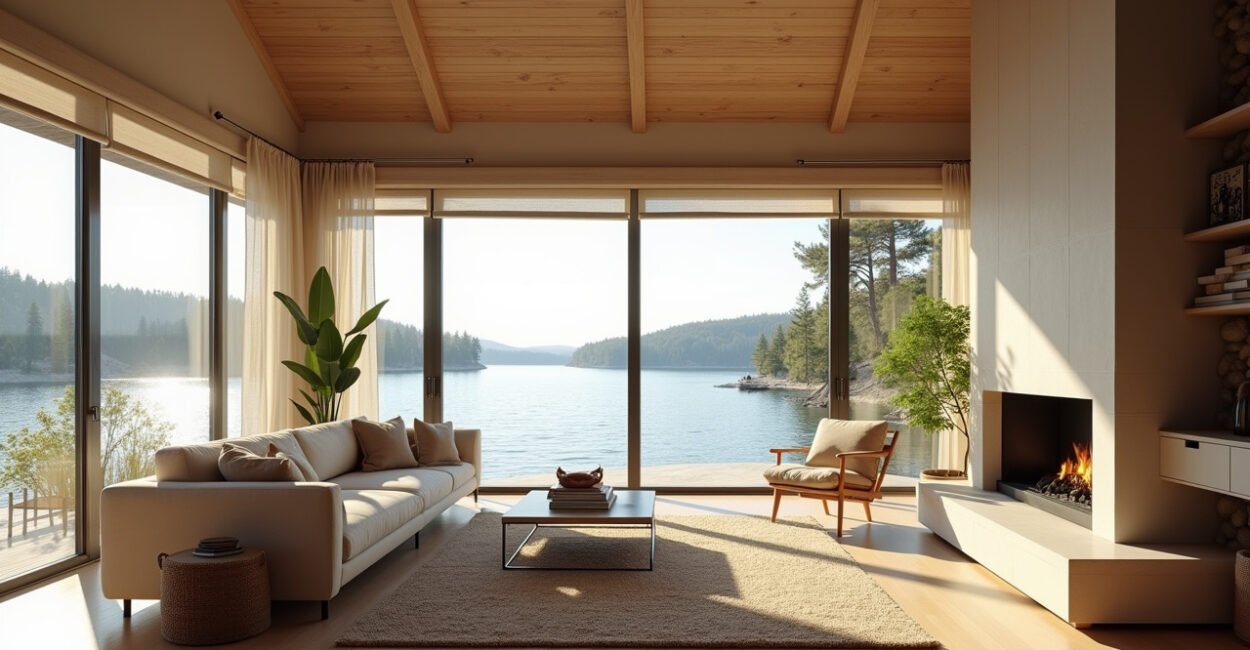
If the room has a strong lake view, the furniture plan should protect it. That means keeping tall storage off the main sightline, avoiding bulky sectionals that block windows, and placing seating so people can look outward without twisting their necks. A low-profile sofa, two lighter armchairs, and a slim coffee table usually do more for the room than one oversized statement piece.
Whoever has worked on waterfront homes knows this: the wrong layout can make a beautiful room feel closed in even when the windows are huge. That’s why the arrangement matters before the accessories do.
Let the Architecture Stay Visible
If your lake house has exposed beams, shiplap, wood ceilings, or a stone fireplace, don’t cover every surface with decor. Those elements already carry the room. Letting the original architecture breathe often makes the whole space feel more expensive and more authentic.
In a lake house, the best decor is often the least decorative thing in the room: light, space, and a clear view.
Keep the Theme Subtle
Nautical accents can work, but only in small doses. One striped pillow or a framed vintage lake map adds character; five anchors, rope knots, and ship wheels turn the room into a rental cliché. The strongest lake home interiors usually borrow from the shoreline itself rather than copying maritime motifs.
Color Palettes That Reflect Water, Wood, and Natural Light
Color has a bigger job in a lake house than in many other homes. It affects how bright the room feels at noon, how calm it feels at dusk, and how much the interior competes with the outdoors. The safest approach is a low-contrast palette with a few deeper accents for grounding.
Use Soft Neutrals as the Base
Warm white, oat, sand, fog gray, and driftwood beige all work well because they reflect light without looking stark. These shades are forgiving in changing daylight, which is important near water, where reflections can shift fast. A pure cool white can feel crisp in summer and a little sterile on gray days, so it is not always the best default.
Add Blue in a Controlled Way
Blue belongs in lake house design, but it should echo the setting instead of overpowering it. Think muted navy, slate blue, or blue-gray instead of bright coastal turquoise. Those tones pair better with natural wood, linen, and stone, and they age well across seasons.
Anchor the Room with One Dark Note
A charcoal lamp base, black picture frame, or deep brown wood table keeps the room from floating away visually. Without one anchoring element, an all-light palette can start to feel unfinished. This is where restraint matters: one or two darker details are enough.
For color guidance that aligns with how light behaves in interiors, the National Institute of Standards and Technology has useful material on measurement and lighting concepts, and the U.S. Department of Energy explains how lighting choices affect comfort and energy use.

Furniture Choices That Hold Up to Real Lake Life
The best furniture in a lake home does two things at once: it survives wet swimsuits, sandy feet, and weekend guests, and it still looks relaxed enough for everyday use. That is where performance fabric, slipcovered upholstery, and honest materials earn their keep.
Choose Durable Upholstery First
Performance linen, tightly woven cotton blends, and stain-resistant microfiber can all work, depending on how the room gets used. If the house sees kids, dogs, or frequent entertaining, easy-clean fabric matters more than a perfect showroom look. A pretty sofa that scares people away from sitting down is a design failure, not a win.
Prefer Furniture with Visual Air
Pieces raised on legs tend to look lighter in a lakeside room than blocky, floor-hugging furniture. That small detail lets the floor show through and keeps the room from feeling heavy. Glass and metal can help too, but use them sparingly so the space doesn’t lose warmth.
Mix One Rustic Piece with Cleaner Lines
A reclaimed wood coffee table, vintage sideboard, or woven bench gives the room character. Pair it with a simpler sofa or more tailored chairs so the space doesn’t become too rustic. That contrast keeps the room current.
The difference between “rustic” and “dated” is usually balance: one weathered piece looks collected, three weathered pieces look accidental.
A Practical Mini-Story
I once saw a lakeside living room that had beautiful windows but a giant, dark sectional pushed hard against the walls. The owners thought they needed more seating. In reality, the room needed better circulation and a lighter footprint. Replacing the sectional with a sofa, two swivel chairs, and a round coffee table made the view visible again and somehow created more usable seating, not less.
Textures, Rugs, and Window Treatments That Add Warmth Without Weight
Texture is what keeps a lake house from feeling flat. In rooms with lots of glass and light walls, texture provides the depth that color sometimes cannot. Think linen, nubby wool, jute, natural fiber baskets, and matte wood finishes.
Layer Materials Instead of Adding Clutter
One chunky knit throw, one woven basket, and one textured rug can do more work than a dozen decorative objects. The goal is tactile variety, not visual noise. A room with too many small accents starts fighting the view outside.
Pick Rugs That Define Zones
A rug should ground the seating area, not disappear under it. In a lake house living room, flatweave or low-pile rugs are often the smartest choice because they hold up better to traffic and are easier to maintain. If the room is large, two rugs can sometimes work better than one oversized piece, especially when the space has distinct conversation areas.
Use Window Treatments That Filter, Not Hide
Sheer curtains, relaxed linen panels, or woven shades let you soften glare without losing the lake. Heavy drapes can feel necessary in winter, but all-year lake homes usually do better with layered treatments: light panels for daytime privacy and thicker curtains only where needed. That approach keeps the room bright while still giving you control.
For textile safety and home material considerations, the U.S. Consumer Product Safety Commission is a reliable source for household product guidance and safety standards.
Seasonal Styling That Works from Summer Through Winter
A lake house lives in two different moods. In summer, the room should feel breezy and open. In colder months, it needs more warmth, more softness, and a little more visual density. Good decor handles both without a full redesign every season.
Build a Base That Stays Year-Round
Keep the major pieces steady: sofa, rug, coffee table, floor lamps, and curtains. Then rotate smaller items like throws, pillow covers, and table decor. That gives the room a stable backbone and makes seasonal changes feel intentional instead of chaotic.
Swap Accessories by Weight, Not Just Color
Summer decor usually benefits from lighter fabrics, fewer layers, and more open surfaces. Winter benefits from thicker knits, deeper tones, and a couple of denser objects such as ceramic vases or wood bowls. This is less about “summer colors” versus “winter colors” and more about the perceived mass of the room.
Keep One Cozy Element Always Present
Even in a bright, airy lakeside interior, you need something that signals comfort. A visible fireplace, a deep reading chair, or a thick throw blanket keeps the room from feeling too fragile. Without that anchor, the space can look pretty but not especially livable.
Artwork, Lighting, and Decorative Objects That Add Character
This is where many lake homes go wrong. People either under-decorate and end up with a room that feels temporary, or they overfill the space with generic cabin decor. The sweet spot is a few meaningful pieces with enough visual weight to personalize the room.
Choose Art That Feels Local or Abstract
Large abstract pieces, shoreline photography, vintage maps, and landscape paintings all fit well when they echo the environment without shouting it. Avoid tiny art grouped randomly above the sofa unless you are intentionally creating a gallery wall. One substantial piece often looks better in a lake house because the room usually already has strong visual activity through the windows.
Layer Lighting at Three Heights
Ambient light, task light, and accent light each serve a different purpose. Overhead fixtures brighten the room, table lamps create evening comfort, and floor lamps help define reading zones. In a lake house, dimmers matter because the room can shift from bright sun to deep dusk very quickly.
Use Objects with a Story
A hand-thrown bowl, vintage glassware, a carved tray, or a ceramic lamp base adds character without feeling fussy. Objects that show material variation—grain, glaze, woven fiber—fit the lake house mood better than glossy mass-produced pieces. Keep the number of objects modest so the room still feels calm.
Common Mistakes That Make a Lake House Living Room Feel Off
There are a few mistakes I see repeatedly, and they are easy to avoid once you know what to look for. These issues do not just affect style; they affect how the room functions day to day.
- Too much theme decor: anchors, paddles, and rope details everywhere make the room feel forced.
- Oversized dark furniture: heavy pieces can swallow a room and block the light.
- High-maintenance fabrics: silk-like textures and delicate upholstery often do not match lake life.
- Small accessories in large rooms: tiny decor gets lost when ceilings are high and windows are wide.
- Ignoring seasonal use: a room that works in July but feels cold in January is only half-designed.
There is one nuance worth admitting: not every lake house should look airy and pale. If your home sits in a wooded area, has low light, or uses a lot of exposed timber, a deeper palette can be the right answer. The rule is not “always light”; the rule is “match the room to its actual light and architecture.”
How to Check If the Room is Working
Stand at the entry, then sit on the sofa, then walk toward the windows. If the room feels balanced from all three positions, the decor is doing its job. If you notice blocked views, too many competing textures, or a color scheme that looks different in every corner, the plan still needs refinement.
Practical Way to Pull the Whole Room Together
The smartest approach is to treat the room as a system, not a shopping list. Start with the view and seating layout, choose a restrained palette, add durable upholstery, then layer texture and lighting. After that, bring in art and a few personal objects.
Next step: walk through your living room and remove anything that competes with the windows, the fireplace, or the main seating area. Then choose one improvement in each category—paint, upholstery, rug, lighting, and art—and make those decisions based on how the room is used on ordinary weekdays, not just when guests arrive. That is where lake house living room decor stops looking styled and starts feeling right.
FAQ
What Colors Work Best in a Lake House Living Room?
Soft neutrals usually work best because they reflect natural light and keep the room feeling open. Warm white, oat, sand, fog gray, and muted blue-gray are safe choices because they pair well with wood, stone, and outdoor views. If the room gets limited daylight, avoid overly cool whites or high-contrast color schemes that can feel harsh when the sky turns overcast. Add one darker accent for balance.
How Do I Make My Lake House Living Room Feel Cozy Without Making It Dark?
Use texture instead of heavy color. Linen curtains, a low-pile wool rug, a woven throw, and a wood coffee table add warmth while still keeping the room bright. Layer lighting too: overhead, table, and floor lamps all help the room feel inviting in the evening. A cozy lake house room should feel soft and lived-in, not cave-like.
Is Nautical Decor a Good Choice for a Lake House?
It can be, but only in small amounts. A striped pillow, framed map, or subtle navy accent can nod to the setting without making the room feel kitschy. The problem starts when every object repeats the same maritime symbol. Lake house design usually looks better when it draws from shoreline textures, wood tones, and the colors of the water instead of literal nautical props.
What Type of Sofa is Best for a Lake House Living Room?
A sofa with durable, easy-clean upholstery is usually the smartest choice. Performance fabric, slipcovered linen, or a tightly woven blend can handle wet swimsuits, guests, and daily use much better than delicate materials. Visually, a sofa with lighter legs or a lower profile keeps the room from feeling heavy. If the room is small, scale matters even more than fabric.
How Do I Decorate a Lake House Living Room for Year-round Use?
Keep the main furniture and color palette steady, then change smaller items with the season. In summer, use lighter throws, fewer layers, and airy textiles. In winter, add thicker blankets, deeper accents, and one or two warmer materials like wool or leather. The room should feel adaptable without needing a full reset every few months.