Skip to content

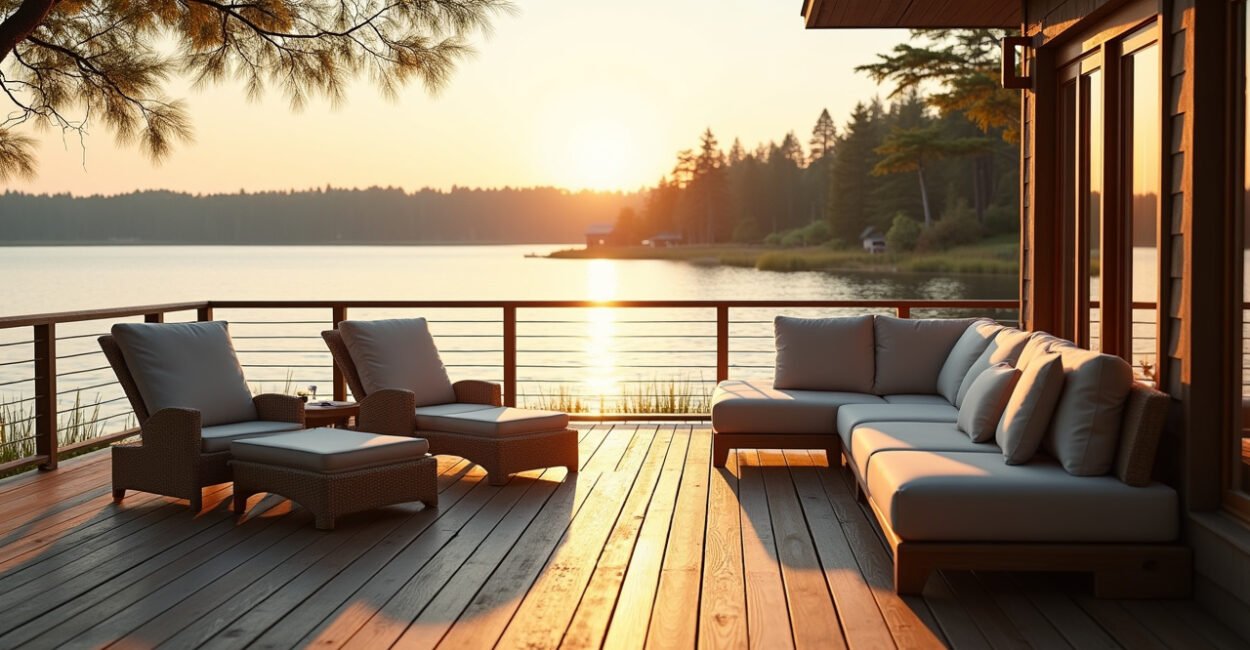
Lakefront homes are tricky in the best way: the view does half the decorating, and the interior has to know when to step back. The strongest lake house interior design ideas don’t chase trendiness; they create rooms that feel relaxed, work hard in wet or muddy conditions, and frame the water instead of competing with it.
The technical goal is simple: build a calm, durable, light-filled interior that supports everyday life in a setting where sand, humidity, wet towels, and changing sunlight are part of the routine. In this guide, you’ll find a practical approach to layout, materials, color, furniture, lighting, and styling so the house feels cohesive from the front door to the dock.
O Que Você Precisa Saber
- A good lake house interior uses low-fuss, high-durability materials first, then layers in softness through textiles and decor.
- Rooms should be oriented around the view, but the seating plan still needs to work on cloudy days and in the evening.
- Closed storage beats decorative clutter in entryways, mudrooms, and lake gear zones because the mess at a lake house is seasonal but relentless.
- Color works best when it echoes the landscape: water, sky, stone, driftwood, pine, and sand are more timeless than themed nautical palettes.
- The most successful interiors feel collected, not decorated, with a few local materials and personal objects carrying more weight than matching sets.
Lake House Interior Design Ideas That Balance the View, Comfort, and Everyday Function
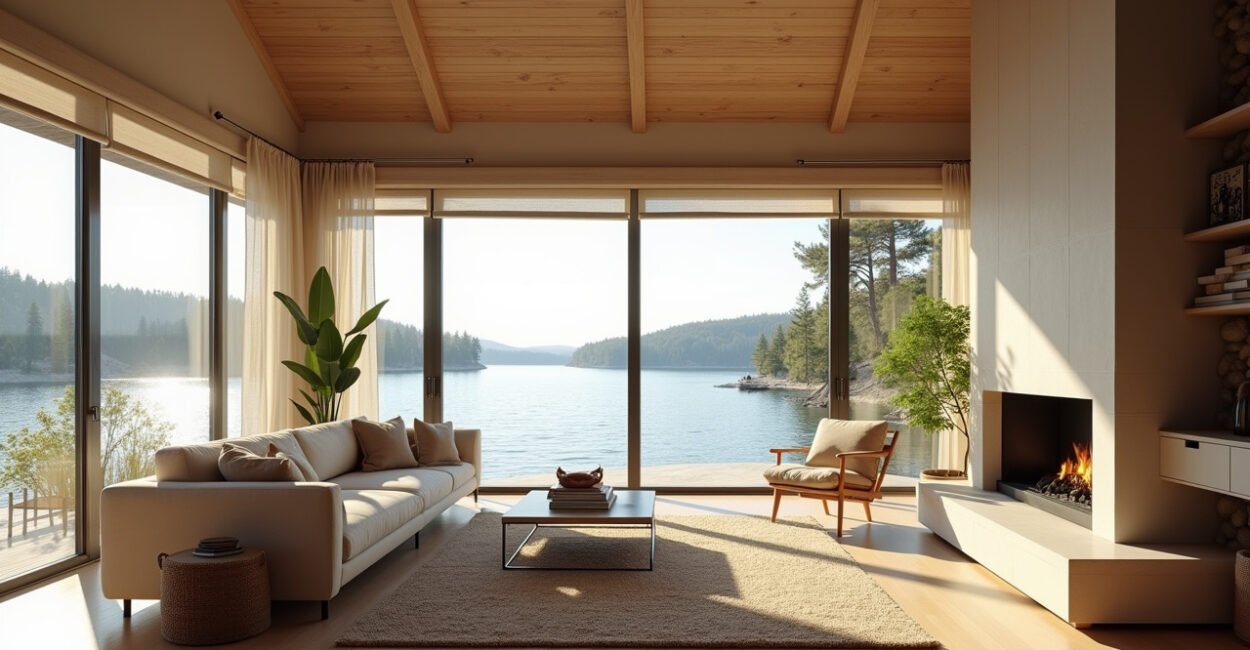
The first rule is architectural, not decorative: the interior should defer to the landscape. That means lower visual clutter, lighter window treatments, and furniture placement that keeps sightlines open to the water. If the lake is the star, the room should act like the frame.
Start with the Room’s Job
A lake house living room is rarely just for lounging. It becomes a landing zone, a reading spot, a game table, and sometimes the place where everyone dries off after a swim. That is why the best plan starts with use cases, not style boards.
Use the View Without Making Every Room Fragile
Floor-to-ceiling glass looks stunning, but it increases glare, heat gain, and cleaning demands. In sunnier exposures, use woven shades, linen drapery, or solar-control window film so the room stays comfortable without losing the view. According to the U.S. Department of Energy’s guidance on window coverings, the right treatments can improve comfort and reduce unwanted solar gain.
In lake house interiors, the view is the luxury, but the layout is what makes that luxury livable.
Plan for Mud, Water, and Traffic
Who works with waterfront homes knows the real problem is not the main living room; it is the traffic path from dock to sofa. Build in a clear route for shoes, towels, bags, and sunscreen so those items never spread through the main entertaining space.
Materials and Finishes That Hold Up to Sand, Moisture, and Sunlight
Material choice is where many pretty lake houses fail. Soft finishes may photograph well, but they can discolor, warp, or stain quickly in a humid environment. The safest strategy is to combine easy-clean surfaces with tactile materials that age well instead of looking sterile.
Choose Surfaces That Can Handle Real Life
- Flooring: wide-plank engineered wood, sealed oak, porcelain tile, or luxury vinyl plank in secondary spaces.
- Countertops: quartz or sealed stone if the kitchen sees heavy use.
- Upholstery: performance fabric, washable slipcovers, and tightly woven textures.
- Hardware: brushed nickel, aged brass, or matte black depending on the overall palette.
Engineered wood and porcelain tile are popular because they tolerate humidity swings better than many site-finished materials. That said, no finish is magic. In a house with constant wet entry traffic, even the toughest flooring needs mats, a defined drop zone, and a cleaning routine that starts before stains settle.
Use Natural Texture, Not Theme Decor
Rattan, oak, wool, jute, linen, and unlacquered brass all fit the lake setting because they feel relaxed without trying to imitate a boat cabin. That difference matters. Theme decor ages fast; texture stays relevant.
The safest lake house palette is not “beachy.” It is textured, light, and durable enough to look good after a rainy weekend and a full house.
For moisture-heavy areas, the EPA’s indoor humidity guidance is worth following, especially if the property sits closed for part of the year. Stable humidity helps protect wood, fabrics, and millwork.

Color Palettes That Feel Calm Without Looking Predictable
Color at a lake house should pull from the setting, but not copy it too literally. Blues can work, but an entire house of navy and white can feel like a weekend rental. The better approach is to build a quiet base and use color as an accent rather than the main event.
Build the Base Around Light Neutrals
Warm white, soft sand, fog gray, and muted greige keep rooms airy and make natural light feel larger. These tones also work across changing seasons, which matters in homes used in both summer and colder months.
Add Colors That Belong to the Landscape
- Sage and moss echo shoreline vegetation.
- Deep blue-green feels like water at dusk.
- Driftwood brown grounds rooms that need warmth.
- Slate and stone gray pair well with fireplaces and hard surfaces.
There is no rule that every lake house must be pale. In fact, a darker den or study can be the best room in the house when the main living spaces are bright. The key is contrast: let one or two rooms deepen the mood so the whole home does not flatten into the same color temperature.
Mini Story: The Cabin That Finally Felt Right
A small family cabin I saw on a wooded lake had beautiful water views but felt strangely cold. The owners had used cool white walls, shiny chrome, and matchy-blue accents everywhere. After they switched to warm white paint, oak side tables, wool pillows, and one weathered green sofa, the house stopped feeling staged. It became the place people naturally stayed in after dinner.
Furniture and Layout Choices for Easy, Unfussy Living
Furniture should be comfortable first and precious last. A lake house gets more use from open ottomans, deep sofas, nesting tables, and movable chairs than from a rigid formal arrangement. If the room cannot handle a spontaneous gathering, it is not really lake-house-ready.
Favor Pieces You Can Move and Reconfigure
Light-to-medium-weight chairs, bench seating, and side tables on one of the most useful. They let the room flex for board games, guests, or a quiet afternoon reading by the window. A fixed, oversized sectional can work if the room is large, but it can also block circulation and make the space feel heavy.
Keep Scale Honest
Many lake houses have generous windows but not generous square footage. That creates a common mistake: furniture that is visually bulky because it is low-profile and deep. Measure the room the way people actually walk through it, not just the way it photographs.
| Room Type | Best Furniture Traits | Common Mistake |
|---|---|---|
| Living Room | Deep seating, movable tables, washable covers | Overstuffed sectional that blocks the view |
| Dining Area | Round or oval table, wipeable chairs | Fragile upholstered chairs in a high-traffic zone |
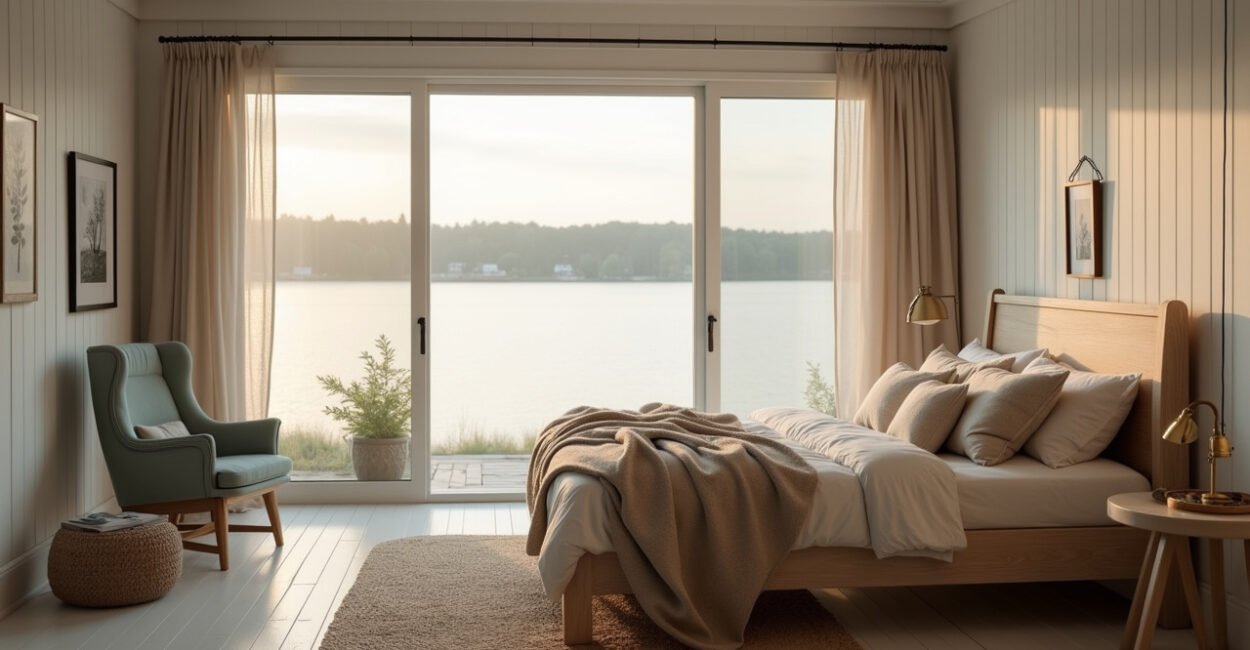
| Bedroom | Simple nightstands, layered bedding, blackout options | Too many decorative pieces competing for visual attention |
A room feels larger at a lake house when circulation stays open, not when every wall is filled with furniture.
Lighting, Window Treatments, and the Atmosphere After Sunset
Lake houses are often designed with daylight in mind, but evenings reveal whether the interior was planned well. If the only light source is the ceiling fixture, the house can feel flat and harsh once the sun drops. Good lighting gives the room depth, warmth, and a sense of calm after dark.
Layer Three Types of Light
- Ambient light for overall brightness, usually from ceiling fixtures or recessed lights.
- Task light for reading, cooking, and game tables.
- Accent light for artwork, shelves, and architectural details.
In rooms with big windows, use dimmers whenever possible. That lets the interior adapt from bright mornings to soft evenings without feeling clinical. Wall sconces and table lamps usually do more for comfort than one oversized statement fixture ever will.
Window Treatments Should Control Glare, Not Hide the Lake
Sheer linen panels, woven wood shades, and tailored drapery are the safest options in most lakefront homes. They soften the room and reduce glare while preserving the connection to the outdoors. Heavy blackout drapes can work in bedrooms, but in living areas they often shut down the very quality people came for.
Decor, Art, and Storage That Make the House Feel Collected
Decor should tell a story, but not a generic one. The best lake house interiors include a few specific objects that make sense in the place: a local landscape painting, a stack of well-loved books, pottery with visible handwork, or a vintage oar used as wall art because it has actual history.
Keep Decorative Objects in Check
The mistake many homeowners make is styling every surface at once. That creates visual noise and gives dust too many places to settle. Leave some empty space. It makes the good pieces feel intentional.
Prioritize Storage That Disappears the Clutter
Built-ins, baskets, closed cabinets, and drawers do more for a lake house than most decorative accessories. Use them for board games, extra throws, lake towels, sunscreen, bug spray, and the random gear that always appears when a house is used by more than one generation.
Use Art with Local Restraint
Art does not need to be nautical to belong in a lake house. Landscapes, abstract watercolors, black-and-white photography, and framed maps can all work if they relate to the setting without leaning into kitsch. One strong piece is often better than a wall full of literal lake signs.
For safer indoor environments, the CDC’s home water and health resources are useful if the home sits on well water or sees seasonal occupancy. That matters because lake properties often have maintenance quirks that show up first in storage, laundry, and utility spaces.
How to Make a Lake House Feel Timeless Instead of Trendy
Timeless lake house design comes from restraint. If everything is rustic, coastal, or “rustic coastal” at once, the room dates itself quickly. A better approach is to let the architecture, materials, and light do most of the work, then edit the rest hard.
Follow a Simple Rule: One Strong Gesture Per Room
That gesture might be a stone fireplace, a reclaimed wood dining table, a moody paint color, or a standout pendant. If you introduce too many focal points, the room starts competing with itself. One clear idea is easier to live with and easier to refresh later.
Mix Old and New
Lake homes often feel best when they include one or two older pieces with newer upholstery and clean-lined lighting. That balance keeps the house from looking like a catalog while still protecting it from looking cluttered or dated. Vintage finds work best when they bring scale, texture, or a sense of history, not just nostalgia.
Know Where the Rules Can Bend
There is one exception worth naming: if the house is used only a few weekends a year, you can lean a little more decorative because the daily-wear test is weaker. But that shortcut fails fast in a full-time home. The more often the house is used, the more durability has to lead.
Próximos Passos for a Lake House That Actually Works
The smartest move is to design the house in this order: layout first, durable finishes second, furniture third, decor last. That sequence keeps you from spending money on things that look right in photos but fail in real use. If you are making decisions room by room, start with the spaces that take the most abuse: entry, mudroom, kitchen, and main living area.
Before buying anything new, test the room against one question: does this choice support the view, the traffic pattern, and the cleanup routine? If the answer is no, keep looking. The most successful lake house interior design ideas are the ones that make ordinary weekends feel easy, not staged.
FAQ
What Colors Work Best in a Lake House Interior?
Warm whites, soft grays, sandy neutrals, sage, and muted blue-green tones usually work best because they echo the natural setting without becoming too themed. If the home gets strong sunlight, slightly warmer shades keep the space from feeling cold or washed out. Darker accent colors can work in smaller rooms, especially studies, dens, or bedrooms where a cozier mood makes sense.
What Flooring is Most Practical for a Lake House?
Engineered hardwood, porcelain tile, and high-quality luxury vinyl plank are the most practical choices for many lake homes because they handle moisture and heavy foot traffic better than delicate finishes. The best option depends on the room and climate, but slip resistance and easy cleaning should rank high. In entryways and mudrooms, a surface that tolerates wet shoes matters more than visual warmth alone.
How Do I Make a Lake House Feel Cozy Without Adding Clutter?
Use texture instead of quantity. Linen curtains, wool pillows, a nubby throw, woven baskets, and wood furniture add warmth without crowding the room. Keep tabletops mostly clear and let one or two meaningful objects carry the styling. Cozy feels better when it comes from layers, not from filling every available surface.
Should a Lake House Interior Be Coastal or Rustic?
It can be either, but it does not need to be obviously one or the other. Coastal works well if the home has bright daylight and open views, while rustic fits naturally in woodsy settings with stone and darker trim. The strongest interiors usually borrow a little from both and stay grounded in the actual architecture of the house.
How Do I Decorate a Small Lake House So It Does Not Feel Cramped?
Choose fewer, better pieces and keep the circulation path open. Light-colored walls, furniture with visible legs, and built-in storage help a compact home feel larger. In a small lake house, oversized sectional sofas and too many decorative accessories can make the room feel crowded fast, even if the floor plan is efficient.