Skip to content

📅 Updated on June 12, 2026
Passive solar design is the practice of shaping a home so it captures winter sun, blocks unwanted summer heat, and uses the building itself to stabilize indoor temperatures. In other words, the house does part of the climate control work before the HVAC system ever turns on.
For a homeowner, the payoff is practical: lower heating and cooling demand, fewer temperature swings near windows, and a house that feels easier to live in across seasons. The catch is that passive solar design only works when orientation, glazing, shading, insulation, and thermal mass are planned as one system rather than as separate upgrades.
What You Need to Know
- Passive solar design reduces energy use by using the sun, the building envelope, and interior materials to manage heat gain and heat loss.
- South-facing glass is useful only when the house can admit winter sun, limit summer sun, and retain the heat it collects.
- Thermal mass helps flatten indoor temperature swings, but it performs best when sun can reach it directly and nights cool down enough to release stored heat.
- Insulation and air sealing are not optional add-ons; they are what keep the gains from escaping too quickly.
- The most common failure is not “too little solar ambition” but poor coordination between window placement, shade control, and the local climate.
Passive Solar Home Design Basics and How a House Uses the Sun
Passive solar home design basics start with one idea: let the building collect solar heat when it is useful, store some of that heat, and prevent it from becoming a liability when the weather changes. The system uses no pumps or collectors. It relies on the sun path, window geometry, insulation, and material choices working together inside the home itself.
The technical term is solar heat gain management. The plain-English version is this: you want winter sunlight to enter, warm surfaces inside the house, and then stay long enough to matter. That is why passive solar design is more about controlling heat than simply “adding more windows.”
How the Heat Moves Through the House
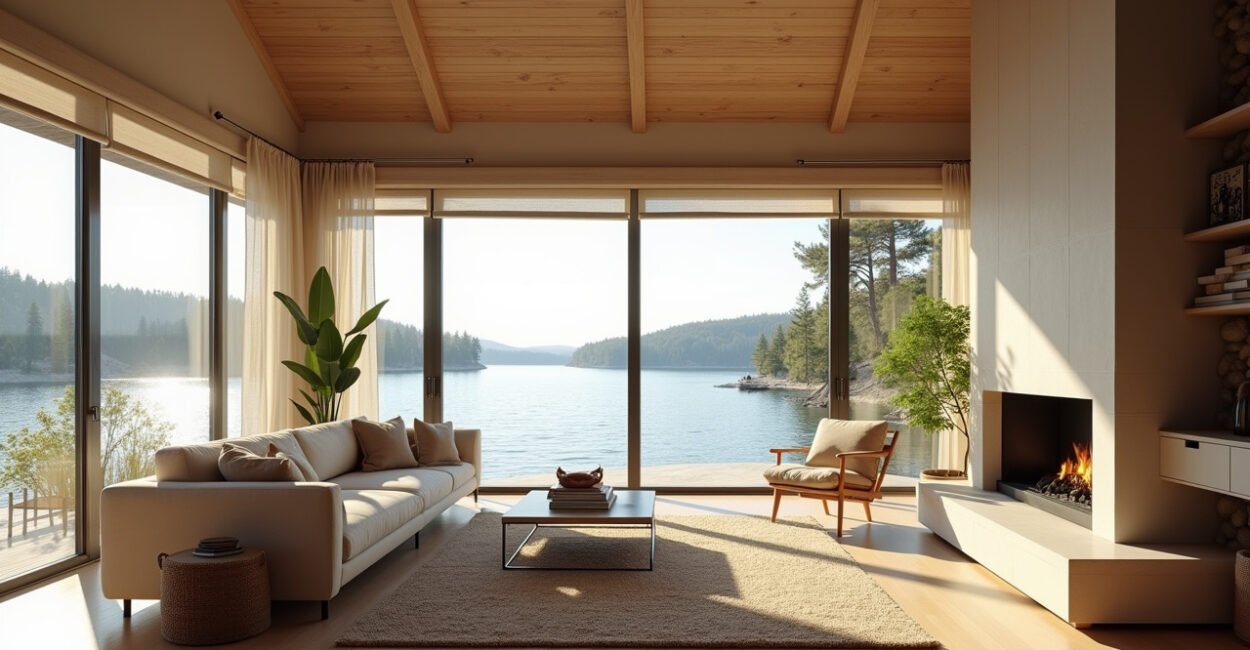
Solar radiation passes through glazing, warms interior surfaces, and is absorbed by materials such as concrete, tile, brick, or masonry. That stored heat is then released slowly as indoor air cools. Good design also reduces unwanted heat loss through the envelope, which is why air sealing, insulation, and high-performance windows belong in the same conversation.
Who works with this every day knows that the details are where the project succeeds or fails. A house can have the right compass direction and still overheat if the overhangs are shallow, the west glass is too large, or the thermal mass sits behind a rug and a couch where it never sees the sun.
Passive solar design works best when the building captures winter sun, blocks summer sun, and stores heat long enough for the indoor temperature to stay stable.
Orientation: Why the Building’s Position Matters First
The best orientation usually gives the longest wall in an east-west direction, with the main glazing facing within roughly 15 degrees of true south in the northern hemisphere. That setup makes winter sun easier to admit and summer sun easier to shade. It is one of the few design choices that is hard to fix later without major renovation.
Why South-facing Exposure is the Target
Winter sun is lower in the sky, so it can penetrate deeper into rooms and reach floors and walls. East and west sun is harsher because it comes in at a low angle during morning and late afternoon, which makes it harder to block and more likely to cause glare and overheating. North-facing windows are useful for daylight, but they contribute less to passive heating.
What to Do When the Lot Fights Back
Not every site gives you a perfect solar canvas. In real projects, setbacks, views, neighboring homes, trees, or driveway access may force compromises. In those cases, the right move is not to pretend the site is ideal; it is to prioritize the best available orientation for the main living spaces and reduce the penalty on the other sides.
If you want a clean technical overview of the broader strategy, the U.S. Department of Energy’s Energy Saver guidance on passive solar home design is a solid starting point. For climate-specific planning, the National Renewable Energy Laboratory publishes building-energy research that helps explain why the same layout performs differently in Phoenix, Minneapolis, or Charleston.
Windows and Glazing: The Real Control Point
Windows are not just openings for daylight and views. In a passive solar house, they are also heat collectors, heat leaks, and glare sources. The right glazing strategy gives you winter gain without turning the living room into a greenhouse in July.
| Window Location | Best Use | Main Risk |
|---|---|---|
| South | Winter heat gain and daylight | Summer overheating without shade |
| East | Morning light | Low-angle heat and glare |
| West | Limited daylight | Hard-to-block afternoon heat |
| North | Soft daylight | Little direct solar gain |
Glazing Performance Matters as Much as Size
Double- or triple-pane low-e windows can reduce heat loss dramatically compared with single-pane units, but they do not fix a bad layout. The key specifications are U-factor, solar heat gain coefficient (SHGC), and frame quality. A lower U-factor means less heat loss, while SHGC tells you how much solar energy the glass admits.
Size the Glass for the Climate, Not for the Render
Design illustrations often make enormous south-facing glass look elegant. In practice, that can be a mistake in mixed or warm climates because the cooling penalty can exceed the winter benefit. The U.S. Department of Energy’s window guidance and ENERGY STAR window resources both reinforce the same point: choose glazing based on climate and orientation, not appearance alone.
More glass does not equal better passive solar performance; the right glass in the right place does.
Shading, Insulation, and Air Sealing: The Parts That Keep the System Honest
Solar gain is only useful when you can control it. Fixed overhangs, exterior shades, deciduous trees, and operable awnings keep summer sun out while preserving winter access. In many homes, exterior control works far better than blinds on the inside because the heat is stopped before it enters the room.
Why Shading Should Be Outside the Glass
Interior blinds reduce glare, but much of the heat has already crossed the glazing by the time they are closed. Exterior shading blocks solar energy earlier, which makes it more effective. That is why a properly sized roof overhang can do more for comfort than an expensive interior treatment.
Insulation and Air Sealing Protect the Gains
If heat escapes through the roof, walls, rim joists, or leaky penetrations, the sun ends up working against a drafty envelope. Dense-pack walls, attic insulation, and careful air sealing are what make passive solar performance durable. The National Association of Home Builders and building-science guidance from universities consistently point to the same truth: envelope quality determines whether solar heat lasts.
The Department of Energy’s insulation guidance is useful here because it shows how heat loss paths change the result. A passive solar home with poor envelope performance usually disappoints, even if the glazing layout looks right on paper.
Thermal Mass: The Part Most People Underestimate
Thermal mass is any material that stores heat and releases it slowly. Concrete slabs, masonry walls, tile floors, and some stone surfaces all qualify. In passive solar design, thermal mass smooths out the spike from direct sun and delays the drop after sunset.
When Thermal Mass Helps
It helps most in climates with sunny days and cooler nights, because the house can absorb heat during the day and release it after dark. It also works best when the sun actually reaches the mass. A thick slab under carpet is not much help if the surface never receives direct radiation.
When Thermal Mass Disappoints
In humid climates with long, warm nights, too much mass can hold unwanted heat and make the house slow to cool. In that kind of climate, the balance shifts toward shading, ventilation, and a tighter cooling strategy. This is one of those areas where there is no universal rule: the right amount of mass depends on diurnal temperature swing, solar access, and the season profile of the location.
A simple renovation story makes the point. A homeowner replaces old single-pane sliders with efficient glazing and expects the house to feel better. It does, for a while. Then the west-facing family room starts overheating every afternoon because the glass is bigger than the overhang, and the old carpet blocks the concrete floor that was supposed to act as thermal storage. The fix was not another gadget. It was smaller west exposure, exterior shade, and revealing the slab.
Passive Solar Design Mistakes That Cost Homeowners the Most
The most expensive mistakes are usually the ones that look harmless during design. They are also the ones that show up after move-in, when changing them costs more than expected.
Common Errors to Avoid
- Putting too much glass on the east or west side of the house.
- Using interior blinds as the main summer heat control.
- Skipping air sealing and assuming the windows will carry the whole strategy.
- Choosing thermal mass without confirming that sunlight can actually reach it.
- Designing around aesthetics first and climate second.
Where the Design Breaks Down
Passive solar design can disappoint in homes with weak winter sun access, shaded lots, or a climate that needs strong summer cooling more than winter heating. It also fails when the owner wants the comfort benefits of passive design but is unwilling to make the envelope tight enough to hold the gains. That is not a flaw in the concept; it is a mismatch between the concept and the house.
The biggest mistake in passive solar home design is treating windows as decoration instead of as part of the thermal envelope.
A Homeowner Checklist for a New House or Renovation
Before you buy, build, or remodel, use a quick solar audit. It will tell you more than a pretty floor plan does.
- Check whether the main living spaces can face south or near-south.
- Measure how much glass sits on the east and west sides.
- Look for exterior shading, not just interior blinds.
- Ask what the window U-factor and SHGC are for the proposed glazing.
- Confirm that the building envelope is insulated and air sealed to current standards.
- Identify where thermal mass exists and whether sunlight will reach it.
- Review whether the local climate favors winter gain, summer shading, or both.
For deeper climate and building-science context, the NREL Buildings program is useful because it connects house design with actual performance data. The DOE’s building design resources also help separate true efficiency measures from features that only look efficient.
What to Do Next If You’re Planning a House or Remodel
The smartest move is to treat passive solar design as a coordination problem, not a single feature. If you get orientation, glazing, shading, insulation, and thermal mass aligned early, the house becomes easier to cool, easier to heat, and more comfortable in the shoulder seasons. If you wait until the end, you usually end up paying twice for partial fixes.
For a renovation, start with the envelope and the worst exposures first: west glass, attic insulation, air leakage, and exterior shading. For a new build, lock in the site layout before you fall in love with the floor plan. That sequence gives passive solar design a real chance to work instead of leaving it as a nice idea on paper.
Frequently Asked Questions
Is Passive Solar Design Only Useful in Cold Climates?
No. It helps most in heating-dominant climates, but it can still improve comfort in mixed climates when shading is carefully handled. In hot climates, the design emphasis shifts toward daylighting, shading, and limiting unwanted solar gain.
Do I Need a Big South-facing Window Wall to Make It Work?
No. In many homes, moderate south glazing performs better than a large glass wall. The goal is useful winter gain with controlled summer exposure, not the largest possible window area.
What is the Difference Between Passive Solar Design and Solar Panels?
Passive solar design uses the building itself to manage heat and daylight. Solar panels generate electricity through active technology. They solve different problems and are often best used together.
Can I Retrofit an Existing House for Passive Solar Benefits?
Yes, but the results depend on the house. The easiest gains usually come from better shading, improved windows, more insulation, and air sealing. Reorienting the structure itself is rarely practical in a retrofit.
Does Thermal Mass Always Improve Comfort?
No. Thermal mass helps when the climate has useful day-night temperature swings and direct sun access. In some warm or humid regions, too much mass can make cooling slower and less responsive.
What Should I Check First in a Home That Claims Passive Solar Features?
Check orientation, glazing placement, exterior shading, and envelope quality. If those four items are weak, the passive solar claim is mostly marketing. If they are aligned, the house has a real chance of performing well.