Skip to content

Buying home improvement products gets expensive fast when you choose the wrong grade, the wrong size, or the wrong retailer for the job. The useful way to shop is not by brand loyalty, but by project type: repair, upgrade, storage, safety, or outdoor work. This guide helps you choose what is worth buying, where to buy it, and how to compare options without wasting money.
In practice, the best purchases are the ones that solve a specific problem cleanly and last long enough to justify the price. A $12 part that fits perfectly can save a weekend; a $200 tool you use once a year can sit untouched for years. The difference is knowing what to buy first, what to skip, and when a major retailer makes more sense than a local store.
Key Takeaways
- The best home improvement buys are tied to a project, not to a brand or a sales flyer.
- For beginners, the highest-value purchases are hand tools, patching supplies, basic fasteners, and safety gear.
- Big-box retailers such as Home Depot and Lowe’s are strongest for selection, while Ace Hardware is often better for quick, local fixes and knowledgeable counter help.
- Online shopping works best for comparing specifications; in-store shopping works best for fit, finish, and anything you need today.
- Durability matters more than the lowest price on items you will touch often, install permanently, or rely on for safety.
What Home Improvement Products Include and Which Home Improvement Tools Actually Matter
Home improvement products are the materials, fixtures, hardware, and tools used to repair, upgrade, maintain, or reorganize a house. That includes paint, caulk, screws, lumber, light fixtures, faucets, outlet plates, storage systems, and home improvement tools like a drill/driver, tape measure, level, utility knife, stud finder, and adjustable wrench. The right mix depends on the project, not the aisle endcap.
What Beginners Should Buy First
- Measuring tools: tape measure, speed square, and level.
- Fastening tools: drill/driver, bit set, hammer, and screwdrivers.
- Cutting and prep tools: utility knife, pliers, putty knife, and sandpaper.
- Safety gear: gloves, eye protection, hearing protection, and a dust mask or respirator when the material calls for it.
The technical distinction matters: tools are reusable instruments, while materials are consumed by the project. If you are patching drywall, the knife, hawk, and sanding block are tools; joint compound and mesh tape are materials. Spending too much on materials is annoying, but buying a weak tool usually costs you twice: once at checkout and again when the job stalls.
What separates a useful toolkit from a cluttered one is not the number of items inside it; it is whether each tool solves one repeat problem well.
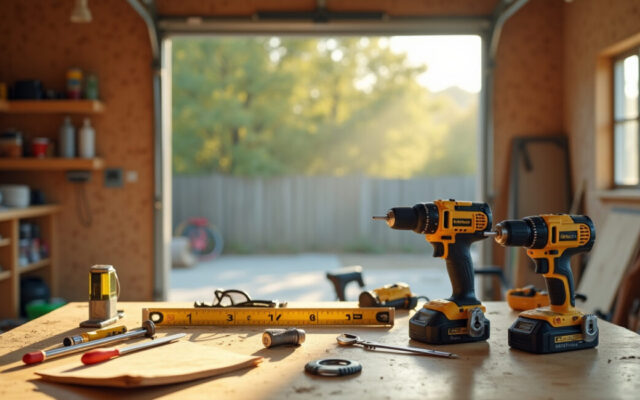
If you only buy one power tool first, choose a cordless drill/driver with decent torque and a battery platform you can expand later. That gives you a base for future additions like an impact driver, circular saw, or oscillating multi-tool without starting over.
Best Categories for Repairs, Upgrades, Outdoor Work, and Storage Projects
For most homes, the smartest purchases cluster into four categories: repair, upgrade, outdoor, and storage. If you shop by category, you avoid overbuying specialty items that look useful but solve a problem you do not actually have.
Repair: The High-frequency Essentials
Repair items should be chosen for compatibility and shelf life. Think caulk, spackle, duct sealing tape, replacement filters, faucet washers, outlet covers, weatherstripping, and touch-up paint. These are the products you want on hand before they become urgent.
Upgrade: The Quality-of-life Purchases
Upgrades are where the value often feels immediate: LED light fixtures, dimmers, smart thermostats, soft-close hinges, better showerheads, and cabinet hardware. The mistake here is buying for appearance alone. Check voltage, finish, mounting pattern, and weight rating before you fall for the display model.
Outdoor: Durability Beats Trendiness
Outdoor categories reward weather resistance. Storage benches, hose reels, deck stain, patio lighting, sealants, and corrosion-resistant fasteners matter more than glossy marketing. UV exposure, moisture, and temperature swings punish cheap materials quickly.
Storage: The Quiet Money-saver
Good storage products do not just look organized; they cut project time because you can find what you already own. Wall-mounted shelving, pegboards, bins, and modular drawer systems can prevent duplicate purchases. That sounds minor until you realize how often people rebuy screws, anchors, or drill bits they already had.
For readers already planning efficiency upgrades, the same disciplined buying approach that helps with efficient kitchen appliances also applies here: choose the item that lowers waste, saves time, or improves performance for years, not the one that looks impressive in the cart.

Tools Vs. Materials: What to Buy First and What to Borrow
Buy reusable tools first, then buy the project-specific materials once you know the dimensions and finish. That order keeps you from returning half the cart after discovering the screw head, pipe size, or fixture style was wrong.
Buy Now
These items are worth owning for almost any homeowner: tape measure, drill/driver, bits, hammer, utility knife, pliers, level, stud finder, caulk gun, and a small set of clamps. They cover most assembly, hanging, patching, and minor repair jobs.
Borrow or Rent
Renting makes more sense for heavy-duty or infrequent equipment such as floor sanders, tile saws, large wet/dry vacs, or demolition tools. If a tool will sit in a closet 51 weeks of the year, rental usually wins. The exception is a tool you know will be used repeatedly during a renovation phase.
A tool is worth buying when the second and third uses are likely; a tool is worth renting when its cost is mostly tied to ownership, not to the job itself.
There is a practical nuance here: some projects need a better-than-basic tool even if you use it only once. I have seen plenty of first-time DIYers struggle with a cheap drill that stalls in hardwood or a flimsy level that reads wrong on shelving. The job gets blamed, but the real problem was the tool grade.
Where to Buy: Home Depot, Lowe’s, Ace Hardware, and Local Stores
The best retailer depends on what you need. Home Depot and Lowe’s are usually strongest on breadth, online inventory, and project-scale purchases. Ace Hardware tends to shine for convenience, fast service, and odd little parts when you need a fix today. Local stores can beat them on specialty knowledge, lumber quality, or niche building supplies.
Home Depot Vs. Lowe’s Vs. Ace Hardware
| Retailer | Best For | Typical Strength | Watch Out For |
|---|---|---|---|
| Home Depot | Project variety, contractor-grade options, tools | Broad assortment and strong online fulfillment | Availability can vary by store |
| Lowe’s | Homeowner projects, finishes, appliances, décor-adjacent upgrades | Clean merchandising and strong consumer selection | Model numbers may differ from other retailers |
| Ace Hardware | Quick repairs, fast pickups, small hardware needs | Helpful staff and neighborhood convenience | Smaller inventory and fewer bulk options |
If you are comparing eco-friendly cabinetry and finishes, the same retailer logic applies: stores with better staff support and clearer product labeling reduce expensive mistakes. A good associate can save you from buying the wrong hinge type, finish sheen, or mounting hardware.
Search behavior matters too. People often type “home depot near me,” “home improvement stores near me,” or “ace hardware store near me” when they need immediate pickup. If you are planning ahead, search inventory first, then compare returns policies and delivery windows. For readers checking regional assortments, Lowe’s locations and Lowe’s USA pages can help confirm whether a nearby store actually stocks the item rather than just advertising it online.
Shopping Online Vs. In-Store: How to Choose the Right Option
Home improvement products online are best for research, price comparison, and checking specifications; in-store shopping is best for fit, feel, and same-day fixes. The wrong approach is treating one channel as superior for everything. Each has a job, and the job changes by product.
When Online Wins
Buy online when you need to compare dimensions, finish options, energy ratings, or multiple brands side by side. It is also better for repeat purchases, bulky items with delivery, and anything with clear model numbers. A product page can be more useful than a crowded aisle when the real question is whether the part matches your existing setup.
When the Store Wins
Go in-store when color, texture, weight, or compatibility is hard to judge from a screen. Paint, flooring samples, cabinet hardware, faucets, and light fixtures often look different in person. The store also wins when the job is urgent and you need the part before noon.
For project planning, compact roof solar layouts are a good example of why specifications matter more than advertising photos. The same logic applies to home improvement shopping: dimensions, load ratings, and compatibility decide whether a product works, not the lifestyle image on the box.
Where Online Tools Save Time
Retailers like Lowe’s and Home Depot use digital inventory systems that make it easier to check stock, compare finishes, and read reviews before driving across town. One useful feature is item lookup by SKU or model number. For example, many shoppers look for a Lowe’s item lookup free option when they want to confirm whether the exact product is available before leaving home.
How to Compare Products, Brands, and Prices Before Buying
Comparing products well means checking the spec sheet, not just the star rating. Price only matters after you know the product meets the job’s requirements. A cheaper item that fails early is not a bargain; it is a delay with packaging.
The 5-point Comparison Check
- Fit: dimensions, thread size, voltage, finish, or mounting pattern.
- Durability: material quality, corrosion resistance, duty cycle, or warranty length.
- Ease of installation: whether it needs special tools or extra parts.
- Replacement cost: whether consumables or batteries are proprietary.
- Total value: not just purchase price, but time saved and failures avoided.
Brand comparison is useful, but only after you compare the product class. A premium caulk that is wrong for the joint will fail faster than a mid-priced one that is compatible. The same is true for drill bits, shower valves, and light switches: the right specification beats the fanciest packaging.
The smartest price comparison is not between the cheapest and most expensive item; it is between the item that fits the job and the item that only looks like it does.
For regulatory or safety-sensitive purchases, official sources are worth checking. The U.S. Consumer Product Safety Commission publishes recalls and safety guidance, and the ENERGY STAR program helps identify efficient products that can lower utility costs over time. For building basics and code-related questions, local authorities and university extension pages are often more reliable than product ads.
Best Practices for Choosing Durable, Safe, and Value-for-Money Items
Choose durable products for anything that gets touched, loaded, heated, wet, or mounted permanently. Save your bargain hunting for replaceable decorative pieces, not for safety gear, plumbing parts, electrical components, or structural hardware. The cheapest version of those items is often the most expensive in the long run.
Prioritize These Traits
- Material quality: brass, stainless steel, solid polymer, or rated composite when the application demands it.
- Warranty terms: a warranty only matters if the company actually supports it.
- Compatibility: standard sizes reduce return headaches.
- Safety certification: look for UL, ETL, or other recognized marks where relevant.
- Repairability: replaceable parts are worth more than sealed designs in many household categories.
The one place to be strict is electrical and plumbing work. Switches, outlets, GFCI devices, shutoff valves, and supply lines should match code and manufacturer instructions. If the installation scope is outside your comfort zone, reading the label is not enough; local code requirements can change the answer.
There is also a limit to the “buy the best” rule. For rarely used items such as specialty clamps, trim tools, or seasonal outdoor accessories, paying top dollar rarely makes sense. In those cases, the best value is the item that performs reliably without locking you into premium replacement parts or expensive consumables.
What to Buy First If You Are Starting from Zero
If you are building a starter kit, begin with a drill/driver, tape measure, hammer, level, utility knife, screwdriver set, pliers, caulk gun, and a small organizer for screws and anchors. Then add task-specific items only when a project proves you need them. That order prevents the classic rookie mistake of buying a crowded toolbox before owning a real plan.
A practical example: a homeowner replacing a loose bathroom towel bar often buys the wrong anchors, the wrong drill bit, and a low-quality level. The fix only needs a few reliable basics, but the store trip becomes three trips because the first purchases were guesses. The right starter kit removes that guesswork.
If you are also thinking about broader home upgrades, the same “buy the right category first” logic used in insulation upgrades that actually pay off applies here: spend first on the items that change performance, not the ones that merely fill space.
Próximos Passos
Start with the project, not the store. Write down the dimensions, finish, compatibility requirements, and urgency of the job, then compare at least two retailers before buying. That one habit cuts a large share of return trips, duplicate purchases, and “close enough” mistakes that never quite work out. For immediate needs, check local stock; for planned work, compare specs and durability first.
The fastest way to shop smarter is to build a short list of trusted categories: essential tools, repair materials, safety gear, and one or two retailers you know well. Then use that list every time you buy home improvement products. If a product cannot pass the fit, safety, and value check, skip it and move on.
FAQ
What Are the Most Useful Home Improvement Products for Beginners?
The most useful beginner purchases are a tape measure, drill/driver, bit set, hammer, level, utility knife, pliers, caulk gun, and basic safety gear. Those items cover hanging, patching, fastening, and small repairs without forcing you into specialty tools too early. Add project-specific materials only after you know the exact size, finish, and compatibility you need.
Should I Buy Home Improvement Products Online or In-store?
Buy online when you need to compare specifications, prices, or delivery options, and buy in-store when fit, color, texture, or urgency matters. Online is better for model-number matching and bulk orders; in-store is better for paint, fixtures, and anything you want to inspect before purchase. The best approach is often hybrid: research online, confirm stock, then pick up locally.
Which is Better for Home Improvement Needs: Home Depot, Lowe’s, or Ace Hardware?
Home Depot is often strongest for broad selection and project-sized purchases, Lowe’s is a strong choice for homeowner-focused shopping and finishes, and Ace Hardware is excellent for quick fixes and neighborhood convenience. None is best for every job. The right store depends on whether you need depth of inventory, fast pickup, or hands-on help with a small part.
How Do I Find the Right Product for My Project Without Overpaying?
Start by checking the exact size, material, rating, and compatibility of the item, then compare two or three versions in the same category. The cheapest option is not always the best value if it fails early or needs extra parts. A better rule is to buy the lowest-priced product that still meets the job’s technical requirements and has a solid warranty.
What Tools Are Essential for Basic Home Improvement Work?
The essentials are a tape measure, drill/driver, screwdriver set, hammer, level, utility knife, pliers, caulk gun, and a small set of bits and anchors. Those tools handle most beginner repairs and small upgrades. If you add safety glasses, gloves, and a dust mask, you will be ready for far more projects than the average starter kit suggests.