Skip to content

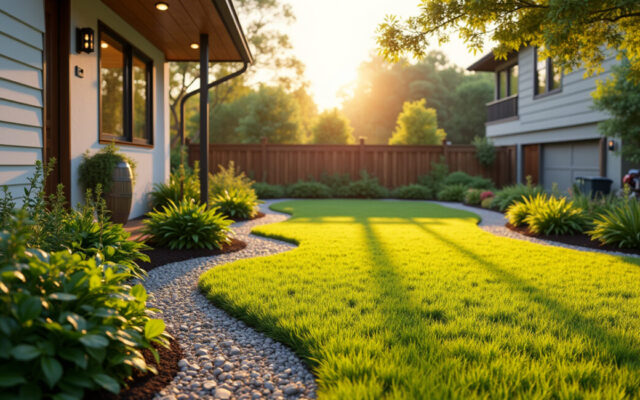
When water gets expensive, the smartest front yards are the ones that look intentional first and “thirsty” never. A good drought-tolerant front yard design combines a reduced-lawn layout, layered low-water planting, and hardscape that gives structure without turning the yard into a barren expanse. Done well, it reads as polished curb appeal, not compromise.
The real goal is not to “survive with less water.” It is to build a front yard that still has shape in winter, color in spring, and clean lines in midsummer, while cutting irrigation demand and weekly upkeep. Below, you’ll find practical drought-tolerant front yard ideas you can actually use, from plant selection to gravel mulch, drip irrigation, and style-specific layouts.
What You Need to Know
- A low-water front yard works best when plants, paths, and mulch are designed as one system, not as separate parts.
- The most polished xeriscape front yard layouts reduce lawn first, then use repeated plant masses and hardscape edges to create order.
- Native plants often outperform imported “desert” ornamentals because they handle local rainfall patterns and soil conditions more predictably.
- Drip irrigation and gravel mulch do more for long-term performance than adding more plant varieties.
- The difference between sparse and stylish is usually structure: a clear entry path, one focal point, and garden layers that stay legible year-round.
Drought-Tolerant Front Yard Design: What Makes It Work Visually and Functionally
A drought-tolerant front yard design is a landscape plan that reduces water use by favoring drought-tolerant plants, efficient irrigation, and water-smart surfaces such as gravel, stone, and permeable paving. In practice, it works when the yard still has hierarchy: a clear entry, a focal point, and repeated plant forms that create rhythm instead of clutter.
That visual order matters because a dry-climate yard can look unfinished fast if the planting is too random. A front yard with just a few species, grouped in generous masses, usually looks richer than one with many different plants scattered everywhere. The best water-wise landscaping uses restraint as a design tool.
What separates a polished low-water front yard from a sparse one is not how many plants you use — it is whether every element has a job, from the path edge to the mulch line.
For a technical foundation, the EPA WaterSense program is useful because it treats landscape water efficiency as a system: plant choice, irrigation, and maintenance all matter together. That is the mindset behind good curb appeal in dry climates.
Start with a Layout That Reduces Lawn and Simplifies Maintenance
The best layout for a drought-tolerant front yard is usually a no-lawn front yard or a yard with only a small, intentional lawn panel near the entry or street edge. Remove turf where it does not serve a real purpose, then replace it with planting beds, gravel mulch, and a path that directs the eye to the front door.
Prioritize the Entry Path
The front walk should feel like a feature, not an afterthought. When you define the approach with edging, stone, or compacted decomposed granite, the whole yard instantly feels more designed. This is where articles on permeable patio edging ideas translate well to the front yard: hard boundaries make even simple planting look deliberate.
Use One Focal Point Instead of Many
A sculptural tree, a large boulder, a mailbox garden, or a pair of matching planters can anchor the yard. One focal point is enough for most homes. If you add three or four competing features, the design starts to feel busy, which is the opposite of low-maintenance.
Think in Zones, Not a Blank Canvas
Divide the yard into three jobs: arrival, planting, and screen or buffer. That alone makes maintenance easier because each zone can get a different irrigation schedule and plant density. The same zoning logic works in compact yards and is echoed in permeable patio ideas for small yards.
Experience note: In projects that fail, the problem is rarely the plant list. It is usually a layout that leaves no visual anchor, no clear edge, and too much lawn to justify the watering bill.

Choose the Right Plant Layers for Color, Texture, and Year-Round Structure
Good drought-tolerant front yard ideas depend on layers: canopy, mid-layer, and ground layer. In other words, you want height, body, and finish. If everything sits at the same level, the yard looks flat; if everything is tall and spiky, it feels harsh. The goal is a front yard that has depth without needing constant trimming.
Use Structural Plants First
Start with a small tree, large shrub, or architectural specimen that keeps the design grounded through winter. Examples include olive, desert willow, manzanita, rosemary standards, and compact juniper in the right climate. These plants hold shape and act like visual furniture.
Fill with Repeated Mid-layer Plants
Mid-layer plants should do the heavy lifting for color and texture. Think salvias, lavender, yarrow, penstemon, lomandra, kangaroo paw in warm climates, and native grasses where they are appropriate. Repetition is the trick: three groups of the same plant usually look cleaner than nine different species used once each.
Finish with Groundcover and Mulch
Groundcovers reduce bare soil, which helps the planting read as cohesive. In many yards, native groundcovers or low-growing sedums work better than trying to keep every inch of soil exposed. If you want a practical comparison of living cover versus lawn alternatives, native grass lawns versus ground covers is a helpful next read.
For plant selection by climate, local extension services are often the most reliable source because they evaluate plants in real soils and rainfall conditions. The University of Arizona Cooperative Extension is a solid reference for hot, dry regions, and the same principle applies elsewhere: choose plants that match your climate, not just the look you want.
Native plants are not a design shortcut; they are a climate fit. When they are matched to the right site, they usually need less supplemental water, less replacement, and less correction after the first season.
Use Hardscape to Define the Design and Cut Water Demand
Hardscape is the nonliving part of the yard: walkways, edging, retaining walls, boulders, steps, and gravel fields. In water-wise landscaping, hardscape is not decoration. It is the frame that keeps a low-water planting scheme from looking unfinished and reduces the amount of irrigated soil you need to maintain.
Choose Materials That Feel Intentional
Decomposed granite, flagstone, concrete pavers, and steel or stone edging all work well when they suit the house. The wrong move is mixing too many materials. Two or three finishes, used consistently, are usually enough for curb appeal.
Prefer Permeable or Semi-permeable Surfaces Where Possible
Permeable paving lets water soak into the ground instead of running off, which helps in dry climates and during storms. If you are planning a front walk or small landing, the same drainage logic behind gravel patio drainage solutions can keep the front yard tidy and functional.
Use Gravel Mulch Carefully
Gravel mulch can look sharp and modern, but it is not a universal solution. It works best in sunny, open areas with good drainage and plants that tolerate reflected heat. In shaded or very windy sites, organic mulch may perform better because it is lighter on roots and easier to refresh. That’s one of the places where expert judgment matters more than trend-following.
For outdoor surfaces and water-wise site planning, the USDA is worth consulting for broader soil and climate context, especially if your region has poor drainage, drought stress, or compacted urban soil. Dry-yard success often starts below the surface.
Best Drought-Tolerant Plants for Front Yard Curb Appeal
The best plants for a low-water front yard are the ones that stay attractive without constant rescue care. That usually means a mix of evergreen structure, long-blooming perennials, and a few seasonal accents. You are looking for plants that tolerate heat and lean watering, not plants that only look good right after planting.
| Plant Type | Why It Works | Design Use |
|---|---|---|
| Small evergreen shrubs | Hold shape year-round and reduce visual gaps | Foundation planting, corners, entry framing |
| Drought-tolerant perennials | Bring seasonal color with limited watering | Mass planting, path edges, focal drifts |
| Ornamental grasses | Add movement and texture with low upkeep | Transitions between hardscape and beds |
| Native groundcovers | Reduce bare soil and support a finished look | Under trees, slopes, and bed fronts |
Reliable Plant Groups to Consider
- Salvia for long bloom and pollinator appeal.
- Lavender for fragrance and a clean, clipped look.
- Yarrow for soft texture and drought resilience.
- Manzanita for sculptural evergreen structure.
- Penstemon for seasonal color in drier climates.
- Blue fescue or native grasses for texture and movement.
Here’s the practical rule: if a plant needs rich soil, frequent deadheading, or weekly watering to stay presentable, it is probably not a strong front-yard choice for a dry climate. Some favorites from wetter gardens can still work in a sheltered pocket or with slightly more irrigation, but they should be the exception, not the base of the design.
A homeowner once tried to solve a hot, exposed front yard by planting a mixed border of colorful perennials from a garden center sale. It looked good for six weeks. By midsummer, the weakest plants had collapsed, the spacing looked accidental, and the whole bed needed rework. The fix was boring on paper: fewer species, wider spacing, and stronger shrubs. The result looked more expensive, not less.
Mulch, Irrigation, and Soil Tips That Help the Design Succeed
If the layout is the skeleton and the plants are the skin, soil and irrigation are the circulation system. A low-maintenance front yard only stays low-maintenance when water reaches roots efficiently and soil can hold moisture without becoming swampy. That is why drip irrigation beats overhead sprinklers in most drought-tolerant designs.
Install Drip Irrigation in Zones
Group plants by water need. Shrubs, perennials, and groundcovers should not all share the same valve if their watering needs differ. Drip emitters deliver water slowly at the root zone, which reduces evaporation and runoff. It also makes spot maintenance easier when one plant needs adjustment.
Improve Soil Before You Plant
Compacted soil causes shallow roots and weak establishment. If your front yard has builder-grade fill or heavy clay, loosen planting areas and add organic matter where appropriate. For many landscapes, a few inches of compost in planting beds changes how the whole system behaves during the first hot season.
Mulch the Right Way
Organic mulch is often best around shrubs and perennials because it moderates temperature and breaks down over time. Gravel mulch works in open, sunny areas and around xeriscape front yard plantings that like heat. Keep mulch away from trunks and stems, and don’t bury the crown of the plant. That mistake causes more problems than people expect.
For irrigation scheduling and water efficiency, local water agencies and extension offices often publish region-specific recommendations. If you are in a water-restricted area, those local rules matter more than generic online advice because seasonal watering limits and soil conditions vary a lot.
Front Yard Design Ideas by Style: Modern, Mediterranean, Cottage, and Desert-Inspired
Style gives a drought-tolerant front yard its identity. Without a style cue, low-water landscaping can drift into “whatever survived.” With one, even a simple plant palette feels intentional. The trick is matching plant forms and materials to the house architecture instead of copying a look that belongs to a different climate or building type.
Modern
Use crisp geometry, limited plant species, and strong negative space. Black steel edging, concrete pavers, and sculptural grasses work well here. Keep colors restrained and let repetition do the heavy lifting. Modern design is one of the easiest ways to make a no-lawn front yard look premium.
Mediterranean
Think olive tones, lavender, rosemary, stone, and sun-loving textures. Curved beds can soften hard lines, but keep the overall layout clean. This style works best with warm gravel, stucco tones, and a few durable shrubs that feel settled rather than fussy.
Cottage
A cottage look can still be water-wise if you choose drought-tolerant plants with softer forms: salvias, yarrow, penstemon, verbena, and ornamental grasses. The risk here is overcrowding. Cottage style only succeeds in dry climates when you leave enough space for mature plant size and air movement.
Desert-inspired
This style is not just rocks and cacti. The strongest versions use boulders, agaves, yuccas, aloes, and a small number of accent shrubs with wide planting pockets. The difference between tasteful desert-inspired design and a generic desert yard is editing. Every object needs breathing room.
Style is what keeps xeriscape front yard design from looking bare. The house should set the palette, and the planting should support the architecture instead of competing with it.
Common Mistakes to Avoid in Drought-Tolerant Front Yard Design
The most common mistake is treating water-saving landscaping like a plant swap. It is not. If you keep the same awkward layout, the same overlarge lawn, and the same weak edging, the result will still feel disorganized. Good design starts with structure, then plant choice, then maintenance.
Too Many Plant Varieties
Mixing a lot of species can make the yard feel busy and harder to maintain. Repetition is usually better. Repeated plant groups are easier to water, prune, and replace if something fails.
Ignoring Mature Size
Many drought-tolerant plants look tiny at the nursery and dominate the space two years later. If you plant them too close, they will compete for light and airflow. That often leads to more pruning and weaker shape.
Using the Wrong Mulch for the Site
Gravel mulch is not ideal everywhere, and organic mulch is not ideal everywhere. The site decides. Shade, wind, slope, soil drainage, and reflected heat all change what will hold up best.
Skipping Irrigation Tuning
A drip system is only effective if it is adjusted after establishment. New plantings need one schedule; mature plantings need another. If you never revise the system, you either waste water or stress the landscape.
Forgetting the Front Door Experience
The front yard has one job that the backyard does not: it frames arrival. If the path is confusing, the entry feels hidden, or the bed lines fight the architecture, the yard will not read as polished no matter how drought-tolerant the plants are.
What to Do Next
If you want a front yard that saves water and still looks designed, start by drawing the layout before choosing plants. Cut lawn where it has no function, give the entry a clear path, and build around three or four repeatable plant groups. That approach creates curb appeal faster than chasing rare plants or piling on decor.
Before planting, walk the yard at different times of day and note the hottest spots, the shady pockets, and where rain actually moves. Then choose materials and plants that fit those conditions instead of fighting them. If you want a practical next step, compare your current yard to a simple no-lawn front yard plan and decide which areas should become structure, planting, or hardscape.
FAQ
What is the Best Layout for a Drought-tolerant Front Yard?
The best layout is usually a reduced-lawn plan with a clear entry path, one focal point, and planting beds organized in layers. Start by deciding where people actually walk and where the eye should land from the street. Then build around those functions instead of filling every open space with plants. That makes the yard easier to water, easier to maintain, and more visually coherent from the curb.
Which Plants Look Best in a Low-water Front Yard?
The best-looking low-water plants are the ones that keep shape through the seasons: small evergreens, drought-tolerant shrubs, ornamental grasses, and repeat-blooming perennials such as salvia, lavender, yarrow, and penstemon. Native plants are often the safest bet because they tend to fit local climate stress better. The key is to repeat a few strong plants rather than scatter many different ones.
How Can I Make a Xeriscape Front Yard Look Polished, Not Sparse?
Give the yard a clear structure. Use edging, a defined path, and repeated plant masses so the design reads as planned rather than leftover. Gravel mulch can help, but only if it is paired with enough plant density and one or two focal elements like a tree, boulder, or entry planter. Sparse yards usually lack rhythm, not water.
What Hardscape Materials Work Best for Water-wise Landscaping?
Concrete pavers, flagstone, decomposed granite, stone edging, and steel edging are all strong options when used consistently. Permeable materials are especially useful because they let water move into the soil instead of running off. The best choice depends on your house style, climate, and how much foot traffic the area gets. Mixing too many finishes usually makes the yard feel less intentional.
How Do I Keep a Drought-tolerant Front Yard Low-maintenance Year-round?
Keep the plant palette limited, group plants by water needs, and use drip irrigation so watering reaches roots instead of spraying the air. Choose plants that stay attractive without constant pruning, and mulch beds so soil moisture lasts longer. The biggest maintenance win comes from design restraint: fewer species, cleaner edges, and a layout that matches the site will always be easier to manage.