Skip to content

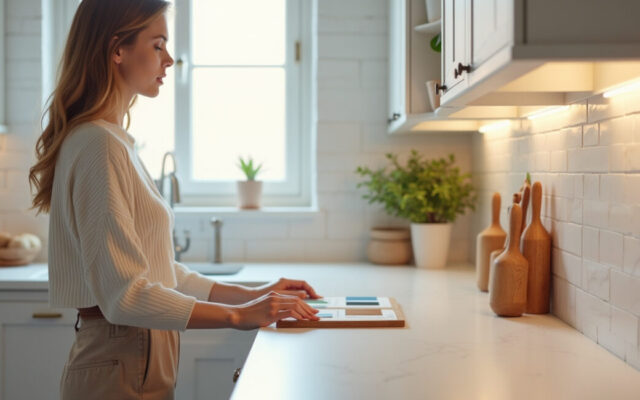
Sustainable kitchen design ideas are not about making a kitchen look “green” for a photo. They are about choosing materials, appliances, and layouts that last longer, waste less, and use less energy every day. The best kitchens do all three at once: they feel good to live in, they age well, and they lower the environmental cost of cooking, cleaning, and storage.
If you are remodeling or just upgrading in stages, the smartest move is to focus on the parts of the kitchen that drive the most impact: cabinets, countertops, appliances, lighting, and circulation. That means fewer landfill-bound replacements later, lower utility bills, and a space that works better in real life. This guide breaks down the practical choices, including budget-friendly options, small-kitchen strategies, and materials worth paying for versus the ones that only sound eco-friendly.
In a Nutshell
- A sustainable kitchen is defined by durability, repairability, low-toxicity materials, and efficient energy use, not by trendy finishes alone.
- Cabinets made from FSC-certified wood, bamboo, or reclaimed stock can be a better long-term choice than disposable particleboard with heavy finishes.
- Energy Star appliances, LED task lighting, and a layout that reduces walking and duplication cut waste faster than cosmetic upgrades.
- Small kitchens can still be sustainable when storage is planned well, materials are chosen for longevity, and the remodel avoids unnecessary demolition.
- Budget matters, but “cheapest today” often becomes the least sustainable option once replacement, repairs, and energy costs are counted.
What Makes a Kitchen Sustainable in Sustainable Kitchen Design Ideas
A sustainable kitchen is a kitchen designed to reduce environmental impact across its full life cycle: sourcing, installation, use, maintenance, and eventual replacement. In plain English, it means fewer toxins, less waste, lower energy use, and materials that hold up for years instead of seasons. The goal is not perfection; it is making the biggest practical improvements where they matter most.
The Core Definition, Without the Fluff
At the technical level, sustainability in kitchen design comes down to embodied carbon, operational energy, material health, and service life. Embodied carbon is the emissions tied to making and transporting the product. Operational energy is what the kitchen consumes after installation, such as electricity for appliances and lighting. A durable product with a longer lifespan usually beats a “green” product that fails early and has to be replaced.
The U.S. Environmental Protection Agency treats food waste reduction as part of household sustainability, which matters in kitchens because layout and storage influence what gets thrown away. If your refrigerator is cluttered, your pantry is dark, and your prep zones are awkward, you waste food faster. A sustainable kitchen is partly a materials question and partly a behavior question.
What separates a truly sustainable kitchen from a merely stylish one is not the color palette — it is whether the room stays useful, efficient, and repairable after the first five years of real use.
What Actually Matters Most
- Durability: Can the cabinet doors, hinges, countertops, and flooring survive daily use without early replacement?
- Low toxicity: Are adhesives, sealants, and finishes low-VOC or otherwise safer for indoor air quality?
- Efficiency: Do appliances and lighting reduce electricity and water use without making the kitchen harder to cook in?
- Waste reduction: Does the layout make it easier to store food, sort recycling, and avoid duplicate tools?
Best Sustainable Materials for Cabinets, Countertops, and Floors
If you are comparing materials, start with the longest-lived surfaces first. Cabinets and counters are expensive to replace, so they deserve the strongest sustainability criteria. Floors come next because they take abuse from water, dropped pans, and constant movement. A material that looks eco-friendly but scratches, swells, or delaminates quickly is not a good environmental choice.
Cabinets: Bamboo, FSC Wood, and Reclaimed Stock
Bamboo kitchen cabinets can be a solid option when they are made with stable construction and low-emission adhesives. Bamboo grows quickly, but the quality varies a lot by manufacturer, so the frame, joinery, and finish matter more than the label. FSC-certified wood is another strong choice because the Forest Stewardship Council tracks responsible forestry practices. For budget projects, recycled kitchen cabinets for sale or gently used cabinet boxes can save a huge amount of material.
One practical note from the field: I have seen kitchens where the “eco” cabinet choice failed because the installer used poor hardware. A well-built standard cabinet with durable hinges can outperform a weak green option. That is why looking at construction is just as important as looking at the wood species.
If you are shopping modular systems, planning a remodeling approach around long-term value often beats chasing the lowest upfront price. The same logic applies to well-known flat-pack solutions like IKEA kitchen cabinets: they can be a reasonable sustainability choice when they replace damaged existing units selectively and are paired with longer-lasting fronts, hardware, and finishes rather than a full tear-out.
Countertops: Recycled Glass, Paper Composite, and Stone with Restraint
Recycled glass countertops are durable enough for many kitchens, but they are not magic. They resist stains well, create a distinctive look, and divert material from the waste stream. Their downside is cost and weight, plus the fact that some styles show chips or hairline cracks more easily than quartz or solid stone. That does not make them poor choices; it means they work best when you value aesthetics, uniqueness, and content recycled material over absolute toughness.
Other solid options include paper composite surfaces and responsibly sourced stone used sparingly, especially in small kitchens where every square foot of material matters. The rule I use is simple: choose the countertop that matches how you cook. Heavy bakers, high-heat cooks, and households with kids need different performance than a lightly used apartment kitchen.
Floors: Cork, Linoleum, Tile, and Reclaimed Wood
Cork is one of the most underrated sustainable flooring materials because it is renewable, comfortable underfoot, and relatively quiet. Linoleum made from natural ingredients is also better than many vinyl products, especially in older homes where indoor air quality matters. Ceramic tile lasts a long time, and reclaimed wood can be beautiful, but both need the right installation and maintenance plan.
| Material | Main Sustainability Strength | Best Use Case | Watch Out For |
|---|---|---|---|
| Bamboo cabinets | Fast-growing resource | Modern, light-looking kitchens | Adhesives and finish quality |
| Recycled glass countertops | Waste diversion and long life | Statement kitchens | Chipping and higher cost |
| Cork flooring | Renewable and comfortable | Homes where comfort matters | Water sealing |
| FSC wood cabinets | Responsible forestry | Most kitchen styles | Price and lead times |
For a broader design lens, the same material-thinking used in responsive home design helps here too: choose surfaces that adapt to daily life instead of fighting it. That is what makes a kitchen feel calm, not fragile.

Energy-Saving Appliances and Lighting Choices
The fastest operational savings in a kitchen usually come from appliances and lighting. If the cabinets are fine, do not replace them just to look greener. Replace the equipment that runs all day, every day. That is where the electricity bill and the carbon footprint are often hiding.
Appliances That Pay Back over Time
Energy Star-rated refrigerators, dishwashers, and induction cooktops are the most practical starting point for a lower-impact kitchen. Energy Star is a U.S. Department of Energy and EPA-backed efficiency label, and it is one of the easiest ways to compare real performance. Induction is especially compelling because it heats the pan directly, which reduces wasted heat and keeps the room cooler.
The Energy Star program is useful because it gives shoppers a consistent benchmark instead of marketing language. That matters when every brand claims to be “eco-friendly.” If the label is missing, check annual energy use, water use for dishwashers, and repairability. A slightly higher purchase price often makes sense if the machine saves energy for 10 years and is easier to service.
Energy-efficient appliances are most sustainable when they last long enough to offset their manufacturing footprint; the cheapest replacement cycle is often the dirtiest one.
Lighting That Does Not Waste Power
LED lighting is the default choice for sustainable kitchens because it uses far less electricity than incandescent or halogen bulbs and lasts much longer. The real design trick is layering: under-cabinet task lights, ceiling ambient light, and a small amount of accent light where needed. That way, you do not overlight the whole room just to chop vegetables.
Natural light also matters. A window over the sink, a lighter wall finish, and reflective backsplash materials can reduce daytime lighting needs. If you are already thinking about kitchen decor ideas for walls, choose finishes that bounce light without making the room feel clinical.
Water Use and Ventilation
Low-flow faucets and efficient dishwashers can trim water use without changing how the kitchen functions. Good ventilation is part of sustainability too, because it protects indoor air quality and extends the life of finishes. If a hood is too weak, grease settles everywhere and forces earlier cleaning or replacement. That is a hidden sustainability problem most people ignore.
Smart Layout and Design Ideas That Reduce Waste
A kitchen layout becomes sustainable when it lowers friction. Less walking means less time, less clutter, and fewer duplicate tools. Better storage means less food waste. A smarter circulation pattern also reduces the chance that you will remodel again in three years because the space never worked in the first place.
Design Around How People Actually Cook
Think in zones: prep, cook, clean, store, and trash/recycling. When those areas are close enough to work together but not so cramped that they collide, the kitchen uses less energy in a human sense too. People stop reaching for convenience purchases when ingredients are visible and easy to access.
- Put knives, cutting boards, and bowls near the prep counter.
- Keep the trash and compost near the sink and prep zone.
- Store everyday cookware close to the stove.
- Reserve higher shelves for seasonal or backup items.
Waste-reducing Storage Choices
Deep drawers beat awkward base cabinets for most households because they show what you own. Pull-out bins for compost and recycling help the system actually get used. Clear containers can reduce food spoilage because people can see what needs to be eaten soon. This is where eco kitchen designs become practical instead of ideological.
A kitchen reduces waste when storage makes the right choice the easiest choice.
A Short Real-world Example
In one small remodel, a client wanted to replace everything. The cabinets were structurally sound, so we kept the boxes, replaced only the worn fronts, switched to LED under-cabinet lighting, and added a pull-out compost drawer next to the sink. The result looked new, but the project avoided a full tear-out, saved money, and cut construction waste dramatically.
Sustainable Ideas for Small Kitchens
Small kitchens are often easier to make sustainable because they need fewer materials and less equipment. The trap is overfilling them with storage gimmicks that make the room feel tighter, not smarter. In a compact space, every decision has to earn its place. That is good news, because it forces discipline.
Small-space Upgrades That Actually Help
Choose multi-use surfaces, slim hardware, wall-mounted storage, and appliances scaled to the household. A compact dishwasher may be a better sustainability move than a full-size unit if it runs more often with full loads and prevents hand-washing waste. The same goes for a counter-depth refrigerator when the room is narrow.
If you are looking for small kitchen decor ideas, focus on function first: light-colored finishes, reflective backsplashes, and open sight lines. Then add texture with a woven runner, ceramic canisters, or a single shelf of useful objects. For kitchen decor ideas for walls, consider a magnetic rail, a peg system, or framed art that does not crowd the work zone.
When to Keep, When to Replace
Do not replace a functioning sink, faucet, or cabinet box just because the finish feels dated. Refinishing, repainting, and changing hardware usually provide the best sustainability return in a small kitchen. The exception is water damage, mold, or unsafe wiring. In those cases, repair comes before preservation.
For people comparing used options, understanding sustainability as a practical trade-off helps avoid false economy. A used cabinet that fits the room can be more sustainable than a new one shipped across the country, even if it needs light refinishing.
Eco-Friendly Kitchen Decor and Finishing Touches
Decor is the easiest place to make a kitchen feel intentional without creating extra waste. The trick is to choose pieces that are useful, repairable, or long-lived. Decorative objects that do nothing except collect dust are the opposite of sustainable, no matter how natural the material looks.
Materials and Accents That Age Well
Natural fiber textiles, ceramic containers, glass storage jars, and solid wood accents tend to outlast trend-driven accessories. If you want kitchen decor ideas that feel calm and mature, use a few materials repeatedly rather than adding many different finishes. Consistency makes a room look designed, not assembled.
Recycled kitchen ideas also work well here: salvaged shelves, restored stools, reused pendant lights, and secondhand art can add character without new manufacturing. A vintage cutting board used as a display piece is a better choice than another imported object with a short life span.
Decor That Helps the Kitchen Function
- Wall-mounted shelves for frequently used items.
- Hooks or rails for tools instead of crowded drawers.
- Labelled jars for dry goods to reduce duplicate purchases.
- Low-toxicity paint and sealants for better indoor air quality.
For a style reference that still feels livable, the same calm, natural-material approach used in relaxed living rooms translates well to kitchens. The room does not need to be rustic. It just needs to feel honest, durable, and easy to maintain.
How to Plan a Sustainable Kitchen Remodel
A sustainable kitchen remodel starts with restraint. The most eco-friendly remodel is often the one that changes the least while solving the most. Before you buy anything, measure what can be saved, what must be replaced, and what can be improved through repair, refinishing, or selective upgrades. That order matters.
A Practical Planning Sequence
- Audit the existing kitchen for structural issues, water damage, and inefficient appliances.
- Keep the elements that are still solid, especially cabinet boxes and subflooring.
- Prioritize the biggest operational wins: appliances, lighting, faucet, and ventilation.
- Choose long-life materials for high-wear surfaces.
- Buy fewer products, but buy better ones.
The U.S. Green Building Council’s LEED framework and the Natural Resources Defense Council both stress the same principle in different ways: reduce resource consumption first, then improve efficiency. That is a helpful way to think about a kitchen, because it keeps you from overspending on “green” products that do not fix the real waste.
Where This Approach Fails
This method works well in homes with a sound layout and decent infrastructure, but it fails when the room has hidden moisture damage, unsafe electrical work, or a layout so broken that patching it creates daily frustration. In those cases, selective preservation is still smart, but pretending the room can be saved whole is not. Sustainability should support use, not preserve dysfunction.
Budget, Sourcing, and Where to Buy Eco-Friendly Kitchen Products
Budget is where many eco projects get distorted. People think sustainability means premium custom cabinetry and imported finishes, but that is only one path. A better rule is to spend on the items you touch and use the most, then source everything else with cost and durability in mind. The best budget is the one that avoids repeat replacement.
How to Spend Wisely
Put money into cabinet hardware, hinges, ventilation, lighting, and the work surfaces that take daily abuse. Save on secondary elements like open shelving, simple tile, and decor. Wholesale eco friendly kitchen products can make sense for contractors or large projects, but verify certifications and product specifications rather than trusting the label alone.
Where to Source Without Greenwashing
- Look for FSC-certified wood, recycled content, and low-VOC finishes.
- Check repair parts availability for appliances before you buy.
- Compare installation waste, not just the product itself.
- Use reclaimed or gently used items when fit and condition are good.
If you are hunting locally, searches like eco kitchens near me or eco kitchens reviews can help, but reviews should be read for patterns, not star ratings alone. A company may have beautiful photos and still use weak hardware or poor moisture protection. For region-specific sourcing, terms like eco kitchen Sri Lanka will only be useful if you pair them with local material availability, climate needs, and installer reputation.
For nearby material sourcing and resale options, this site’s home-focused guides on practical, livable design offer a useful mindset: buy for the room you actually live in, not the one a showroom is trying to sell you.
How to Compare Products Without Falling for Green Marketing
One of the hardest parts of sustainable kitchen design ideas is separating real performance from polished language. “Natural,” “earth-friendly,” and “responsible” are not enough on their own. Ask what the product is made of, how long it lasts, whether it can be repaired, and what happens when it is discarded.
A Quick Checklist for Every Product
- What is the expected service life?
- Can it be repaired or replaced in parts?
- Does it use low-VOC finishes or adhesives?
- Is there a third-party certification such as FSC or Energy Star?
- Does the product solve a real kitchen problem?
That last question matters more than people expect. A beautiful recycled surface is still a poor choice if it stains under normal cooking, and a high-efficiency appliance is wasted if its size does not match the household. Sustainable kitchen design is not about buying the most virtuous-looking object. It is about reducing regret over time.
What to do next: audit your current kitchen for the three highest-impact changes: appliances, lighting, and the most worn surface. Then choose one upgrade that lowers waste immediately and one that reduces long-term maintenance. If the remodel is larger, compare cabinet preservation, material durability, and energy use before approving a full replacement plan.
FAQ
What Are the Most Sustainable Materials for Kitchen Cabinets and Countertops?
The most sustainable cabinet materials are FSC-certified wood, high-quality bamboo, and salvaged or reused cabinet boxes that still have structural life left. For countertops, recycled glass, paper composite, and responsibly sourced stone are strong options, but the best choice depends on how hard the kitchen is used. Durability matters just as much as recycled content, because a product that fails early creates more waste than a less “green” one that lasts for decades.
How Can I Make My Kitchen More Eco-friendly Without a Full Remodel?
Start with the upgrades that change daily energy and waste patterns: switch to LED lighting, improve storage visibility, install low-flow fixtures, and replace any failing appliance with an Energy Star model. Then refinish cabinets, update hardware, or add pull-out recycling and compost bins instead of tearing out the whole room. Small changes add up fastest when they improve how the kitchen is used, not just how it looks.
Are Bamboo Cabinets or Recycled Glass Countertops Actually Durable?
Yes, but only when the product quality is good and the installation is done correctly. Bamboo cabinets can be durable, although the adhesives, finish, and hardware matter a lot. Recycled glass countertops are also durable in many homes, but they can chip or crack depending on the binder and slab design. They are best treated as long-term design materials, not indestructible surfaces.
What Are the Best Energy-efficient Appliances and Lighting Options for a Green Kitchen?
Energy Star refrigerators, dishwashers, and induction cooktops are usually the best starting point because they offer measurable efficiency gains and clear labeling. For lighting, LED fixtures with layered task lighting outperform old incandescent or halogen setups by a wide margin. The smartest choice is the one that reduces power use without making the kitchen awkward to cook in or expensive to repair later.
How Do I Design a Sustainable Kitchen on a Budget, Especially in a Small Space?
Keep the layout simple, reuse what still works, and spend your budget on the parts that affect daily use the most. In a small kitchen, that usually means storage efficiency, lighting, ventilation, and one or two high-quality surfaces rather than a full makeover. A compact, well-organized room can be more sustainable than a large remodel because it uses fewer materials, creates less demolition waste, and is easier to maintain over time.