 Skip to content
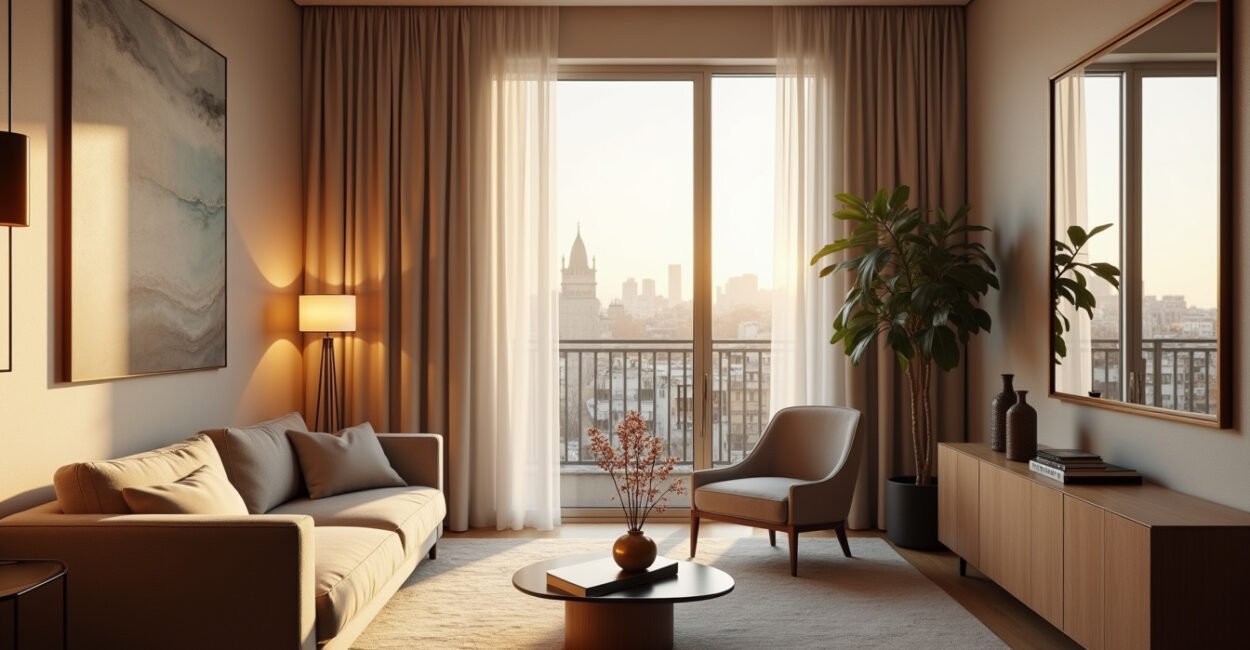
Good apartment lighting can make a cramped room feel calmer, taller, and more expensive.
When the right light hits the right surface, tight spaces stop feeling boxed in and start feeling intentional. That’s the real trick: layered apartment lighting, mirrors, and the right fixtures don’t just “brighten” a room — they change how your eye reads the space.
If your rooms feel small even after you’ve decluttered, the problem may not be the furniture. It may be the light.
Why Apartment Lighting Changes the Size of a Room
Light affects depth, not just brightness. In apartment lighting, the goal is to create visual layers so your eye moves across the room instead of stopping at one harsh glare point. A single ceiling fixture flattens everything. Three sources — ambient, task, and accent — create the illusion of distance.
That’s why a room with fewer lumens can still feel bigger than a room that’s blasting light from one overhead fixture. The second one often creates sharp shadows, which make walls feel closer and ceilings feel lower.
Think of it like photography. Flat light reveals every edge at once. Layered light gives the room texture, and texture creates perceived depth. Once you see it, you can’t unsee it.
The 3 Layers That Make Tight Spaces Feel Open
Start with the classic lighting trio: ambient for overall glow, task for focused work, and accent for visual lift. This is the foundation of smart apartment lighting, and it works in studio apartments, small bedrooms, and narrow living rooms alike.
- Ambient: ceiling fixtures, flush mounts, or soft recessed light
- Task: reading lamps, under-cabinet strips, desk lights
- Accent: wall sconces, picture lights, LED strips behind furniture
Here’s the part people miss: you do not need all three everywhere. You need balance. A small living room can feel bigger with one soft ceiling fixture, one floor lamp in a dark corner, and one subtle accent light near art or shelving. That combination keeps the room from collapsing into one bright center.

Mirror Placement: The Fastest Way to Multiply Light
Mirrors are not magic. They’re better than magic because they’re predictable. In apartment lighting, a mirror works when it reflects a bright source or a view, not when it reflects a blank wall. Place it across from a window, near a lamp, or beside a hallway opening to push brightness deeper into the room.
A mirror that reflects light feels useful; a mirror that reflects clutter feels louder. That’s the comparison that matters. If your mirror is facing a messy shelf, you just doubled the mess. If it faces daylight or a clean lamp glow, you just doubled the sense of space.
In practice, the best mirrors are often large and simple. Oversized frames can look elegant, but thin frames or frameless mirrors usually disappear better, which helps the room feel less crowded.
Fixture Choices That Visually Lift the Ceiling
The wrong fixture can shrink a room faster than a bulky sofa. For apartment lighting, look for designs that pull the eye up or spread light outward instead of dumping it in one spot.
Good bets include:
- flush mounts with diffused shades for low ceilings
- wall sconces that free up floor and table space
- slim floor lamps with arched arms
- pendants hung high enough to avoid chopping the room
A quick rule: if the fixture is visually heavy, keep the rest of the room light and simple. If the fixture is airy and slim, you have more freedom with bolder furniture. That tradeoff matters in small apartments, where every visual decision gets repeated five times by reflection, shadow, and line of sight.
For a technical reference on lighting quality and room comfort, the U.S. Department of Energy’s lighting guidance is a solid starting point, especially if you’re comparing efficiency and brightness. And if you want a more design-oriented view of how light affects interiors, the Architectural Digest guide to lighting a room explains the visual side well.
Small Mistakes That Make Rooms Feel Smaller
Here’s the mini-story that plays out all the time: someone buys a brighter bulb, expects the room to feel larger, and instead gets a harder glare. They add another lamp, then another, and the apartment still feels cramped. The fix was never “more light.” It was better distributed light.
These are the most common apartment lighting mistakes:
- using one overhead light as the only source
- choosing bulbs that are too cool for the room
- placing mirrors where they reflect clutter
- using oversized fixtures in low-ceiling rooms
- leaving corners dark, which compresses the space
One more thing: not every room wants the same color temperature. Warmer light often feels softer and more welcoming in bedrooms and living rooms, while neutral light can work better in kitchens and work areas. There’s no perfect setting for every apartment, and that’s worth admitting.
Small spaces do not need more light. They need smarter light.
That shift changes everything, because it moves you from “flood the room” thinking to “shape the room” thinking. And once you start shaping light, the apartment stops feeling like a container.
How to Build a Bigger Feel Room by Room
Use the same apartment lighting logic in every room, but change the emphasis. In the living room, prioritize layered light and one reflective surface. In the bedroom, keep the glow softer and lower. In the kitchen, focus on task lighting that removes shadow from counters. In a hallway, a slim sconce or wash of light can prevent that tunnel effect.
Good apartment lighting is not about perfection. It is about removing the visual friction that makes a room feel tight. When the corners glow, the mirrors help, and the fixtures stay out of the way, the apartment reads as larger than its square footage.
That’s the quiet win: not a fake “bigger” room, but one that finally breathes.
According to the U.S. Nuclear Regulatory Commission’s LED overview, modern LED lighting offers efficient, controllable light sources that make layered setups easier to maintain. That matters because a small apartment benefits from flexibility more than raw power.
FAQ
What Type of Lighting Makes an Apartment Feel Bigger?
Layered lighting usually works best: one ambient source, one or two task lights, and at least one accent light. This spreads brightness through the room instead of creating a single hot spot. Soft, diffused light tends to feel larger than a harsh overhead fixture because it reduces sharp shadows and makes walls feel farther away.
Where Should Mirrors Go in a Small Apartment?
Place mirrors where they reflect daylight, a lamp, or an open view, not clutter. A mirror across from a window can make a room feel much brighter, while one facing a blank wall gives you very little payoff. In narrow spaces, mirrors near entryways or hallways can also help break up that compressed feeling.
Are Warm Bulbs or Cool Bulbs Better for Small Rooms?
Warm bulbs usually feel more inviting in living rooms and bedrooms, while cooler or neutral bulbs can help task areas like kitchens and desks. The key is not just the color temperature but the balance across the room. A small apartment often feels best when the light is consistent enough to avoid visual choppiness from room to room.
Do Floor Lamps Really Help a Room Look Larger?
Yes, especially when they light a dark corner that would otherwise pull the room inward. A slim floor lamp can lift the eye vertically and add depth without taking much floor space. The effect is stronger when the lamp’s shade softens the glow instead of shooting light straight down in a harsh cone.
What is the Biggest Apartment Lighting Mistake?
Relying on one overhead light is probably the most common mistake. It tends to flatten the room, create shadows in the wrong places, and make the space feel smaller than it is. The better move is to spread light around the room so your eye travels, which creates openness without adding any square footage.


