 Skip to content
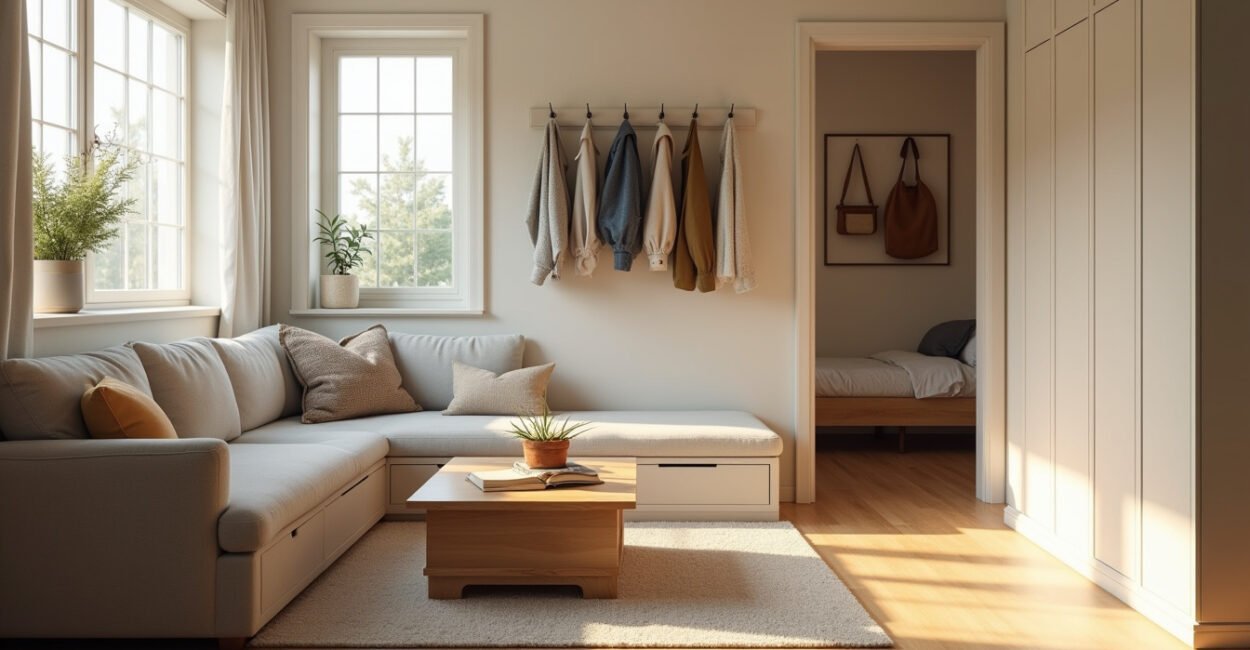
Small-space storage works best when you can see less, not hide more.
Apartment storage gets tricky when every shelf starts acting like a display case. The fix is not buying bigger furniture. It’s choosing pieces that swallow clutter, keep daily essentials within reach, and make the room feel visually lighter.
Why Apartment Storage Feels Harder Than It Should
The technical problem is simple: in a compact apartment, storage has to do two jobs at once. It must hold things and reduce visual noise. If it only holds things, the room still feels busy. If it only looks clean, you end up creating a system that is annoying to use.
That’s why the best apartment storage ideas are usually invisible from the front and obvious from the inside. Think closed bases under benches, lift-top coffee tables, bed frames with drawers, and wall-mounted organizers that pull clutter off the floor. The goal is not to store more stuff. It’s to make the stuff you already own disappear into the room.
In practice, what works is a little less dramatic than social media makes it look. A basket by the entryway, a slim cabinet in the dining area, and one well-placed tray in the kitchen can change the whole feel of a place. The room stops looking “full” and starts looking intentional.
The Hidden Storage Pieces That Earn Their Keep
If you want apartment storage that actually improves the room, start with furniture that does double duty. Not every clever piece needs to be custom-built. Some of the best solutions are the most ordinary ones, just used with more discipline.
- Storage ottomans: good for blankets, chargers, board games, and anything that tends to wander.
- Under-bed drawers: ideal for off-season clothes or extra linens.
- Entry benches with cubbies: they hide shoes, bags, and the daily drop zone mess.
- Nesting tables: useful because they expand when needed and vanish when they don’t.
- Wall rails and peg systems: perfect for kitchens, cleaning tools, or small accessories.
The surprising part is that the smartest apartment storage often looks less “organized” at first glance. A closed cabinet with a few labeled bins usually beats a perfectly styled open shelf, because it gives your eye a place to rest. That matters more than people think. Visual calm is a storage feature.

Open Shelves Look Good Only If You Edit Them Hard
Open shelving gets romanticized, but it’s a trap if you don’t edit ruthlessly. One stack of plates can look airy. Four mismatched mugs, three cookbooks, a candle, a bowl of keys, and a random speaker? That’s not design. That’s visual static.
Here’s the comparison most people miss: before, open storage feels spacious for about a week; after, closed or partially hidden storage keeps the apartment looking cleaner for months. That difference is huge in a small home. Open shelves should be treated like a stage, not a warehouse.
Use them for objects that repeat visually: matching dishes, a few books, one plant, one tray. Everything else should move behind a door, into a drawer, or into a basket with a lid. If you need more proof that clutter control is part psychology, not just decor, the National Institute of Mental Health notes how environment can affect stress and focus in daily life; a calmer room can feel easier to live in and maintain. See the NIMH guidance on caring for your mental health.
Small Apartment Storage Mistakes That Make Rooms Feel Smaller
The biggest mistake is buying storage that adds bulk without solving a problem. A chunky cabinet in the wrong place can steal more space than the clutter it hides. The second mistake is scattering tiny storage everywhere, which creates a dozen mini-messes instead of one manageable system.
Watch for these common errors:
- Leaving the floor crowded: visible items on the floor make the room feel tighter fast.
- Using too many open bins: they look tidy for a day, then become visual noise.
- Choosing storage that is too deep: things disappear and stop being used.
- Buying furniture before measuring: one wrong inch can wreck circulation in a small room.
Here’s a real-world version of how this plays out. A tenant I saw in a one-bedroom kept adding cute baskets because they looked organized. The apartment still felt chaotic, because every basket was another object competing for attention. When she switched to one closed media console and one slim hallway cabinet, the place felt bigger overnight. Same stuff. Less visual drag.
A Simple Apartment Storage System That Actually Stays Tidy
The best system is one you can maintain on a tired weekday night. Start by grouping items into three categories: daily use, weekly use, and rarely used. Daily items deserve the easiest access. Weekly items can live in drawers, bins, or upper cabinets. Rarely used items should go as high, low, or hidden as possible.
For apartment storage, that means placing the most-used things where your hand naturally reaches them: near the door, beside the bed, under the sofa, or inside the first drawer you open. If you have to move five things to store one thing, the system will fail.
The U.S. Department of Energy’s guidance on efficient space use for smaller homes makes the same basic point in a different context: layout matters as much as the object itself. See Energy Saver from the U.S. Department of Energy for practical home-efficiency ideas that also support a lighter, more functional layout. And for broader home-organizing principles, the HGTV cleaning and organizing section offers useful visual examples of how storage affects the feel of a room.
The cleanest apartment is rarely the one with the least stuff. It’s the one where every object has a quiet place to disappear to.
What to Do Tonight If You Want Instant Relief
Don’t start with a full overhaul. Start with the three spots your eye keeps landing on: the entry, the coffee table, and the top of one dresser or counter. Those are the clutter magnets. Clear one surface, add one hidden storage solution, and remove one item that doesn’t belong.
That small reset is usually enough to change the mood of the room. Apartment storage works best when it feels almost invisible. The room looks calmer, but nothing feels missing. That’s the sweet spot.
FAQ
What is the Best Apartment Storage for Very Small Spaces?
The best apartment storage for very small spaces is usually multi-use furniture with hidden compartments. Storage ottomans, beds with drawers, and slim closed cabinets work well because they hold everyday items without adding visual bulk. If you only have room for a few upgrades, choose pieces that reduce both clutter and the number of separate objects in the room. That makes the apartment feel larger almost immediately.
Are Open Shelves Bad for Apartment Storage?
Not at all, but they only work if you keep them tightly edited. Open shelves are best for a small number of repeated items, like dishes, books, or a plant. If you mix too many shapes and colors, the shelf becomes visual noise. In a compact apartment, open shelving should be decorative first and functional second, while the messy stuff goes behind closed storage.
How Do I Make Apartment Storage Look Stylish Instead of Bulky?
Choose pieces with clean lines, lighter finishes, and hidden compartments. A storage piece looks less bulky when it sits flush against the wall and matches the room’s color palette. Transparent containers can help in closets, but in living areas, closed fronts usually look calmer. The trick is to let the furniture disappear into the space instead of announcing itself.
What’s the Biggest Mistake People Make with Apartment Storage?
The biggest mistake is adding storage without removing anything. That turns a small apartment into a crowded one with nicer containers. Another common problem is buying storage that’s too large or too deep, which makes items harder to reach and easier to forget. Good storage should make your life simpler on a busy day, not create another system to manage.
How Often Should I Review My Apartment Storage Setup?
A quick review every season is enough for most people. That’s a good time to move out items you no longer use, rotate seasonal clothing, and check whether any storage zone has become overloaded. If a drawer or basket is always hard to close, it’s probably a sign that the system needs to be simplified. Small apartments stay calm when storage stays current.


