 Skip to content
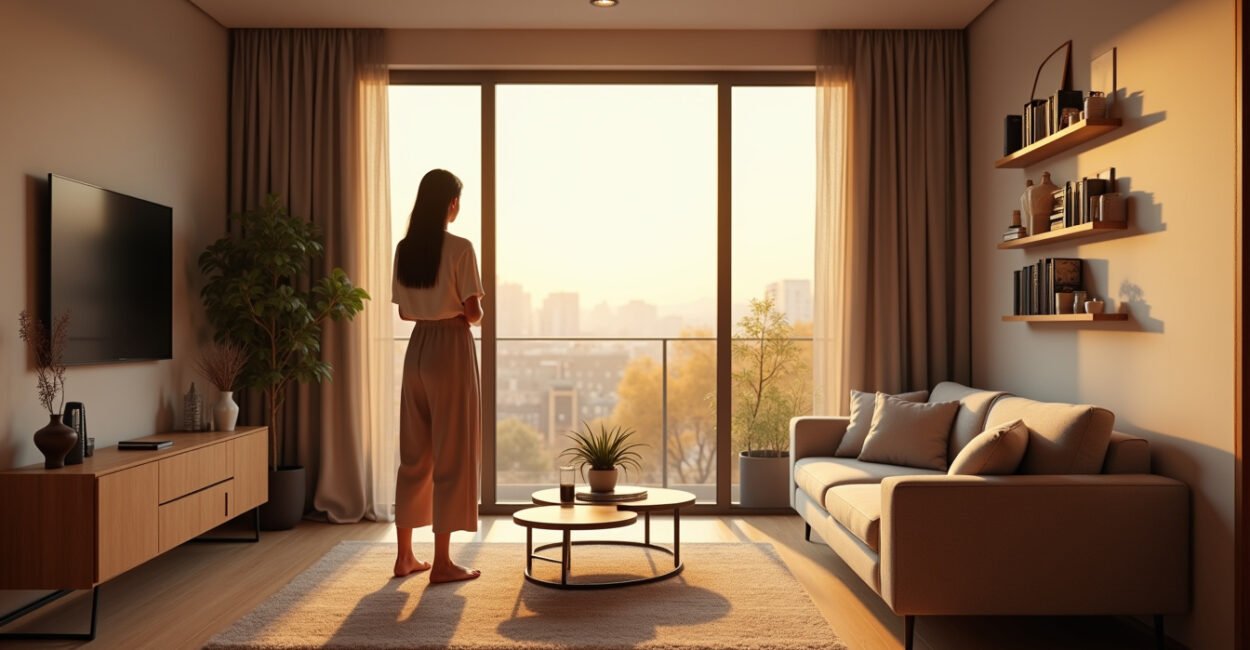
Small apartment decor works best when every choice earns its keep: more light, more space, less clutter.
If your place feels tight, the fix usually isn’t “more stuff.” It’s smarter small apartment decor: cleaner sightlines, furniture that does double duty, and a layout that stops fighting the room. The good news? You can make a studio or one-bedroom feel bigger without knocking down a single wall.
In practice, the biggest wins come from a few moves that are almost annoyingly simple: raise things off the floor, reflect natural light, and keep heavy visual blocks out of the center of the room. That’s the thread running through the 17 upgrades below.
1. Start with the Layout, Not the Shopping List
The fastest way to improve small apartment decor is to stop buying pieces that ignore the room’s shape. Measure first. Then map your “traffic lanes” so you can walk from door to sofa, kitchen to table, and bed to closet without sidestepping furniture.
A room feels larger when your eye can travel. That means fewer obstacles in the middle and more breathing room along the edges. A slim sofa, a round table, and a clear path can do more for a tiny apartment than an expensive statement chair ever will.
Here’s the practical version:
- Choose furniture with legs so the floor stays visible.
- Float the sofa slightly away from the wall if the room allows it.
- Use a rug to define zones instead of adding partitions.
- Keep the center of the room visually light.
That last part is where many people miss the mark. They fill the middle with storage cubes, side tables, and “just in case” pieces. The room gets smaller on sight. So before you buy anything else, ask one question: what can move to the wall, hang up, or disappear entirely?
2. Use Height to Beat the Footprint
When floor space is limited, vertical space becomes your best friend. This is where small apartment decor gets a little strategic. Think tall bookcases, wall shelves, peg rails, mounted lamps, and curtain rods placed closer to the ceiling line.
Why it works is simple: the eye reads height as volume. A room with tall, uninterrupted lines feels more generous than one packed with low, wide furniture. That’s why a narrow cabinet with a tall profile often looks less bulky than a squat storage bench with the same capacity.
One of the easiest upgrades is replacing table lamps with wall sconces or plug-in swings. You free up surfaces, reduce visual clutter, and make the room feel cleaner at night.
This is also where a tiny mistake can cost you space. Oversized art hung too low, shelves that stop halfway up the wall, or curtains that barely reach the window all shorten the room visually. Go higher. Let the room stretch.

3. Brightness is a Design Tool, Not an Accident
Light changes everything in small apartment decor. Bright rooms feel open because they reduce visual weight. Dark corners, heavy drapes, and matte black furniture can work in small doses, but too much of them makes the apartment feel compressed.
Start with what you already have. Sheer curtains, mirrors across from windows, and warm white bulbs can shift the mood fast. According to the U.S. Department of Energy’s guidance on lighting, efficient lighting choices can also reduce energy use while improving how a space looks and feels.
Here’s the contrast that surprises people: a room with fewer items but poor lighting often feels smaller than a room with slightly more furniture and better light. That’s why brightness beats minimalism for sheer livability.
Light is not decoration. It is square footage for your eyes.
A real-home trick: place a mirror where it catches daylight, not where it only reflects a blank wall. That one shift can make a narrow living room feel less like a hallway and more like an actual room.
4. Choose Pieces That Work Twice as Hard
In a small apartment, every object should justify its space. The best upgrades are the ones that solve two problems at once. Storage ottomans, nesting tables, extendable dining tables, and beds with drawers all fit that rule.
That’s not just clever design; it’s maintenance. The less you need to stash in random corners, the less the apartment turns into a visual mess. And once clutter spreads, the room starts feeling smaller no matter how many nice things you bought.
Small apartment decor gets easier when “pretty” and “practical” stop competing. A woven basket can hold throws and look good. A slim bench can store shoes and give you a landing spot by the door. A fold-down desk can disappear after work and give you your living room back at night.
Mini-story: a couple in a 520-square-foot apartment had a dining table that looked beautiful but blocked half the room’s movement. They replaced it with a drop-leaf version and swapped two bulky chairs for stackable seats. Nothing dramatic changed on paper. In real life, the apartment felt calmer within a day. Same square footage. Different behavior.
5. The Finishing Touches That Make It Feel Intentional
Once the big pieces are right, the details pull everything together. In small apartment decor, the final layer should make the space feel edited, not decorated to death. That means a restrained color palette, fewer but larger accessories, and repeated materials that create visual rhythm.
One common mistake is using too many tiny objects. Lots of little frames, little bowls, little plants, little candles — all of them compete for attention. A few larger pieces usually work better because they read as calmer and cleaner.
- Use one or two accent colors, not six.
- Repeat a material like wood, linen, or black metal.
- Group decor in odd numbers for a natural look.
- Leave some surfaces empty on purpose.
If you want a reliable reference point, the National Park Service’s clutter guidance is a surprisingly useful reminder: clutter changes how a space is experienced, not just how it looks. That’s true in apartments, too. A clear surface can feel like a deep breath.
The goal isn’t to make a small apartment look empty. It’s to make it feel easy to live in.
What Makes a Small Apartment Feel Bigger Right Away?
The fastest change usually comes from removing visual blockages. Clear the floor, use lighter window treatments, and replace one bulky piece with something slimmer or multifunctional. Small apartment decor works best when the room can be seen in one glance without interruption. Even one open pathway and one mirror in the right spot can shift the whole feel of the apartment.
Should I Avoid Dark Colors in a Small Apartment?
No, but use them with intention. Dark colors can add depth and make a room feel richer, especially on one accent wall or in a compact entryway. The problem starts when dark tones dominate every large surface. In small apartment decor, balance matters more than color rules. Pair darker pieces with light walls, reflective surfaces, or natural textures so the room doesn’t close in.
What Furniture is Best for a Small Apartment?
The best furniture is compact, raised on legs, and preferably multifunctional. Think storage beds, nesting tables, armless chairs, and slim consoles instead of deep, heavy pieces. For small apartment decor, scale matters more than style trends. A beautiful sofa that swallows the room is still the wrong sofa. Measure carefully and keep circulation space protected.
How Do I Decorate Without Making the Apartment Feel Cluttered?
Pick a visual theme and repeat it instead of adding random accents. Use a limited palette, a few larger decor items, and closed storage for everyday mess. Small apartment decor feels cluttered when too many small objects compete for attention. If a surface already works, don’t force more onto it. Empty space is part of the design.
What’s the Biggest Mistake People Make in Small Apartment Decor?
They decorate around individual corners instead of planning the whole room. That’s how you end up with a nice lamp, a nice chair, and a room that still feels awkward. The better approach is to think in zones, sightlines, and scale. Small apartment decor succeeds when the apartment feels like one connected space, not a collection of isolated purchases.


