Skip to content
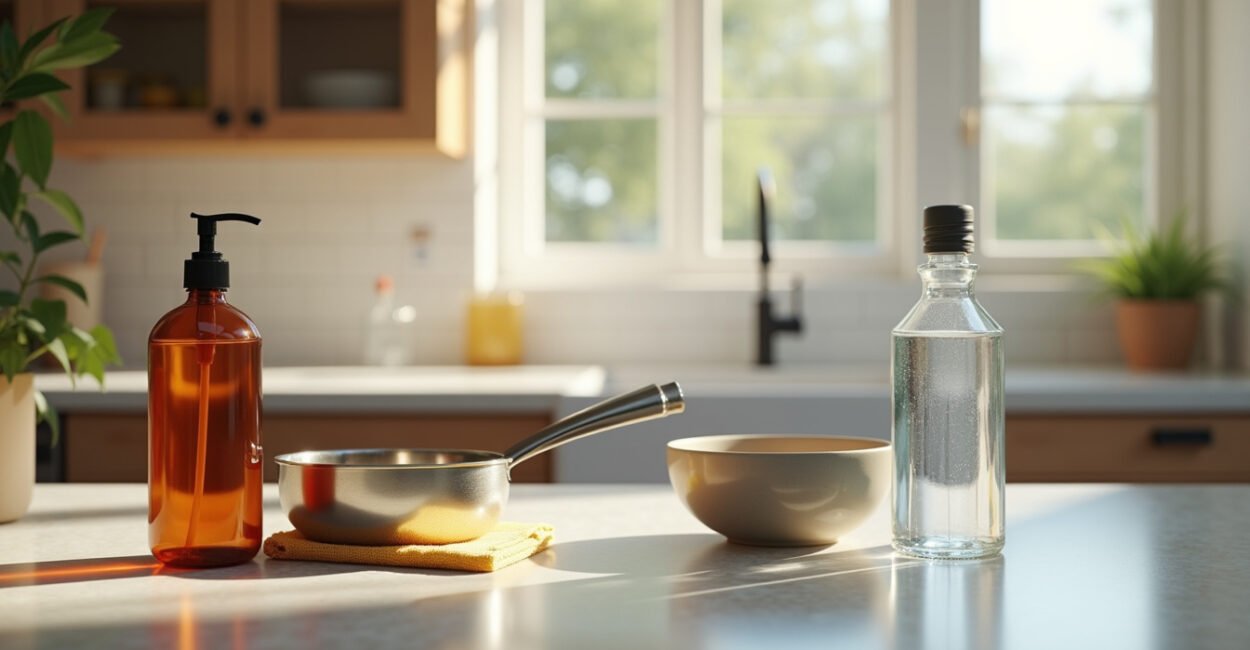
Castile soap vs vinegar cleaner uses sound simple—until you spray the wrong one on the wrong surface.
That’s where most “natural cleaning” advice falls apart. One mix cuts grease beautifully and the other crushes mineral buildup, but they behave very differently once they touch stone, glass, wood, or sealed finishes.
Castile soap and vinegar are not interchangeable. Used side by side, they solve different problems—and they can cancel each other out if you combine them carelessly.
Castile Soap Vs. Vinegar Cleaner Uses: The Real Split
Here’s the cleanest way to think about it: Castile soap is a surfactant, vinegar is an acid. Castile soap lifts oils and dirt so water can rinse them away. Vinegar dissolves some mineral deposits, softens soap scum, and helps break down grime on hard, non-porous surfaces.
That difference matters more than the “natural” label. If you’re cleaning a greasy kitchen counter, castile soap usually wins. If you’re fighting cloudy hard-water spots, vinegar usually wins. And if you mix them together in one bottle, they neutralize each other to a degree, which makes castile soap vs vinegar cleaner uses more about choosing the right tool than finding one magical recipe.
The big mistake is assuming one cleaner can do both jobs equally well.
Where Castile Soap Shines—and Where It Slows Down
Castile soap is the better choice when the mess is oily, sticky, or film-like. Think countertops with food residue, bathroom sinks with body oils, painted surfaces, and some floors that need a gentle wash rather than a chemical-style strip.
It works because soap surrounds grease molecules and helps lift them off the surface. That’s why castile soap vs vinegar cleaner uses usually favor soap for general cleaning, especially when you want something mild and versatile.
- Best for: grease, dust film, everyday dirt
- Usually safe on: sealed wood, painted walls, most counters
- Less effective on: hard-water stains, mineral haze, soap scum buildup
But here’s the catch: if you overdo it, soap can leave residue. That residue attracts more dirt, which is the exact opposite of what you wanted. In practice, what happens is that people use “a little extra for a deeper clean,” then wonder why the surface feels tacky later. The fix is a smaller amount and a clean water rinse when needed.

Where Vinegar Wins, and Why It Fails Fast on the Wrong Surface
Vinegar is strongest when the problem is mineral, not oily. It can help loosen hard-water spots, dull film on glass, and some soap scum on shower surfaces. That’s why it gets so much attention in castile soap vs vinegar cleaner uses: it looks dramatic because it works fast on the things people hate seeing.
But vinegar is not a universal cleaner. On natural stone like marble, granite, travertine, and limestone, the acid can etch the surface over time. That’s not theoretical; stone-care groups and manufacturers warn against acidic cleaners for exactly this reason. A good reference point is the Consumer Reports guidance on granite care and the National Park Service overview of stone cleaning.
Vinegar is a specialist, not a generalist.
The Surfaces That Need a Different Mix Entirely
Some surfaces don’t want either ingredient in a strong form. That’s where a lot of castile soap vs vinegar cleaner uses need a hard stop and a different plan.
- Marble and other natural stone: skip vinegar; use a stone-safe cleaner.
- Unfinished wood: avoid soaking; use minimal moisture.
- Electronics and screens: use manufacturer-approved wipes or a barely damp cloth.
- Cast iron: castile soap can strip seasoning if overused.
- Sealed floors: test first, because buildup and finish type matter.
That last point trips people up. A cleaner can be “natural” and still wrong for your surface. If you’ve ever cleaned a countertop and left it looking worse—streaky, dull, or somehow sticky—you probably didn’t need more power. You needed a different chemistry.
The One Mistake That Makes Both Cleaners Look Bad
Mixing castile soap and vinegar in the same bottle sounds efficient, but it’s usually a bad trade. The acid in vinegar can cause the soap to separate, curdle, or lose cleaning strength. You end up with a bottle that feels clever and performs worse.
Good cleaning is less about “natural” and more about matching chemistry to the mess.
Here’s the mini-story that sums it up. A homeowner kept using a vinegar spray on a greasy stove because it “smelled clean.” The stove looked okay for a day, then the film came back. She switched to diluted castile soap for the grease, used vinegar separately on the glass panel for mineral haze, and the whole routine got easier in one week. Same pantry. Very different results.
A Simple Side-by-Side Decision Table
If you want the shortest possible answer, use this:
| Cleaning job | Better choice | Why |
|---|---|---|
| Grease and everyday grime | Castile soap | Lifts oils and dirt |
| Hard-water spots and mineral film | Vinegar | Acid dissolves deposits |
| Natural stone | Neither, in strong form | Acid can etch; soap can leave residue |
| Routine light cleaning | Castile soap first | Gentler and more versatile |
This is why castile soap vs vinegar cleaner uses should be treated like a menu, not a rivalry. The right answer changes with the surface, not with the trend.
How to Use Each Cleaner Without Guessing
Start with the mess, then choose the formula. If the issue is oily, go castile soap. If the issue is chalky or cloudy from minerals, go vinegar. If the surface is delicate, test a hidden spot first or skip both and use a manufacturer-safe product.
That approach lines up with broader cleaning guidance from public-health and consumer sources, including the EPA’s cleaning and disinfecting guidance and university extension advice such as University of Minnesota Extension’s cleaning basics. Neither source is selling you a miracle bottle. Both point to the same principle: match the product to the task.
That’s the real win: fewer products, fewer mistakes, better results.
FAQ
Can I Mix Castile Soap and Vinegar in One Spray Bottle?
Usually, no. Vinegar can react with castile soap and reduce its cleaning power, leaving you with a cloudy or separated mixture that performs worse than either ingredient used alone. If you want both benefits, use them separately for different jobs: soap for grease and vinegar for mineral buildup. That keeps castile soap vs vinegar cleaner uses clear and avoids wasting both ingredients.
Is Castile Soap Safe for All Countertops?
Not automatically. It’s generally gentle, but some surfaces—especially unsealed stone or finishes that dislike residue—can still react badly if you use too much or don’t rinse well. A small test spot is smart, especially on older counters. For castile soap vs vinegar cleaner uses, surface type matters as much as the cleaner itself.
Why Does Vinegar Work So Well on Shower Glass?
Because shower glass often carries mineral deposits from hard water, and vinegar is acidic enough to help loosen them. That said, it works best on non-porous surfaces and may disappoint if the real issue is soap residue mixed with body oils. For castile soap vs vinegar cleaner uses, vinegar is the mineral-removal specialist, not the universal answer.
Which One is Better for Daily Cleaning?
Castile soap usually has the edge for daily wiping because it handles mixed dirt, fingerprints, and light grease without the surface warnings that come with vinegar. It’s the more flexible option for kitchens, sinks, and many painted or sealed surfaces. Vinegar is better saved for specific jobs where mineral buildup is the real problem.
What Should I Use on Marble Instead?
Use a pH-neutral, stone-safe cleaner made for marble or natural stone. Vinegar is too acidic, and even castile soap can leave a film if it’s used heavily or not rinsed well. With castile soap vs vinegar cleaner uses, marble is the clearest example of “neither is the default choice.”
The smartest cleaner is rarely the flashiest one. It’s the one that leaves the surface better than you found it, without asking you to guess twice.
In home cleaning, the winner is the ingredient that fits the job—not the one with the better reputation.