Skip to content
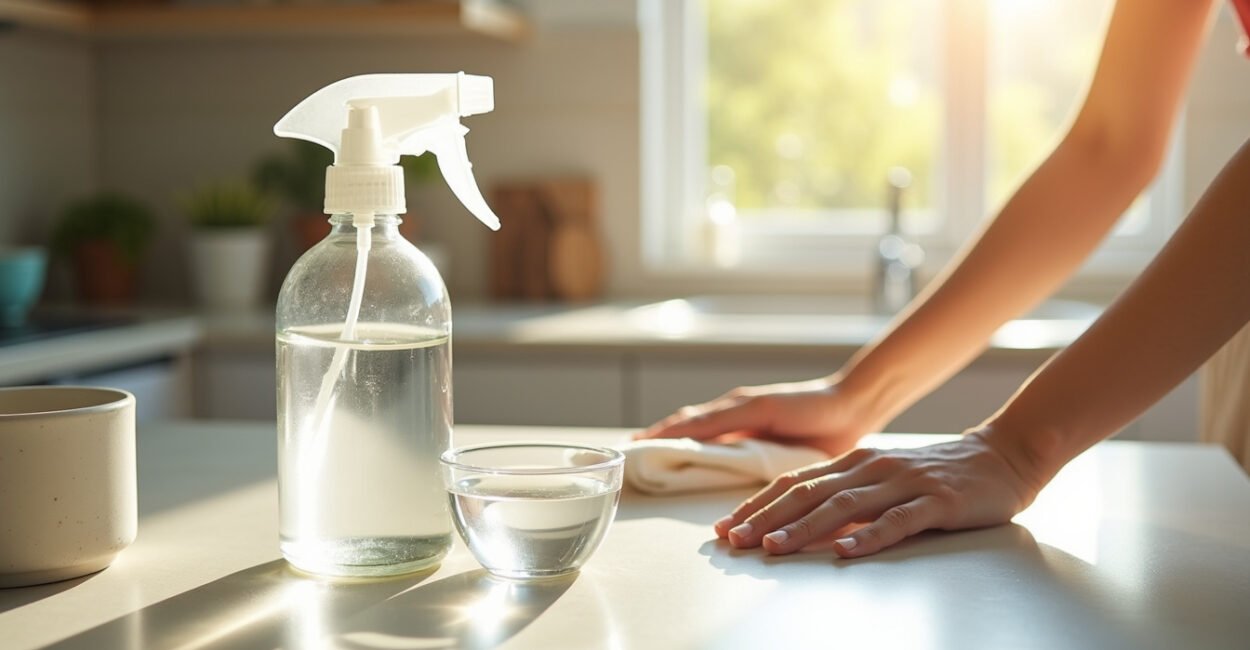
The trick is not adding more vinegar — it’s using the right dilution so your natural all purpose cleaner recipe vinegar works hard without streaking the glass.
That’s why this three-ingredient mix has stayed popular: it can handle counters, tile, and glass in one batch, as long as you keep the ratio tight and skip the ingredients that leave a film.
Why This 3-ingredient Mix Works Better Than Most Homemade Sprays
A proper natural all purpose cleaner recipe vinegar is not magic; it’s chemistry. Vinegar is a dilute acetic acid solution, and that mild acidity helps loosen mineral haze, light grease, and everyday grime. In plain English: it cuts through the kind of mess that makes a surface look dull, not the kind that needs heavy-duty disinfecting.
That distinction matters. On sealed counters, tile, and glass, a simple vinegar-based spray can do a lot of the visible cleaning work without the sticky feel some store-bought products leave behind. The win is not just “natural.” It’s fast, cheap, and less fussy.
The biggest advantage is consistency: one batch, one bottle, three surfaces. That keeps your cleaning routine simple enough to actually use it.
The Dilution Tip That Keeps It Effective Without Residue
Here’s the part most people get wrong with a natural all purpose cleaner recipe vinegar: they pour in too much vinegar. More acid does not equal better cleaning. It often means stronger smell, more drag on the cloth, and a higher chance of streaks on glass.
The sweet spot for everyday cleaning is usually 1 part white vinegar to 1 part water. That ratio keeps the spray effective on counters, tile, and glass while reducing the residue problem that shows up when a mix is too concentrated. If your water is hard, this matters even more, because mineral content can make streaking worse.
- Use distilled white vinegar, not balsamic or apple cider.
- Mix with clean water in a spray bottle.
- Add just a few drops of dish soap only if needed.
- Shake gently before each use.
That small dilution tweak is the difference between “fresh and clean” and “why does my mirror look hazy?”

How to Make One Batch for Counters, Tile, and Glass
For a practical natural all purpose cleaner recipe vinegar, keep the formula simple: 1 cup white vinegar, 1 cup water, and 2 to 3 drops of mild dish soap if you want a little extra cutting power on greasy spots. Pour it into a spray bottle and label it clearly.
Then use it the same way on all three surfaces: spray lightly, wipe with a microfiber cloth, and dry with a second cloth if you want a polished finish. On glass, less is more. On tile, the grout line needs a little extra attention. On counters, you want a light mist, not a wet layer.
That last part is where people waste time. They soak the surface, then spend twice as long wiping it off. A thin spray covers more area and leaves less behind.
Where It Shines — And Where It Should Stay Out of the Way
This is one of those cleaners that earns its keep because it’s good in the right places. A natural all purpose cleaner recipe vinegar is excellent for sealed countertops, ceramic tile, mirrors, and most glass surfaces. It’s also handy for quick daily wipe-downs when you do not want a whole cabinet full of specialty bottles.
But it is not for everything. Vinegar can damage natural stone like marble, granite, or travertine over time, especially if the seal is weak. It can also be a poor choice on waxed wood and some delicate finishes.
Use it where it helps. Skip it where acid can quietly wear down the surface.
For general household safety and cleaner selection guidance, the EPA Safer Choice program is a good place to compare product ingredients. And if you want a broader look at acetic acid’s role in cleaning, the National Library of Medicine’s PubChem entry on acetic acid gives a solid technical overview.
The Mistakes That Make Vinegar Cleaner Look Worse Than It Is
When a natural all purpose cleaner recipe vinegar disappoints, the problem is usually not the recipe — it’s the method. I’ve seen people blame the spray when the real issue was a dirty cloth, too much product, or the wrong surface.
Here are the most common slip-ups:
- Using too much vinegar and leaving streaks on glass.
- Mixing it with bleach, which is dangerous.
- Spraying on unsealed stone or damaged finishes.
- Skipping the dry wipe on mirrors and windows.
- Using paper towels that shed lint.
There’s a simple mental rule here: if the surface should look clearer after cleaning, the cloth has to finish the job. The spray loosens grime. The wipe removes it.
A Quick Routine That Makes the Bottle Last Longer
The best homemade cleaner is the one you do not overuse. With a natural all purpose cleaner recipe vinegar, you can stretch one bottle a long way if you clean in small zones instead of fogging the whole room at once. Spray, wipe, move on. That rhythm keeps the surface from getting overloaded.
Here’s a mini scene I’ve seen play out more than once: someone cleans the kitchen island, sees streaks, adds more cleaner, and makes the streaks worse. Then they switch to a lighter spray and a dry microfiber cloth. The result is better in half the time. That tiny adjustment saves both product and patience.
The bottle is not the system. The system is the ratio, the cloth, and the restraint.
Why This Old-school Mix is Still Winning in 2026
Part of the appeal is that this cleaner fits the way people actually live now. Fewer products. Faster resets. Less clutter under the sink. In 2026, that is not a niche preference; it is a sanity saver.
A natural all purpose cleaner recipe vinegar gives you a practical middle ground: strong enough for everyday mess, gentle enough for routine use on the right surfaces, and simple enough to remake in under a minute. That combination is why it keeps showing up in real homes instead of just in internet lists.
If you want a cleaner that feels efficient without being fussy, this is the one that earns a permanent spot.
Clean less often, but clean with a method that actually works — that is the whole point.
FAQ
Is a Vinegar-based Cleaner Safe for All Countertops?
No, not all of them. A natural all purpose cleaner recipe vinegar works well on many sealed surfaces, but it should stay away from marble, granite, travertine, and other natural stone unless you are certain the finish can handle acid. When in doubt, test a hidden corner first and check the manufacturer’s care instructions before using it regularly.
Why Does My Homemade Spray Leave Streaks on Glass?
Usually because the mix is too strong, the cloth is dirty, or too much liquid is being sprayed. For glass, a 1:1 vinegar-to-water ratio is often the best starting point. Wipe with a clean microfiber cloth, then dry with a second cloth if you want a clearer finish.
Can I Add Essential Oils to the Cleaner?
You can, but they are optional and mostly for scent. They do not replace the cleaning action of vinegar, and too much oil can leave a light film on glass or mirrors. If you use them, keep the amount tiny and do a small test first so the spray still dries clean.
Does Vinegar Disinfect Surfaces?
Not in the same way that registered disinfectants do. A natural all purpose cleaner recipe vinegar is better for everyday cleaning, loosening residue, and improving appearance than for claiming full disinfection. If you need to kill specific germs, follow the directions on an approved disinfectant label.
What is the Best Cloth to Use with This Cleaner?
Microfiber is the best choice for most jobs. It grabs loosened dirt instead of pushing it around, and it helps reduce streaks on glass and shiny tile. Paper towels can work in a pinch, but they often leave lint behind and usually need more product to get the same result.