Skip to content

A calmer start does not require a drawer full of “eco” products or a 45-minute ritual. A practical low-waste morning wellness routine is a daily setup that reduces disposable packaging, saves time, and keeps your morning habits simple enough to repeat on a busy Tuesday.
The real win is not perfection. It is removing the small frictions that push people toward single-use wipes, sample-size clutter, overbuying, and half-finished routines. This guide gives you seven easy swaps, plus the habits and tools that make them stick in real life.
O Que Você Precisa Saber
- Low waste works best when you reduce repeat purchases, not when you chase zero waste purity.
- The most effective morning swaps are the ones you use every day: cleansing, brushing teeth, drinking water, skincare, and breakfast prep.
- Reusable basics like a bamboo toothbrush, refillable soap, and a stainless steel bottle cut packaging without complicating your routine.
- A good system is built around convenience. If a reusable item is harder to grab than the disposable version, it usually loses.
- The most sustainable routine is the one you can keep on low-energy mornings, travel days, and rushed school or work days.
How a Low-Waste Morning Wellness Routine Works in Real Life
Technically, a low-waste routine is a consumption pattern that minimizes disposable materials, packaging waste, and unnecessary product turnover while preserving the same functional outcome. In plain English: you keep the parts of your morning that help you feel clean, awake, and steady, but you stop feeding the trash bin with tiny, repeated purchases.
The key difference is design. A routine is not low waste because it uses “natural” products; it is low waste because it creates less waste across the whole morning loop. That means fewer paper towels, fewer sample packets, fewer plastic minis, fewer throwaway razors, and fewer half-used products that expire before you finish them.
What makes a morning routine low waste is not the label on the product — it is how often the routine depends on disposables, packaging, and impulse replacements.
In practice, the routine works when your default items are visible, refillable, and fast to use. The moment your system requires too many decisions, people go back to whatever is easiest. I have seen that happen with beautifully organized “eco” bathrooms that still waste more because the reusable items are hidden in a basket nobody opens.
Swap 1: Replace Single-Use Cleansing with Refillable Basics
Start with the Bottles You Finish Fastest
The easiest place to cut waste is your cleanser, hand soap, and body wash. Those products move quickly, so switching to refillable formats has an immediate effect without forcing a lifestyle overhaul. A solid bar cleanser can reduce packaging even more, but only if you actually like the texture and rinse-off feel. If a bar makes you skip cleansing on rushed mornings, it is not the better option for you.
Choose One Refill System and Stick to It
Refill stations, concentrated soap tablets, and bulk-buy dispensers all work. The best option is the one you will restock without procrastinating. A refillable pump bottle in the shower or by the sink is more sustainable than a fancy glass jar that looks nice and stays empty for three weeks. Convenience matters because habits are built at the sink, not on a mood board.
For water and energy context, the U.S. Environmental Protection Agency’s WaterSense program is a solid reference for reducing household water use without turning your bathroom into a project. The same principle applies here: small daily efficiencies add up when they are repeatable.

Swap 2: Trade Disposable Toothcare for Reusables That Actually Last
Use a Manual Brush You Replace, Not Throw Away Daily
A standard toothbrush is not waste-free, but it is still a better baseline than all the extra packaging that comes with novelty kits and single-use oral-care accessories. A bamboo toothbrush helps reduce plastic content, though the real advantage comes from treating it like a regular tool instead of a guilt object. Replace it on a normal schedule and move on.
Rethink the Extras Around Oral Care
Floss picks, travel-size toothpaste tubes, and individually wrapped mouthwash tablets add up fast. If you brush twice daily, a family-size toothpaste tube or a refillable paste option usually creates less waste than a stream of minis. Dentists still matter more than aesthetics here, so do not swap out a product that supports your oral health just to feel greener. Good dental hygiene is non-negotiable.
The National Institutes of Health publishes practical oral-health guidance through its oral hygiene resources. If a swap compromises brushing quality, it is the wrong swap.
Swap 3: Make Hydration Reusable and Easy to Grab
Morning hydration sounds trivial until you notice how many households rely on bottled water, paper cups, or random cups left around the kitchen. A reusable bottle or glass carafe near the sink solves that problem with almost no effort. Stainless steel works well if you like cold water; glass is fine if you set it somewhere stable and do not need portability before coffee.
A reusable bottle saves waste only when it becomes the first thing you reach for, not the thing you remember after you are already out the door.
Build a Fill-Drink-Refill Loop
The most reliable setup is boring: fill the bottle the night before, leave it where you can see it, drink half before leaving home, refill after breakfast, and carry it if needed. That loop reduces last-minute bottled-water runs and removes one more disposable from your morning. It also makes the routine feel calmer because there is one less decision to make.
Swap 4: Simplify Skincare with Fewer, Better Products
Pick Multi-Use Products That Match Your Skin
A low-waste skincare routine is not about owning fewer products at any cost. It is about choosing products that you will finish, repurchase deliberately, and use in a clear order. A gentle cleanser, moisturizer, and sunscreen are enough for most people in the morning. Adding five extra serums often creates more packaging than results, especially if you are not consistent.
Buy Bigger Sizes Only When You Truly Use Them
Large containers sound efficient, but they fail when the formula expires before you finish it. That happens often with active ingredients and niche skincare. If you use a product daily and finish it reliably, bulk size can be smart. If not, smaller refills reduce waste from both the product and the packaging you never fully use.
According to the U.S. Department of Energy’s Energy Saver guidance, small efficiency choices matter when they become habits. The same is true in a bathroom: a shorter, consistent routine beats a complicated one that burns out after a week.
Swap 5: Rethink Breakfast Packaging Before It Reaches the Bin
Choose Staple Foods over Single-Serve Convenience
Single-serve yogurts, granola cups, and drinkable breakfasts create a lot of packaging for very little nutrition. A lower-waste morning usually starts with plain oats, fruit, nut butter, eggs, or yogurt from a larger container. These are not glamorous choices. They are practical ones, and practical is what keeps waste down when life gets hectic.
Use Prep, Not Perfection
You do not need a full meal-prep system to reduce waste at breakfast. One container of overnight oats, a cut fruit bowl, or a reusable lunch container with leftovers from dinner can eliminate several disposables a week. The trick is to prep the parts that annoy you most in the morning. If slicing fruit is what makes you default to packaged snacks, handle it the night before.
Mini example: One parent I know stopped buying boxed breakfast bars for weekdays and started keeping a jar of oats, a container of peanut butter, and bananas on the counter. The routine was not “healthier” because it was trendy. It worked because the kids could serve themselves, and the trash can stopped filling up with wrappers by 8 a.m.
Swap 6: Cut Paper Towels and Bathroom Waste with Reusable Cloths
Reserve Disposables for True Messes
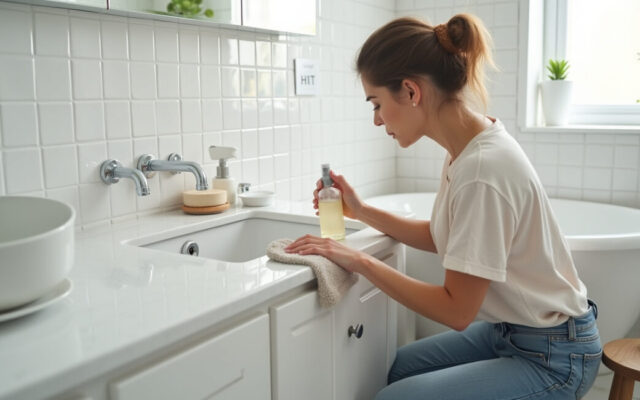
Paper towels are convenient, which is why they quietly become a default for mirrors, counters, spills, and hand drying. A stack of washable cloths or old cotton rags handles most of those jobs with less waste. Keep a small hamper or dedicated bin nearby so used cloths do not become another chore. If the storage is awkward, the system will fail.
Set Up a Simple Morning Cleaning Zone
The easiest way to use less paper is to make the replacement visible. Put one cloth for counters, one for sink touch-ups, and one for makeup or shaving messes. You do not need color-coded perfection. You need enough structure that cleaning the bathroom does not require reaching for a fresh sheet every time.
| Morning Task | Lower-Waste Option | Common Failure Point |
|---|---|---|
| Wiping counters | Reusable cotton cloth | Not keeping it within reach |
| Drying hands | Shared hand towel | Using it past the point of freshness |
| Small spills | Washable rag | Forgetting to separate it from laundry |
Swap 7: Build a Routine That Survives Busy Mornings
A routine only matters if it survives the days when you are tired, running late, or traveling. That is where many low-waste plans break. People buy the reusable bottle, the bamboo brush, the refill soap, and the cloths, then abandon the system the first time they oversleep. A real routine needs a fallback version.
Create a “Bare Minimum” Morning Stack
Your bare minimum stack should include the smallest set of reusable actions you can complete half-asleep: rinse the reusable bottle, brush with your regular toothbrush, use one cleanser or soap, moisturize, and grab breakfast that does not create extra packaging. If you do those five things, the day is already better than the disposable alternative. On travel days or chaotic mornings, this is the version that matters.
Watch for the Hidden Waste Traps
Refillable products still create waste if you over-order, forget what you already own, or buy duplicates because the original container is hidden in a cabinet. That is where this kind of routine can fail. The solution is inventory awareness, not more buying. A quick monthly check of soaps, toothpaste, cloths, and breakfast staples keeps you from turning “low waste” into “more stuff.”
The best low-waste routine is the one that reduces trash without creating a new management problem.
Próximos Passos
The smartest next move is not buying a bundle of eco-products. It is choosing two swaps you can repeat every single morning for the next 30 days. Start with the highest-frequency habits: washing, brushing, drinking water, and breakfast. Once those are stable, add the smaller changes. That order matters because consistency creates the savings, not the label on the product.
Before you change anything else, audit one week of morning trash. Look for the repeat offenders: toothpaste packaging, paper towels, bottled drinks, snack wrappers, and empty mini bottles. Then remove one and replace it with a reusable version that is easy to reach. That is the kind of low waste shift that holds up in a real house, not just in a photo.
Frequently Asked Questions
What Makes a Morning Routine Low Waste Instead of Just “eco-friendly”?
A morning routine is low waste when it reduces disposable materials, packaging, and unnecessary product turnover in a measurable way. “Eco-friendly” can describe almost anything with a green label, but low waste is about the actual amount of trash created. In practice, the best indicator is whether your routine relies on refillable, reusable, or bulk options for the things you use most often. If waste drops week after week, the system is working.
Do I Need to Switch Everything at Once?
No. Switching everything at once is one of the fastest ways to create burnout and clutter. Start with the items you use daily and finish quickly, like soap, toothpaste, water bottles, and paper towels. Those changes give you visible results without demanding a complete bathroom overhaul. A slow rollout also makes it easier to notice which products genuinely work for your lifestyle.
Are Bamboo Toothbrushes and Bar Soaps Always Better?
Not always. A bamboo toothbrush can reduce plastic content, but only if it is comfortable enough that you keep brushing properly and replacing it on schedule. Bar soap can cut packaging, but some people use more product or dislike the feel, which makes the swap less practical. The better choice is the one that matches your habits and does not create a hygiene trade-off.
How Can I Keep a Low-waste Routine During Travel or Rushed Mornings?
Build a backup version that uses the same core habits with fewer steps. A reusable bottle, a small toiletry kit, and a simple breakfast plan can keep waste low even when time is tight. The goal is not perfection; it is preserving the habit pattern when your schedule gets messy. If your routine only works on calm mornings, it is too fragile to be useful.
What is the Easiest First Swap If I’m Starting from Zero?
The easiest first swap for most people is replacing disposable paper towels or bottled water with a reusable cloth and a refillable bottle. Those two changes are cheap, visible, and easy to repeat. They also make the rest of the routine feel more natural because you start seeing waste reduction as a normal part of the morning, not a special project.