Skip to content

Blank walls in a small apartment do more than look unfinished; they can make a compact room feel narrower, darker, and more cluttered than it really is. The right small apartment wall decor ideas work like visual architecture: they guide the eye upward, bounce light, and add personality without stealing floor space.
In practice, the best wall styling for an apartment is not about covering every inch. It is about choosing pieces that improve scale, balance, and function at the same time. Below, you’ll find practical ways to decorate each room, the materials that work best in rentals, and the mistakes that usually make a small space feel even smaller.
O Que Você Precisa Saber
- In small apartments, wall decor should solve a spatial problem first and a style problem second.
- Mirrors, vertical art, and light-toned palettes help rooms feel larger because they reduce visual weight and increase reflected light.
- Rental-friendly options like peel-and-stick frames, removable hooks, and lightweight shelving give you flexibility without damaging walls.
- One strong focal wall usually works better than scattering many small pieces across every surface.
- Texture matters as much as color: woven pieces, wood, and fabric soften hard edges and make a room feel more finished.
Small Apartment Wall Decor Ideas That Make Rooms Feel Larger
The first rule of decorating tight walls is simple: create depth, not clutter. When every wall carries a different visual message, the room feels busy. When one or two elements repeat across the apartment, the space reads as intentional and calmer.
Designers often rely on scale, proportion, and reflection because these three things change how your brain reads a room. A large mirror near a window, for example, can visually extend a living area by doubling light. Vertical artwork does something different; it stretches the eye upward and makes low ceilings feel less compressed.
Use Mirrors with a Purpose
A mirror is one of the few wall pieces that can change both the look and the light level of a room. Place it where it can reflect daylight or a lamp, not just an empty wall. Oversized mirrors usually outperform tiny decorative ones in small apartments because they create one clear visual gesture instead of several weak ones.
Keep the Visual Field Calm
If your walls are fighting with patterned rugs, bold curtains, and colorful furniture, your apartment will feel smaller than it is. Choose either a strong wall focal point or a busier mix of textiles; rarely both. That tradeoff is where most people go wrong.
What makes a small room feel larger is not empty wall space alone, but controlled visual continuity: fewer competing focal points, more reflected light, and a clear vertical line.
For a deeper look at how the eye reads space, the National Park Service landscape architecture resources explain core composition principles that also apply indoors. The same visual logic is used in compact interiors: repetition, balance, and proportion all matter.
Art, Prints, and Gallery Walls Without the Clutter
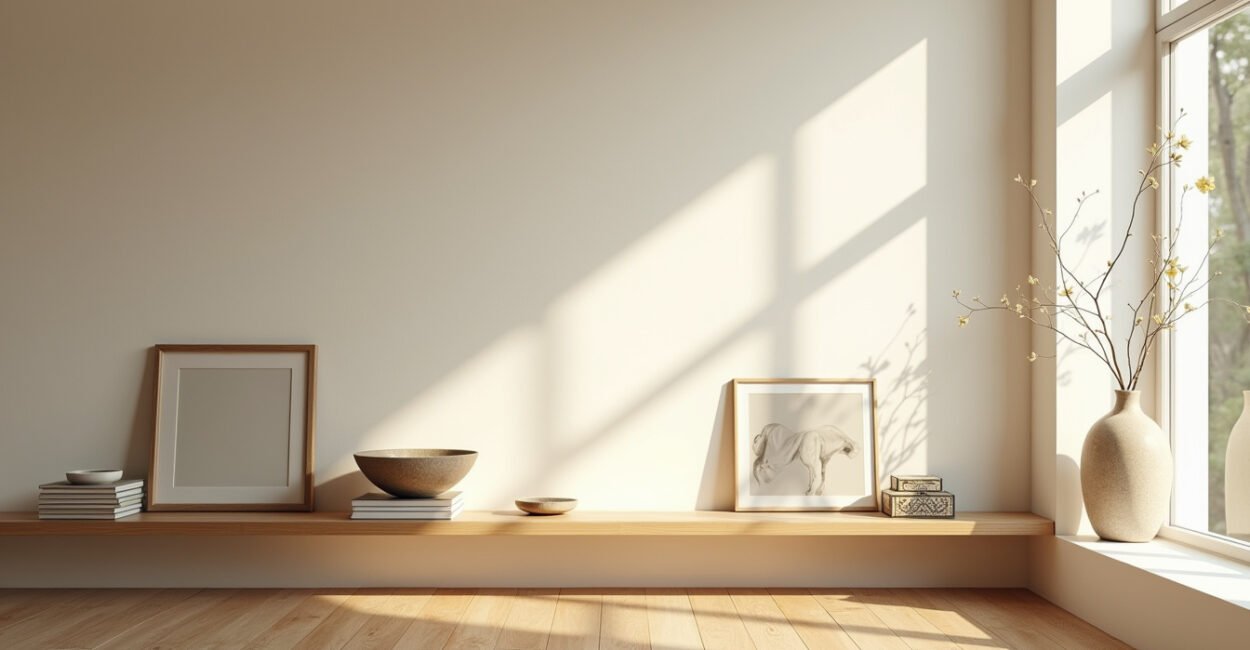
Gallery walls can work in small apartments, but only when they follow a disciplined layout. The common mistake is treating every frame as equally important. That makes the wall look accidental. A better approach is to pick one anchor piece, then build around it with supporting prints that share a color family or frame style.
Choose One of Three Layout Styles
- Grid layout: Best for modern, orderly rooms and identical frames.
- Linear layout: Good above sofas, beds, and consoles because it keeps the eye moving horizontally.
- Cluster layout: Works when the art pieces vary in size, but it needs consistent spacing to avoid visual noise.
Use Spacing as Part of the Design
Spacing is not leftover room between frames; it is part of the composition. In a small apartment, two to three inches between medium frames often looks cleaner than a packed arrangement. If you hang art too tightly, the wall starts to feel crowded, especially when furniture already sits close to it.
For renters, removable hanging systems matter more than people think. Damage-free strips and lightweight hooks let you test layouts without committing to extra holes. The U.S. Department of Energy also notes that lighting choices affect how surfaces are perceived, which is why art placement should always be considered with nearby lamps and natural light.

Vertical Storage That Doubles as Wall Decor
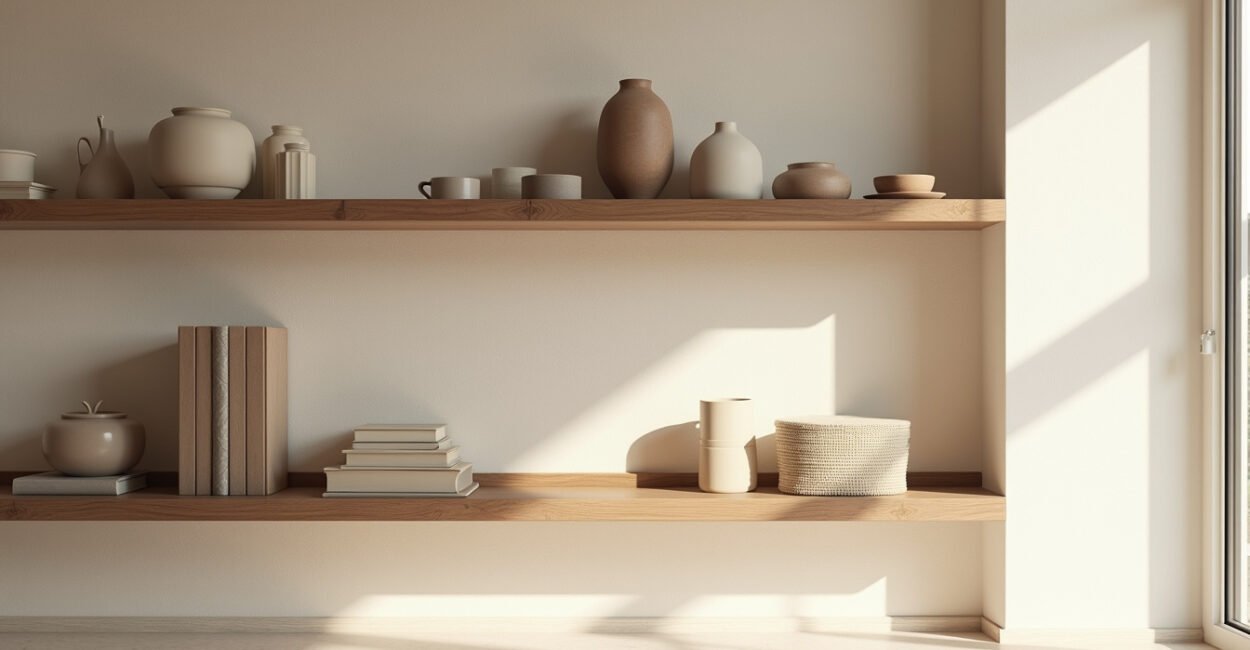
In a small apartment, functional wall decor is usually the smartest kind. Floating shelves, peg rails, and shallow wall-mounted cabinets give you storage without taking floor area. The trick is to keep them visually light, so they read as part of the room rather than as bulky add-ons.
Pick Shelves with Restraint
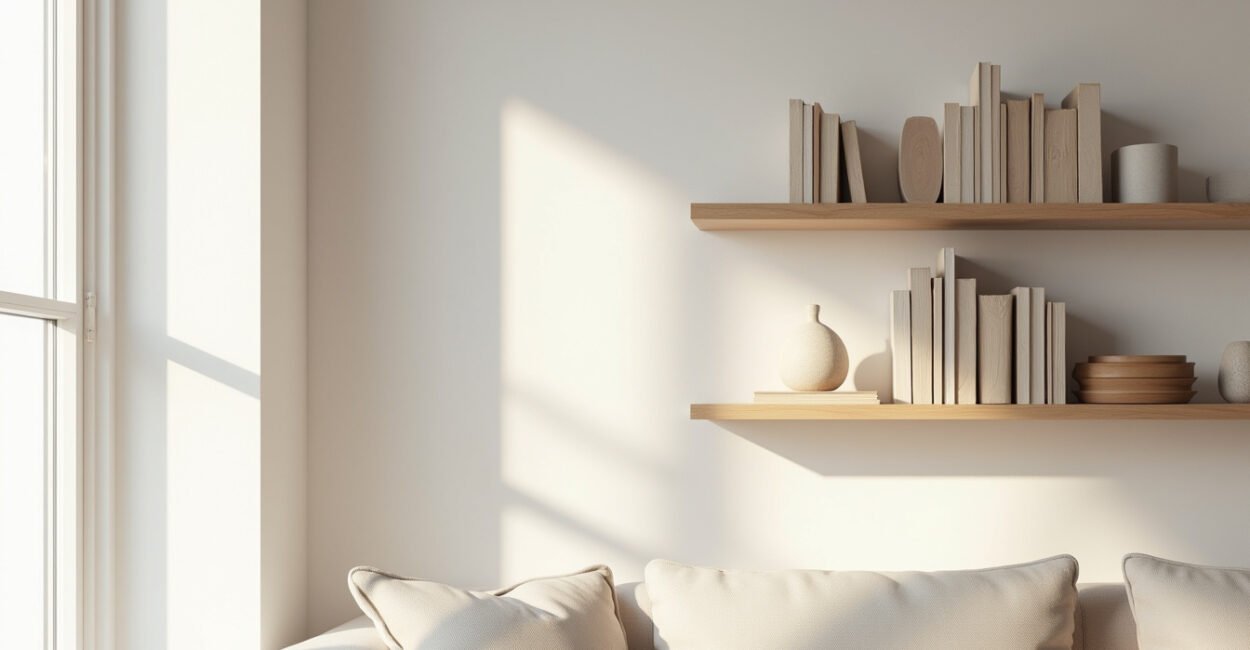
Floating shelves work best when they hold a mix of useful and decorative objects, not an overcrowded row of knickknacks. A good rule is to leave at least one-third of each shelf open. That open space keeps the shelf from looking heavy, especially in narrow living rooms or studio apartments.
Make Storage Look Intentional
Use repeating materials: wood with wood, black metal with black frames, or white shelving with pale walls. Matching finishes create order fast. If you mix too many materials without a plan, the wall stops feeling styled and starts feeling improvised.
Who works with compact interiors for a living knows this: wall storage should solve one problem only. If it tries to store everything, display everything, and decorate everything, it usually does all three badly. The best pieces are the ones you would still keep even if you moved to a larger place.
Light, Color, and Texture on Tight Walls
Color is not just decoration in a small apartment; it is a spatial tool. Light walls tend to recede visually, while dark walls can feel intimate or cramped depending on the lighting and ceiling height. That does not mean dark paint is off-limits. It means you need to choose it deliberately.
Use Texture to Replace Visual Heaviness
If you want warmth without clutter, texture usually does more work than extra objects. Woven wall hangings, linen panels, carved wood, and ceramic pieces add depth without overwhelming the room. This is especially helpful in apartments with plain builder-grade finishes, where everything can feel a little flat.
Know When Dark Walls Work
Dark paint can look beautiful in a small bedroom or a narrow dining nook if the room gets enough natural light and the rest of the decor stays restrained. Where it fails is in dim hallways or rooms with too many dark furniture pieces. In those spaces, the wall color absorbs too much light and shrinks the room.
| Decor choice | Best use | Effect in a small apartment |
|---|---|---|
| Large mirror | Living room, entryway | Expands light and depth |
| Gallery wall | Sofa wall, hallway | Adds personality if tightly edited |
| Floating shelf | Kitchen, bedroom, office nook | Combines storage and display |
| Woven art | Bedroom, reading corner | Adds softness and texture |
Dark walls are not a mistake in small spaces; unbalanced lighting is the real problem.
Room-by-Room Wall Styling That Actually Works
Each room in a compact apartment has different wall demands. The living room needs a focal point, the bedroom needs calm, the kitchen needs utility, and the entryway needs function in very little square footage. Treating them all the same usually leads to generic decor that does nothing well.
Living Room
Above a sofa, one oversized piece often looks better than three small ones. If you prefer a gallery, keep the palette tight and align the bottoms or centers so the wall feels anchored. This is one of the strongest small apartment wall decor ideas because it gives structure without extra furniture.
Bedroom
Bedrooms do better with softer, quieter choices: fabric panels, paired prints, or one calm statement piece above the bed. Avoid overcrowding the headboard wall. The space should feel restful, not like a mini showroom.
Kitchen and Dining Area
Use wall-mounted spice racks, utensil rails, or framed food prints only if they serve the room’s purpose. Kitchens are already visually busy. Adding too many decorative objects near counters often makes the space feel smaller and harder to clean.
Entryway
Even a tiny entry benefits from a mirror, a slim shelf, and one catchall hook system. That combination handles daily life without wasting inches. It also gives guests a clear first impression instead of an empty or chaotic wall.
A useful reference point for safe placement and renter-friendly mounting is the Consumer Reports guide on hanging art and wall mounts, which emphasizes weight ratings and secure hardware. That matters more in apartments than in houses because landlords and thin drywall leave less margin for error.
Rental-Friendly Materials, Hardware, and Budget Moves
The best apartment decor is not the most expensive one; it is the easiest to install, maintain, and change later. If you rent, lightweight frames, removable adhesive strips, and modular shelving reduce risk. They also make seasonal updates much easier.
Best Low-risk Materials
- Aluminum or thin wood frames
- Canvas prints that do not need heavy mounting
- Peel-and-stick wallpaper for accent zones
- Removable hooks for lightweight baskets and keys
- Shallow floating shelves with proper anchors
Where to Spend, Where to Save
Spend more on one or two pieces that you see every day, like the mirror in the hallway or the art above the sofa. Save on secondary walls, where inexpensive prints or DIY framing can still look polished. That spending split usually gives better results than buying five mid-quality pieces that never quite feel finished.
Mini-story: I once watched a studio apartment go from cramped to composed with just three changes: a 30-inch mirror by the window, two large prints above the sofa, and a single shelf in the entryway. Nothing was dramatic on its own. Together, though, they created a clean visual path from door to living area, and the place immediately felt wider.
Mistakes That Make a Small Wall Look Smaller
Most wall decor problems in small apartments come from overcorrection. People either leave the walls bare because they fear clutter, or they fill every empty surface because it feels unfinished. Both extremes miss the point. Good wall decor edits the room; it does not fight it.
The Most Common Missteps
- Using too many small frames instead of one or two larger pieces
- Hanging art too high, which disconnects it from the furniture below
- Mixing too many finishes, patterns, and frame colors at once
- Ignoring lighting, so the decor disappears at night
- Choosing pieces that have no relationship to the room’s function
There is one limit worth admitting: the same wall strategy does not work in every apartment. A long narrow hallway, a loft with high ceilings, and a dark basement unit all need different solutions. That is why copying a pretty photo from social media often fails in real life. Context beats trend every time.
The fastest way to improve a small wall is not to add more decor; it is to remove one visual conflict and strengthen one focal point.
How to Build a Wall Decor Plan That Feels Personal
A good apartment wall plan starts with three questions: where does the room need light, where does it need structure, and where do you actually spend time? When you answer those honestly, the decor choices become much easier. You stop buying things because they look nice in isolation and start choosing pieces that work together.
If you want a simple method, pick one focal wall per room, one supporting texture, and one functional element. That framework keeps the apartment from feeling underdone or overdecorated. It also makes future updates easier because each piece has a job, not just a place.
For broader design principles on proportion and visual balance, the small-space design coverage at Architectural Digest is useful because it shows how professionals think about scale, negative space, and furniture-wall relationships. Those ideas translate directly to apartments where every wall has to earn its keep.
Next step: Walk through your apartment room by room and identify the one wall that feels most visually weak. Start there, choose a single function for that wall, and build around it with one mirror, one art group, or one storage element. That one decision will usually do more for the apartment than buying five random decor pieces.
Frequently Asked Questions
What Wall Decor Makes a Small Apartment Look Bigger?
Large mirrors, vertical art, and a limited color palette usually make the biggest difference. These elements guide the eye upward and increase reflected light, which helps a compact room feel more open. One oversized piece often works better than several small ones because it creates a cleaner visual line. The goal is depth and continuity, not decoration for its own sake.
How Do I Decorate Apartment Walls Without Damaging Them?
Use removable adhesive strips, lightweight hooks, and peel-and-stick hanging systems whenever possible. These options are ideal for renters because they reduce the chance of holes and paint damage. For heavier pieces, use the right anchors and confirm weight limits before hanging anything. The safest choice is always the one matched to both the wall material and the object’s weight.
Are Gallery Walls Good for Small Spaces?
Yes, but only when they are edited carefully. A gallery wall works best with a consistent frame style, a shared color palette, and controlled spacing. If you mix too many styles, the wall can feel crowded fast. In a small apartment, the strongest gallery walls look curated, not collected all at once.
What Should I Put on a Blank Bedroom Wall in a Small Apartment?
Choose something calming and scaled to the bed or room size, such as one large print, a pair of matching frames, or a fabric wall hanging. Bedrooms need rest more than visual activity, so keep the composition quiet. If you want texture, use soft materials instead of lots of objects. That keeps the room from feeling busy at night.
How Many Wall Decor Pieces Are Too Many in a Small Apartment?
There is no universal number, but the room usually starts to feel crowded when every wall has a different message. A better test is whether the pieces relate to one another by scale, color, or function. If not, the apartment begins to feel fragmented. In most small spaces, fewer, larger, better-matched pieces outperform a lot of small accents.