Skip to content

Renter-friendly gallery wall ideas are wall-display strategies that create a curated, layered look without permanent damage to drywall, plaster, or paint. In practice, that means using removable adhesives, lightweight hanging systems, precise layout planning, and frame choices that spread visual weight without stressing a single point on the wall.
This matters now because small apartments are getting harder to personalize without risking a deposit. Leases are stricter, walls are thinner, and many renters are working with awkward layouts: narrow living rooms, low ceiling lines, weird corners, and not enough floor space for decor that carries real visual impact. A well-planned gallery wall solves several problems at once. It gives you personality, makes a room feel finished, and can even improve the sense of proportion when the placement is intentional.
There is a technical side to this, too. A gallery wall is not just “a bunch of frames on the wall.” It is a composition problem: spacing, alignment, scale, contrast, and negative space all affect how large or cramped a room feels. Get those right, and a tiny apartment reads as deliberate and elevated instead of crowded.
Pontos-Chave
- A strong renter-safe gallery wall relies on weight distribution, repeatable spacing, and damage-free hardware more than on expensive art.
- Small rooms usually look bigger when frames are grouped in a controlled block, kept above one visual anchor, and matched to the room’s existing lines.
- Removable hanging strips, picture ledges, washi tape, and command-style hooks solve different problems; they are not interchangeable.
- The best layouts for tiny apartments reduce visual clutter by limiting frame sizes, controlling color noise, and preserving negative space.
- Testing the layout on the floor or with paper templates prevents crooked alignment, overfilling, and the common “too high, too busy” mistake.
Renter-Friendly Gallery Wall Ideas That Work in Small Apartments
1) Build a Tight Grid When the Room Already Feels Busy
A grid is the most reliable layout for small spaces because it creates order. When frames share the same size, same mat style, and same spacing, the eye reads them as one unified object instead of a pile of separate decorations. That matters in a compact room, where visual noise makes the space feel even smaller.
Use a grid when the wall sits near a sofa, desk, or bed and the furniture already has a strong rectangular shape. Four, six, or nine frames usually work better than a loose cluster because the edges align cleanly with the furniture below. If you want the room to feel taller, let the grid sit a few inches above the furniture rather than floating in the middle of the wall.
2) Try a Salon-style Cluster When You Need Softness, Not Symmetry
A salon arrangement uses mixed frame sizes but keeps a clear outer boundary. It is the right move when the room needs personality and warmth, especially if the furniture is minimal. The trick is to keep the grouping dense enough to feel intentional but not so dense that it becomes a visual knot.
For renters, this layout works best with lightweight frames and removable hanging hardware, because the composition often needs small adjustments during installation. Viable combinations include art prints, mirrors, one small textile, and a narrow shelf piece. Viable does not mean random. The wall still needs one repeated element, such as matching frames or a consistent color family, to hold the cluster together.
3) Use a Picture Ledge When You Want Flexibility with Zero Commitment
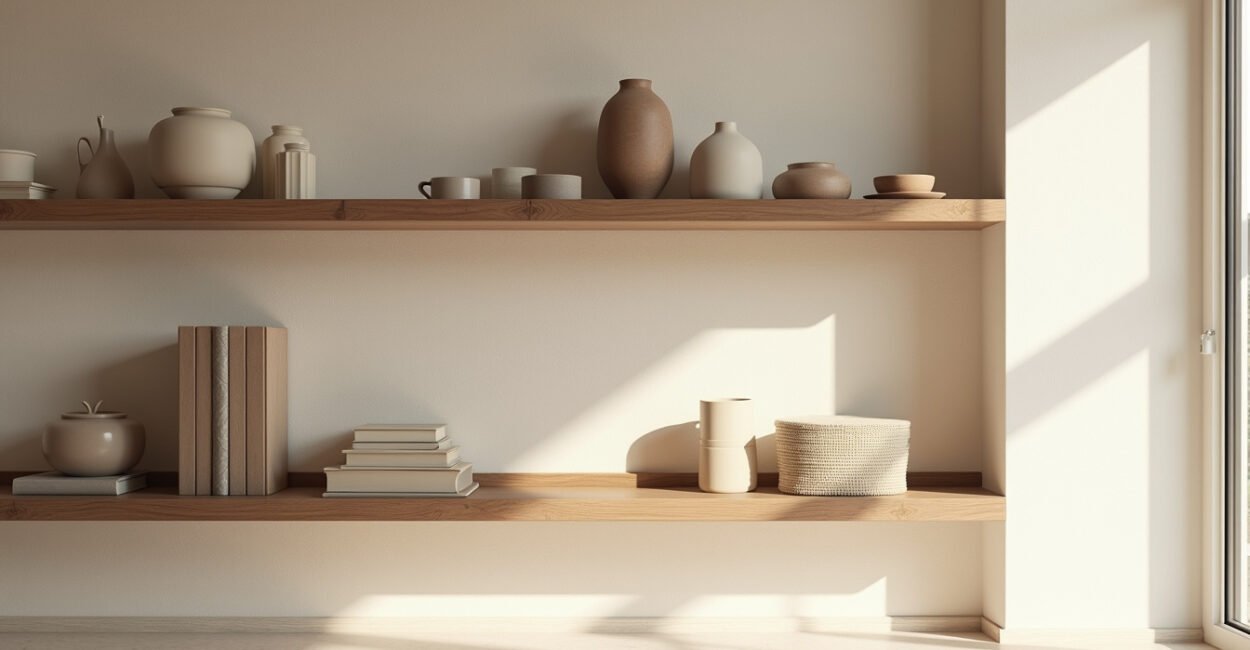
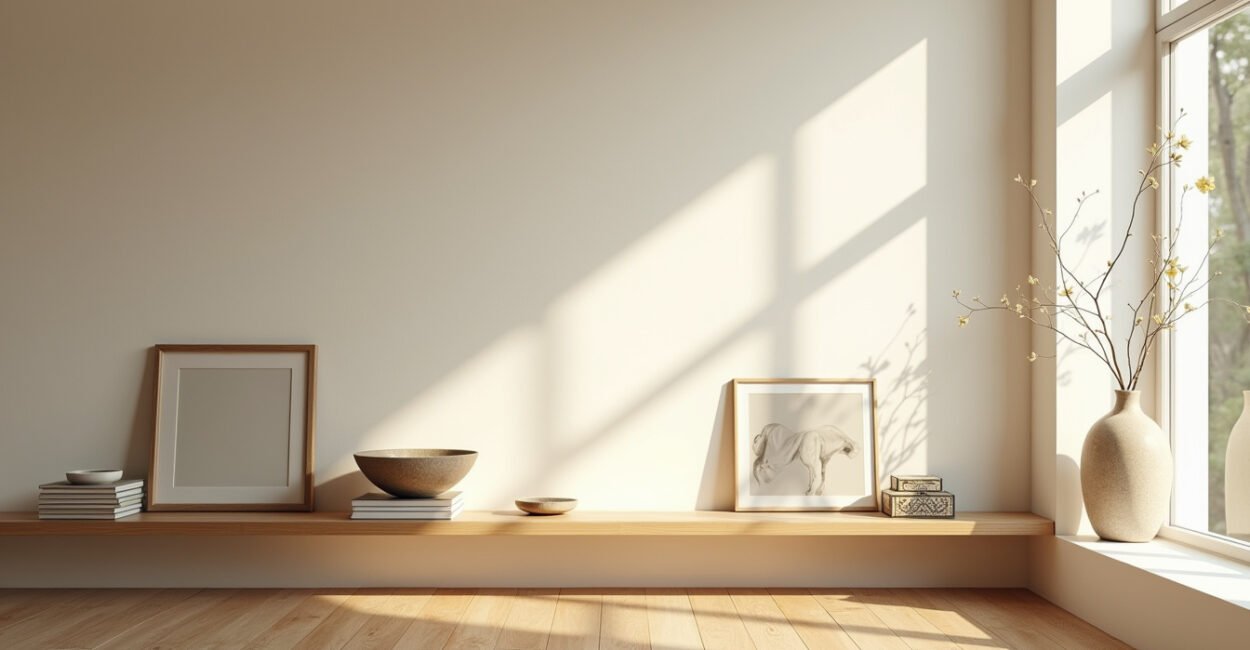
Picture ledges are one of the smartest choices for rented spaces because they shift the load to a single narrow support and let you swap art without making new holes. You can layer framed prints, postcards, and small objects without measuring every placement. That makes the wall look collected over time rather than installed in one rigid session.
They also work well in apartments where wall condition is uncertain. Older plaster, soft drywall, or freshly painted surfaces often make repeated nail holes a bad trade. A ledge gives you rotation without damage, and it reduces the risk of committing to a layout that does not work with the lighting in the room. If you want a room to feel curated but not precious, this is one of the best options.
4) Go Vertical to Fake Ceiling Height
When a room feels squat, a vertical gallery wall can correct the proportion. The eye follows the stack upward, which makes the ceiling line feel higher than it is. This works especially well beside a tall plant, a narrow bookcase, or a floor lamp, because the wall composition borrows height from nearby objects.
The key is restraint. A vertical arrangement should read as one column, not a loose ladder of frames. Keep the widths consistent or gradually smaller as you move up. If you use this method near a doorway or in a hallway, preserve enough clearance so the composition feels intentional rather than squeezed into leftover wall space.
| Layout Type | Best For | Visual Effect | Rent-Friendly Strength |
|---|---|---|---|
| Grid | Busy rooms, formal spaces | Order, calm, structure | Easy to align and rehang |
| Salon cluster | Eclectic interiors | Warmth, character, softness | Works with lightweight hardware |
| Picture ledge | Flexibility-first renters | Layered, collected look | Minimal wall impact |
| Vertical stack | Low ceilings, narrow walls | Height, lift, definition | Uses few anchor points |
How to Choose Damage-Free Hanging Hardware Without Guesswork
Removable Strips, Hooks, and Adhesives Do Different Jobs
Do not treat all damage-free products as equal. Command-style picture strips work well for flat-backed frames and moderate weights, while adhesive hooks are better for items with wire hangers or oddly shaped backs. Washi tape is useful for lightweight paper pieces, but it is not a structural hanging solution. If you match the hardware to the object, the installation lasts longer and fails less often.
Read the weight rating, then reduce it a little in real use. Humidity, paint texture, dust, and repeated repositioning all weaken adhesion. A frame that technically fits the rating may still slip if the wall was not cleaned properly or if the frame sits under a vent. That is not a flaw in the product; it is an installation problem. Who works with rental walls for a living knows that surface prep often matters more than the brand name.
Surface Condition Changes Everything
Paint sheen, wall texture, and age affect adhesion more than most renters expect. Fresh paint needs cure time before anything goes up, and textured walls reduce the contact area for adhesive strips. On older apartments, small cracks and dust can make a wall look ready when it is not. Clean with a dry microfiber cloth first, then follow with the manufacturer’s prep step if the product requires one.
The rule is simple: the smoother the wall, the safer the adhesive strategy. On rough plaster or fragile finishes, a picture rail, a ledge, or very light frames may be a smarter choice than trying to force a full adhesive solution. This method works well in many apartments, but it fails when the surface is unstable or the wall is actively shedding paint.
Choose Hardware by Object, Not by Habit
A common mistake is buying a pack of the same hook for every frame in the apartment. That creates avoidable failures. Heavy framed art needs a different support than a lightweight print, and a mirror needs more caution than paper art because the load profile is different. Mirrors also demand better anchoring because they swing and stress the mount during installation.
Use a simple decision path: flat frame back, adhesive strip; wire hanger, hook; lightweight paper, clips or tape; mixed object display, ledge or rail. The goal is not just avoiding holes. It is maintaining a stable composition that stays level after a few weeks, not a display that slowly drifts and looks tired.

Layout Rules That Make Tiny Rooms Feel Curated, Not Crowded
Keep One Clear Anchor
Every strong gallery wall needs a visual anchor, whether that is a sofa, bed, desk, console, or narrow bench. The anchor tells the wall where to live. Without it, the display floats, and floating displays in small rooms tend to feel accidental. The best renter-friendly gallery wall ideas always consider the furniture first, not the art first.
Place the center of the arrangement so it relates to the anchor instead of competing with it. Above a sofa, the grouping should usually span about two-thirds to three-quarters of the sofa width. Above a desk, narrower is often better, because you want the wall to frame the workspace rather than overwhelm it. That proportion gives the room a finished look while preserving breathing room around the edges.
Use Negative Space as Part of the Design
Negative space is the empty area that lets the eye rest. In small rooms, it is not wasted space; it is structural. Too many frames packed too tightly make a wall feel flat and heavy. A little open space around the grouping creates contrast, which is what helps the wall feel curated instead of overloaded.
The mistake I see most often is trying to fill every available inch because the wall looks “unfinished” during planning. In the finished room, that instinct backfires. The best compositions leave a margin around the outer edges, especially on walls that face other busy surfaces like bookshelves, televisions, or patterned curtains.
Repeat One or Two Design Variables Only
Good wall composition usually repeats a frame color, a mat color, or a subject matter—not all three at once. If every variable changes, the display loses cohesion. In a tiny apartment, cohesion matters more than variety because the room itself already has enough competing elements.
For example, you can mix black and natural wood frames if the art shares a muted palette. Or you can mix different art styles if the frames are identical. Those constraints keep the wall from feeling improvised. Curated rooms often look effortless because the designer limited the number of decisions the eye has to process.
Styling Choices That Quiet Visual Noise in Small Rooms
Use a Controlled Color Palette
Small rooms benefit from restraint. If the art includes too many saturated colors, the wall starts fighting with the rest of the apartment. A tighter palette—monochrome, earthy neutrals, faded blues, black-and-cream, or one accent color—helps the room feel intentional and larger.
This is where people often overcorrect. They choose only safe art and end up with a flat wall. The better approach is to use a dominant palette with one or two controlled accents. That keeps the composition alive without turning it into static. If your apartment already has bold textiles or colorful furniture, let the wall be quieter than the room, not louder.
Mix Art Types with Discipline
You do not need to fill a gallery wall with identical prints. A better composition often includes one small mirror, one photograph, one graphic print, and one object with texture, such as a woven piece or a slim shelf with a ceramic item. That mix adds depth, but only if the items share enough visual logic to belong together.
Texture matters because tiny spaces flatten quickly. A matte frame next to a glossy photo, or paper next to wood grain, creates subtle variation that reads well at a distance. This is one reason museum-style displays feel so polished: they control contrast without making every element shout.
Let Lighting Work with the Wall
Gallery walls look better when the lighting supports them. A wall beside a floor lamp, sconce, or small picture light gains dimension because shadows create separation between objects. Without directional light, a narrow apartment wall can feel like a flat collage instead of a layered design.
Be careful with glare, though. Glass fronts and strong overhead lighting can create reflections that flatten the artwork and make the wall look busy. Non-glare glass, matte prints, and thoughtful placement are the practical fix. In many apartments, this matters more than the art selection itself.
Measurement, Spacing, and Testing Before You Commit
Use Paper Templates or Floor Layout First
Before touching the wall, cut paper the size of each frame and arrange the shapes on the floor or tape them to the wall with painter’s tape. This step prevents the two most common problems: layouts that run too wide and clusters that sit too high. It also helps you judge spacing in a way a tape measure alone cannot.
People often underestimate how much visual weight a frame carries once it is on the wall. A 16-by-20 frame is not “just a medium piece”; in a small room, it can dominate if the surrounding pieces are too tiny. Testing on paper lets you correct scale before you make any holes or stick anything permanently.
Standard Spacing is a Starting Point, Not a Law
Two to three inches between frames is a common rule, but the right gap depends on frame thickness, room size, and the density of the composition. Thin frames can sit closer together. Heavier frames often need more space so the arrangement does not feel compressed. Narrow walls may also require tighter spacing to avoid leaving awkward slivers at the edges.
That is why rigid design rules can fail in real apartments. A layout that looks balanced in a large living room can feel crowded in a studio. Use the standard as a baseline, then adjust until the outer silhouette feels clean. The outside shape of the whole wall matters more than any single gap.
Measure from the Furniture Line, Not Just the Floor
Hanging art relative to the floor alone is a classic mistake. In compact apartments, the relationship to the furniture line is usually more important. A gallery wall placed too high above a sofa or bed looks disconnected, even if the height from the floor is technically correct. The furniture creates the visual anchor, so treat it as the reference point.
A practical method is to start with the centerline of the anchor piece and build around it. This keeps the display from drifting upward over time, which happens when people keep adding “just one more frame” to make the wall feel complete. Completion is not the goal. Balance is.
Room-by-Room Ways to Adapt the Same Gallery Wall Strategy
Living Room: Make the Wall Feel Intentional and Open
In a small living room, the best setup usually centers on one wall above a sofa or sideboard. Keep the composition horizontal if the room is short and narrow, because a wide arrangement can visually stretch the space. If the room has multiple focal points, the gallery wall should support the main seating area rather than compete with the television or window.
A single large mirror combined with a few framed prints often works better here than a dense cluster of all art. The mirror reflects light and can make the room feel larger, which is useful in apartments that do not get much natural brightness. This is one of the most effective renter-friendly gallery wall ideas when the living room does double duty as a workspace or dining area.
Bedroom: Keep the Composition Calm and Low-contrast
Bedrooms need visual quiet. A soft palette, thin frames, and even spacing usually outperform a high-contrast, dense arrangement. If the wall sits above the headboard, keep the display compact so it feels connected to the bed, not like it is hovering over it.
For a more restful effect, choose art with repeated tones or themes. Botanical prints, black-and-white photography, line drawings, and small textile pieces all work because they do not create a lot of visual friction. Bedrooms punish clutter faster than other rooms, so the wall should settle the space, not energize it too much.
Entryway or Hallway: Narrow Compositions Win
Hallways and entryways are where vertical stacks and linear arrangements shine. These spaces are usually too narrow for a sprawling gallery, but they can handle a disciplined column of frames or a slim ledge. That gives the transition space personality without obstructing movement.
Use stronger contrast here if the corridor lacks natural light, because soft art can disappear in a dim passage. Still, keep the number of pieces controlled. The point of an entry wall is to create a memorable first impression, not to turn a traffic lane into a full visual exhibition.
For renters, the most successful wall treatment is rarely the most decorative one. It is the one that respects proportion, surface limits, and the way people actually move through the room.
For broader guidance on safe wall hanging and surface care, the Federal Trade Commission’s consumer resources are useful for checking claims around household products and repair costs. For painting and indoor surface considerations, the U.S. Environmental Protection Agency’s indoor air quality guidance explains why wall prep and ventilation matter after renovations. For a design perspective on scale and proportion in small interiors, Architectural Digest regularly documents how professionals use composition in compact rooms.
Common Mistakes Renters Make and How to Avoid Them
Overfilling the Wall
The fastest way to make a small room feel smaller is to cover too much of the wall. Many renters react to blank space as if it were a problem to solve, but blank space is what gives the display room to breathe. A wall can look finished long before it looks full.
If you want a stronger composition, increase cohesion before increasing quantity. Match the frames, simplify the palette, or tighten the arrangement. Those moves deliver more impact than adding another print that introduces a new color or line weight.
Using Frames That Are Too Heavy
Heavy frames create avoidable stress on rented walls. They also make installation harder, because a small leveling error becomes more obvious when the object weighs more. In many apartments, lightweight wood, composite, or slim metal frames are the better trade.
That said, there are limits. Ultra-light materials sometimes look cheap if the art is large. The goal is not to make everything featherweight; it is to choose frames that are light enough for the wall system but visually substantial enough to hold the room together.
Ignoring the Room’s Real Function
A gallery wall in a workspace should support concentration. In a bedroom, it should reduce agitation. In a living room, it should clarify the seating zone. When the display ignores how the room is used, it may look good in isolation and fail in daily life.
That is why one-size-fits-all advice breaks down. A dense salon wall may be perfect over a console but exhausting over a desk where you need focus. The smartest design decision is the one that respects the room’s job.
Próximos Passos Para Implementação
Start with One Wall and One Clear Constraint
Pick the wall that already has the strongest anchor, then decide what limitation matters most: no holes, low ceiling, narrow width, or low light. That constraint will tell you whether a grid, cluster, ledge, or vertical stack is the right structure. Designing from constraints is faster and produces better results than starting with art pieces and hoping they fit.
If the room is especially small, keep the first version modest. You can always expand later. A disciplined arrangement that leaves some wall visible usually looks more expensive than an overfilled one, and it is easier to maintain when you change furniture or move to a different apartment.
For renters, the long-term win is not a wall that survives one weekend of decorating. It is a system you can reinstall, adapt, and remove without damage. That is what turns renter-friendly gallery wall ideas from a decorating trend into a practical interior strategy.
Validate the Layout Before You Install Anything
Dry-fit the whole composition with paper templates or painter’s tape, then photograph it from across the room. The photo often reveals proportion errors that the eye misses up close. If the arrangement looks balanced in a picture taken from the doorway, it usually works in daily use too.
Once the layout is right, install from the center outward and check level at each step. That simple habit prevents drift. The wall will feel calmer, the room will feel larger, and you will avoid the one outcome every renter wants to skip: a nice-looking wall that damages the apartment on the way out.
FAQ
What is the Safest Way to Hang a Gallery Wall in a Rental?
The safest approach is to match the hanging method to the object and the wall surface. Removable picture strips work well for lightweight frames on smooth walls, while picture ledges and rails reduce wall contact even further. Clean the surface first, respect the weight rating, and avoid fresh paint until it has cured. On textured or fragile walls, a ledge is often safer than adhesive hardware because the bond is more predictable.
How Do I Make a Small Room Look Larger with Wall Art?
Use a composition that adds structure without adding clutter. Horizontal layouts can widen a room, vertical stacks can lift the ceiling visually, and mirrors can bounce light into darker corners. Keep the palette controlled and leave enough negative space around the grouping. The room feels larger when the wall reads as one intentional shape instead of a scatter of unrelated frames.
Are Command Strips Good Enough for Framed Art?
Yes, if the frame is light enough, the wall is smooth enough, and the strips are installed correctly. They are not a universal solution, though. Heavy frames, humid rooms, textured plaster, and repeated repositioning all reduce performance. In practice, they are best for small to medium pieces with flat backs, not oversized frames or anything with unstable hardware.
Should All Frames in a Gallery Wall Match?
No. Matching frames create a cleaner, more formal look, but mixed frames can work if you control another variable such as color palette, mat width, or subject matter. In tiny apartments, too much variety can make the wall look busy fast. If you mix frame finishes, keep the art itself more restrained so the composition still feels coherent.
How Many Pieces Should Be in a Gallery Wall for a Tiny Room?
There is no fixed number, but small rooms usually benefit from fewer, more deliberate pieces. Four to six frames often create enough presence without overpowering the wall, while a picture ledge can hold more items because the display layers inward rather than outward. The right number depends on the wall’s width, the furniture below it, and how much empty space the room needs to stay balanced.