Skip to content

Most apartment cleaning routines create a surprising amount of trash: plastic spray bottles, paper towels, disposable pads, and half-used products under the sink. The better path is zero-waste cleaning swaps for renters, which means choosing reusable, refillable, and low-packaging cleaning tools that work in small spaces without damaging a lease or cluttering cabinets.
The goal is not to turn cleaning into a lifestyle project. It is to replace the most wasteful habits with versions that are cheaper over time, easier to store, and practical for apartments where sinks, storage, and landlord rules all matter. A few smart swaps can cut trash fast, and the right ones also make regular cleaning less annoying.
O Que Você Precisa Saber
- A reusable cleaning setup lowers waste most when it replaces single-use towels, wipes, and spray bottles in the routines you actually use every week.
- Refill concentrates and tablet cleaners save cabinet space, but they only work well if you keep one durable bottle and label it clearly.
- For renters, the best swaps are low-mess, low-odor, and easy to move out with, because portability matters as much as sustainability.
- Microfiber, cellulose sponges, castile soap, and solid dish soap are the workhorses of a small-apartment cleaning kit.
- Zero waste works best when you match the product to the job; one all-purpose cleaner cannot replace every specialty cleaner safely.
Zero-Waste Cleaning Swaps for Renters That Actually Fit Apartment Life
In technical terms, a zero-waste cleaning swap is a product or routine that reduces disposable packaging and single-use consumption while maintaining the same cleaning function. In plain English: it cleans the mess without creating a second mess in the trash can.
That matters for renters because apartments punish clutter. Under-sink storage is tiny, closets are shared with vacuum cords and winter coats, and nobody wants a dozen bottles that all do the same thing. The smartest swaps are the ones that collapse several products into one system: refillable spray bottle, reusable cloths, and a small set of concentrated cleaners.
What separates a sustainable cleaning routine from a gimmick is not the label on the bottle; it is whether the routine still works on real grime after three weeks of use.
People sometimes assume zero-waste cleaning means making your own cleaners from scratch. That is optional, not required. For many renters, the most realistic win is switching from disposables to reusables, then slowly replacing packaged products with refill options only where it makes sense.
Start with the Highest-waste Items
The first things to replace are the items you throw away constantly: paper towels, disinfecting wipes, mop pads, and single-use scrubbers. Those are the easiest to swap without changing your whole routine. If you clean the kitchen every few days, a stack of washable microfiber cloths can save an impressive amount of trash within a month.
Keep the System Small on Purpose
One of the mistakes I see often is overbuying “eco” products before building a basic routine. That backfires. A renter-friendly setup usually works better when it fits into one caddy or one cabinet shelf, because you are more likely to use it consistently.
Reusable Basics That Replace the Most Trash Fast
If you only make three swaps, make them here. The core of a low-waste apartment kit is not fancy: it is durable cloths, a good sponge alternative, and one refillable bottle that can handle multiple jobs.
Microfiber Cloths Instead of Paper Towels
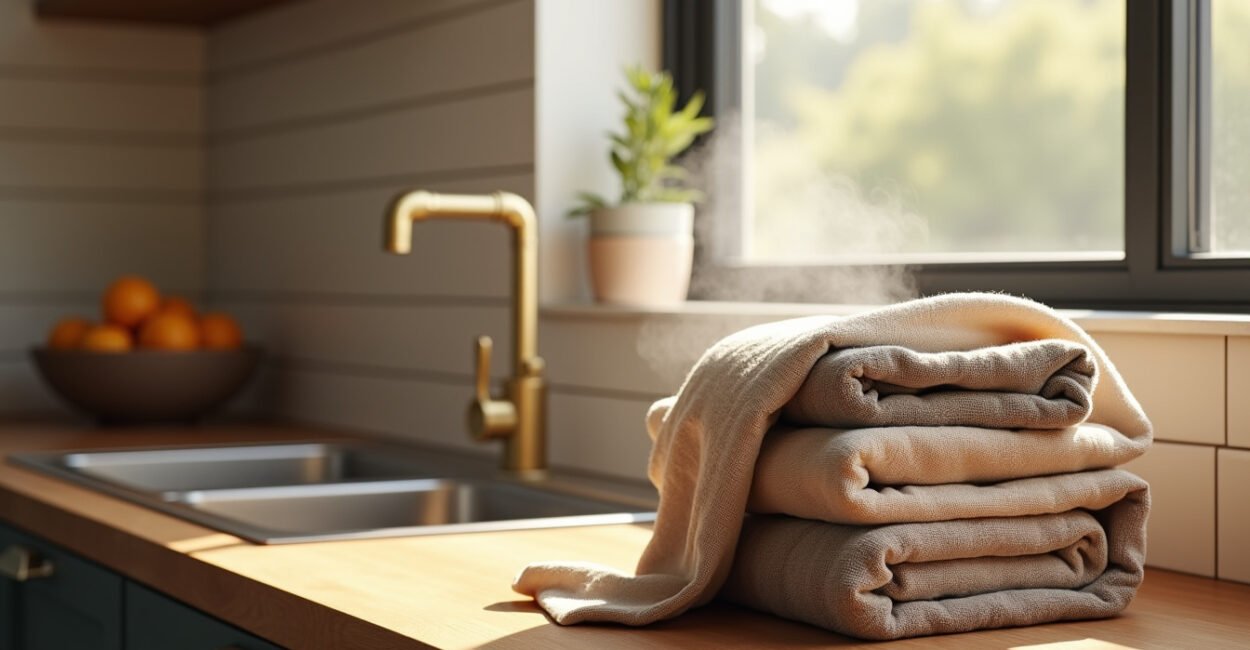
Microfiber is not perfect, but it is highly effective for dust, glass, counters, and quick spills. The practical advantage is repeated use. One stack can replace hundreds of sheets of paper towels over time. Wash them with similar fabrics, skip fabric softener, and they will keep working much longer.
Cellulose Sponges and Brush Alternatives
Traditional synthetic sponges break down into waste fast and often hold odor. Cellulose sponges, wooden dish brushes, and replaceable brush heads reduce that churn. They are also easier to rinse clean. For greasy kitchen work, I prefer a dish brush with a replaceable head because it handles corners better than a flat sponge.
Refillable Spray Bottle with a Concentrated Cleaner
A single durable spray bottle paired with a concentrate or cleaning tablet can replace several plastic bottles. This is where packaging waste drops sharply. It also reduces the chance of duplicate products crowding your storage. Look for formulas that are meant to be diluted, not random DIY mixtures that may streak or leave residue.
For renters, the most efficient zero-waste swap is usually not the most “natural” one — it is the one that replaces the largest number of disposable items without creating storage problems.
For context on safer chemical handling, the EPA Safer Choice program is a useful starting point when you want cleaners that meet ingredient-screening standards without guesswork.

Refill, Concentrate, or Tablet: Which Format Makes Sense?
These three formats all reduce packaging, but they solve different problems. Refill jugs are often best for products you use a lot. Concentrates are great when you want less shipping weight and fewer bottles. Tablets are the most compact option, which makes them ideal for tight apartments.
| Format | Best For | Trade-Off |
|---|---|---|
| Refill bottles | High-use products like glass cleaner or all-purpose spray | Still needs storage space |
| Concentrates | Renters who want fewer bottles and lower shipping waste | Requires careful mixing |
| Tablets | Small kitchens, small bathrooms, minimal storage | Not all formulas perform equally on heavy grease |
Choose by Storage, Not by Trend
If your apartment has no utility closet, tablets or concentrates usually beat bulky refills. If you clean a lot of surfaces every week, a refillable ready-to-use bottle may be the easiest habit to maintain. The right choice is the one that keeps you from buying backup products because you ran out of room.
Consumer Reports has long emphasized checking performance and label claims rather than assuming every “green” cleaner works the same way. Their testing guidance is a good reminder that sustainability does not excuse weak cleaning power: Consumer Reports on safer cleaning products.
Kitchen and Bathroom Swaps That Cut Waste Without Cutting Performance
Kitchens and bathrooms produce the most cleaning waste because they generate grease, soap scum, and frequent wipes. This is where a lot of people give up on zero waste, because they assume reusable tools cannot handle tough messes. That is not true, but the tool has to match the mess.
For the Kitchen
- Use solid dish soap instead of a plastic bottle when your sink setup allows it.
- Keep a dedicated scrub brush for pans and sink corners.
- Use baking soda as a mild abrasive for stuck-on residue, but avoid it on delicate stone surfaces.
- Wash cloths in hot water after greasy jobs so they do not hold odors.
For the Bathroom
A refillable tub-and-tile cleaner is usually enough for everyday maintenance, paired with a squeegee and washable cloths. A squeegee sounds minor, but it prevents soap scum and hard-water buildup before they become real cleaning jobs. That means fewer heavy cleaners later. For renters with glass shower doors, this is one of the highest-return swaps you can make.
For renters in shared buildings, product choice also matters because ventilation is often weaker than people expect. The National Institute of Environmental Health Sciences has clear information on indoor air quality and why strong fumes in enclosed spaces deserve attention.
How to Build a Renter-Friendly Cleaning Kit Without Clutter
A practical kit should fit into one small basket, drawer, or under-sink bin. If it sprawls into three separate storage spots, it stops feeling easy. The trick is to keep only what you reach for weekly and remove anything that duplicates a function you already have.
A Simple Starter Kit
- 2 to 4 microfiber cloths
- 1 refillable spray bottle
- 1 all-purpose concentrate or tablet
- 1 scrub brush with replaceable head
- 1 cellulose sponge
- 1 squeegee for bathroom glass or tile
That list covers most apartment cleaning tasks without filling your cabinets. Add specialty products only when a specific problem proves you need them, such as mineral buildup, mold-prone grout, or stainless-steel fingerprints that a generic spray cannot handle well.
Mini-story from a Real Apartment Routine
A renter I worked with once kept buying paper towels because she assumed they were the fastest solution for everything. After switching to cloths and a single refillable spray bottle, her trash bag stopped filling up every two days. The surprise was not just the waste reduction. She also cleaned more often because the supplies were easier to grab, easier to store, and easier to replace.
Common Mistakes That Make Zero Waste Cleaning Harder Than It Should Be
This is where good intentions usually go sideways. The biggest mistake is treating “eco-friendly” as the goal instead of “works every week without friction.” If a product takes too long to mix, leaks in a drawer, or smells so strong you avoid using it, it will fail.
What to Avoid
- Buying too many specialty cleaners before testing your actual cleaning habits
- Using one homemade solution on every surface, including stone, wood, and electronics
- Choosing refill products with poor closures that leak during move-outs
- Confusing low packaging with low toxicity; those are not the same thing
There is also a real limit here: zero waste is a direction, not a perfect end state. Some jobs still require disposable items, especially during pest issues, renovation dust, or a contamination event. In those cases, practicality beats ideology.
Zero waste cleaning is strongest when it reduces routine trash, not when it tries to ban every disposable item in the apartment.
How to Make the Switch Stick in a Small Rental
The best strategy is to replace items when they run out, not all at once. That prevents waste from a drawer full of duplicates and gives you time to notice what you actually use. Most renters need about two or three weeks to see which products earn a permanent spot.
Start with the highest-frequency job in your home. If your kitchen gets messy more often than your bathroom, swap the kitchen first. If you rarely cook but shower daily, build the bathroom system first. That kind of sequencing matters because habits form around friction, not around good intentions.
Set one rule: if a new cleaner does not earn its place after a few uses, do not repurchase it. That keeps your setup lean, your storage manageable, and your waste lower over time.
What to Do Next
Audit the products you use in a normal week, replace the disposable item that appears most often, and commit to one refillable or reusable swap before adding another. The fastest wins usually come from paper towels, wipes, and single-use spray bottles, so those are the best starting points for a renter-friendly system.
FAQs About Zero-Waste Cleaning Swaps for Renters
Are Zero-waste Cleaning Swaps Really Cheaper for Renters?
Usually, yes, but the savings show up over time rather than on day one. Reusable cloths, refillable bottles, and durable brushes cost more upfront than a single disposable item, yet they replace dozens or hundreds of uses. The real savings are in fewer repeat purchases and less storage clutter. If you choose products that fit your cleaning habits, the payback is easier to notice within a few months.
Can I Make Zero-waste Cleaning Work in a Tiny Apartment?
Yes, and small apartments are often the easiest place to do it because you can keep everything in one compact kit. A handful of cloths, one bottle, one brush, and one or two refills is enough for most routines. The key is not buying “just in case” products. Tiny spaces actually reward a tighter system because every extra item becomes visible immediately.
What If I Need Strong Cleaners for Grease or Bathroom Buildup?
You do not have to give up performance to reduce waste. The better approach is to keep a refillable everyday cleaner for maintenance and a separate targeted product for stubborn buildup. Heavy grease, soap scum, and mineral deposits sometimes need a stronger formula. The limit is real: one all-purpose spray cannot safely or effectively replace every specialty cleaner.
Which Swap Makes the Biggest Difference First?
Paper towels are usually the fastest win, followed by disposable wipes and single-use spray bottles. Those items disappear quickly in a normal apartment and create regular trash without much thought. A washable microfiber cloth stack paired with a refillable cleaner usually has the highest impact for the least disruption. If you only change one habit this month, start there.
Do I Need to Make My Own Cleaners to Be Zero Waste?
No. Homemade cleaners can work for some people, but they are not required and they are not always the safest or most effective option. Refill systems, concentrates, and reusable tools are enough to reduce a lot of waste without turning cleaning into a chemistry project. If a store-bought option is refillable and performs well, that is still a valid zero-waste choice.