Skip to content
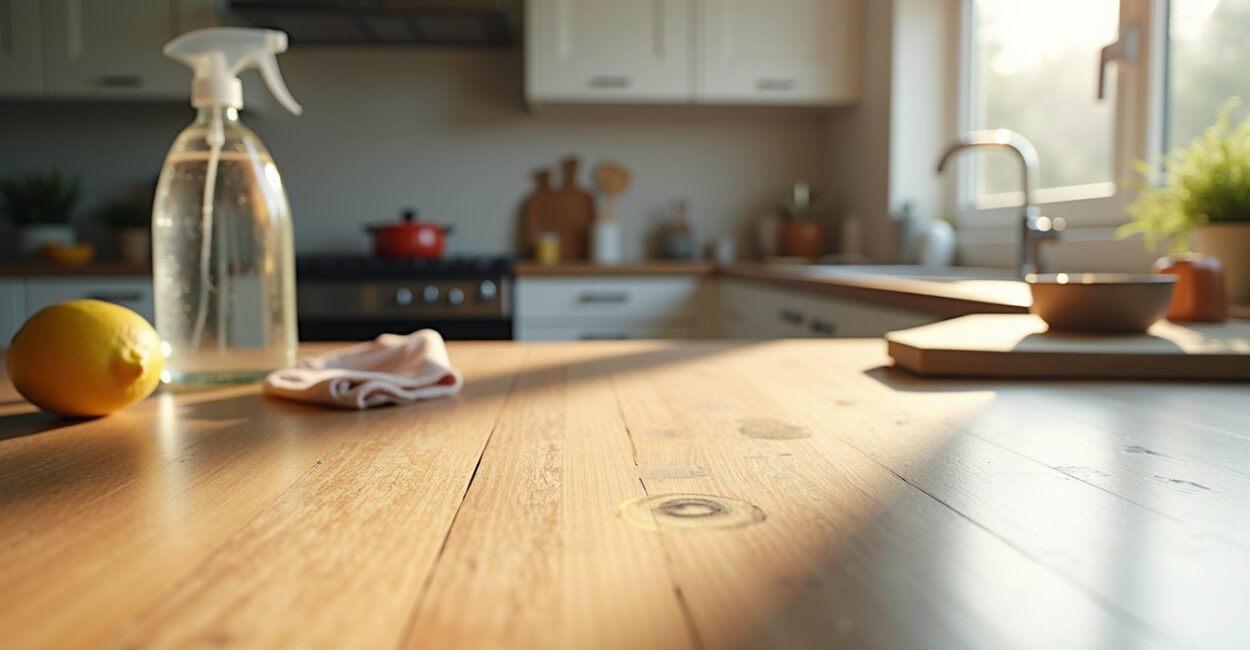
Small ratio errors in diy natural cleaner mistakes sticky residue are usually the real reason your counters feel tacky instead of clean.
That sticky film is not a mystery. It’s usually too much soap, too much oil, too much vinegar, or not enough rinsing for the surface you’re touching every day.
And once a cleaner leaves buildup, you do not just lose time. You also end up cleaning the same spot twice, which is the exact opposite of why people make natural cleaners in the first place.
The First Mistake: Treating Every Surface Like It Wants the Same Recipe
The fastest way to create diy natural cleaner mistakes sticky residue is to use one “universal” mix on everything. Glass, sealed wood, stone, laminate, and stainless steel do not react the same way. A spray that feels perfect on a kitchen counter can leave a cloudy drag on another surface.
Professionals notice this first: the cleaner is not always the problem — the match between cleaner and surface is. Natural acids, oils, and surfactants behave differently depending on finish, heat, and porosity.
That is why a vinegar-heavy mix can be fine on some surfaces and a bad idea on others. On natural stone, for example, acidity can damage the finish. The University of Minnesota Extension and similar extension services consistently caution that surface compatibility matters as much as the ingredient list.
Too Much Soap Turns “clean” Into a Film
If there is one ratio mistake that shows up again and again, it is soap overload. People assume more castile soap means more cleaning power. In practice, it often means more rinsing, more streaking, and more sticky residue when the water evaporates.
Here’s the counterintuitive part: a tiny amount of soap usually cleans better than a generous pour. Soap is a surfactant, which means it lifts grime so water can carry it away. But if you leave too much behind, it becomes the new dirt.
I have seen this on kitchen cabinet handles more times than I can count. Someone mixes a “healthy” splash of soap into a spray bottle, wipes once, and walks away. Two days later the handle feels slightly gummy, and now the person thinks the surface is dirty when it’s really coated.
The fix is boring, but it works: start lighter than you think, then wipe with a clean damp cloth if the recipe calls for it. That small second pass often makes the difference between fresh and tacky.

Oil-based Cleaners Leave a Shine That Feels Dirty Later
Natural cleaner recipes often lean on olive oil, coconut oil, or essential oils because they smell good and look “healthy.” But oil does not disappear. It spreads. It clings. It catches dust.
This is where diy natural cleaner mistakes sticky residue gets sneaky. The surface may look polished right after you clean it, but that shine can turn into a dust magnet by afternoon. The result is a finish that feels slick in the wrong way.
- Too much carrier oil leaves a greasy drag.
- Heavy essential oil blends can build up on knobs and switches.
- Wood may need conditioning, but not every hard surface does.
Shiny is not the same as clean. A lot of homemade sprays are really finishing products pretending to be cleaners.
The Water You Use Can Change the Result More Than the Recipe Does
Hard water can sabotage a good mix. Minerals in the water react with soap and leave a thin film that looks like residue, even when your formula is technically correct. That is one reason a recipe that works beautifully in one home feels off in another.
This is a detail many people miss, and it matters. The Environmental Protection Agency explains the basics of water quality and household mineral content through its guidance on water systems and treatment at EPA.gov. If your tap water is mineral-heavy, your cleaner may need less soap, not more.
So if your diy natural cleaner mistakes sticky residue problem keeps coming back, test the same mix with distilled water once. If the stickiness drops, the formula may not be the issue at all.
Spraying Too Much Means You Are Wiping Up Your Own Mistake
Over-spraying is a classic cleanup trap. People think a surface looks cleaner when it is wet longer, but oversaturation forces you to smear the product around instead of removing it. On sealed wood and laminate, that can leave the thinnest possible tacky layer — the kind you only notice when your hand sticks.
What works better is a light, controlled mist and a separate cloth for drying. You want enough product to lift soil, not enough to pool in corners, seams, or grain lines.
Here is the short version: if you can see droplets sitting on the surface, you probably used too much. The best natural cleaners are usually the ones you barely notice while using.
Skipping the Rinse or Dry Pass Leaves the Last Ingredient Behind
Many homemade cleaners fail at the very end. People spray, wipe, and stop. But if the recipe contains soap, oil, or even a concentrated plant-based degreaser, the final pass matters. Without it, the remaining layer dries into the exact sticky residue you were trying to avoid.
Mini-story: A friend switched to a “clean green” kitchen spray and loved it for a week. Then the counters started feeling oddly grabby near the sink. The recipe was fine on paper, but she was wiping with one cloth and walking away. Once she added a second dry cloth, the tackiness vanished.
That is the quiet truth behind many diy natural cleaner mistakes sticky residue complaints: the formula was only half the job.
The Safest Fix is to Simplify Before You Scale Up
If a cleaner leaves residue, do not immediately add more ingredients. Cut the recipe down. Remove the oil. Reduce the soap. Test one surface at a time. Professionals do this because it reveals the real culprit faster than guessing ever will.
There is no shame in using a plain, low-residue mix for most daily cleaning. In fact, that is often the smartest move. The cleaner should vanish when the job is done.
The best homemade cleaner is the one that leaves nothing behind but a clean surface.
For more on choosing safe ingredients and matching products to surfaces, the EPA Safer Choice program is a useful starting point, especially if you want cleaner formulas without the extra film.
FAQ
Why Does My Homemade Cleaner Leave a Sticky Film?
Sticky film usually comes from too much soap, oil, or product left on the surface after wiping. In some homes, hard water also reacts with the cleaner and leaves a faint coating that feels tacky. The fastest way to diagnose it is to cut the formula back and test a dry finish. If the problem disappears, the mix was too heavy for that surface or water type.
Can Vinegar Fix Sticky Residue?
Sometimes, but not always. Vinegar can help dissolve mineral film or soap haze on certain surfaces, yet it is not safe for everything, especially natural stone. If the residue came from oil or too much soap, vinegar may only move the mess around instead of solving it. Always test on a small hidden area first.
Is Castile Soap the Main Cause of Buildup?
Not by itself. Castile soap can work well, but using too much of it is a common reason natural cleaners feel sticky after drying. The problem is usually concentration, not the ingredient alone. A smaller amount plus a proper wipe-down tends to perform better than a stronger mix that leaves a film behind.
What Should I Use Instead If I Want No Residue?
Choose the simplest formula that still does the job: less soap, no heavy oil, and a clean microfiber cloth. Distilled water can also help reduce mineral film if your tap water is hard. For daily wipe-downs, a light spray and a dry finish usually beat a more complex recipe every time.
How Do I Know If the Cleaner or the Surface is the Problem?
Test the same cleaner on two different materials, like sealed tile and laminate, or two spots on the same surface. If one feels clean and the other feels tacky, the surface finish may be reacting to the formula. That is common with wood, stone, and textured materials, where product can hide in pores and seams.