Skip to content
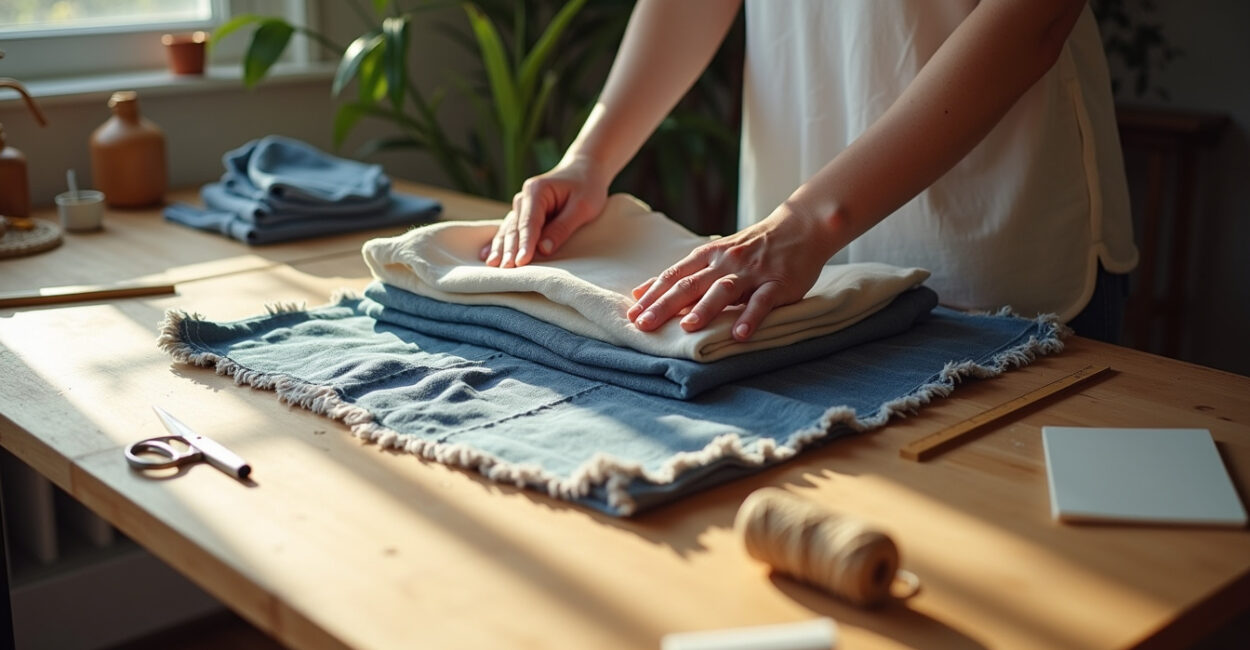
Small fabric scraps can look intentional fast—if you cut, join, and finish them the right way.
How to start repurposed fabric home projects is less about sewing skill and more about making a few smart decisions early. The difference between “cute handmade” and “why does this look messy?” usually comes down to edge treatment, seam choice, and scale.
That’s good news for beginners. You do not need a studio full of tools. You need a clean first project, a simple cut, and one finish that makes the fabric feel designed instead of leftover.
1) Start with Fabric That Already Wants a Second Life
The easiest way to make repurposed fabric home projects look polished is to choose material that still behaves well. Old cotton sheets, curtains, denim, tablecloths, and sturdy shirts are ideal because they hold shape and tolerate washing. Thin, frayed, or overly stretchy fabric is harder to control on a first try.
In practice, the best beginner projects start with fabric that has one strong quality: size, texture, or pattern. A striped pillow cover, a set of napkins, or a basket liner can look intentional even if the cloth came from an old duvet. Repurposed does not have to look patched together.
If you are wondering how to start repurposed fabric home projects without wasting time, this is the first rule: choose fabric that already matches the job. Heavy cotton for structure, soft weave for drape, denim for durability. That one choice does half the design work.
2) Cut Shapes That Forgive Mistakes
Beginners usually try to be clever with curves and angles. Don’t. Straight cuts are your best friend. Squares, rectangles, long strips, and simple triangles are easier to align, easier to sew, and easier to make look tidy.
When I’ve seen first-time makers struggle, it’s usually because they jump straight into complicated shapes. A perfect circle sounds charming until the edges start warping. A plain rectangle, though, can become a cushion cover, placemat, storage wrap, or wall pocket with almost no drama.
- Use a ruler and chalk for clean lines.
- Cut larger than you think you need; you can trim later.
- Keep pieces matched by grain when possible, so they hang better.
That’s the quiet secret of how to start repurposed fabric home projects: boring cuts often give the most elegant results. What makes them look “designed” is not complexity. It’s consistency.

3) The Easiest Joins Are the Ones That Disappear
Joining fabric is where a project starts to look real. For beginners, the simplest joins are a straight seam, a lapped seam, or a folded edge stitched down. They are forgiving, fast, and strong enough for most home items.
A straight seam joins two pieces face to face and hides the stitching inside. A lapped seam overlaps edges, which is useful when you want speed or a slightly rustic look. A folded edge is great for hems, napkins, and runners because it keeps fraying under control.
Good joins don’t draw attention to themselves; they make the whole piece feel calmer.
That matters more than people think. If you want repurposed fabric home projects to look intentional, the join should support the shape instead of shouting, “I was sewn in a hurry.”
4) Finishes Are What Turn Scraps Into Décor
This is where reused fabric stops looking improvised. Clean finishes change everything. Even a simple project can look elevated if the edges are handled well.
For beginners, the safest finishes are folded hems, zigzagged edges, pinked edges, or bias tape. A hem gives you a crisp border. Zigzag stitching helps keep woven fabric from unraveling. Bias tape adds a decorative frame that can make mismatched fabric feel deliberate.
If you are building how to start repurposed fabric home projects around confidence, remember this: finish the visible edges first. That one habit makes the project look like home décor, not a practice sample.
And yes, there is a limit. Some fabrics fray too aggressively for bare edges to survive repeated washing. When that happens, a clean hem is not optional. It is the difference between a piece that ages well and one that falls apart.
5) One Small Project Can Teach You Three Skills at Once
Do not start with a blanket if you want momentum. Start with something that is small, useful, and forgiving—like napkins, drawer liners, a pillow cover, or fabric coasters. These projects let you practice cutting, joining, and finishing without needing a full day to recover from mistakes.
Here’s a quick before-and-after contrast: a raw strip of floral curtain fabric can look like a leftover. That same strip, hemmed and turned into a shelf liner, suddenly looks curated. Same cloth. Different decisions.
That is the real trick of repurposed fabric home projects: the material does not need rescuing as much as it needs framing.
For beginners, the win is not perfection. It is finishing something that looks at home in your house.
6) A Beginner’s Order of Operations Keeps the Project Clean
If you want a simple workflow, use this sequence: measure, press, cut, join, finish, press again. The pressing step matters more than most people expect, because wrinkles make fabric look accidental even when the sewing is solid.
That order also reduces waste. You are less likely to trim too much, stitch off-center, or lose shape halfway through. When you are learning how to start repurposed fabric home projects, structure saves more time than creativity does.
| Step | What it does |
|---|---|
| Press | Flattens old folds and improves accuracy |
| Cut | Sets the final shape |
| Join | Gives the project structure |
| Finish | Makes reused fabric look intentional |
According to the U.S. EPA’s textile guidance, extending the life of textiles helps reduce waste before they reach disposal. That idea is simple, but the craft version is even simpler: use what you already have, then make it look deliberate.
7) Avoid the Mistakes That Make Reused Fabric Look Like a Mistake
Most beginner problems are not about sewing skill. They are about proportion, finish, and restraint. If you avoid a few common errors, your project looks better immediately.
- Do not mix too many loud prints in one small item.
- Do not leave raw edges on fabric that frays heavily.
- Do not skip pressing before and after sewing.
- Do not choose a complicated first project just because it looks impressive.
A small story: a friend once tried to turn three different shirt scraps into a throw pillow in one afternoon. The sewing was fine. The problem was visual chaos—different weights, mismatched stripes, and no clear border. The fix was surprisingly small: one solid backing, one repeated front panel, and a clean envelope closure. Suddenly it looked designed.
That is why how to start repurposed fabric home projects should begin with limits, not ambition. A few controlled choices give the fabric room to look intentional.
For design ideas and sustainability context, the United Nations sustainability resources and research summaries from the National Library of Medicine are useful starting points when you want the bigger picture behind reuse and waste reduction.
One clean hem. One straight seam. One fabric that fits the job. That is enough to turn “leftover cloth” into something people assume you chose on purpose.
The fastest way to make repurposed fabric look expensive is to stop treating it like a shortcut.
FAQ
What is the Easiest Repurposed Fabric Project for a Beginner?
A pillow cover, napkins, or a simple tote-style storage pouch are usually the easiest places to start. They rely on straight cuts, basic seams, and simple hems, so you can focus on getting clean results instead of fighting a complicated pattern. If you are learning how to start repurposed fabric home projects, choose one item that will actually get used in your home.
Do I Need a Sewing Machine to Start?
No, not necessarily. Hand stitching works well for small projects like coasters, sachets, and light decorative pieces. A sewing machine just speeds up straight seams and hems. For beginners, the better question is not whether you own a machine, but whether the fabric and project are simple enough to finish neatly either way.
Which Fabrics Are Hardest to Repurpose Well?
Very stretchy knits, delicate synthetics, and heavily frayed textiles are tougher for beginners because they shift, curl, or unravel. You can still reuse them, but they usually need more stabilization and patience. Cotton, denim, and medium-weight woven fabrics are more forgiving and usually give cleaner results on the first try.
How Do I Make Old Fabric Look Intentional Instead of Homemade?
Use consistency. Repeat one color family, keep your edges even, and finish visible seams cleanly. Pressing the fabric before and after sewing makes a bigger difference than most people expect. Intentional design usually comes from restraint, not from adding more pieces or decorations.
What Should I Avoid on My First Project?
Avoid tiny pieces, curved seams, and fabrics that fray like crazy. Also avoid combining too many prints in one small object, because the result can look busy instead of curated. Start with one clear shape, one stable fabric, and one finish you can repeat without stress.