Skip to content

Vinegar can cut kitchen grime faster than most people expect, but it is not a universal cleaner. The reason homemade kitchen cleaners with vinegar work so well in some spots and fail in others comes down to chemistry: acetic acid helps loosen mineral deposits, light grease, and odors, yet it can also damage stone, dull some finishes, and react poorly with the wrong residue. In practice, the best DIY cleaner is the one matched to the surface, not the one with the most vinegar.
If you want a kitchen that looks clean without buying a different bottle for every job, vinegar-based recipes are a smart place to start. Below, you’ll get reliable formulas for counters, sinks, and stovetops, plus the limits that matter, so you can clean faster, spend less, and avoid the mistakes that cause streaks, etching, or wasted effort.
In a Nutshell
- Vinegar is most effective on light soil, hard-water film, and odor control, not heavy baked-on grease or porous stone.
- The safest DIY formulas pair distilled white vinegar with water, a small amount of dish soap, or baking soda only when you need scrubbing power.
- Granite, marble, quartzite, and unsealed stone are the biggest no-go surfaces for vinegar because repeated acid exposure can dull or etch them.
- A spray bottle, microfiber cloths, and a non-scratch scrub pad will do more for results than adding extra ingredients.
- The best kitchen routine uses vinegar for the right task and switches to neutral cleaners when the surface demands it.
How Homemade Kitchen Cleaners with Vinegar Work and Where They Don’t
Homemade kitchen cleaners with vinegar work because acetic acid dissolves some mineral residue, loosens light film, and helps neutralize odor-causing buildup. The common kitchen version is distilled white vinegar diluted with water, usually in a 1:1 mix, which is strong enough for everyday wipe-downs but gentle enough for most sealed, non-porous surfaces. That said, it is not a degreaser in the industrial sense, and it is not safe on every surface.
Here’s the part that gets missed in a lot of DIY advice: the cleaner’s strength matters less than the surface chemistry. Acid can be helpful on glass, stainless steel, and chrome, but repeated use on natural stone can cause visible damage over time. The EPA Safer Choice program and the CDC guidance on cleaning and disinfection both make the same practical point in different ways: match the product to the job, and don’t confuse “natural” with “safe for every material.”
Vinegar is a good everyday cleaner for light kitchen soil, but it becomes the wrong tool the moment the surface is acid-sensitive or the mess is heavy grease.
What Vinegar Does Well
It handles hard-water spots on faucets, mild film on counters, and odor on sink drains better than many people expect. It also evaporates cleanly, so it is useful on glass and stainless steel when you want a streak-free finish.
Where Vinegar Falls Short
It struggles with burnt-on food, thick grease on range hoods, and sticky polymerized residue on stovetops. It also should not be used on marble, limestone, travertine, or many quartzite counters because acid can etch the surface.
The Best Vinegar Spray for Counters and Cabinet Fronts
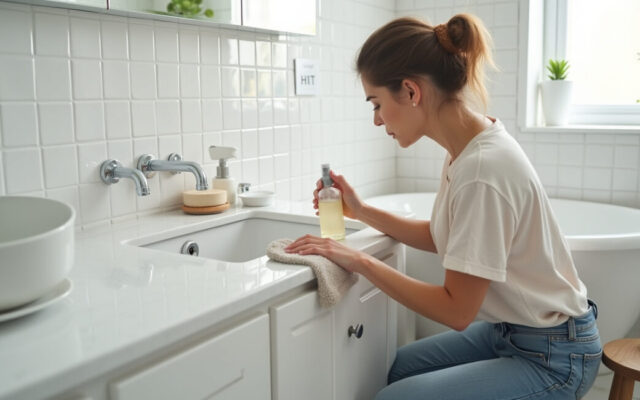
For routine kitchen wiping, the most useful formula is a simple spray: 1 cup distilled white vinegar, 1 cup water, and optional 5 to 10 drops of mild dish soap for extra slip. Spray lightly, let it sit for 30 to 60 seconds, then wipe with a microfiber cloth and follow with a dry cloth if you want a polished finish. This is the one recipe most people can keep by the sink and use daily.
Recipe: Everyday Counter Spray
- 1 cup distilled white vinegar
- 1 cup water
- Optional: 5–10 drops mild dish soap
- 1 spray bottle
Use this on laminate, sealed butcher block, tile, sealed stone, stainless steel backsplashes, and most painted cabinet fronts after testing a hidden spot. If the cabinets have a glossy factory finish, avoid soaking the surface; a damp cloth is enough. For readers building a simpler cleaning setup, this pairs well with the kind of low-clutter habits covered in our eco-friendly self-care on a budget guide, because the same principle applies: fewer products, used correctly, beat a crowded cabinet.
The real advantage of a vinegar spray is not power; it is consistency, because a fast daily wipe prevents the buildup that turns into scrubbing later.
When to Skip the Spray
Skip it on unsealed wood, marble, granite, and any finish that already looks hazy or worn. If you are unsure, try a small hidden area first and watch for dullness after it dries.

Sink Cleaner and Deodorizing Paste That Actually Helps
For sinks, especially stainless steel and porcelain, a vinegar-baking soda routine can be useful if you treat it as a cleaning sequence, not a magic reaction. First, scrub the basin with baking soda and a damp sponge. Then rinse, spray with diluted vinegar, let it fizz lightly on residue, and wipe clean. The fizzy reaction looks dramatic, but the real value comes from loosening grime and lifting odor from the drain area.
Recipe: Sink Paste and Rinse
- Sprinkle baking soda over a damp sink.
- Scrub with a soft sponge or non-scratch pad.
- Rinse thoroughly.
- Spray with the vinegar-water mix.
- Wipe dry with a microfiber cloth.
That sequence is useful for everyday sink maintenance, but it is not a substitute for disinfecting after raw meat contact. The FoodSafety.gov kitchen cleaning guidance is clear on this point: cleaning removes soil, while disinfection is a separate step when food-safety risk is involved. That distinction matters in real kitchens, where a sink can look clean and still need a different treatment.
Viables, citrus peels, and essential oils get promoted as odor fixes, but I would not rely on them as the main method. A clean drain, dry sink walls, and regular wiping do more than fragrance ever will.
Stovetop Grease Remover Without Damaging the Finish
Vinegar is not the strongest grease cutter, but it can be part of a safe stovetop routine if you use it after loosening the mess. For glass-top or smooth electric ranges, warm the surface slightly, remove loose crumbs, then wipe with a microfiber cloth dampened with the vinegar solution. For heavier buildup, add a small amount of dish soap to the cloth, not the whole bottle, so you get surfactant power without a slippery residue.
Recipe: Stovetop Wipe for Light Grease
- 1 cup water
- 1 cup distilled white vinegar
- 1 teaspoon mild dish soap, optional
- Microfiber cloth
If the spill is baked on, vinegar alone will disappoint you. Use a plastic scraper designed for glass cooktops, then follow with the spray. On gas ranges, keep liquid away from igniters and control areas. That is the kind of practical detail that sounds small until you have seen a burner refuse to relight because too much moisture pooled around it.
For readers trying to cut down on waste while keeping the kitchen usable, this approach fits the same logic as our zero-waste checklist for busy beginners: use a few tools well instead of chasing perfect all-purpose solutions. A spray bottle, a scraper, and a cloth often cover 90% of the job.
A Simple Daily Cleaning Routine for Real Kitchens
The fastest kitchen routine is not the most elaborate one. It is a short cycle you can repeat without thinking: clear the counters, spray the wipeable surfaces, clean the sink, and finish by drying high-touch areas like the faucet and stove knobs. If you do that every night or every other night, grease and mineral film stay light enough that vinegar can do useful work.
Five-minute Routine
- Clear dishes and food scraps.
- Spray counters and cabinet handles.
- Wipe the sink and faucet.
- Spot-clean the stovetop.
- Dry everything that stays visible.
Na prática, what happens is that people overclean on weekends and underclean during the week, which makes the next session feel like a project. A short vinegar-based routine breaks that cycle. It also pairs well with a minimalist setup, which is the same reason many readers like a cheap reusable essentials first approach in other parts of the home: a few durable items create better habits than a pile of rarely used products.
A five-minute cleaning habit prevents more buildup than a powerful cleaner used once a week.
Safety, Surfaces, and the Mistakes That Ruin Good Results
The biggest mistake with vinegar cleaners is using them where acidity creates damage. Natural stone is the clearest example, but it is not the only one. Some sealed finishes, waxed wood, older laminates, and delicate hardware coatings can also react badly if they get repeated exposure. If you are cleaning a new apartment or unfamiliar kitchen, test first.
Do Not Mix Vinegar with Bleach
That combination can release chlorine gas, which is dangerous even in small indoor spaces. The same caution applies to ammonia-based cleaners. The CDC and EPA both warn against mixing household chemicals without clear label directions, and that warning is worth taking seriously.
Use the Right Cloth and the Right Dilution
A microfiber cloth traps soil better than paper towels and helps reduce streaking. If the vinegar smell bothers you, add a few drops of dish soap and rinse the cloth often instead of adding more vinegar. Stronger is not better here; overconcentration can leave odor without improving cleaning performance.
There is also a limit to what vinegar can accomplish alone. If your stovetop has polymerized grease or your sink has deep mineral buildup, a specialty cleaner may be faster and safer for the finish. Good cleaning is not about ideology. It is about the shortest effective method.
How to Mix, Store, and Upgrade Your DIY Kit
Mix your cleaner in a labeled spray bottle, keep it away from direct heat, and replace it if the bottle gets cloudy or contaminated. A fresh batch every few weeks is usually enough for a household formula that contains water. If you want more control, make two bottles: one plain vinegar spray for glass and metal, and one mild soap-and-water cleaner for greasy touchpoints.
| Surface | Best DIY Approach | Avoid |
|---|---|---|
| Laminate counters | Vinegar-water spray | Soaking seams |
| Stainless steel sink | Baking soda scrub, then vinegar rinse | Abrasive powders |
| Glass cooktop | Light vinegar spray and microfiber cloth | Metal scouring pads |
| Marble or granite | pH-neutral cleaner | Any vinegar-based mix |
If you are building a smarter home routine overall, the logic is the same one behind the affordable zero-waste skincare routine and similar low-waste systems: choose fewer products, label them well, and use them on the right surface. That is where the savings show up.
What to Do Next If You Want Better Results with Less Effort
The smartest next step is to audit your kitchen surfaces once and match each one to the safest cleaner. Once you know which areas can handle vinegar and which ones cannot, the whole routine gets simpler. That single decision prevents the mess of trial and error that makes DIY cleaning feel hit-or-miss.
Try one spray bottle this week, test it on two safe surfaces, and keep a note of what streaks, what shines, and what needs a different approach. If a cleaner looks good but leaves the wrong finish behind, it is the wrong cleaner for that job. That is the standard worth using every time.
Can Vinegar Really Replace Most Kitchen Cleaners?
It can replace a surprising number of light-duty cleaners, but not all of them. Vinegar works best for routine wipe-downs, mineral film, and odor control. It does not replace degreasers for heavy baked-on messes, and it should never be your default on marble, granite, or other acid-sensitive stone. The best setup is a small, purpose-built toolkit rather than one bottle for everything.
Why Does Vinegar Sometimes Leave Streaks?
Streaks usually come from using too much liquid, wiping with a dirty cloth, or cleaning a surface that already has greasy residue. Vinegar evaporates cleanly, but if the cloth is saturated or the surface is overloaded, it can still smear. A microfiber cloth and a final dry wipe usually fix the problem. On glass and stainless steel, less liquid almost always works better.
Is Baking Soda and Vinegar a Strong Cleaning Combo?
It is useful, but not because of the bubbling reaction people like to film. Baking soda gives you gentle abrasion, and vinegar helps loosen film and odor after rinsing. When mixed directly in equal amounts, they mostly cancel each other out, so the better method is to use them in sequence. That approach gives you more actual cleaning power with less waste.
Can I Use Vinegar on Sealed Granite or Quartz?
Sealed granite is still risky if vinegar is used often, because the seal can wear and the stone itself may still react over time. Quartz is more variable: some engineered quartz surfaces tolerate light cleaning, but manufacturers often recommend pH-neutral products instead. The safest choice is to follow the surface maker’s care instructions and use vinegar only if the label explicitly allows it.
How Often Should I Make a Fresh Vinegar Cleaner?
A fresh batch every few weeks is a good rule for a diluted homemade spray stored at room temperature. If the bottle smells off, looks cloudy, or has visible residue, replace it sooner. Since water-based DIY cleaners do not contain preservatives, they are better made in smaller amounts. That keeps the mix reliable and reduces the chance of contamination.