 Skip to content
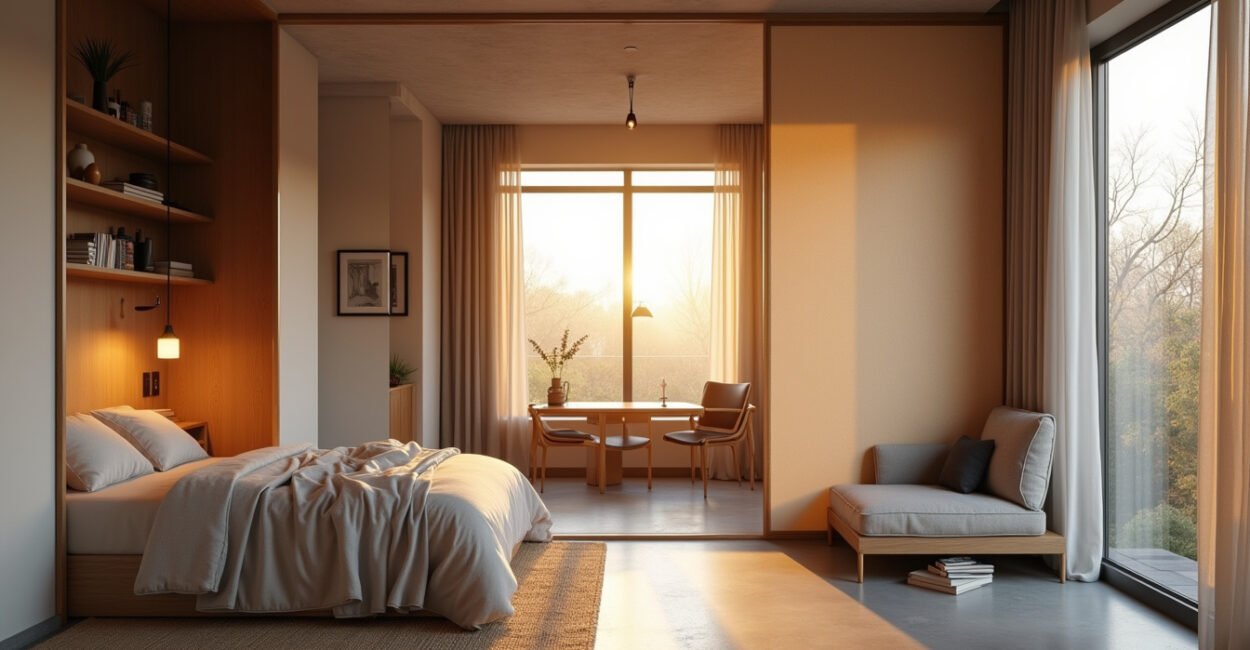
In a small apartment, the right room divider can create a real extra room—without stealing a single square foot.
If your studio feels like your bed, desk, and dinner plate are always competing for the same patch of floor, you’re not imagining it. Room dividers work best when they define space without turning the apartment into a maze. That means choosing pieces that add storage, soften light, or fold away when you need the room back.
And that’s the trick: the best options don’t just separate areas. They make the apartment feel calmer, more intentional, and easier to live in.
Why Room Dividers Make a Small Apartment Feel Bigger
“Division” sounds like it should make a space smaller, but in practice it usually does the opposite. A studio with clear zones feels organized, and organized rooms feel larger because your eye knows where to rest. Room dividers create that structure fast.
Think of them as visual boundaries, not walls. A bookshelf behind a sofa can turn a living area into a lounge. A curtain can hide a sleeping nook. A folding screen can separate a workspace from the rest of the apartment by 6 p.m. and disappear by 7.
That’s also why the wrong divider can backfire. Heavy pieces block daylight, and dark panels can make a tiny apartment feel boxed in. The sweet spot is a divider that adds function first and separation second.
The 9 Room Dividers That Actually Work in Small Spaces
Here’s the short version: the smartest room dividers earn their place by doing more than one job. Storage, light control, flexibility, and style matter more than gimmicks.
- Open shelving: Great for books, baskets, and decor; it separates zones without killing light.
- Floor-to-ceiling curtains: The easiest soft divider, especially for hiding a bed or home office.
- Foldable screens: Lightweight, movable, and ideal when your layout changes often.
- Freestanding bookcases: Better than people think, as long as they don’t feel bulky.
- Slatted wood panels: Stylish, airy, and more architectural than a curtain.
- Glass dividers: Best if you want separation with maximum light, though they cost more.
- Hanging plants or trellis systems: Softens a zone boundary and brings life into the room.
- Storage cabinets: Useful when you need hidden clutter control plus division.
- Sliding panels: A more built-in look, good for renters only if installed carefully.
The best room dividers for small apartments are the ones that solve a storage problem at the same time. That’s why shelving often beats decorative screens in real life.

What to Avoid If You Don’t Want Your Apartment to Feel Smaller
The biggest mistake is choosing a divider because it looks beautiful in a large loft, then wondering why it overwhelms your 400-square-foot studio. Scale changes everything.
- Skip anything too tall and opaque unless you truly need privacy.
- Avoid thick bases that eat floor space.
- Don’t block windows or natural light paths.
- Be careful with dark finishes in already dim rooms.
- Don’t pick a divider that only looks good from one angle.
Here’s a quick reality check: a divider that hides clutter but makes the room feel darker is a bad trade. In a small apartment, light is part of the floor plan. If your choice interrupts it, the room shrinks emotionally even if the measurements stay the same.
How to Choose the Right Divider for Your Layout
Start with the problem, not the object. Are you trying to separate sleep from work? Hide the mess behind the sofa? Create privacy for guests? Your answer tells you what kind of divider makes sense.
| If you need… | Best divider type |
|---|---|
| Privacy | Curtains, folding screens, sliding panels |
| Storage | Open shelving, cabinets, bookcases |
| Flexibility | Foldable screens, lightweight shelving, plants |
| Airy separation | Slatted wood, glass, open shelves |
In apartments where every inch matters, I’ve seen people regret buying a divider that was “pretty” but useless. The pieces that get kept are the ones that solve daily friction. That’s why a simple curtain can beat a sculptural screen when you’re trying to sleep better and clear visual noise.
For a broader look at how small-space planning is influencing home design, the small apartment ideas covered by Homes & Gardens show just how much layout choices matter. And for practical housing guidance on maximizing compact living, the U.S. Department of Energy’s design and efficiency guidance is a useful reminder that light, airflow, and placement all shape comfort.
Styling Tricks That Make Room Dividers Look Intentional, Not Improvised
The divider should feel like part of the apartment, not a random object you moved in desperation. That means repeating one material or color somewhere else in the room.
For example, if you choose a wood shelving divider, echo that tone in a side table or lamp base. If you go with curtains, keep the fabric close to your bedding or sofa palette. If you use a folding screen, place it where it frames a vignette instead of hiding it.
A good room divider doesn’t scream “separation.” It quietly tells the room where to breathe.
That’s the difference between a fix and a design choice. One feels temporary. The other feels like you planned the space on purpose.
One practical rule: if you can see daylight through or around the divider, the apartment will usually feel larger.
What Works Best in 2026: Flexibility Wins
Right now, the strongest trend is not one material or style. It’s flexibility. More people want spaces that can switch from work mode to sleep mode to hosting mode without major rearranging.
That’s why foldable screens, curtains, and open shelving keep showing up in small apartments. They let you change the room’s purpose without committing to a fixed wall. As Architectural Digest’s small-space coverage often shows, the best interiors are usually the ones that adapt instead of locking you into one use.
There’s a limit, of course. If you need sound isolation, a soft divider won’t do the job. But for most studios and open-plan rentals, the best move is the one that gives you structure, light, and the option to change your mind next month.
Small apartments don’t need more stuff. They need smarter boundaries. And the best room divider is the one that makes your space feel edited, not crowded.
FAQ
What is the Best Room Divider for a Studio Apartment?
For most studios, open shelving or a floor-to-ceiling curtain is the best place to start. Shelving gives you storage and separation at the same time, while curtains offer privacy without a heavy visual footprint. If your main goal is keeping the room bright, choose something open or semi-transparent rather than a solid panel.
Do Room Dividers Make a Small Apartment Look Smaller?
They can, but only if they block too much light or take up too much floor space. A divider that is slim, airy, or multifunctional usually makes the apartment feel more organized instead of cramped. The key is to separate zones without creating a visual barrier that cuts the room in half.
Are Curtains a Good Room Divider?
Yes, especially in rentals and studios. Curtains are affordable, easy to install, and easy to remove, which makes them one of the most flexible room dividers. They work best when you want soft privacy around a sleeping area or home office and don’t want to commit to a more permanent structure.
Which Room Divider is Best for Renters?
Freestanding screens, bookcases, curtains, and open shelving are usually the safest renter-friendly options. They create separation without major construction or wall damage. If your lease is strict, avoid anything that requires drilling or permanent mounting unless you’ve checked the rules first.
How Do I Choose the Right Room Divider for My Layout?
Start by identifying the problem you’re solving: privacy, storage, light control, or flexibility. Then match that need to the divider type that handles it best. In small apartments, the smartest choice is usually the one that does two jobs at once and still keeps the room feeling open.


