Skip to content

📅 Updated on June 12, 2026
Counter space disappears faster than people expect: one bulky gadget turns into three, and suddenly the kitchen feels busy even when nothing is happening. The best space-saving swaps reduce clutter without making everyday cooking more annoying, which is the real test. This matters most in small kitchens, rentals, and family spaces where every drawer and shelf has to work harder.
What counts as a good swap? In practice, it is a change that removes waste, folds into existing habits, and does not create a new storage problem. That means fewer single-use tools, more stackable containers, and equipment that earns its footprint. Below, I’ll break down what to switch, what to keep, and where these changes genuinely pay off.
In a Nutshell
- The smartest kitchen swaps remove duplicate functions first, because duplicate tools waste space faster than almost anything else.
- Stackable glass jars, nesting bowls, collapsible tools, and wall-mounted storage solve different problems and work best when combined.
- Multi-use appliances help only when they replace two or more items you already use often; otherwise, they become one more bulky object.
- Good organization is not about hiding clutter. It is about lowering the number of items that need storage in the first place.
- The best changes are easy to keep up after a busy week, not just pretty on day one.
Space-Saving Swaps for a Kitchen That Needs to Work Harder
Space-saving swaps are intentional replacements that reduce physical footprint while preserving function, convenience, or both. In plain English: you trade a bulky, single-purpose item for one that stores better, stacks better, or does more than one job. The result is a kitchen that feels calmer because it contains less dead space and fewer duplicates.
Start with the items that create the most visual bulk
Big containers, oversized boxes, and awkwardly shaped gadgets usually create the biggest mess effect. If something is hard to stack, hard to nest, or impossible to slide into a cabinet without wasting air around it, that item is a storage problem before it is a kitchen tool.
A good first pass is to look at what sits on the counter every day. Can the coffee setup be reduced to one station? Can baking supplies move into uniform containers? Can a tool that only gets used monthly leave the prime real estate?
Replace duplication before you replace convenience
People often buy a “better” version of a tool they already own, then keep both. That is how clutter grows quietly. A second garlic press, a backup spatula set, or a separate appliance for one minor task usually adds more burden than value.
OThe best kitchen swap is the one that removes an item entirely without making the remaining workflow slower.
Use measurements, not guesses, when you buy storage
Who works with kitchens every day knows this mistake: a bin that looks compact in a store can eat half a shelf at home. Measure shelf depth, drawer height, and cabinet clearance before buying organizers. That simple step prevents the common “organized clutter” problem, where the storage itself becomes the thing taking up space.
For storage planning, the U.S. Environmental Protection Agency’s guidance on reducing wasted food at home is useful because it ties organization to waste reduction, not just tidiness. That connection matters: if food is visible and accessible, it is less likely to be forgotten and thrown away.
Containers, Jars, and Bins That Actually Save Room
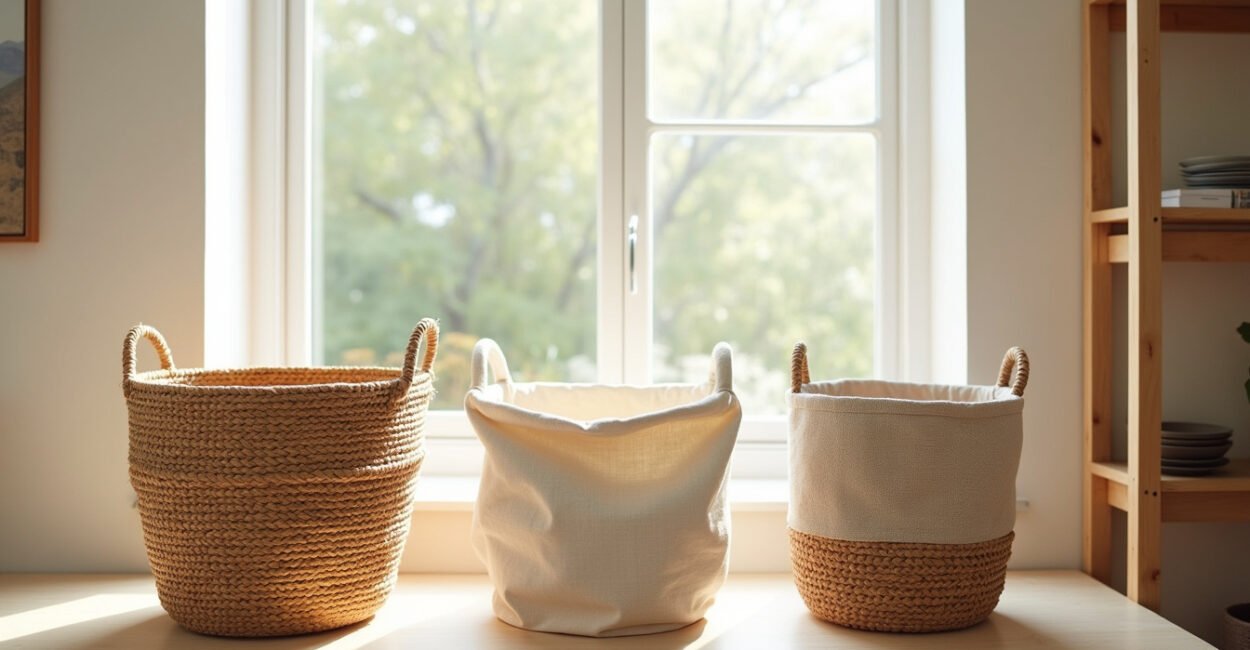
The right container system can cut cabinet chaos fast. Glass jars, modular pantry containers, and nested bins work because they standardize shape. Standard shapes stack cleanly, show what you own, and make shelf space easier to use from front to back.
Choose stackability over pretty mismatches
Mixed packaging is a major source of visual clutter. Flour in one bag, rice in another, pasta in a box, snacks in half-open pouches—each item occupies a different footprint. Uniform containers make the cabinet read like one system instead of a pile of leftovers.
- Glass jars are best for dry goods you use often.
- Modular plastic containers make sense when you need lighter weight and airtight lids.
- Wire or clear bins work well for fridge items that need fast visibility.
- Nesting bowls beat separate bowls in multiple materials if storage is tight.
Keep categories narrow
One of the easiest mistakes is over-containerizing. If every item gets its own container, you have not reduced clutter—you have repackaged it. A better approach is grouping by use: baking staples together, breakfast items together, snacks together.
That approach aligns with NRDC’s guidance on cutting food waste at home, which emphasizes visibility and routine as practical waste reducers. When people can see food clearly, they tend to use it sooner.
Use labels only where they solve a real problem
Labels help in shared kitchens, deep pantries, and homes where multiple people cook. They are less useful if you already know every item by sight. If you label everything, you create a maintenance task, and maintenance is where good systems often break.
Tools That Fold, Nest, or Do More Than One Job
The best compact tools are not gimmicks. They either fold down, nest into another item, or replace two functions you use often. A collapsible colander, a nesting measuring cup set, or a whisk with a slimmer profile can free a drawer without changing how you cook.
Favor tools that disappear after use
Collapsible silicone items save the most space when they are stored in a truly flat state. That said, not every foldable tool is worth buying. If the hinge is weak or the material feels flimsy, the item may save room but fail under real use. A tool that breaks early costs more space in the long run because you end up replacing it.
Look for real 2-in-1 solutions, not marketing claims
A 2-in-1 countertop oven makes sense when it genuinely replaces a toaster and a small oven you use several times a week. It makes less sense if it is just a larger machine with more buttons. The same rule applies to immersion blenders with attachments, electric kettles with temperature presets, and food processors with multiple inserts.
Multi-use kitchen equipment saves space only when it replaces tools you use regularly; otherwise, it becomes a bigger object with a wider footprint.
A small example from a real kitchen setup
A two-person apartment kitchen had a toaster, a toaster oven, a stand mixer, three mixing bowls, and a drawer full of rarely used gadgets. The fix was not more storage. The owner replaced the toaster and toaster oven with one compact oven, kept only two nesting bowls, and moved the stand mixer to a lower cabinet because it was not an everyday tool.
The counter opened up immediately. More important, the kitchen became easier to clean because fewer items needed to be moved during cooking.
Vertical Storage, Wall Space, and the Spots People Ignore
Countertops are the most expensive storage in the kitchen. Vertical space is usually underused, which is why wall rails, magnetic strips, and over-the-door organizers can have outsized impact. They shift frequently used items into visible reach without taking floor or counter area.
Use walls for repeat-use items only
A magnetic knife strip works because it frees a drawer and keeps knives visible. A rail for measuring cups, utensils, or frequently used pans can do the same. But wall storage should stay limited to items you reach often. If everything goes on the wall, the kitchen starts to feel busy again.
Think in zones, not just in products
Store coffee gear near the coffee machine, cutting tools near prep space, and baking tools near the oven. Zoning reduces the number of steps you take and lowers the odds that tools migrate into random drawers. That matters more than people think because migration is how clutter spreads.
Swaps That Cut Waste as Well as Clutter
Space-saving changes work best when they also reduce waste. If a system helps you see what you have, you are less likely to buy duplicates or forget food at the back of the fridge. That is why clear containers, lazy Susans, and shallow bins do more than organize—they support better inventory control.
Make old food harder to ignore
Put older items in front. Store leftovers in square containers that fit tightly together. Keep produce in visible drawers instead of opaque bags when possible. These small adjustments reduce the odds of throwing out food because it was hidden, not because it was spoiled.
For a broader public-health view of food loss and waste, the U.S. Department of Agriculture’s food waste resources are a solid reference point. They reinforce a simple idea: reducing waste starts with better visibility and planning, not just shopping less.
Know where the method falls short
This approach is not perfect for every household. If you cook large meals, batch prep every Sunday, or have a shared kitchen with limited shelving, some “space-saving” tools can become frustrating because they take longer to clean or require more careful handling. In those cases, durability and speed matter more than compactness alone.
What to Buy First If Your Kitchen Feels Crowded
If you want the fastest payoff, start with the things that currently waste the most space per use. That usually means duplicate gadgets, oversized packaging, and storage containers that do not fit each other. The goal is not to buy a pile of organizers. The goal is to remove friction from the way you already cook.
A practical order of operations
- Clear out duplicate tools you have not used in the last month.
- Measure one shelf, one drawer, and one cabinet before buying anything new.
- Replace irregular packaging with stackable containers for the items you use daily.
- Move rarely used appliances out of prime counter space.
- Add vertical storage only after the clutter load is lower.
How to Tell Whether a Swap Is Worth It
A useful swap should pass three tests: it should save space, stay easy to use, and not create more cleaning work than it removes. If it fails any one of those, skip it. A product that looks efficient but is awkward in daily life will end up in a cabinet, which defeats the point.
Ask one blunt question before buying
What will this replace? If you cannot name the item, function, or habit it will displace, it is probably an impulse purchase in disguise. That is the cleanest way to avoid filling a small kitchen with “helpful” clutter.
Keep convenience in the definition
Space-saving does not mean minimalist at any cost. It means the setup is easier to maintain than what came before. The best systems are the ones you can still use when dinner is late, guests are over, or the sink is full.
Próximos Passos
The strongest kitchen systems are built by subtraction, not accumulation. Start by removing one duplicate, one oversized container, and one item that lives on the counter without earning its place. Then test whether the remaining setup is easier to clean, easier to reach, and easier to maintain after a normal week of use.
If you are evaluating space-saving swaps for your own kitchen, begin with the highest-traffic zone first: the counter, the prep drawer, or the pantry shelf you touch most often. That gives you the fastest signal on what actually helps and what only looks organized.
FAQ
What makes a kitchen swap truly space-saving?
A space-saving swap removes either physical bulk, duplicate function, or both. It should fit better, stack better, or replace more than one item without making daily use harder. If the new item saves room but slows you down, it is not a win.
Are collapsible kitchen tools worth it?
They are worth it when you need to store them in very tight spaces and you use them often enough to justify the tradeoff. The weak point is durability: low-quality collapsible tools can wobble, wear out, or feel annoying in use. Buy them for specific needs, not just because they fold.
Do clear containers really help reduce waste?
Yes, because visibility changes behavior. When you can see dry goods, leftovers, and produce more easily, you are less likely to forget them. That said, clear containers work best when they are standardized and labeled well enough to keep categories organized.
Is wall storage safe for knives and heavy tools?
It can be safe if the hardware is installed correctly and the tool is appropriate for hanging storage. Knives belong on magnetic strips designed for the weight, and heavier tools need sturdy anchors. If you are unsure about mounting strength, keep the item in a cabinet instead.
What should I replace first in a crowded kitchen?
Start with duplicate tools and appliances you do not use weekly. Those are the fastest wins because they free the most room without changing your cooking habits much. After that, move to packaging and storage containers.
Can space-saving swaps work in a large kitchen too?
Yes, because clutter is not only about square footage. Large kitchens can still feel chaotic if tools are duplicated, storage is mismatched, or counters are overloaded. A more efficient layout makes the space easier to use, even when you already have room.