Skip to content

Someone just stopped mid-scroll because of a perfectly imperfect shelf: a stack of books leaning against a raw ceramic vase, a single framed photo, and—crucially—three inches of empty breathing room. That single visual is the whole trick behind why shelf styling is everywhere on socials right now. It’s not just about filling space; it’s about orchestrating what the eye wants to land on.
Below are practical, counterintuitive, and visual hacks to turn open shelving from chaotic to curated—fast. You’ll get exact balances, textures that work, what to avoid, and quick-win edits that look expensive but aren’t.
The Micro-rule That Makes 70% Of Shelves Look Intentional
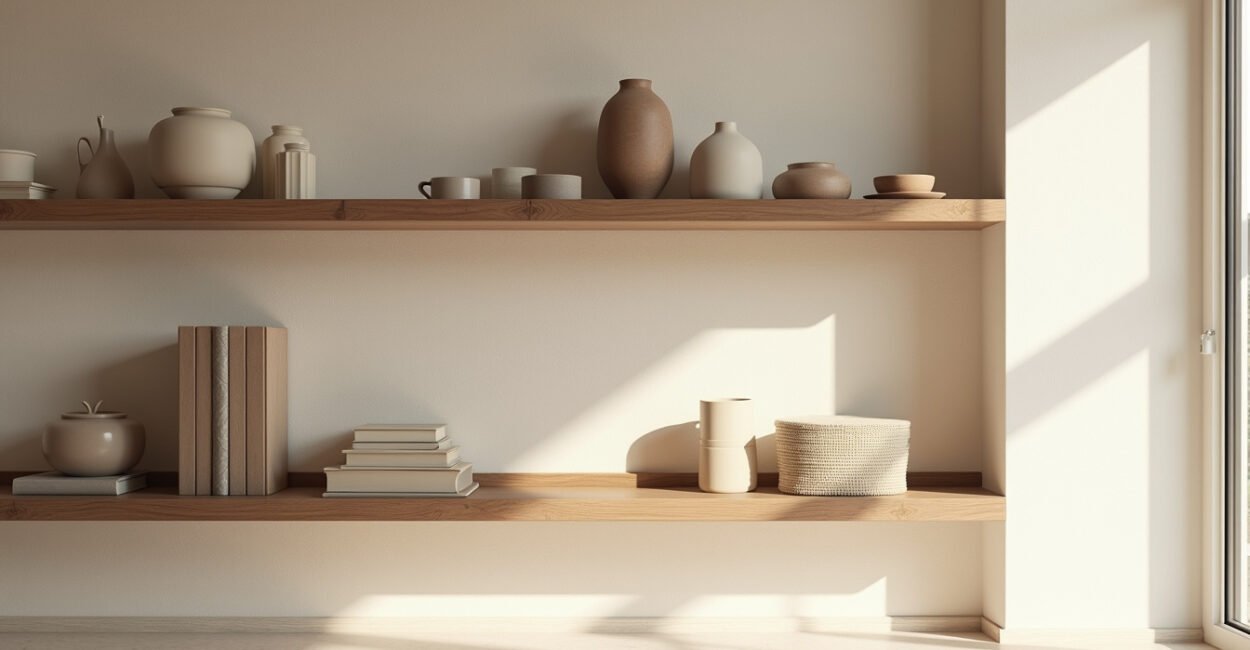
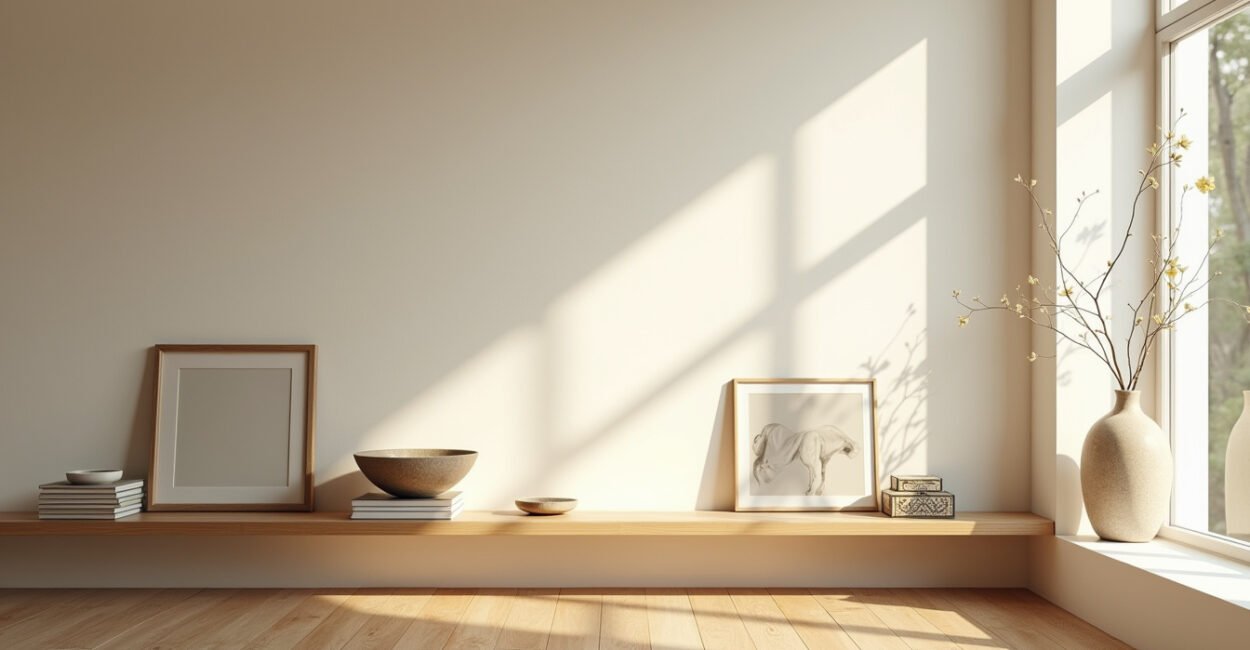
Leave measured emptiness—negative space is the hero, not a mistake. Most people treat shelves like closets: more stuff = better storage. Instead, aim for one-third objects, one-third texture, one-third negative space on each shelf plane. That ratio creates rhythm and a focal point without overthinking.
- Objects: decorative items, small vases, or curios.
- Texture: books, woven baskets, folded linens.
- Negative space: empty areas where your eye can rest.
Try removing half the items from one shelf and standing back; the difference feels intentional immediately.
The Texture Trilogy That Instantly Reads as Curated
Design pros rely on three textures per shelf: a hard surface, a soft surface, and an organic element. That tactile contrast is what reads as layered and thoughtful in photos and real life.
- Hard: ceramic, glass, metal.
- Soft: textiles, paper, clothbound books.
- Organic: wood, plants, stone.
Example: place a matte ceramic vase next to a stack of linen-covered books and a small wood bowl. The camera and your eye both register depth.

Scale and Rhythm: How to Stop Shelves from Looking Like a Jumble Sale
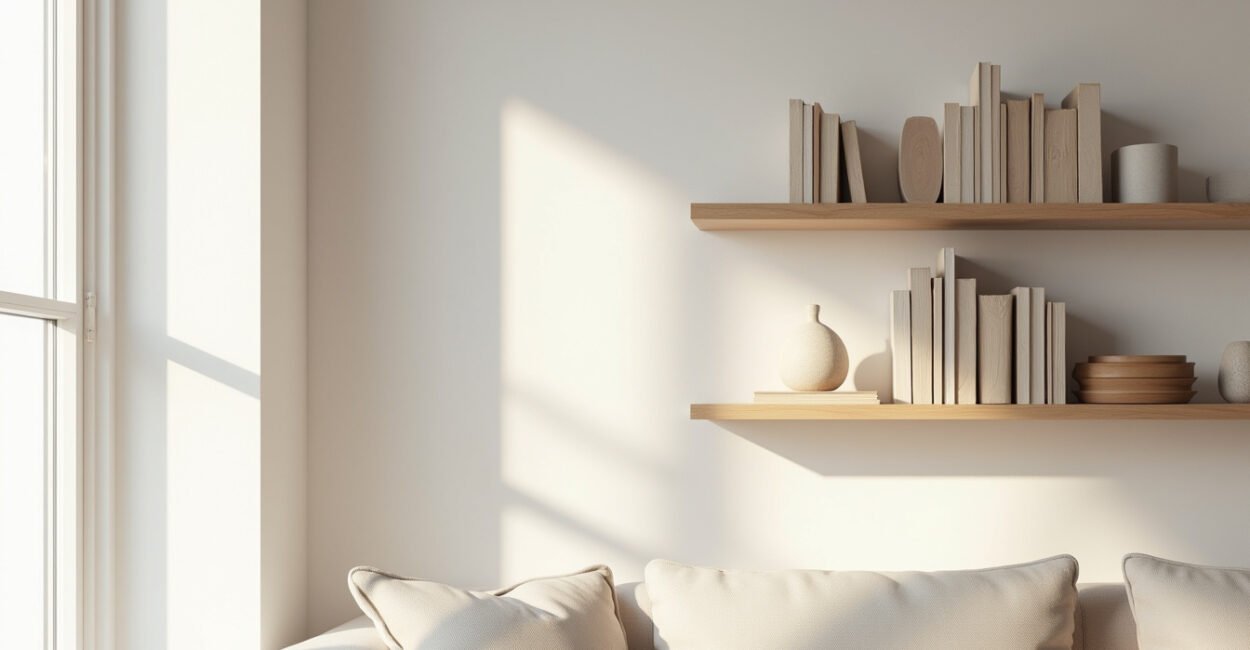
Too many same-sized objects = visual noise. Introduce three height zones per shelf: low, medium, tall. Repeat shapes or colors in odd numbers (3 or 5) to create a quiet rhythm.
Small hack: rotate one tall item every week—your shelf will feel fresh without a full restyle.
The Before/after Comparison Everyone Misses
Expectation: fill every inch to show abundance. Reality: curated emptiness reads richer. In a simple before/after test, removing 40% of items and rearranging the rest around a single focal item increased perceived value and calm instantly. Less can look like more when arranged with intention.
Think of the shelf like a gallery wall—one piece dominates, others support.
Three Common Mistakes and What to Do Instead
Stop treating shelf styling like decorating by accident. Here are the top errors and the fix for each:
- Error: Overstacking books horizontally. Fix: Mix vertical and horizontal stacks; use horizontals as platforms for small objects.
- Error: Too many personal photos in mismatched frames. Fix: Limit to one or two frames with consistent framing.
- Error: Hiding plants among clutter. Fix: Let a plant breathe—place it adjacent to negative space so it reads as intentional.
A Quick 10-minute Edit You Can Do Right Now
Set a timer for 10 minutes and follow these exact steps: remove everything; choose one anchor item (a vase, sculpture, or large book); rebuild around that anchor using the texture trilogy and the scale rule; leave visible gaps. You’ll walk away with a curated look in the time it takes to brew coffee.
This small ritual trains your eye—do it weekly and you’ll notice what to keep or toss faster.
Why Shelf Styling Matters Beyond Looks (a Tiny Sociology Lesson)
Objects on shelves communicate lifestyle, not just taste. They hint at routines, values, and even memory management. Museums and cultural historians treat domestic displays as meaningful; the same principles apply in our homes. Styling a shelf is storytelling—choose the story you want to tell.
For design context and how material culture signals identity, see research from Smithsonian Institution. For cognitive effects of clutter on wellbeing, check findings shared by academic sources such as Harvard University.
What to Avoid When Styling Open Shelves?
The number-one trap is treating shelves like storage bins instead of stages for display. Resist overloading with functional items (bills, loose cables, spare bulbs). Keep functional storage in matching baskets and assign one shelf as “utility” that still follows your texture and scale rules. If you’re unsure, step back and photograph—the camera reveals imbalance faster than the eye.
How Do I Choose a Focal Object for a Shelf?
Pick an object that’s visually strong and meaningful—a sculptural vase, an art book, or a framed print. The focal item should be proportionate to the shelf depth and distinct in color or shape so it reads first. Arrange supporting pieces to lead the eye toward it: a horizontal book stack, a medium-height plant, and a small personal item make a balanced cluster. If nothing feels right, rotate the object weekly until one feels “correct.”
Can I Style Shelves in a Small Apartment Without Looking Cluttered?
Absolutely. In small spaces, negative space becomes even more powerful—use it to create breathing room. Favor low-profile items, vertical lines to increase perceived height, and limit palette to two to three colors for cohesion. Use baskets or boxes for true storage and display only curated pieces. A single plant and a compact lamp can anchor a shelf without overwhelming it, and regular editing keeps it from creeping into clutter.
How Often Should I Restyle or Edit My Shelves?
Brief weekly edits (5–10 minutes) keep shelves current and prevent accumulation. Every season, do a deeper refresh: reassess one-third of items, swap textures, and introduce a seasonal accent like a woven tray or colored vase. The goal isn’t constant change—it’s intentional rotation so the shelf continues to reflect life without becoming a storage catchall.
What Lighting Works Best for Showing Off Styled Shelves?
Soft, directional lighting flatters objects and creates depth. LED strip lights or puck lights hidden under each shelf provide even illumination without glare. If installing lights isn’t an option, position a small adjustable lamp nearby to cast warm light across the display. Avoid harsh overhead lighting that flattens texture—warm, layered light enhances materials and makes photos pop.
Are There Budget-friendly Items That Instantly Elevate a Shelf?
Yes—affordable pieces can deliver a high-end look. Think matte vases, thrifted frames with matching paint, inexpensive ceramic bowls, or a stack of secondhand hardcover books. Natural elements like a small branch, a stone, or a woven placemat add texture inexpensively. The trick is editing: a few well-chosen, cohesive items beat many mismatched ones every time.