Skip to content

Half a wheelbarrow of rainwater can be the difference between a wilted patch and a thriving garden come August. If you’ve got a postage-stamp yard, water storage suddenly becomes a logistics problem: where to keep enough water to feed plants without turning the space into a puddle or a junkyard. This piece cuts straight to seven affordable, space-saving water storage hacks that actually hold usable volumes — and tells you the trade-offs so you can plan like a gardener who sleeps at night.
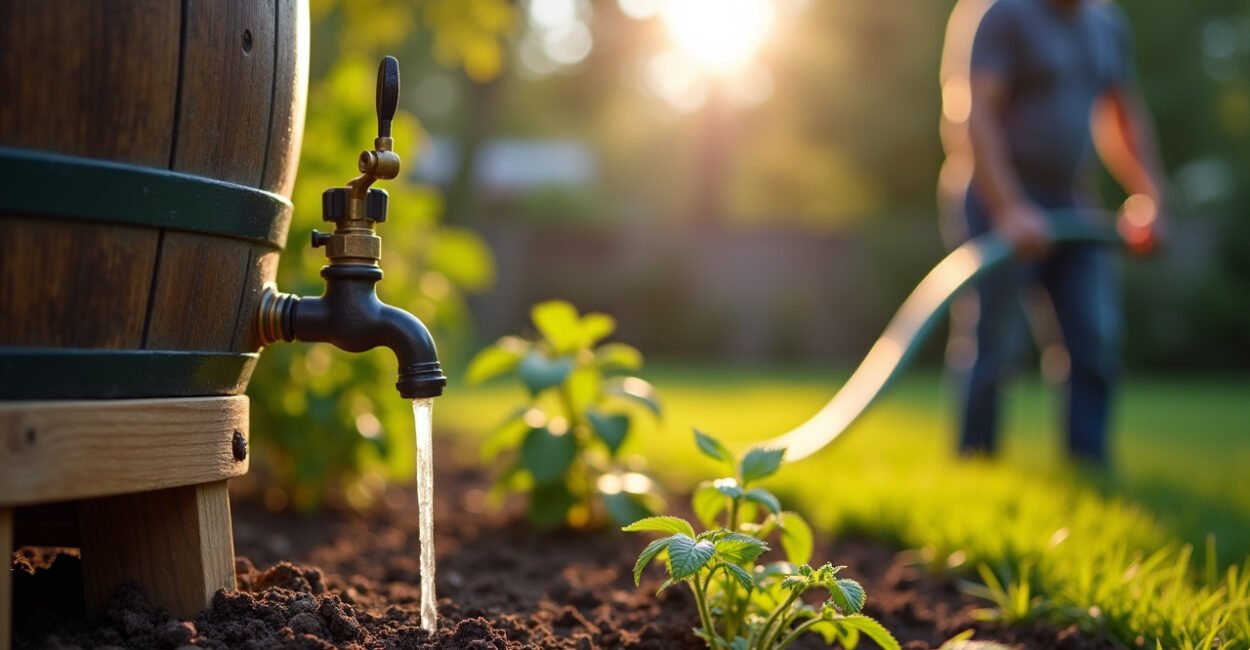
1. Repurposed IBC Totes: Industrial Capacity on a Backyard Budget
Assertion: One IBC tote (approx. 275–330 gallons) gives you big capacity in a 3×3-foot footprint.
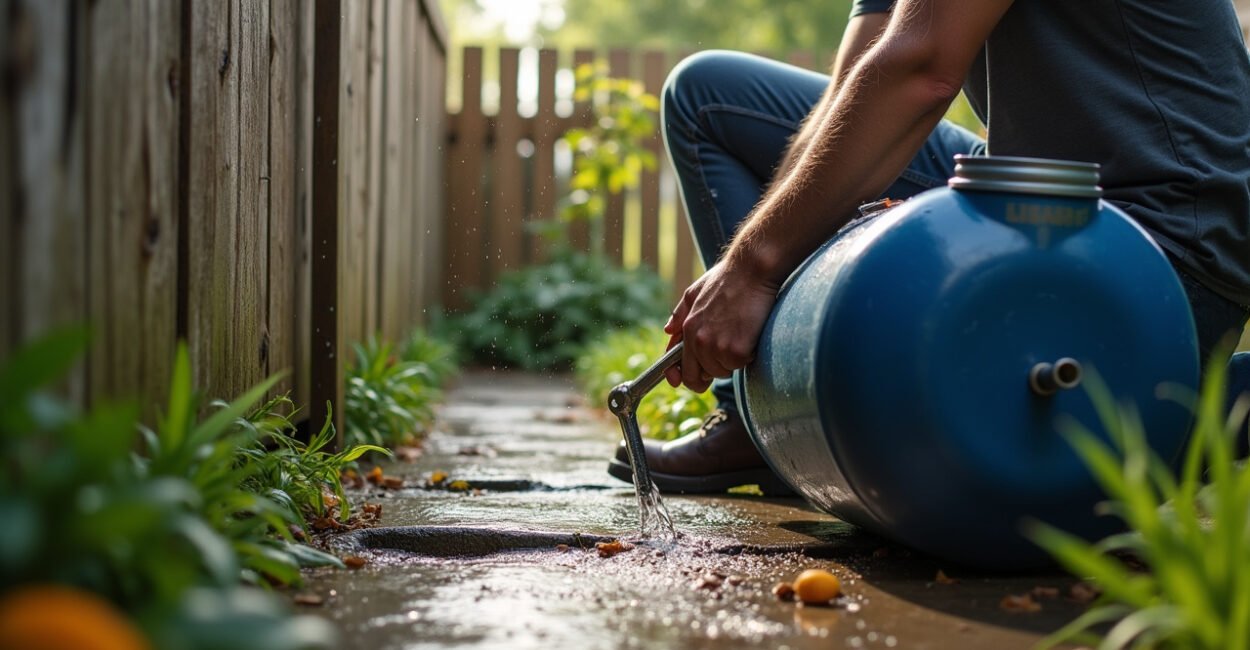
Imagine a pallet-sized cube tucked beside a shed. Industrial bulk containers (IBCs) are often sold used for under $150. They stack, can be fitted with a spigot and filter, and connect to gravity-fed drip lines. For many urban gardeners, an IBC replaces a row of 50-gallon drums without eating the yard.
- Pros: High volume per square foot; durable; easy to modify.
- Cons: Can be heavy when full (do not place on weak decking); may need cleaning if previously stored chemicals.
- Realistic volume: 275–330 gallons (~1,040–1,250 liters).
2. Stackable Rain Barrels: Vertical Thinking for Small Lots
Assertion: Vertical stacking multiplies capacity without expanding footprint — two or three modest barrels can match one large tank.
Stackable and slim-profile barrels (50–80 gallons each) are built for narrow spaces beside fences. Use a staggered arrangement so the top barrel feeds the lower barrels via overflow fittings; gravity then feeds your irrigation. This is a simple before/after: one 60-gallon barrel vs. three stacked yields 180 gallons in roughly the same footprint as a trash bin.
- Pros: Modular (buy as you go); cheaper per unit; easy to hide with lattice or plants.
- Cons: Needs secure fastening; higher stack height can complicate access.
- Realistic volume: 50–240 gallons depending on stack (e.g., four 60-gallon barrels = 240 gallons).


3. Underground Cisterns: Out of Sight, Out of the Way, Huge Payoff
Assertion: If surface space is sacred, a small buried cistern can store thousands of gallons without changing the look of your lot.
Homeowners often balk at digging, but a 1,000-gallon corrugated plastic underground tank sits under a small lawn patch. It keeps water cool (better for plants), preserves yard aesthetics, and protects water from evaporation. Installation cost rises, but long-term payoff is less hauling and more reliability in dry spells.
- Pros: Massive capacity with zero visual footprint; lower evaporation; safe from freezing at depth.
- Cons: Higher upfront cost and installation; requires pump for distribution unless gravity-fed downhill.
- Realistic volume: 500–2,000+ gallons (typical homeowner tanks: 500, 1,000, 2,000 gallons).
4. Collapsible Bladder Tanks: Temporary, Flexible, and Surprisingly Roomy
Assertion: A garden that changes every season benefits from collapsible tanks that expand when needed and disappear when not.
Bladders (or pillow tanks) fit inside sheds, under decks, or behind walls and unfold to hold hundreds of gallons. They’re excellent for seasonal needs — plantings in spring and summer, storage folded away in winter. Small community gardens use these for emergency capture after heavy storms.
- Pros: Cheap per gallon; easy storage when empty; adaptable shapes for odd spaces.
- Cons: Less durable than rigid tanks; puncture risk from tools or roots.
- Realistic volume: 100–1,000 gallons depending on model.


5. Under-deck Tanks and Planter-integrated Reservoirs: Dual-purpose Storage
Assertion: Marry form and function: use built structures as water storage so nothing is wasted.
Think of a raised planter with a built-in reservoir or a flat tank under a deck that doubles as storage and structure. This approach turns otherwise wasted cubic feet into usable water. One gardener converted the empty space under a 6×8 deck into a 200-gallon tank and now waters rows of pots without a hose across the yard.
- Pros: Concealed; uses existing structures; aesthetically pleasing.
- Cons: Requires design or retrofitting; access for cleaning can be tricky.
- Realistic volume: 50–500 gallons depending on available void space.
6. Rain Chain + Smart Distribution: Capture More from the Same Roof
Assertion: Small upgrades to collection infrastructure can increase capture by 25–40% without new tanks.
Replace a downspout with a rain chain feeding a funnel and splitter. Direct water into multiple small containers spread around the garden rather than a single point; you capture more minor events that would otherwise splash away. It’s a simple mismatch: better collection often beats bigger tanks for seasonal gardeners.
- Pros: Low cost; reduces overflow; feeds multiple zones directly.
- Cons: Requires careful leveling and screening; multiple small containers need more monitoring.
- Realistic volume: Adds capture equivalent to 10–50 gallons per small rainfall event across containers.
7. Modular Polyethylene Tanks and DIY Manifolds: Scale as Your Garden Grows
Assertion: Modular tanks let you start small and add capacity with minimal plumbing headaches.
Buy 100–300 gallon polyethylene tanks with standardized fittings and link them with a simple manifold. This way you add capacity unit by unit, balance pressure, and keep redundancy — if one tank needs maintenance, the rest still serve plants. It’s the difference between a brittle single tank and a resilient bank of tanks.
- Pros: Flexible expansion; relatively inexpensive; easy to plumb with PVC or flexible hose.
- Cons: Requires attention to leveling and proper venting to avoid siphon problems.
- Realistic volume: Modular: 100–1,000+ gallons depending on units used.
Comparison that surprises: A single 275-gallon IBC tucked behind a shed often holds more usable water than three 80-gallon barrels scattered around because fewer fittings mean less leakage and easier maintenance. Expectation: many small drums = more capacity. Reality: plumbing losses and neglect often mean less actual water when you need it.
Common mistakes to avoid:
- Storing untreated water in containers previously used for chemicals — always verify prior contents.
- Skipping secure anchors for stacked tanks — collapse is costly and dangerous.
- Underestimating outlet sizing — pumps and spigots must match irrigation demands.
- Ignoring overflow routing — overflow should be directed to a garden bed or soakaway, not a neighbor’s foundation.
Mini-story: A neighbor started with a single 50-gallon barrel and thought it enough. Two heat waves later, he swapped the barrel for a 275-gallon IBC and added a cheap manifold. The garden went from limp tomato vines to steady harvests — and he stopped borrowing my hose.
Two credible sources back the practicality of capturing rain and designing storage systems: the EPA’s rainwater guidance and water-conservation research from university extension programs like university extensions, both of which offer sizing calculators and safety advice.
Think beyond a bin: map daily irrigation needs (gallons per plant) against available storage and expected rain capture. That small spreadsheet you create now will save hours of frantic watering later.
Want a final, uncomfortable thought? In a drought, the easiest water to access isn’t the biggest tank — it’s the tank you actually maintain. Capacity is nothing without cleanliness and functioning valves.
How Much Water Does a Typical Vegetable Bed Need Per Week?
Most established vegetable beds need roughly 1 to 1.5 inches of water per week. For a 10×10-foot bed, that translates to about 62 gallons per week (1 inch over 100 square feet ≈ 62 gallons). Hotter weather and newly planted seedlings require more frequent watering, and sandy soils drain faster than clay. To plan storage, multiply the number of beds by 62 and add a safety margin for heat waves; that tells you how many gallons you should have on hand between rains.
Can I Safely Use Greywater or Stored Rain for Edible Crops?
Stored rainwater is generally safe for irrigating edible crops if collected from clean roofs and kept covered. Greywater can be reused for irrigation with precautions: avoid using it on leaves or fruits eaten raw and steer it to subsurface drip systems. Always check local regulations and guidelines, since some areas restrict greywater use. Proper filtration, regular maintenance, and avoiding harmful detergents will protect both plants and people.
What Maintenance Does Each Storage Type Require?
Maintenance varies: IBCs and polyethylene tanks need occasional cleaning and inspection of fittings; collapsible bladders require puncture checks and a dry storage spot when empty; underground cisterns need periodic sediment removal and secure lids. Rain barrels and stackable systems benefit from screens to block debris and mosquito-proofing. Simple monthly checks of valves, overflow routes, and filters keep systems reliable; neglect is the main cause of failures, not complexity.
How Do I Prevent Algae, Mosquitoes, and Contamination?
Keep tanks opaque and sealed: light encourages algae, and open water invites mosquitoes. Use fine mesh over inlets, secure lids, and install a first-flush diverter to bypass initial roof grime. For long-term storage, consider passive shading, regular chlorination for non-edible uses, or UV filtration for potable needs. Routine visual checks and flushing of sediments are inexpensive ways to maintain water quality and prevent pests from turning your tank into a nuisance.
How Much Should I Budget for a Beginner System That Actually Works?
Expect a basic, reliable setup to run from roughly $150 to $1,500 depending on scale. A single used IBC + fittings can cost $150–$300; a modest stackable rain barrel system with plumbing and a stand is $200–$500. Underground cisterns and professional pump installs push costs higher. Budget also for hoses, filters, and simple tools. The cheapest system is only valuable if it’s maintained; factor in small annual maintenance costs when planning.