Skip to content

A dated house does not have to stay inefficient. The right smart devices for older homes can cut energy waste, smooth out uncomfortable temperature swings, and reduce the little losses that quietly inflate utility bills month after month. The trick is choosing upgrades that work with old wiring, inconsistent insulation, and the realities of a lived-in house instead of assuming everything is built like a new-construction model.
That is the difference between buying gadgets and making a useful retrofit. In older homes, the biggest wins usually come from devices that control heating and cooling, manage lighting, monitor usage, and close the gaps created by drafts, human habits, and aging mechanical systems. Below, I’ll walk through the upgrades that matter most, what they actually do, where they fail, and how to prioritize them without turning the project into a full renovation.
O Que Você Precisa Saber
- In older homes, the highest-return smart upgrade is usually thermostat control, not entertainment or convenience features.
- Smart devices work best when they solve a specific waste pattern, such as overheated rooms, standby power draw, or lights left on in rarely used spaces.
- Compatibility matters more in older houses because some devices need a neutral wire, stronger Wi‑Fi coverage, or a stable HVAC system.
- The best retrofit strategy is to start with one zone, measure the result, and then expand only if the first device proves useful.
- Smart technology reduces waste fastest when it is paired with basic home maintenance like sealing drafts and replacing worn weatherstripping.
Smart Devices for Older Homes and the Energy Problems They Actually Fix
Technically speaking, smart home devices are connected systems that monitor, automate, or remotely control household functions through a local network, Wi‑Fi, Zigbee, Z-Wave, Bluetooth, or a hub. In plain English, they let your house react to conditions instead of running on a fixed schedule that ignores whether anyone is home, whether a room is in use, or whether the weather changed overnight.
That matters more in older homes because old houses often leak energy in more than one place at once. A furnace can be oversized for the space. A second-floor bedroom can run hot while the main level stays cold. Hallway lights get left on. Window units cool rooms that should not need cooling at all. Smart devices do not replace insulation, but they do make the system more responsive.
Where the Waste Usually Hides
- Heating and cooling cycles that run when no one is home.
- Lighting in basements, porches, hallways, and laundry areas.
- Standby loads from older appliances, media gear, and chargers.
- Poorly balanced comfort between floors, wings, or additions.
- Missed maintenance that smart alerts can catch early, such as unusual runtime or temperature drift.
The best smart retrofit for an older house is the one that reduces runtime, not the one that adds the most features.
If you want a data-backed starting point, the U.S. Department of Energy has long noted that thermostat setbacks and more precise control can reduce heating and cooling waste when used correctly. See the guidance from the U.S. Department of Energy on thermostats for the underlying logic.
Start with the Thermostat, Because HVAC Waste is Usually the Biggest Lever
In most older homes, a smart thermostat is the first device worth buying. It can learn occupancy patterns, schedule setbacks, and prevent the classic mistake of heating or cooling the whole house as if every room is occupied all day. If your HVAC system is central and reasonably functional, this one device can deliver a visible bill reduction without changing the rest of the house.
But there is a catch: smart thermostats are not magic. If your furnace short-cycles, your ductwork leaks badly, or your thermostat location is already misleading the system, automation only improves a bad baseline. In those cases, the thermostat helps, but it does not solve the real problem.
What to Check Before You Buy
- Confirm whether your system needs a common wire (C-wire) for stable power.
- Identify whether you have forced-air heat, boiler/radiator heat, or multi-zone equipment.
- Look for overheating, undershooting, or uneven room comfort before assuming the thermostat is the issue.
- Verify that the app supports scheduling, geofencing, and manual overrides without extra subscriptions.
For homeowners who want to verify energy behavior instead of guessing, utility dashboards and load data can help. The National Renewable Energy Laboratory publishes research on load management and building efficiency that explains why better control can matter as much as better equipment.

Lighting Controls That Cut Waste Without Changing the House
Smart switches, dimmers, and motion sensors are underrated in older homes because they solve a very old problem: lights that stay on when people leave a room. A single occupancy sensor in a basement, attic access, pantry, or mudroom often saves more energy than a string of decorative smart bulbs spread across the house.
I’ve seen this play out in practical retrofits more times than I can count. A homeowner buys colorful bulbs for the living room, then forgets the laundry room light burns eight hours a day because nobody ever notices it. The boring device wins. That is usually how efficiency projects go.
Best Places to Use Smart Lighting
- Basements and storage rooms
- Hallways and stairwells
- Porches, garages, and entryways
- Closets, pantries, and utility rooms
Lighting controls are also one of the easier upgrades for older houses because they do not require a whole-home overhaul. Still, some switches need a neutral wire, and some older electrical boxes are too cramped for modern smart dimmers. If the wiring is flaky or the circuit is overloaded, hire a licensed electrician instead of forcing the install.
Smart Plugs, Energy Monitors, and the Hidden Loads Older Homes Ignore
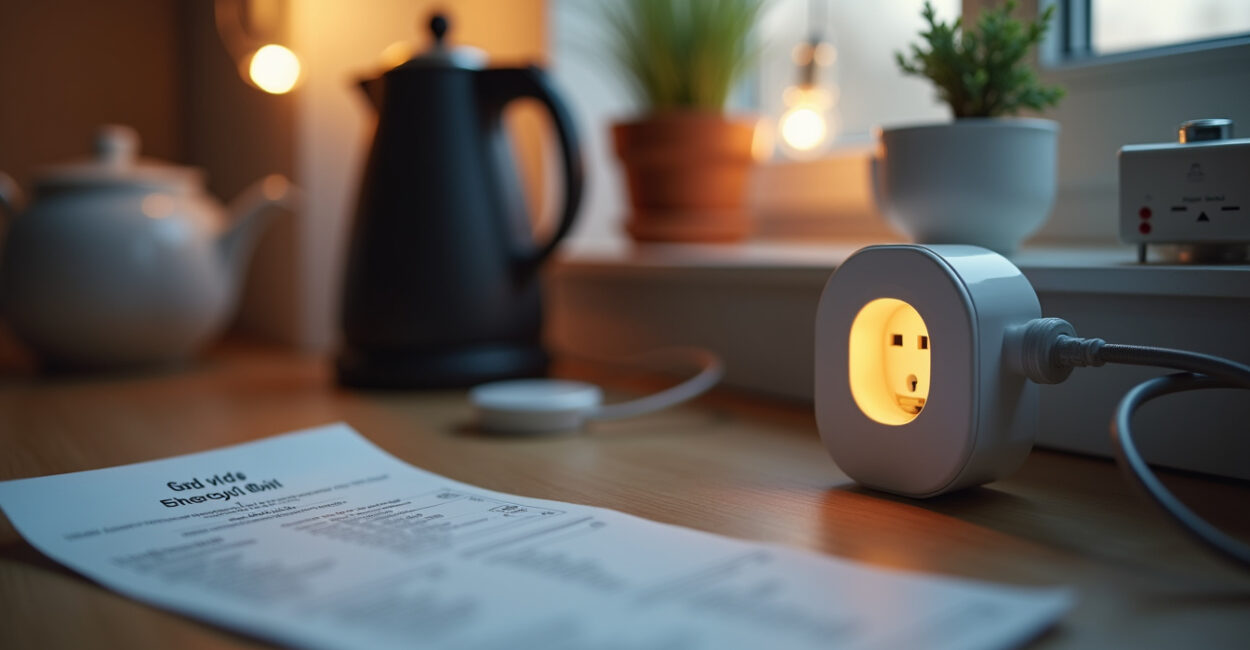
Smart plugs do one job well: they let you control and measure individual devices. That makes them useful for older homes where “phantom load” or standby power adds up across TVs, gaming consoles, printers, coffee makers, and room fans. They are not glamorous, but they are very good at exposing waste that people never notice.
For a more complete picture, whole-home energy monitors sit at the electrical panel and measure usage across the house. These devices can help you spot spikes from HVAC equipment, water heaters, or appliances that have started drawing more power than they should. That kind of visibility is valuable in older homes because aging equipment often gets louder, hotter, or more expensive long before it fails outright.
A whole-home energy monitor is most useful when it changes behavior, not when it just produces charts.
| Device Type | Best Use Case | Main Limitation |
|---|---|---|
| Smart Plug | Single appliances and standby loads | Only works for plug-in devices |
| Energy Monitor | Housewide pattern detection | Requires panel access and installation care |
| Smart Strip | Entertainment centers and office setups | Less precise than meter-level monitoring |
A useful reference here is ACEEE, which regularly publishes research on home efficiency, plug loads, and practical conservation strategies. Their work is a good reminder that small loads become real money when they run all year.
Why Connectivity and Compatibility Matter More in Older Construction
Older homes can be difficult environments for smart devices because the house itself interferes with the technology. Plaster walls weaken Wi‑Fi. Finished basements create dead zones. Thick masonry and metal lath can make a device seem unreliable when the real problem is signal strength. If a product depends on constant cloud access, poor connectivity turns a useful tool into a frustration.
That is why protocol choice matters. Zigbee and Z-Wave often perform well in older homes because they use mesh networking, which lets devices repeat signals for each other. Wi‑Fi can still work fine, but it is more sensitive to coverage gaps. If the house has multiple floors or additions, a hub-based system often behaves better than a pile of standalone Wi‑Fi gadgets.
Compatibility Questions Worth Asking First
- Does the device require a neutral wire?
- Will it work during an internet outage?
- Can it function with your current HVAC or electrical setup?
- Does the app support local control, not just cloud control?
This is also where trust issues show up. Some devices look cheaper because they depend heavily on a vendor’s servers, subscriptions, or closed ecosystem. That can be fine if you like convenience, but it becomes a weakness if the company changes the app or drops support later. In older homes, I usually favor devices that still do their core job even when the internet is unstable.
Low-Cost Upgrades That Deliver High Impact Fast
Not every smart retrofit needs to start with a panel monitor or a premium thermostat. A few low-cost devices can produce a surprisingly strong first round of savings if you choose them carefully. The goal is to target habits and hot spots, not to blanket the house with gadgets.
Here is the short list I would prioritize for most older homes:
- Smart thermostat for central heating and cooling.
- Motion-sensor switches for utility and transition spaces.
- Smart plugs for entertainment centers, office gear, and fans.
- Room sensors to identify hot and cold spots.
- Window or door sensors if drafts or accidental openings are a recurring issue.
Room sensors are a good example of a small device with a practical job. They tell you whether the thermostat reading is matching the room you actually use. In many older homes, the thermostat sits in a hallway that is neither the hottest nor coldest zone, which means the system obeys a misleading average.
A Practical Upgrade Plan for an Older House
The most efficient path is staged, not dramatic. Start with the system that wastes the most energy, then measure the result before buying the next thing. That approach keeps you from over-automating a home that first needs basic fixes like sealing gaps, replacing weatherstripping, or balancing vents.
A Simple Rollout Sequence
- Install a smart thermostat if your HVAC setup is compatible.
- Add smart plugs to the highest standby-load devices.
- Use motion sensors in low-traffic lighting zones.
- Check room-by-room comfort with sensors for at least two weeks.
- Expand only where the data shows a clear problem.
This is where nuance matters: smart devices are strongest in a house that already has a workable mechanical backbone. They are weaker in a home with failing insulation, broken ductwork, or electrical problems that should be repaired first. That does not make the devices a bad idea. It just means they are a force multiplier, not a substitute for maintenance.
Smart retrofits pay off fastest when they match the house’s biggest loss, not when they chase the newest feature.
What Good Results Look Like After the First Month
The point of adding technology to an older home is not to turn it into a showroom. It is to make the house cheaper and easier to live in. A good first-month outcome looks like fewer runtime hours, fewer hot-and-cold complaints, and less manual intervention from the people living there.
For example, a homeowner in a 1960s split-level might notice that the upstairs bedroom no longer overheats at night because the thermostat now follows a more sensible schedule and the hallway light only turns on when needed. Another home may discover that two appliances were drawing power all day on standby, and smart plugs cut that waste immediately. Small changes like those can compound faster than people expect.
If you want to sanity-check your decisions against public guidance, the ENERGY STAR program offers practical efficiency standards and product guidance that are useful when comparing devices with similar claims.
Before buying anything else, test one upgrade, watch the bill or usage pattern for a full cycle, and decide based on results. That is the most reliable way to modernize an older home without turning a simple efficiency project into an expensive hobby.
FAQs
Do Smart Devices Work Well in Houses with Older Wiring?
Yes, but only if the device matches the electrical setup. Some smart switches and thermostats need a neutral wire or a stable low-voltage circuit, and older homes do not always have that. If wiring is brittle, overloaded, or poorly labeled, installation should be checked by a licensed electrician before anything is connected. The device itself is not the problem; compatibility is.
What Smart Device Gives the Best Energy Savings First?
For most older homes, a smart thermostat gives the biggest first payoff because HVAC use usually dominates energy bills. If the home already has decent temperature control, smart plugs and motion-sensor switches are the next best moves. The right choice depends on where the waste is happening. A device only saves money when it targets a real load, not a hypothetical one.
Are Hub-based Systems Better Than Wi‑Fi Devices in Older Homes?
Often, yes. Hub-based systems using Zigbee or Z-Wave can be more reliable in older construction because they create a mesh network and do not rely on every device having perfect Wi‑Fi. Thick walls, basements, and additions can make Wi‑Fi spotty. That said, a strong router and mesh Wi‑Fi can still work well if the house layout is not too difficult.
Should I Buy Smart Bulbs or Smart Switches?
Smart switches are usually the better long-term choice for fixed lighting because they control the whole circuit and do not leave wall switches in a confusing state. Smart bulbs are fine for lamps or places where color control matters, but they are less practical for daily energy management. In older homes, simplicity usually wins. People actually use the easiest system consistently.
Can Smart Devices Reduce Energy Use Without Changing Insulation or Windows?
Yes, but they work best as a control layer, not as a building-fabric fix. Smart devices can reduce waste by shortening HVAC runtime, limiting unnecessary lighting, and shutting off standby loads. They cannot stop heat loss through bad insulation or old windows. That is why the best results come from combining smart controls with basic maintenance and sealing work.