Skip to content

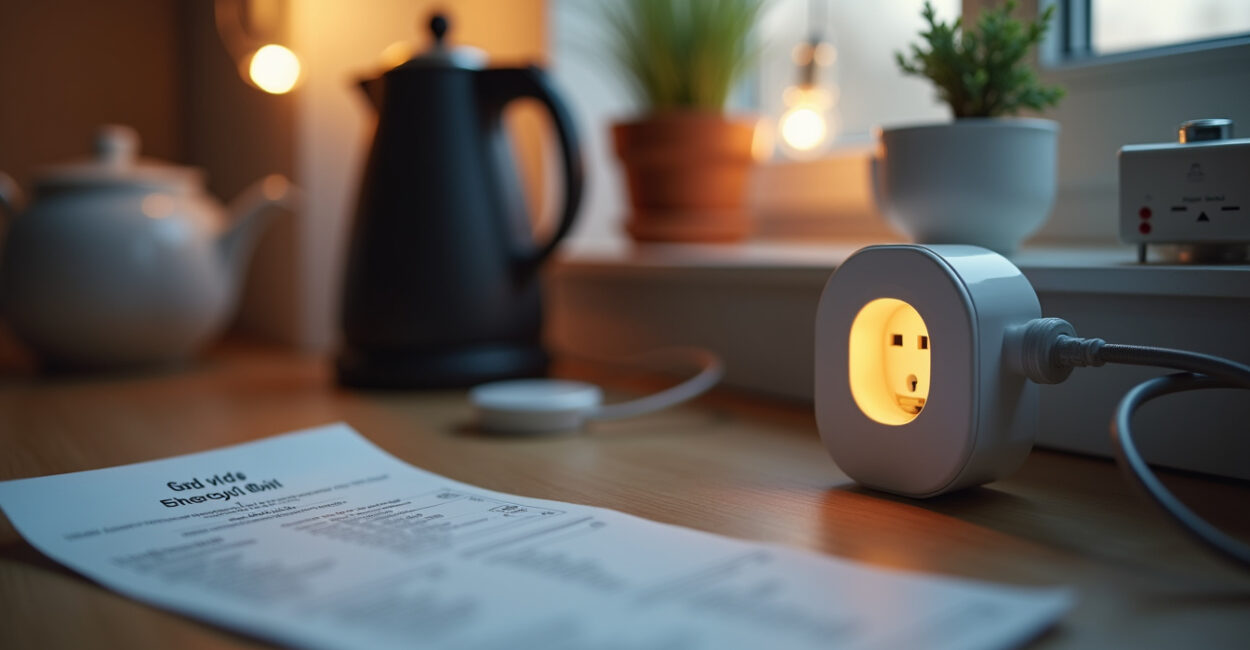
A good home energy monitor can catch waste while it is still cheap to fix—and the app alerts are what turn that data into action. With the right energy monitor with app alerts, you do not just “see usage”; you get warnings when demand spikes, when a device stays on too long, or when your bill is heading in the wrong direction.
That distinction matters. Most people do not need more charts; they need faster signals. The best systems pair a hardware sensor, a mobile app, and alert logic that tells you what changed, when it changed, and why you should care. Below, I’ll walk through the features that actually matter, where alerts help most, and where the marketing hype tends to overpromise.
O Que Você Precisa Saber
- The best app alerts are event-based, not noisy: they notify you when usage crosses a threshold, not every time a watt moves.
- Real-time demand alerts are most useful during peak-rate hours, when a small change in timing can cut cost fast.
- Bill estimates are only useful if the monitor updates often enough to reflect current behavior, not last week’s average.
- Device-level notifications work best when the monitor can identify major loads such as HVAC, water heaters, refrigerators, and EV chargers.
- Integration with smart plugs or a smart thermostat makes alerts actionable instead of just informational.
Energy Monitor with App Alerts: What Matters First
Technically, an energy monitor is a system that measures electrical consumption at the panel, circuit, or device level and sends that data to software for analysis. In plain English: it tells you where the power is going, then nudges you when the pattern looks expensive or unusual.
The alert layer is the difference between passive reporting and active control. A dashboard can show that your HVAC ran for six hours. An app alert can tell you the compressor started cycling abnormally at 2:10 a.m., which is the kind of detail that points to a failing part, a bad thermostat setting, or a comfort issue you would otherwise miss.
Panel-Level, Circuit-Level, and Device-Level Monitoring
Not all monitors work the same way. Panel-level systems, such as whole-home monitors that clamp onto the main service, give you a broad picture and can usually estimate large loads. Circuit-level systems break usage down by branch circuit, which helps if you want to know whether the laundry room, kitchen, or office is the problem. Device-level tools are the most precise, but they usually require smart plugs or dedicated sensors.
The right choice depends on your goal. If you want bill control, panel-level is often enough. If you want to find a rogue freezer, a sump pump issue, or a space heater someone forgot about, circuit-level or device-level visibility is the better fit.
Why Alerts Matter More Than Charts
A chart shows you history. An alert gives you timing. That matters because the biggest waste often happens in short bursts: a stuck relay, a phantom load that wakes up at night, or a heater running during the highest tariff window. If you are only checking graphs once a week, the damage is already done.
In practice, the best alert is the one that changes behavior within minutes, not the one that looks impressive in a monthly report.
That is why a strong app should let you set thresholds by time of day, day of week, or device category. Without that flexibility, alerts turn into noise, and people disable them.
Real-Time Usage Warnings That Actually Help
The most useful alerts are simple and specific. If your monitor can warn you when whole-home usage jumps above a chosen kilowatt threshold, that can catch a lot of problems early. If it can distinguish between a normal spike and a sustained draw, even better.
Who works with these systems knows one thing: false alarms kill trust fast. A notification that fires every time the oven preheats or the AC starts is not helpful unless the app explains that the spike is normal. Good systems use context—baseline patterns, seasonal changes, and device signatures—to avoid crying wolf.
Threshold Alerts Vs. Anomaly Alerts
- Threshold alerts fire when usage crosses a preset line, such as 5 kW for the whole home.
- Anomaly alerts fire when usage deviates from your normal pattern, even if the raw number is not extreme.
- Duration alerts fire when a device stays on longer than expected, which is useful for laundry, ovens, and HVAC.
For most homes, anomaly detection is more valuable than a static threshold, but it is also more dependent on machine learning quality. If the app has poor modeling or too little historical data, it may miss the pattern you care about.
Peak-Rate Timing and Utility Plans
If your utility uses time-of-use pricing, the alert should help you avoid expensive hours, not just reduce consumption overall. A 2 kWh load moved from a peak window to an off-peak window can save more than shaving a few hundred watts at the wrong time. In some households, that single scheduling change beats weeks of “energy-saving” habits.
For rate structures and consumer guidance, the U.S. Department of Energy’s Energy Saver program is a solid starting point, especially if you want to understand how load timing affects cost. For tariff details, your local utility’s rate page is the source that matters most.

Bill Estimates, Forecasts, and How Accurate They Are
Bill estimates are one of the most appealing app features, and one of the easiest to misunderstand. A good estimate combines your measured usage, current rate structure, fixed charges, and sometimes taxes or delivery fees. A weak estimate only multiplies yesterday’s usage by a rough per-kWh number.
That difference explains why two apps can disagree by a lot. If one app uses stale pricing or ignores tiered rates, its monthly projection can be misleading by the time you are halfway through the billing cycle.
What Makes a Bill Estimate Useful
- It reflects your actual utility plan, including peak and off-peak pricing.
- It updates often enough to capture recent behavior changes.
- It separates energy cost from fixed fees, so the number is not artificially low.
- It explains uncertainty instead of pretending the forecast is exact.
There is one limit worth admitting: bill forecasts are weakest when your usage swings wildly from week to week. If you host guests, charge an EV irregularly, or run seasonal equipment, the estimate can look precise and still miss the final number. That is not a flaw in the dashboard alone; it is a math problem created by variable behavior.
A bill estimate is only trustworthy when the app knows your rate plan and updates often enough to track real habits, not just long-term averages.
Device Notifications and Appliance-Level Insight
Appliance-level notifications are where an app becomes genuinely useful in daily life. If the system can identify a refrigerator compressor cycling too often, a water heater drawing power at the wrong time, or an HVAC unit running longer than usual, you can act before the problem becomes a repair bill.
On the practical side, this is where smart plugs, circuit sensors, and load signatures matter. The monitor does not need to recognize every device in your home. It needs to identify the big energy movers with enough confidence to warn you when something changes.
Common Devices Worth Watching Closely
- HVAC systems, because small efficiency losses add up fast.
- Water heaters, because they can hide steady, expensive consumption.
- Refrigerators and freezers, because compressor changes can signal trouble.
- EV chargers, because charging windows can make or break a bill.
- Pool pumps and sump pumps, because they can run longer than expected.
Here is a real-world example. A homeowner notices a quiet nighttime alert showing the water heater is pulling power in repeated bursts after midnight. The app does not diagnose the problem for them, but it gives enough evidence to check the schedule. The culprit turns out to be a timer set incorrectly after a power outage. That is a small fix, but it stops a pattern that would have been invisible from the monthly bill alone.
App Features That Separate Useful from Annoying
Good hardware gets the data. Good software makes the data usable. If the app feels clumsy, most people stop checking it after the first week, which defeats the whole point.
The best apps keep the interface clean, make alerts easy to tune, and let you see both live load and history without digging through menus. They also support multiple users, because a monitor that only one person can manage is less effective in a real household.
Features Worth Paying For
| Feature | Why It Matters | Best For |
|---|---|---|
| Custom alert thresholds | Prevents noise and keeps notifications relevant | Households with variable schedules |
| Historical comparisons | Shows whether a change is a one-off or a trend | Seasonal energy planning |
| Push notifications | Gets attention fast | Usage spikes and unusual after-hours activity |
| Shared access | Lets more than one person respond to alerts | Families and shared homes |
If the app only sends generic summaries, it is usually not enough. You want configurable alerts, exportable data, and a clean breakdown of which circuits or devices are driving the total. That is what makes the system useful after the novelty wears off.
How to Choose the Right Monitor for Your Home
Start with your goal, not the brand. If your goal is lower bills, you need rate-aware alerts and solid whole-home visibility. If your goal is troubleshooting, you need better device identification. If your goal is behavior change, you need notifications that are fast, accurate, and hard to ignore.
The strongest buying signal is not the number of features. It is how well the monitor fits your electrical setup and your tolerance for setup work. Some systems require panel access and professional installation; others rely on smart plugs and can be rolled out in an afternoon.
A Simple Decision Framework
- Choose panel-level monitoring if you want broad visibility and utility-bill control.
- Choose circuit-level monitoring if you need to isolate problem rooms or appliances.
- Choose device-level monitoring if a few specific appliances drive most of your cost.
- Choose a monitor with flexible alerts if your schedule changes often or you pay time-based rates.
For building and efficiency context, the National Renewable Energy Laboratory publishes useful research on home energy behavior and load management. That kind of evidence is worth reading because it reminds you that monitoring works best when it is paired with action, not just awareness.
The right monitor is the one that turns energy data into a decision you can make today, not a graph you admire next month.
Practical Setup Tips, Mistakes, and What I Would Avoid
In the field, the most common mistake is over-alerting. People turn on every notification feature at once, then get buried in pings about harmless spikes. After that, they trust the app less, not more.
Another common issue is chasing perfect device identification on day one. That is not realistic. Start with the largest loads, verify the pattern, then refine your alerts over time. The monitor earns its keep by helping you spot expensive behavior early, not by naming every tiny load with absolute certainty.
What I Would Avoid
- Alerts without thresholds, because they create noise fast.
- Bill forecasts with no explanation of rate assumptions.
- Hardware that requires constant manual calibration.
- Apps that hide usage history behind too many taps.
The U.S. Environmental Protection Agency’s ENERGY STAR resources are useful if you are trying to pair monitoring with efficiency upgrades. That is where monitoring becomes part of a broader plan: identify the waste, fix the source, then verify the improvement.
O Que Fazer Agora
If you are comparing options, focus on the alert system first and the dashboard second. A monitor can have attractive charts and still fail if it does not notify you at the right moment. The best setup is the one that matches your utility rate, your home’s biggest loads, and your willingness to act on alerts quickly.
Before you buy, check three things: whether the app supports custom thresholds, whether it can estimate bills using your actual rate plan, and whether it can identify the devices that matter most in your home. Those are the features that separate a useful tool from a novelty. From there, compare the installation type and make sure it fits your electrical panel and your comfort level with setup.
How Accurate Are Energy Monitor App Alerts?
Accuracy depends on the quality of the hardware, the modeling behind the app, and how well the system has learned your normal usage pattern. Threshold alerts are usually more reliable than anomaly alerts because they are simpler. Device recognition can be accurate for large, consistent loads like HVAC systems, but it is less dependable for small or irregular devices. For best results, review alerts for a few weeks and tune the thresholds before relying on them.
Do I Need Professional Installation?
It depends on the type of monitor. Panel-level monitors often require access to your electrical panel, so many homeowners choose professional installation for safety and code compliance. Smart plug-based or device-level options are usually easier to set up yourself. If you are unsure about panel wiring or breaker space, a licensed electrician is the safer route. The extra cost can be worth it if the system will run for years.
Can App Alerts Really Lower My Bill?
Yes, but only if you act on them. Alerts help most when they catch unnecessary runtime, peak-hour usage, or a device that is behaving abnormally. The savings usually come from a series of small corrections rather than one dramatic change. In homes with time-of-use rates, moving even one or two heavy loads out of peak hours can create a noticeable difference.
What Should I Prioritize: Alerts, Dashboards, or Device Detection?
Prioritize alerts first, because they tell you when action is needed. After that, make sure the dashboard is clear enough to explain what happened and whether the change is trending. Device detection matters most if one appliance or circuit drives a large part of your bill. If the app cannot deliver those three layers together, it will probably fade into background noise.
Are Bill Estimates from Energy Monitors Reliable?
They can be useful, but they are rarely perfect. Reliability improves when the app understands your utility’s rate structure, fixed charges, and seasonal variations. Estimates are least reliable in homes with irregular usage, like EV charging, guests, or large weekend loads. Treat the forecast as a planning tool, not a final invoice.