Skip to content
The winner changes depending on the device, your habits, and how often you want power to come back on.
Smart plugs versus power strips savings sounds like a simple matchup, but the real answer is more annoying—and more useful. If you only want to stop one device from sipping standby power, a smart plug can be the cleaner fix. If you want to cut power to a whole cluster of gear at once, a switched strip often wins on sheer practicality.
That difference matters more than people think. In many homes, the waste is small per device but steady over time: TVs, consoles, chargers, speakers, office gear, even coffee machines with clocks and lights. The trick is not “which product is smarter,” but which one matches the way you actually live.
Why the Cheaper Choice is Not Always the Better Saver
When people compare smart plugs versus power strips savings, they often focus on the purchase price. That’s the wrong first question. The real question is how much standby waste you can remove without making your routine annoying enough that you stop using the device.
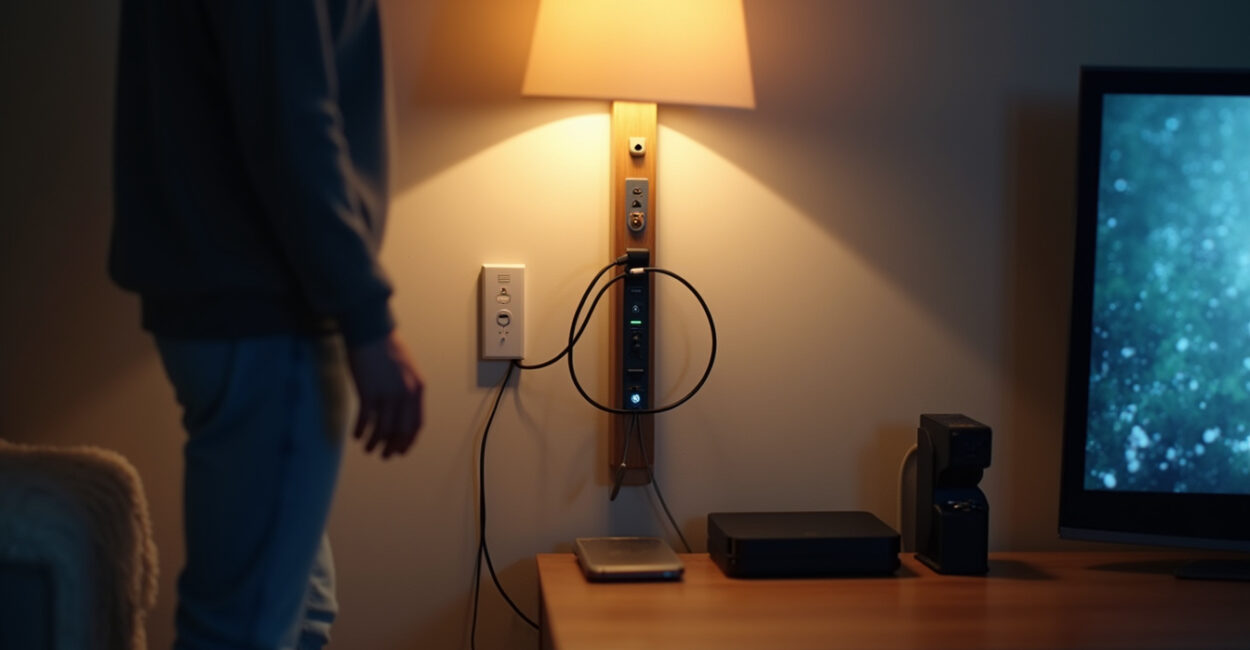
A smart plug gives you control over one outlet. A power strip with a switch lets you cut several devices at once. If one screen setup includes a TV, streaming box, soundbar, and game console, the strip can eliminate more wasted power in one move. But if you only care about the lamp in the corner or the printer on your desk, a smart plug may be all you need.
The best savings come from eliminating waste you’ll actually leave off. If your “solution” is so inconvenient that you flip it back on all day, the math falls apart fast.
The Device Type Decides Almost Everything
Some devices are ideal for smart plugs versus power strips savings, and some are not. The key technical idea is standby load: the power a device draws when it looks off but still stays partially awake.
- Good for a smart plug: lamps, fans, coffee makers, small speakers, chargers, routers you reboot on purpose.
- Good for a power strip: entertainment centers, desks, home offices, gaming stations, multiple chargers in one zone.
- Use caution: appliances with heaters, compressors, or high startup loads may not be a good fit for either unless the product is rated for them.
Here’s the practical part: a power strip can shut off a full cluster, but only if every item on it should lose power together. A smart plug is more precise, which is useful when you want one device off without killing the rest of the setup.

The Control Habit That Makes or Breaks the Savings
The nicest energy-saving device is useless if you hate using it. That’s the part people miss in smart plugs versus power strips savings. If you want lights restored instantly every morning, a smart plug with scheduling or voice control may fit your habits better than a strip hidden behind a desk.
I’ve seen this in real homes: someone buys a smart strip for their TV setup, then never bothers to switch it off because reaching behind the media console is a pain. Another person uses a smart plug on a lamp by the door and turns it off every night without thinking. Same technology category, very different outcome.
Energy savings are part hardware, part behavior. If the habit is bad, the hardware never gets its chance.
When a Power Strip Beats a Smart Plug on Pure Practicality
There are times when a switched strip is the obvious winner. If you have three or four devices that always travel together, a strip gives you one physical cutoff and no app, no pairing, and no cloud dependency. That is boring in the best possible way.
For a desk setup, that can mean real-world savings with less friction. Turn it off at night, turn it on in the morning, done. No automation to debug. No forgotten schedule. No “Why is the printer offline?” drama at 8:02 a.m.
For shared zones, physical control often beats smart control. If multiple devices should always sleep together, a strip is often the lower-friction choice.
When Smart Plugs Pull Ahead
Smart plugs win when you want precision. One plug, one device, one rule. That makes them ideal for anything you want to automate around a schedule, a routine, or a voice command. And unlike a strip, they don’t accidentally cut power to the thing you meant to keep alive.
They also help when “power restored” matters. A smart plug can be scheduled to come back on before you wake up or return home. That sounds minor until you realize how often people want convenience without leaving devices on all day. In smart plugs versus power strips savings, that control can be worth more than the extra wattage you shave off.
According to the U.S. Department of Energy, standby power can add up across a home’s electronics over time: standby power is a real household cost. The EPA’s ENERGY STAR guidance on efficient electronics also reinforces that unplugging or cutting power to idle devices remains one of the simplest ways to reduce waste.
The Hidden Trade-off: Convenience Versus Full Cutoff
The biggest mistake is treating these two tools like they do the same job. They don’t. A strip is a blunt instrument: off means off. A smart plug is a small remote-controlled gate, which is why it feels more flexible and sometimes more annoying.
Use this rule of thumb: if you want power restored often and predictably, smart plugs are easier to live with. If you want a group of devices dead until you deliberately revive them, the strip is cleaner. That’s why smart plugs versus power strips savings is really a question about workflow, not just watts.
| Situation | Better pick | Why |
|---|---|---|
| One lamp or one appliance | Smart plug | Precise control without affecting other devices |
| TV, console, soundbar together | Power strip | One switch cuts several standby loads at once |
| Need schedules or remote access | Smart plug | Automation and restoration are built in |
The Real Winner Depends on How Often You Want Power Back
This is the question that settles it. How often do you actually want the device back on? If the answer is “several times a day,” a smart plug usually wins because it makes restoration painless. If the answer is “only when I’m using this setup,” a power strip is often the better money-saver because it discourages lazy standby use.
Pick the tool that matches your default behavior, not your best intention. That is where the savings show up, month after month.
One small but useful detail: if you have devices that must retain settings, clocks, or boot state, full cutoff can be inconvenient. That’s where the line gets fuzzy, and not every home follows the same pattern. The right answer is still the one that you’ll use consistently.
What to Avoid Before You Buy Either One
Before you spend a dollar, avoid the common traps that erase smart plugs versus power strips savings.
- Don’t use a device that isn’t rated for the load.
- Don’t buy smart features you won’t use.
- Don’t place the switch where it’s impossible to reach.
- Don’t expect savings from devices that already draw very little standby power.
- Don’t assume automation is always better than a simple switch.
The boring truth is also the best one: the right choice is the one that cuts waste without creating new friction. That is why the comparison matters in the first place. One tool saves more in theory; the other saves more in real life.
Choose the option that fits the device, your habit, and your tolerance for convenience. That is where the actual savings live.
FAQ
Do Smart Plugs Save More Money Than Power Strips?
Not automatically. A smart plug can save more when you need precise control over one device, while a power strip can save more when several devices should be shut off together. The bigger savings usually come from matching the tool to the device cluster and actually using it every day.
Are Power Strips Cheaper Than Smart Plugs in the Long Run?
Yes, the upfront cost is usually lower. But a cheaper device is not the same as a better saver. If a smart plug’s schedules or remote control make you more likely to turn something off, it can pay for itself faster than a strip you rarely bother to switch.
Can I Use a Smart Plug with a Power Strip?
Sometimes, but only if the load is safe and the total power draw stays within the plug’s rating. Many people use a smart plug to control an entire low-power strip, but high-wattage appliances need extra caution. When in doubt, check the ratings on both devices before combining them.
Which is Better for a TV Setup?
A power strip often makes more sense for a TV, console, soundbar, and streaming box because they usually behave like one group. If you want to control only one part of that setup, a smart plug is more precise. The better choice depends on whether you want the whole cluster off or just one piece of it.
Do Smart Plugs Waste Electricity Themselves?
Yes, but usually very little. They do use a small amount of power to stay connected and respond to commands, so they are not zero-draw devices. For most homes, that tiny overhead is outweighed when the plug helps shut off a larger standby load consistently.