Skip to content

The smartest HVAC choice is not always the most “smart” one. In the real world, the best pick in a smart thermostat vs programmable thermostat comparison depends on how often your schedule changes, whether you want app control, and how much you care about squeezing every last dollar out of heating and cooling.
A programmable thermostat can still do a solid job if your routine is predictable. A smart thermostat earns its keep when your home, schedule, or comfort needs are messy, inconsistent, or shared by multiple people. Below, you’ll get a practical breakdown of savings, features, cost, and the use cases where each option makes more sense.
In a Nutshell
- A smart thermostat is worth the extra cost when you want remote control, occupancy-based automation, and better coordination across changing schedules.
- A programmable thermostat often delivers most of the same energy discipline at a much lower upfront price if your routine stays stable.
- The biggest savings rarely come from the device alone; they come from reducing wasted heating and cooling hours, which is why setup matters more than the label on the box.
- For many homes, the best value is not the fanciest model; it is the one that gets used correctly every day.
- If you already save on standby loads with tools like smart plugs versus power strips, thermostats are the next big control point for whole-home energy use.
Smart Thermostat Vs Programmable Thermostat: What Actually Separates Them
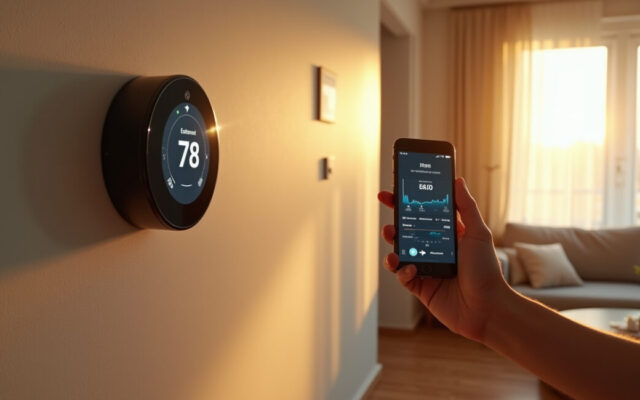
A smart thermostat is a connected HVAC controller that uses Wi-Fi, app access, sensors, automation, and often occupancy or learning logic to adjust temperature without constant manual input. A programmable thermostat is a schedule-based controller that follows pre-set time and temperature blocks. The difference is not just convenience; it is how much the device can adapt when your day stops following a neat calendar.
Here’s the practical version: a programmable model asks you to build the schedule and stick to it. A smart model can react when you leave, return, travel, or change routines. That is why the programmable thermostat vs smart thermostat decision is really a question about behavior, not hardware.
What separates a smart thermostat from a programmable thermostat is not temperature control — it is adaptability under imperfect human behavior.
Where Each One Fits
- Programmable thermostats fit predictable households with regular wake, work, and sleep patterns.
- Smart thermostats fit homes with shifting schedules, frequent travel, or multiple occupants.
- Non-connected models still work well when the goal is discipline, not automation.
How Smart Thermostats Save Energy Without Overpromising
Smart thermostats save energy by reducing the number of hours your HVAC system runs when nobody needs full comfort. That happens through geofencing, occupancy detection, learning routines, remote adjustments, and in some cases room sensors that correct hot-and-cold spots. The savings come from fewer wasted runtime hours, not magic.
ENERGY STAR says certified smart thermostats can save energy when they are used to reduce unnecessary heating and cooling, but results vary widely by climate, insulation, and habits. The U.S. Department of Energy also notes that setpoint setbacks can reduce heating and cooling costs when applied consistently. For a grounded reference, see ENERGY STAR’s smart thermostat guidance and the U.S. Department of Energy’s thermostat advice.
Realistic Savings Ranges
Most homeowners will not see a dramatic drop just because the thermostat is “smart.” If the old thermostat was already used well, the gain may be modest. If the old setup was manually adjusted too often, left at the wrong temperature, or never scheduled properly, the difference can be much larger. That is why claims about exact savings should be treated as ranges, not promises.
- Best case: inconsistent schedules and poor manual habits.
- Middle case: regular use with moderate automation benefits.
- Weak case: already optimized schedule and strong family discipline.
A smart thermostat saves money when it reduces wasted runtime; if it only adds features you never use, the payback gets longer instead of shorter.

Features That Matter in Daily Use: Learning, App Control, Sensors, and Scheduling
The feature gap is where the decision becomes obvious. A programmable thermostat usually gives you timed setbacks and maybe a few weekday/weekend blocks. A smart thermostat adds app control, cloud access, room sensors, usage insights, and in some models adaptive learning. That extra layer is useful only if it changes behavior in the house.
Learning and Automation
Learning thermostats try to infer patterns from manual changes. That can work well in homes where the routine shifts often, but it is not foolproof. In practice, many people still tweak the settings because the device cannot guess comfort preferences perfectly. That is one reason some homeowners prefer a straightforward schedule over a system that “thinks” for them.
Remote Control and Alerts
Remote access is the feature most people notice first. If you forget to adjust the temperature before leaving, you can fix it from your phone. If a system is running too long, you can catch it quickly. For households already using connected devices, this fits naturally with the logic behind choosing the right smart control specs before buying.
Room Sensors and Zoning
Room sensors help when one floor runs hotter than another or a home office needs different treatment during the day. This matters more in larger homes and in systems with uneven airflow. If you are comparing the best smart thermostat for multiple zones, sensors and zone coordination should matter more than a flashy app screen.
| Feature | Smart Thermostat | Programmable Thermostat |
|---|---|---|
| Remote app control | Yes | Usually no |
| Scheduling | Yes, plus automation | Yes, manual only |
| Room sensors | Often | No |
| Learning behavior | Sometimes | No |
| Best for | Changing routines | Predictable routines |
Cost Breakdown: Device Price, Installation, and Long-Term Value
Smart thermostat price is the first thing people notice, but it should not be the only thing they compare. A basic programmable thermostat is usually cheaper up front, while a smart model can cost significantly more depending on sensors, display quality, HVAC compatibility, and brand ecosystem. Installation may also add cost if your wiring is old or your system needs a C-wire.
The National Institute of Standards and Technology has long emphasized the value of measurement, compatibility, and system reliability in connected devices, and that mindset applies here: a device is only “worth it” if it fits the system and gets used as intended. The best smart thermostat for home use is not always the most expensive; it is the one that matches your HVAC setup and your daily habits.
When the Upgrade Pays Back
- If you often leave the house at irregular times.
- If you travel for work or split time between homes.
- If your house has hot and cold rooms that need sensor-based balancing.
- If you want usage insights that make waste visible.
When the Cheaper Option Wins
If your family keeps a stable routine and nobody wants another app to manage, a programmable thermostat often delivers better value. The payback is not about features; it is about whether the added cost creates savings or just adds complexity. In many homes, that answer is surprisingly simple.
One homeowner I spoke with had a two-person household, identical work hours, and a small single-zone HVAC system. They bought a connected model, but after two months they turned off most of the automation because the schedule had already been easy to maintain manually. They ended up keeping the same temperature patterns they could have set on a basic unit. That is the kind of case where “smart” adds less than the marketing suggests.
Which Thermostat Works Best for Your Home Setup
The best choice depends on the shape of your home, not just your budget. Single-zone apartments and tidy schedules often do fine with a programmable thermostat. Larger homes, multi-zone systems, or households with irregular routines benefit more from a connected model with sensors and app control.
Best for Budget-focused Buyers
If price is the main constraint, a non programmable digital thermostat can still be a sensible choice for straightforward comfort control. It is not exciting, but it is dependable and easy to use. That makes it a strong fit for rentals, secondary homes, and households that do not want app dependency.
Best for Busy Households
If nobody in the home keeps the same schedule, a connected thermostat earns its place fast. Geofencing, remote changes, and room sensors reduce the number of times you walk into an overheated or underheated house. For many people, that convenience is worth more than the raw utility savings.
Best for Multi-zone Homes
Multi-zone homes are where the gap widens. Temperature differences between floors, wings, or rooms can make a basic schedule feel blunt. In that setup, the best smart thermostat for multiple zones is often the one that works cleanly with your existing zoning hardware and room sensors, not the one with the flashiest app.
Best Options and Use Cases: Ecobee, Amazon, Honeywell, and Plain Digital Models
Brand matters less than fit, but a few models show the range well. The ecobee smart thermostat premium and the standard ecobee smart thermostat are strong choices for homes that benefit from room sensors and a more detailed control experience. They are often favored in larger homes or in rooms that never feel evenly conditioned.
The amazon smart thermostat is usually appealing for simpler setups and lower upfront cost. In the common home control ecosystem, it fits users who already prefer voice assistants and straightforward app-based management. If you are comparing amazon smart thermostat vs nest, the practical question is not prestige — it is whether you want the cleaner budget option or the broader ecosystem and learning features.
Where Each Option Makes Sense
- ecobee smart thermostat premium: Best for larger homes, sensors, and comfort balancing.
- ecobee smart thermostat: Strong all-around smart choice without going all the way to premium extras.
- amazon smart thermostat: Good value for simple smart control and lower entry cost.
- Non programmable digital thermostat: Best for no-frills reliability and very predictable routines.
If you need a manual for a legacy unit, the Honeywell Home support library is a reliable place to look for documentation and compatibility details. That matters because older systems sometimes need more than a quick swap. Wiring type, HVAC staging, and power requirements can change the outcome more than the brand name does.
Final Verdict: Which One is Better for Most Homeowners?
For most households, a smart thermostat is the better long-term option only if the home will actually use its features. If your schedule changes, your family forgets manual adjustments, or your home has uneven temperatures, the upgrade can pay off through comfort and discipline. If your routine is stable, a programmable thermostat is still the better value.
The cleanest way to decide is to ask one question: will automation save you from real waste, or will it just add another screen to manage? If the answer is waste, buy smart. If the answer is stability, buy simple and keep the system easy to live with.
What to Do Next
Check your current HVAC wiring, note how often your schedule changes, and compare the upfront cost against the odds that you will actually use scheduling or app control. If your home already runs on consistent habits, a programmable model is enough. If your home runs on exceptions, pick the smarter control layer and make sure it is configured correctly from day one.
Is a Smart Thermostat Really Better Than a Programmable Thermostat?
A smart thermostat is better when you need automation, remote control, and better handling of changing routines. A programmable thermostat is better when your schedule is predictable and you want lower cost with fewer moving parts. The “better” choice depends on how much real behavior change the device can create in your home. If you will not use app features or sensors, the smarter device may not deliver smarter results.
How Much Money Can a Smart Thermostat Save on Energy Bills?
Savings vary widely because climate, insulation, HVAC efficiency, and user habits all matter. ENERGY STAR and the U.S. Department of Energy both support the idea that disciplined setbacks can reduce heating and cooling use, but they do not guarantee a specific dollar amount for every home. If your previous thermostat was poorly managed, the savings can be meaningful; if it was already used well, gains may be modest.
Do Programmable Thermostats Still Make Sense in 2026?
Yes, especially in homes with steady schedules and limited interest in smart home features. A programmable model still handles timed setbacks effectively, and it avoids app dependence, cloud services, and higher purchase prices. For rentals, secondary properties, and budget-focused buyers, it remains a practical choice. The real test is whether your household can follow a schedule without automation doing the heavy lifting.
Is a Smart Thermostat Worth It for a Single-zone Home?
Sometimes, but not always. In a single-zone home with predictable habits, a programmable thermostat can do the job at lower cost. A smart thermostat becomes more attractive if you travel often, forget to adjust settings, or want remote control when plans change. Single-zone homes do not need smart features by default; they need a reason for those features to matter.
What’s the Difference Between Smart, Programmable, and Non-programmable Thermostats?
A smart thermostat connects to Wi-Fi and adds automation, app control, and often learning or sensor-based features. A programmable thermostat stores time-based schedules but does not usually connect to the internet. A non-programmable digital thermostat is the simplest of the three: you adjust it manually and it holds that setting until you change it again. Each one trades convenience, cost, and control differently.