Skip to content

Phantom loads can quietly waste a surprising amount of electricity, and the fix is often smaller than people expect: smart power strips for standby savings. A TV setup, gaming console, soundbar, printer, and streaming box can keep drawing power even when they look “off,” so the waste adds up hour by hour, every day.
The practical value here is not hype. A smart strip cuts power to selected devices when a master device shuts down, or when a device goes idle long enough to matter. That makes it one of the few home energy tools that works in the background without changing your habits much. In this article, I’ll break down how the technology works, which devices benefit most, what features are worth paying for, and where the limits are.
O Que Você Precisa Saber
- Standby power is real, measurable, and often concentrated in entertainment centers, offices, and kitchen counters.
- A smart power strip saves the most when it controls several low-use devices that stay plugged in all day.
- Master-controlled outlets are the most useful feature for most homes because they automate shutdown without timers.
- Not every device belongs on a switched strip; anything that needs continuous power, calibration, or a proper shutdown sequence can be a bad fit.
- The best model is the one that matches your actual setup, not the one with the longest feature list.
Smart Power Strips for Standby Savings: How They Cut Phantom Load Without Changing Your Routine
Technically, a smart power strip is a multi-outlet device that uses control logic to disconnect power from selected outlets based on a trigger such as master-device draw, occupancy, a timer, or app-based automation. In plain English: one device decides when the other devices should stop sipping electricity.
That matters because standby power is not just “wasted energy” in the abstract. It is the constant trickle used by power supplies, indicator LEDs, clocks, network radios, and always-on controllers. The U.S. Department of Energy calls these phantom loads, and they can show up across a house in places people rarely check.
What separates a useful smart power strip from a gimmick is not the number of outlets — it is whether the strip turns off power at the right moment without breaking the device chain behind it.
The Basic Mechanics, Translated
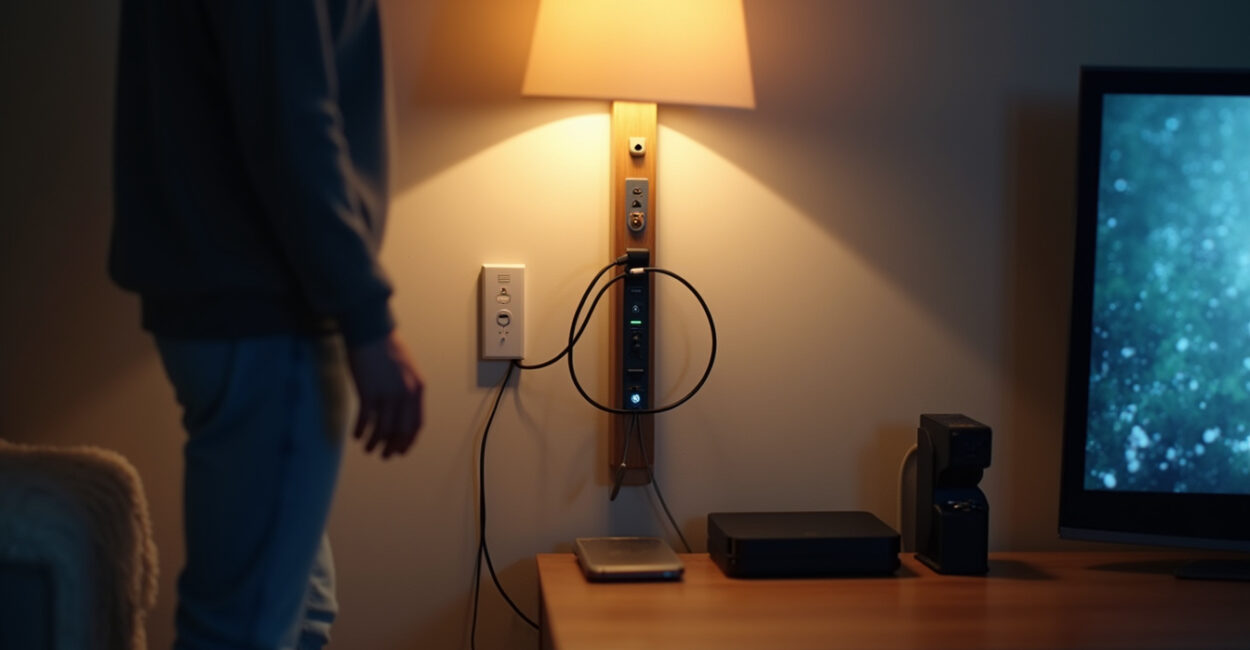
The most common version is the master-controlled strip. You plug your main device, usually a TV or desktop PC, into the master outlet, and the strip shuts off the accessory outlets when the main device drops below a power threshold. More advanced versions use motion sensing, scheduling, or Wi-Fi control through a mobile app. For everyday standby savings, the master-controlled design is usually the most reliable because it does not depend on the user remembering anything.
Why the Savings Show Up Unevenly
The savings are larger when the controlled devices would otherwise sit idle for many hours. A home theater can leak power all evening. A printer in a home office can sit warm and ready all week. A strip helps most when the powered-down devices do not need to be active continuously, and when their standby draw is meaningful relative to their active use.
Which Devices Benefit Most from Outlet Control
In practice, the biggest wins come from grouped devices that stay plugged in for convenience, not necessity. The classic example is a TV cluster: television, streaming box, game console, soundbar, and maybe a subwoofer. When the TV goes off, the accessories have no reason to stay awake.
A second strong use case is the home office. Printers, speakers, scanners, and chargers often remain connected even though they are only needed part of the day. The same logic applies to a media cabinet in a guest room or a small den where devices go unused for long stretches.
A smart strip saves the most when it controls a cluster of devices that are usually idle together and do not require always-on connectivity.
Best Candidates
- TVs and home theater peripherals
- Desktop computers with monitors, speakers, and printers
- Gaming consoles and accessories that sit idle for long periods
- Small kitchen gadgets that are plugged in for convenience, not because they must remain powered
Bad Candidates
Devices with clocks, memory, or cooling cycles can be poor matches. So can network hardware like routers, mesh nodes, or modems that need continuous uptime. If a device has a graceful shutdown process, a power strip that cuts it off too early can create problems. That is one of the real limits here: the strip should fit the workflow, not fight it.

Features That Actually Matter When You Shop
Marketing copy loves to pile on features, but only a few affect real-world savings. Threshold control, outlet layout, surge protection, and manual override matter far more than app badges or flashy packaging. If the strip cannot recognize when your main device is truly off, the rest is decoration.
The best models usually offer a combination of always-on outlets and switched outlets. That gives you flexibility for devices that must stay live, like a router or alarm clock, while still controlling the rest of the cluster.
| Feature | Why It Matters | What to Look For |
|---|---|---|
| Master-controlled outlets | Automates shutdown based on the main device | Adjustable sensitivity or clear trigger behavior |
| Always-on outlets | Keeps essential devices powered | At least 1–2 dedicated outlets |
| Surge protection | Protects electronics from spikes | UL-listed or clearly rated joule protection |
| Manual override | Prevents annoyance when you need power temporarily | One-button control or accessible switch |
Threshold Sensitivity Matters More Than App Control
Some strips work by detecting a drop in wattage from the master device. That sounds simple, but the threshold has to be tuned well enough to distinguish “off” from “idle.” If the threshold is too high, accessories shut off while the device is still in use. If it is too low, the strip never saves much at all. The best products make that behavior easy to understand on the box or in the manual.
For consumer guidance, the ENERGY STAR program remains a useful reference point for efficient electronics, even though it does not certify every smart strip category the same way it certifies other devices. The bigger lesson is simple: look for equipment that solves a real standby problem, not one that merely adds wireless features.
Where Smart Control Helps Most, and Where It Falls Short
These strips are excellent at reducing waste from predictable shared-use setups. They are less useful when every plugged-in item has its own schedule, remote wake feature, or background network need. A smart strip is a blunt tool. That is a strength when the setup is simple and a weakness when the ecosystem is not.
Viability also depends on the type of device. A laptop charger can usually be switched off with no drama. A desktop workstation with peripherals may need a cleaner shutdown sequence. A Wi-Fi router should almost never be cut off just because a monitor turned off.
Mini-story from a Real Household Pattern
A family I worked with had a living-room setup that stayed surprisingly “alive” overnight: TV, game console, soundbar, streaming stick, and a charging dock. The console alone would stay in rest mode all night, and nobody noticed because the room looked dark. They moved the whole cluster onto a master-controlled strip with the TV as the trigger. The next month’s bill was not shocking, but it was measurably lower, and the setup became easier to shut down with one action instead of five.
When the Method Fails
This approach can disappoint if the trigger device itself draws very little power in standby, or if the accessories are already turned off another way. It also fails when people need quick access to peripherals that are frequently toggled independently. In those cases, timers or app-based smart plugs can work better than a strip, though they are solving a different problem.
How to Estimate Real Savings Before You Buy
The smartest way to evaluate standby savings is to look at the devices you already own, not a generic “average home” estimate. A plug-in power meter can reveal which gadgets draw power while idle. That gives you a better picture than guessing from marketing claims.
If you want a broader baseline, the Lawrence Berkeley National Laboratory has published long-running research on residential plug loads and standby use, and it remains one of the most cited sources in this space: Lawrence Berkeley National Laboratory, Energy Technologies Area. That kind of research helps explain why a small per-device draw becomes real money when multiplied across a home.
A Simple Rule of Thumb
- List the devices in one cluster.
- Estimate how many hours per day they sit idle but plugged in.
- Decide whether they all need power during that idle period.
- Choose a strip if most of them can safely shut down together.
For many households, the savings are modest on a single strip and more noticeable when you combine several clusters. That is why people who care about energy use often start with the living room and home office first.
Setup Choices That Prevent Annoying Mistakes
The setup step is where most frustration happens, not the product itself. If you plug the wrong device into the switched side, the strip becomes annoying fast. If you group devices that do not belong together, you lose convenience for little or no gain.
My rule is simple: keep essential always-on devices separate, and only group things that are naturally used together. That keeps the system predictable. It also makes troubleshooting easier when a device stops responding.
Good Grouping Patterns
- TV + game console + soundbar + streaming box
- Desktop PC + monitor + speakers + printer
- Bedroom media center + lamp + charger dock, if the strip supports the load safely
What to Avoid
Do not connect a router to a switched outlet just because it fits physically. Do not assume a copier, NAS drive, or advanced audio gear can be interrupted safely. And do not overload a strip with high-draw appliances that belong on a dedicated circuit. The product should be matched to light- and medium-duty electronics, not used as a universal power manager.
Buying Criteria for Everyday Home Savings
If I had to narrow the choice to the few things that matter most, I would focus on the trigger method, outlet mix, surge rating, cord length, and layout. A lot of people overvalue voice assistants or app control and undervalue the physical details that decide whether the strip fits behind furniture or under a desk.
The sweet spot is a strip that is easy to install, easy to understand, and hard to misuse. That usually beats a “smart” model that needs a setup tutorial every time the power flickers.
The best everyday energy-saving device is the one the household can use without thinking about it after day one.
Practical Buying Checklist
- At least one master-controlled zone
- Enough always-on outlets for essential gear
- Clear load limits and safety ratings
- Surge protection if the strip will sit under expensive electronics
- A form factor that fits your furniture and cable routing
For fire and electrical safety guidance, the U.S. Consumer Product Safety Commission is worth consulting, especially if you are rearranging multiple devices around one strip. Safety is part of savings; a bad setup wipes out any benefit.
What to Do Next If You Want the Savings to Stick
The real win is not the strip itself. It is building a setup where standby waste becomes hard to ignore and easy to remove. Start with one cluster, measure it if you can, and install a strip that matches the way that cluster is actually used. That beats chasing features you will never touch.
If you are choosing between two models, pick the one with the clearer power behavior and better outlet layout, then test it on the room that stays plugged in the most. For most homes, the living room or office tells you more than any spec sheet. That is the fastest path to meaningful standby savings without overcomplicating the house.
Frequently Asked Questions
How Much Electricity Can a Smart Power Strip Actually Save?
The savings depend on how much standby load your devices draw and how many hours they sit idle. In a TV cluster or home office, the reduction can be noticeable because several devices turn off together instead of staying in low-power mode all day. A single strip may not transform a bill, but it can remove steady waste from several rooms when used strategically.
Are Smart Power Strips Safe for Gaming Consoles and TVs?
Yes, as long as the strip is rated appropriately and the devices are grouped correctly. TVs, streaming boxes, soundbars, and most consoles can work well on a master-controlled strip if the console does not need continuous standby for downloads or remote wake features. Always check the load rating and avoid cutting power to devices that need a controlled shutdown or constant network access.
Do I Need a Wi-Fi-enabled Model to Save Energy?
No. Wi-Fi is convenient for scheduling and remote control, but it is not required for standby savings. In many homes, a non-connected strip with master-controlled outlets does the job better because it is simpler and more dependable. If your goal is reducing phantom load, hardware behavior matters more than app features.
Can I Use One for My Computer Desk?
Yes, but the setup has to be thoughtful. A desktop PC, monitor, speakers, and printer can work well together if the strip switches accessories based on the computer’s power state. Keep items like the modem, router, and external drives on outlets that will not be cut unexpectedly unless you are sure that is safe for your workflow.
When is a Smart Power Strip the Wrong Tool?
It is the wrong tool when the devices need independent control, constant power, or frequent manual switching. Network gear, medical devices, and electronics with delicate shutdown requirements should not be treated as casual candidates. If the room depends on uninterrupted power, a timer or individual smart plug may fit better than a multi-outlet strip.