Skip to content

A neutral living room only looks “safe” when the design stops at beige paint and a matching sofa. The real secret behind neutral living room decor ideas for beginners is balance: the right undertones, layered textures, and a few deliberate contrasts that keep the room from feeling flat.
If you are starting from scratch, that is good news. A neutral palette is easier to coordinate, easier to update over time, and far more forgiving than a trend-heavy room. The goal here is not to make everything white and tan; it is to build a calm space that feels finished, lived-in, and personal without becoming busy.
O Que Você Precisa Saber
- A neutral living room works best when the palette has depth, not just one beige repeated everywhere.
- Texture matters more than color in a neutral room because it creates contrast without breaking the calm look.
- Beginners should choose one dominant neutral, one supporting neutral, and one darker anchor for structure.
- The fastest way to make a neutral room feel polished is to mix materials such as wood, linen, wool, ceramic, and metal.
- Most “plain” neutral rooms fail because the scale of furniture, lighting, and art is too small for the space.
Neutral Living Room Decor Ideas for Beginners: Start with a Calm Color Base
Technically, a neutral palette is a color system built around low-saturation hues such as ivory, taupe, greige, oatmeal, sand, warm gray, and soft brown. In plain English, it means you are working with colors that do not fight for attention, so the room feels steady from the moment you walk in.
Pick One Main Neutral and Stay Loyal to It
Choose a dominant base color and let it do most of the work. If your sofa is warm beige, do not surround it with icy gray walls and blue-toned rugs unless you want a cooler look on purpose. Warm neutrals look best with other warm neutrals; cool neutrals look best with cool or balanced tones. That one decision removes a lot of beginner confusion.
Use Undertones, Not Just Color Names
“White” is not one color, and “gray” is not one color either. A white with yellow undertones reads soft and inviting; a white with blue undertones feels sharper and cleaner. The same is true for beige, cream, and gray. This is where many first-time decorators get stuck, because the room can look wrong even when every item is technically neutral. Undertones are the reason.
Keep the Palette to Three Layers
A simple formula works well: light neutral, mid-tone neutral, dark anchor. For example, ivory walls, a taupe sofa, and walnut wood or black metal accents. That structure gives the room definition without making it visually noisy.
One useful reference point comes from color guidance used in design education and material studies. The North Carolina State University design programs and the Tate both show how tone, contrast, and material perception change the way a space feels, even when the colors themselves are subdued. Neutral rooms depend on that interplay far more than on any single paint chip.
What separates a warm, inviting neutral room from a bland one is not more color — it is clearer contrast, better texture, and stronger scale.
Build the Room Around Furniture That Holds Its Own
Furniture is the spine of the room. If the sofa, coffee table, and chairs are weak, every decor choice after that has to work twice as hard. Beginners often buy pieces that are “safe” in color but too visually light in shape, and the whole room ends up looking unfinished.
Start with the Sofa First
The sofa usually sets the tone for the entire space, so it should be comfortable, proportionate, and neutral in a way that matches your lighting. A cream linen sofa in a bright room reads very differently from the same sofa in a dim apartment. If you have kids, pets, or heavy daily use, mid-tone upholstery often ages better than very pale fabric.
Choose One Anchor Material
Wood is the easiest anchor for beginners because it adds warmth without demanding attention. Walnut, oak, and ash each send a different signal, but all of them keep a neutral room from feeling sterile. Black metal can work too, especially in lamps or table legs, but it should appear in small, repeated doses so the room does not feel harsh.
Pay Attention to Scale Before Style
A low-slung sectional, oversized coffee table, and medium-to-large artwork will usually outperform a collection of small pieces. Who works with interiors every day knows this: under-scaled furniture is one of the main reasons a room feels awkward, even when the colors are perfect. If your room is small, choose fewer pieces with more presence instead of crowding the floor plan.
In neutral interiors, furniture scale matters more than decoration count, because weak proportions make the room look accidental.

Layer Textures So the Room Feels Finished, Not Flat
Texture is the hidden engine of neutral design. When color stays quiet, the eye starts noticing surface: woven fabric, matte ceramics, brushed wood, nubby wool, polished stone, boucle, and linen. That is why a great neutral room can feel rich without being loud.
Mix at Least Three Texture Families
A reliable starting point is soft, natural, and reflective. Soft might be a throw blanket or upholstered chair. Natural might be a wood table or a jute basket. Reflective might be a glass lamp base, a brass tray, or a glazed vase. The point is not variety for its own sake; the point is to give light different places to land.
Use Rugs as a Texture Anchor
A rug is often the easiest place to add quiet complexity. Flatweave rugs feel crisp and minimal, while wool rugs feel warmer and more grounded. If the sofa is smooth, a rug with visible weave or subtle pattern keeps the room from flattening out. A low-contrast pattern can also hide wear better than a solid pale rug.
Do Not Overdo the “Cozy” Look
There is a limit here. Too many chunky throws, ruffled pillows, and soft surfaces can make a neutral room feel muddy instead of calm. That balance is where some designers disagree: one camp likes more tactile softness, while another prefers cleaner lines. Both can work, but the best version usually depends on how much natural light the room gets.
For practical guidance on textile care and household materials, the Federal Trade Commission’s consumer guidance and the U.S. Environmental Protection Agency are useful when you are choosing finishes, fabrics, or low-emission products for a room you will use every day.
Choose Decor Pieces That Add Shape, Not Clutter
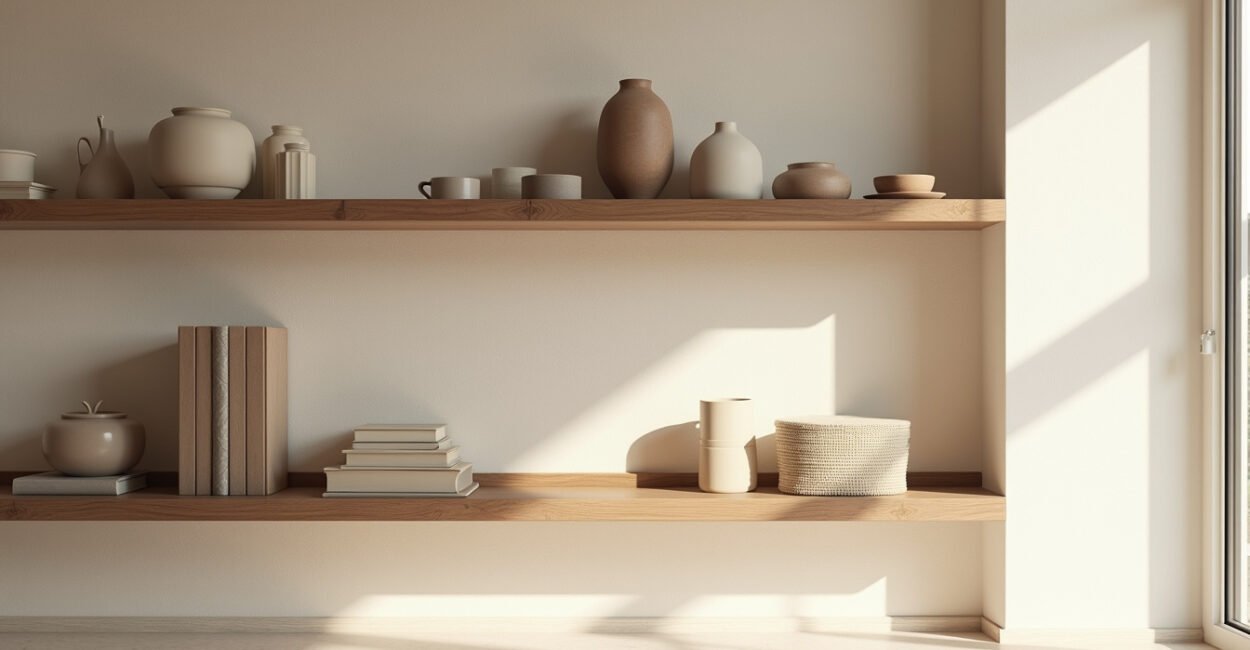
Decor should edit the room, not advertise every surface. In a neutral space, each object has to earn its place. That means you want fewer pieces with better shape: one strong vase, one framed artwork grouping, one tray, one sculptural lamp, and maybe a bowl or basket that solves a real storage problem.
Repeat Shapes for a Cohesive Look
Repeated curves, repeated rectangles, or repeated organic forms make a room feel intentional. If your coffee table is round, echo that softness in a lamp base, mirror, or bowl. If most of your furniture is angular, a rounded accent can keep the room from feeling stiff.
Use Art as a Color Bridge
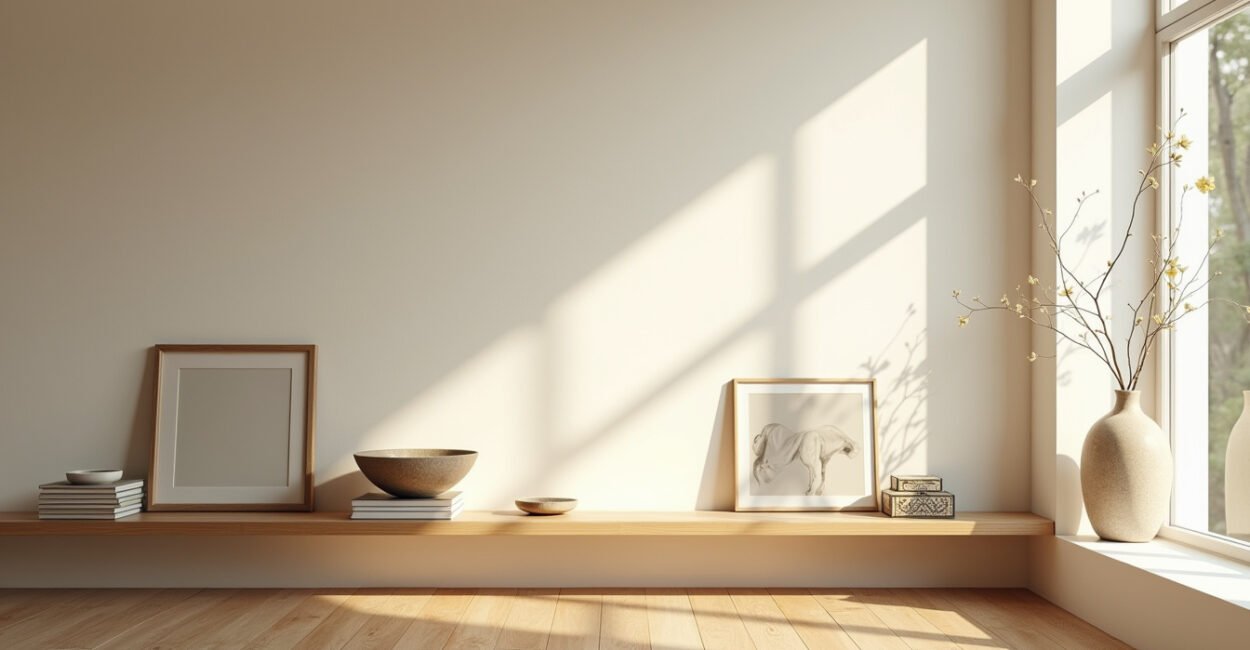
Artwork is one of the easiest places to bring in subtle contrast. You do not need bright color; you need a connection between the wall, sofa, and accessories. Black-and-white photography, abstract prints in taupe and charcoal, or soft landscape art can tie the palette together without breaking the calm.
Keep Accessories Functional When Possible
Trays, baskets, and lidded boxes are not just storage tricks. They reduce visual noise. That matters in a neutral room because every exposed cable, remote, and stack of random items weakens the clean effect you are trying to build.
Here is a simple example from a real setup: a renter with an all-white apartment, one sand-colored sofa, and a dark wood coffee table could not get the room to feel “done.” The fix was not buying more decor. It was switching a shiny side table for a matte ceramic lamp, adding a wool rug, and hanging one large print with warm gray undertones. The room suddenly looked designed instead of assembled.
Use Lighting to Warm the Palette and Control the Mood
Lighting changes neutral decor more than most beginners expect. The same beige sofa can look creamy at sunset, muddy under a cold ceiling bulb, and elegant under layered lamp light. If the room feels off, lighting is often the reason before the furniture or paint is.
Mix Ambient, Task, and Accent Light
Ambient light gives the room overall brightness. Task light supports reading or working. Accent light highlights art, shelves, or architectural details. A living room with only one overhead fixture almost always feels flatter than one with lamps and a few smaller light sources.
Choose Bulbs with the Right Warmth
For a cozy neutral living room, warm-white bulbs usually work better than cool daylight bulbs. If the light feels too blue, the room can lose its softness fast. If you want a clean look, you can still keep the bulbs warm and let the materials do the refining.
Let Natural Light Lead When You Can
Sheer curtains, light-filtering shades, and reflective surfaces help preserve daylight without making the room harsh. If you have a north-facing room, warm neutrals usually feel more forgiving than cool grays. If you have strong afternoon sun, watch for colors that shift too yellow or too pink under changing light.
Make the Room Feel Personal Without Breaking the Neutral Palette
A neutral living room should not feel like a hotel lobby. It needs a trace of the people who live there. The trick is to add identity through material, memory, and form rather than loud color. That approach keeps the room calm while making it feel human.
Bring in One or Two Meaningful Objects
A ceramic piece from a trip, a framed family photo in a simple mat, a vintage wooden bowl, or a favorite book stack can carry more personality than a shelf full of random decor. The object does not have to be expensive. It just needs to feel chosen.
Let Books and Baskets Do Real Work
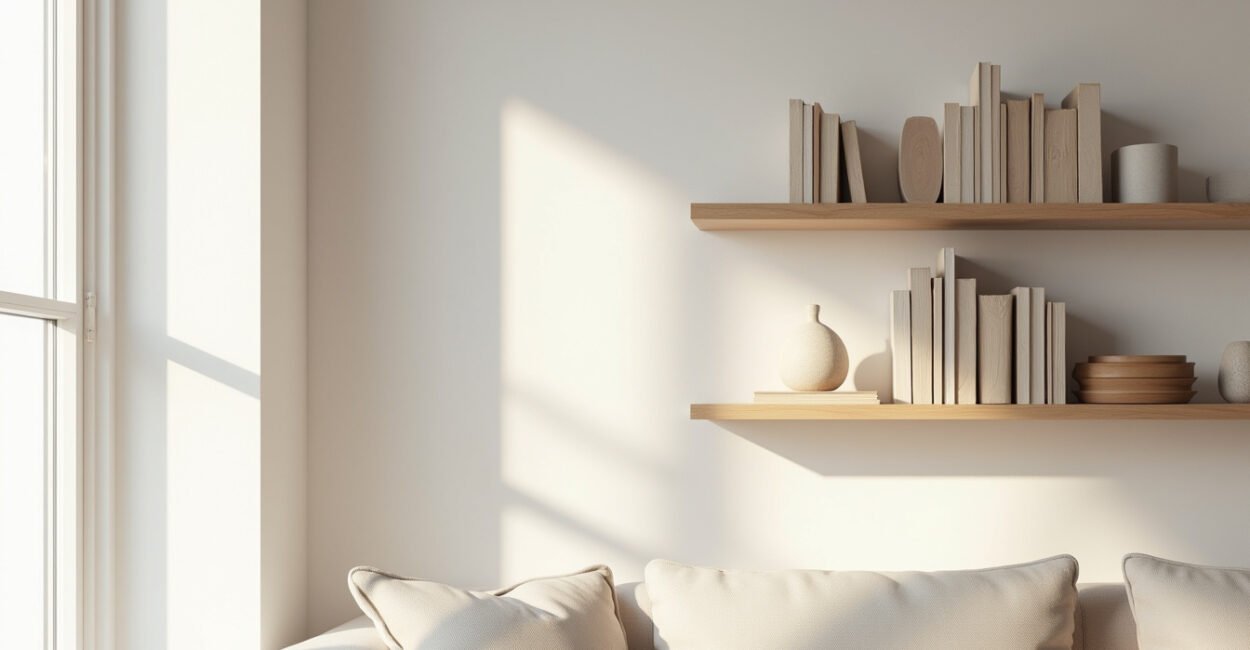
Books add height, color variation, and a relaxed lived-in feel. Baskets hide blankets, charging cords, or kids’ toys without looking like storage bins. In a beginner-friendly neutral room, practical items should be visible only when they add to the composition.
Use Contrast Sparingly but Intentionally
A single black frame, a dark lamp, or a smoked-glass vase can sharpen the whole room. You do not need a lot of contrast, but you do need some. Without it, the palette can drift into one soft blur.
Neutral rooms become memorable when personal objects feel edited, not scattered.
Simple Beginner Mistakes to Avoid
Most beginner mistakes are easy to fix once you see them clearly. The issue is rarely taste. It is usually repetition without contrast, or shopping piece by piece without a plan.
Do Not Buy Everything in the Same Shade
If your rug, sofa, curtains, pillows, and wall color all sit in the exact same beige family, the room will likely look washed out. There needs to be a gentle shift from light to mid-tone to dark so your eye has a place to rest.
Avoid Tiny Decor on a Large Sofa or Wall
Small pillows, small prints, and small lamps often disappear in the room. Bigger items usually solve more problems with less clutter. This is one of those cases where restraint is not about having less; it is about choosing fewer things that carry more visual weight.
Do Not Chase Trends Before You Have a Base
Trend-led neutrals come and go fast, but a solid base of sofa, rug, lighting, and wood finish can last for years. Once the base works, you can swap pillows or art without rebuilding the whole room.
What to Do Next If You Are Starting from Scratch
The smartest move is to build in order: color base, sofa, rug, lighting, then accessories. That sequence prevents the common beginner mistake of buying decor before the room has a structure. If you want the space to feel polished, test one decision at a time and look at the room in daylight and at night before making the next purchase.
If you are comparing options, create a small palette board with paint samples, fabric swatches, wood tones, and one metal finish. Then narrow your choices to pieces that work together in both bright and low light. That process is slower than impulse shopping, but it saves money and keeps the room coherent.
Frequently Asked Questions
What Are the Best Neutral Colors for a Beginner-friendly Living Room?
The easiest starting point is a warm or balanced neutral such as ivory, oatmeal, taupe, greige, or soft beige. These shades are forgiving and work with a wide range of woods, metals, and fabrics. Avoid picking every item in the exact same tone; a small range of light, mid, and dark neutrals makes the room feel more designed. The best choice also depends on light, since north-facing rooms often need warmer neutrals to avoid feeling cold.
How Do I Keep a Neutral Living Room from Looking Boring?
Use texture, scale, and contrast before you add more color. A linen sofa, wool rug, wood table, ceramic lamp, and one dark accent can create far more interest than extra pillows in the same shade. The room should have visible variation in surface and shape. If everything is soft, pale, and small, the space will flatten out quickly. Think in layers, not in decoration count.
Should All My Furniture Match in a Neutral Living Room?
No. Matching furniture often makes a room look stiff and overly coordinated. A better approach is to choose pieces that share a common undertone or material family, then vary their shapes and finishes. For example, a beige sofa, walnut coffee table, and black metal lamp can feel harmonious without being identical. That mix usually looks more natural and more expensive than a matching set.
What Kind of Rug Works Best in a Neutral Living Room?
A wool rug, flatweave rug, or low-pile rug usually works best because it adds texture without overwhelming the palette. If the room is already very soft, choose a rug with a subtle pattern or a slightly darker tone to define the seating area. The rug should be large enough that the front legs of the sofa and chairs sit on it. Too-small rugs are one of the fastest ways to make a neutral room feel unfinished.
Can I Use Black in a Neutral Living Room?
Yes, and it often helps. Black works as an anchor in lamps, picture frames, table legs, or small decorative objects. The key is restraint: one or two black accents usually sharpen the palette, while too much black can make a soft room feel heavy. In a well-balanced neutral space, black should act like punctuation, not the main story.