 Skip to content
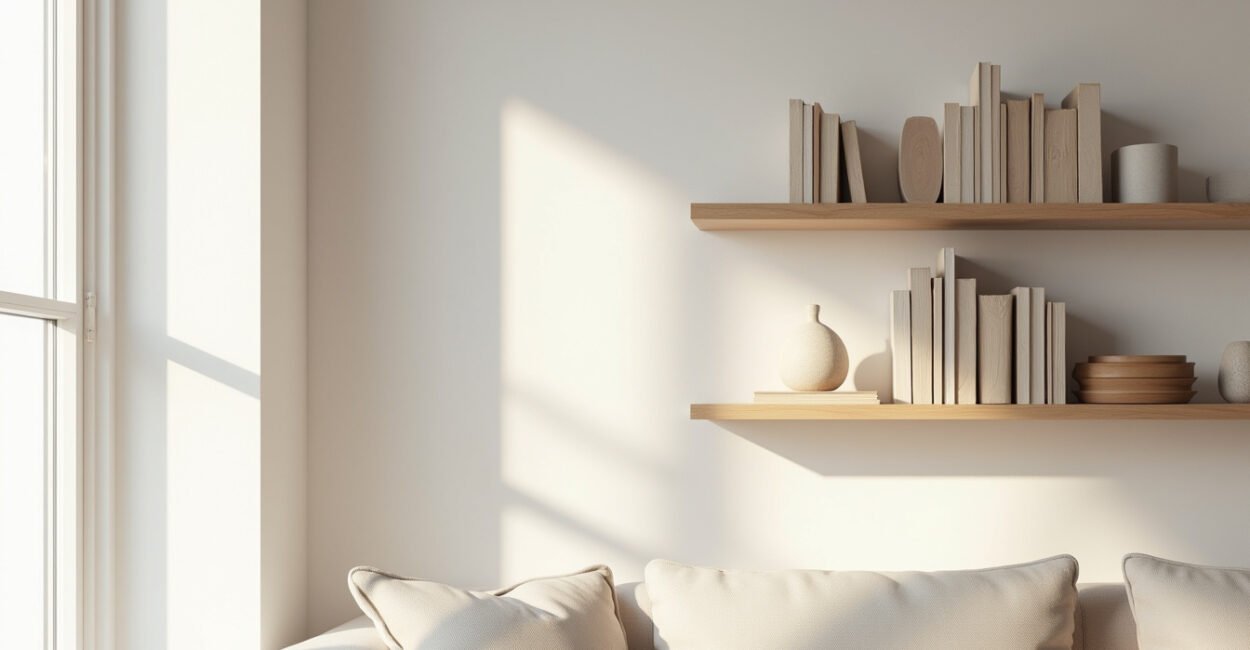
Books can make a minimalist shelf feel finished—or accidentally cluttered. The difference is in the way you place them.
Book styling is less about decoration and more about structure: the right stack, the right gap, the right height. Get that balance right, and even a sparse shelf starts to feel intentional instead of empty.
Why Books Work So Well on Minimalist Shelves
In minimalist spaces, books do something most objects can’t: they add visual weight without adding noise. A single row of spines can anchor a shelf, while a short stack can break up a long horizontal line that feels too flat.
Think of books as architecture at small scale. Standing upright creates rhythm. Lying flat creates a base. Grouped together, they act like one design block instead of a loose collection of things you forgot to put away.
That’s why book styling works so well on shelves that already feel restrained. The books bring texture and proportion, but they don’t need to scream for attention. The best versions look like they belong there because they support the shelf, not compete with it.
The Simplest Way to Stack Without Making a Mess
If you want an easy starting point, use the stack-and-stand method: one small horizontal stack, then one standing book or object beside it to reset the visual line. That little contrast keeps the shelf from looking like a row of accidental piles.
Here’s the rule that helps most people: keep stacks low and deliberate. Two to four books is usually enough. Any taller, and the stack starts to feel heavy, especially on narrow shelves. Choose books with similar depth so the edges line up cleanly.
- Use hardcovers for structure.
- Mix in one softer cover only if the colors stay quiet.
- Leave a small gap around the stack so it breathes.
- Top the stack with one restrained object, not three.
In practice, what happens is this: once you stop treating books like filler and start using them like blocks, the whole shelf calms down. And that calm is what makes the next move—standing books—look so much sharper.

Standing Books: The Cleanest Way to Add Height
Standing books are the easiest way to create vertical movement on a minimalist shelf. They pull the eye upward, which matters when everything else is low, linear, and controlled. If your shelf feels too heavy at the bottom, a tight group of upright books fixes that fast.
The trick is not quantity; it’s spacing. Three to six books grouped together often looks more curated than a full row. Too many and you lose the airy feel. Too few and the grouping can seem unintentional.
Try this visual test: if the spines vary wildly in color, keep the group smaller. If they share a muted palette, you can go a little wider. A shelf with pale neutrals, matte black, or faded earth tones can handle more standing books because the grouping reads as texture, not clutter.
Minimalist shelf styling works best when the books look selected, not stored.
How to Group Books So They Feel Curated, Not Crowded
Curated book styling usually comes down to repetition with one interruption. You repeat a shape, color, or height a few times, then interrupt it with a stack, a gap, or a single object. That interruption is what makes the shelf feel edited.
A small story: a client once had beautiful shelves, but every book was lined up at the same height. The room looked tidy, but lifeless. We shifted just six books into a horizontal stack, moved three upright ones together, and left one third of the shelf empty. The shelf didn’t gain more items. It gained rhythm.
That’s the part people miss. The goal is not to “fill” the shelf. The goal is to give the eye a few places to pause.
You can use this pattern:
- one stack on the left,
- a vertical grouping in the center,
- one open zone on the right.
That open zone matters. Without it, the styling starts to feel busy, and minimalist design loses its edge.
The Mistakes That Break the Clean Look
The most common book styling mistakes are not dramatic. They’re small, and that’s why they’re so easy to miss.
- Too many tiny objects competing with the books.
- Stacks that are too tall for the shelf depth.
- Every book facing the same direction with no variation in height.
- Bright covers that overpower the rest of the room.
- No breathing room between book groups.
There’s a tension here: minimalist shelves need restraint, but they also need contrast. If everything is the same height, same color, and same finish, the shelf goes flat. If everything is too mixed, it turns noisy. The sweet spot sits in the middle.
That balance shows up in current design coverage too. Sites like Architectural Digest and House Beautiful keep returning to the same idea: curated shelves work when they feel edited, not crowded. The principle is simple, but hard to fake.
One Shelf Formula You Can Try Tonight
If you want a fast formula, start with three zones: stack, stand, and space. Place a short horizontal stack on one side, group a few upright books in the middle, and leave one area intentionally quiet. That last part is what makes the whole shelf feel expensive.
Books also work better when they echo the room around them. A neutral rug, a linen sofa, or a wood table can all make book styling feel more natural, because the shelf stops looking isolated. It becomes part of the room’s visual language.
For a useful reference on how people actually perceive clutter and visual order, the National Institute on Aging notes how clutter and distraction affect attention. That’s one reason a few well-placed books can feel so satisfying: they offer structure without demanding focus.
A minimalist shelf should feel edited by someone with taste, not emptied by someone with restraint.
The best book styling doesn’t announce itself. It just makes the room look like it knows exactly what it’s doing.
FAQ
How Many Books Should I Style on a Minimalist Shelf?
Start with fewer than you think you need. On most shelves, a small stack of two to four books and one short upright group is enough to create structure without making the shelf feel full. If the shelf still looks sparse, add another group only if it keeps the spacing clean. Minimalist book styling works best when every item has room to breathe.
Should Books Be Stacked Horizontally or Vertically?
Both. Horizontal stacks add grounding, while vertical books add height and rhythm. The strongest shelves usually mix the two so the eye moves naturally from one shape to another. If everything is stacked, the shelf can feel low and heavy. If everything stands upright, it may look too uniform. The mix is what gives the shelf its curated feel.
What Colors Work Best for Book Styling on Minimalist Shelves?
Muted, cohesive tones usually work best: whites, creams, black, gray, tan, soft green, and faded blue. You don’t need every spine to match, but they should feel related. If your books are colorful, grouping them by tone can calm the look. One bright cover can work as an accent, but too many bold spines will pull attention away from the shelf’s clean lines.
Can I Use Decorative Objects with Books?
Yes, but keep them restrained. One ceramic piece, one framed photo, or one small sculpture can add variation without crowding the shelf. The key is to let books stay the main structure. If the objects start competing with the books, the shelf loses its minimalist balance. Think of accessories as punctuation, not the whole sentence.
How Do I Keep Books from Making the Shelf Look Cluttered?
Use spacing as part of the design. Leave visible gaps, avoid tall stacks, and don’t line every book up in one tight row. A shelf feels cluttered when every inch is occupied. It feels curated when the books seem chosen for shape, color, and placement. In other words: fewer books, better arranged, usually looks richer than more books packed together.


