Skip to content

DIY wall decor ideas for apartments are practical, renter-friendly ways to add style, texture, and personality to blank walls without committing to permanent changes or eating up valuable floor space. Technically, wall décor in an apartment is any removable or low-impact decorative system applied to a vertical surface—think adhesive-mounted art, lightweight shelving, framed prints, peel-and-stick treatments, textile hangings, and modular displays. In plain English: it is the difference between a room that feels temporary and one that feels intentional.
This topic matters now because small apartments have become the rule, not the exception, in many cities. When square footage is tight, walls do more than hold art; they become storage, lighting support, and the main surface for shaping how a room feels. A well-planned wall can make a studio apartment read as organized, layered, and larger than it is. A poorly planned one can make the same room feel crowded, cluttered, and unfinished.
There is also a renter reality that changes the rules. Most apartment dwellers need solutions that are removable, light, and safe for drywall or plaster. That means the best projects are not the prettiest on Pinterest—they are the ones that balance adhesion, weight, visual scale, and lease restrictions. The good news is that you do not need a contractor-grade makeover to get a strong result.
Key Points
- Renter-friendly wall decor works best when it is lightweight, removable, and scaled to the wall size rather than the room size.
- The most effective projects combine decoration with function, such as peg rails, picture ledges, hooks, and modular shelving.
- Visual impact comes from contrast, repetition, and layering, not from filling every inch of wall space.
- Surface choice matters: drywall, plaster, tile, and textured walls each need different mounting methods.
- Good apartment wall design reduces floor clutter, which makes small rooms feel calmer and more spacious.
DIY Wall Decor Ideas for Apartments: What Actually Works in Small Spaces
Start with the Wall’s Job, Not the Decor Trend
The first mistake people make is treating every wall as an art wall. In apartment design, each vertical surface should have a job: anchor the sofa, define the dining zone, add storage near the entry, or create a focal point behind the bed. When the function is clear, the decor choices get easier and the room looks more deliberate.
Who works with compact interiors knows that empty wall space is not wasted space; it is usable space waiting for a purpose. A 36-inch-wide blank area above a console can hold a mirror and a pair of sconces. The same width above a desk might work better with a cork board, a slim shelf, or a grid organizer. The goal is not to decorate everything. The goal is to make every wall earn its place.
Use Scale to Avoid the “tiny Art” Problem
Small rooms often end up with small decor, and that is a mistake. One undersized print floating in the middle of a big wall makes the whole apartment feel underfurnished. Larger pieces, grouped frames, or oversized textile art usually work better because they create a clear visual anchor. In practice, the room looks more finished with fewer, larger elements than with many scattered ones.
A useful rule: if the wall is broad, your decor should have a broad shape. That can mean one large framed poster, a symmetrical pair of prints, or a gallery block with tight spacing. For narrow walls, vertical layouts read better than horizontal ones. This is one of those cases where proportion matters more than style. A beautiful object in the wrong size still looks wrong.
Choose Removable Systems First
For renters, removability is not a bonus; it is the baseline. Command strips, picture hooks, adhesive rails, and lightweight bracket systems are the safest starting points when you are not allowed to patch or repaint freely. The best apartment-friendly ideas use those mounting systems as the backbone, then layer art, fabric, or storage onto them. That reduces risk and protects your deposit.
There is a tradeoff here. Adhesives work well on smooth, clean walls, but they can fail on dusty paint, humidity-prone areas, or rough plaster. That is why I do not recommend leaning on adhesive-only setups for heavy mirrors or full shelving. If the item has real weight, use a stud, proper anchors, or a freestanding hybrid system. That limit matters more than the trend itself.
Renter-Friendly Materials and Mounting Methods That Protect the Deposit
Pick Materials by Weight, Surface, and Removal Risk
When decorating apartment walls, weight is the first technical variable. Lightweight paper art, foam board, fabric, and thin MDF are easy to hang with removable hardware. Glass, thick wood, and framed mirrors need more reliable support. The safest route is to match the decor material to the wall’s load capacity and the lease’s rules, not the look you saw online.
Textiles are underrated here. Woven hangings, tapestry panels, and stretched fabric bring texture without the fracture risk of glass. They also soften echo in hard-surfaced rooms, which is useful in studios and lofts. If a wall feels cold and flat, textile pieces usually correct that faster than another framed print.
Use Adhesive Hardware with Realistic Expectations
Adhesive hangers have improved, but they are not magic. They perform best on painted drywall that has cured properly, with the surface cleaned before application and the weight limit respected. They perform worse on humid bathrooms, gritty surfaces, or walls with flaky paint. Many failures come from setup errors, not product defects.
For a dependable reference on wall mounting, hardware use, and safety practices, it helps to read guidance from manufacturers and safety organizations. The Consumer Reports overview of wall anchors and mounting hardware explains why anchor choice matters, while the U.S. Department of Energy offers practical advice on managing light, window coverage, and room efficiency in compact homes. For general renter context, Nolo’s renter-rights resources are useful for understanding what leases usually restrict.
Keep a Repair Plan for When the Lease Ends
Every wall project should include the exit strategy. Save matching paint information, photograph the wall before installation, and keep the product packaging until you are sure the setup is stable. If adhesive leaves residue, remove it slowly and test a small section first. If the wall surface is fragile, stop before you create a repair that costs more than the decor itself.
Vi cases in which a renter used a beautiful gallery wall but ignored wall texture. The strips held fine for months, then paint lifted on removal because the previous coat had poor adhesion. That is why the best apartment projects are the ones that respect the condition of the wall, not just the design brief.

High-Impact Projects for Blank Apartment Walls
Build a Gallery Wall with One Visual Rule
A gallery wall works when it has structure. Without a rule, it becomes visual noise. The rule can be uniform frame color, equal matting, a strict grid, or one repeated subject such as travel photos or line drawings. That repetition gives the composition authority and keeps it from looking like random leftovers.
For small apartments, a tighter cluster is usually better than a sprawling layout. Leave consistent spacing between frames and align the whole set to an invisible edge. If you want the room to feel calm, use black-and-white art or tonal photography. If you want energy, mix color, but keep the framing system disciplined.
Install Picture Ledges for Flexible Display
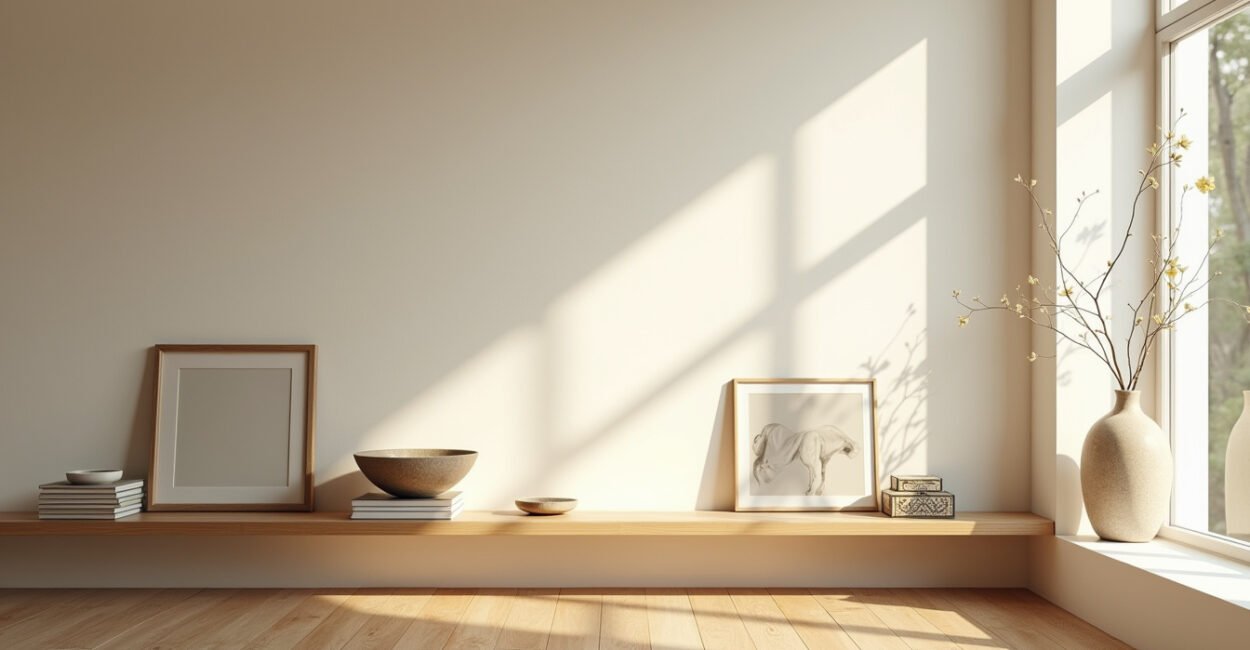
Picture ledges are one of the most practical apartment inventions because they let you layer art without drilling new holes every time your taste changes. They are excellent above sofas, in hallways, and near workspaces where you want rotation rather than permanence. You can swap prints seasonally, lean a small mirror into the mix, or add a few ceramic objects for depth.
From a design standpoint, ledges solve a common problem: flat walls can feel dead, but fully mounted walls can feel overcommitted. A ledge sits in the middle. It creates dimension without locking you into one arrangement. That flexibility matters in rentals where people move often or redecorate on a budget.
Use Mirrors Strategically, Not Everywhere
Mirrors are powerful because they bounce light and create the impression of depth, but they are not a universal fix. A mirror placed to reflect a window or a bright lamp can make a room feel wider and more open. A mirror placed to reflect clutter, a dark corner, or a blank wall with no light source often adds little.
Round mirrors soften angular furniture, while tall vertical mirrors stretch low-ceilinged rooms. In entryways, they are useful for quick checks and for making tight zones feel less compressed. In bedrooms, they should support the layout rather than fight the bed wall. Good mirror placement is about reflection management, not decoration alone.
Texture, Color, and Material Choices That Make Small Rooms Feel Intentional
Layer Texture to Add Depth Without Adding Bulk
Texture is the fastest way to make a wall feel designed. A flat white wall with a single frame can look unfinished, while a wall with linen, rattan, wood grain, and paper creates depth even with minimal color. In apartment interiors, texture often does the work that larger square footage cannot. It gives the eye something to move across.
Materials that work well include woven baskets, cane panels, wood slats, felt boards, cork, and fabric-covered pinboards. The point is not to create a rustic theme unless that is your goal. The point is to keep the wall from reading as one sterile plane. Texture breaks that sameness immediately.
Use Color Blocking to Define Zones
Color blocking works well in studios and open-plan rentals because it creates boundaries without building walls. A painted panel behind a desk, a peel-and-stick color field behind the bed, or a framed textile in a single accent color can separate functions in one room. That visual zoning helps the apartment feel organized.
For example, a muted terracotta rectangle behind a dining nook can make the space feel intentional, even if the footprint is tiny. A pale green shape behind a reading chair can signal a calm corner without needing furniture changes. The trick is to keep the shape geometric and the palette limited. Too many color zones can make a small room feel restless.
Balance Matte and Reflective Surfaces
In compact rooms, the ratio of matte to reflective surfaces affects how noisy the space feels. Matte finishes absorb light and help a wall recede. Reflective finishes, such as glass, metal, or glossy frames, bring movement and brightness. A strong apartment wall plan usually mixes both so the room does not feel flat or overly shiny.
The safest combination is one reflective accent per wall group. A mirror beside a matte gallery wall, or a brass sconce above a linen panel, usually reads as refined. Multiple reflective elements placed together can feel busy. The same goes for highly saturated colors. Small spaces tolerate them better when they are interrupted by calmer materials.
Functional Wall Decor That Saves Floor Space
Use Vertical Storage as Part of the Design
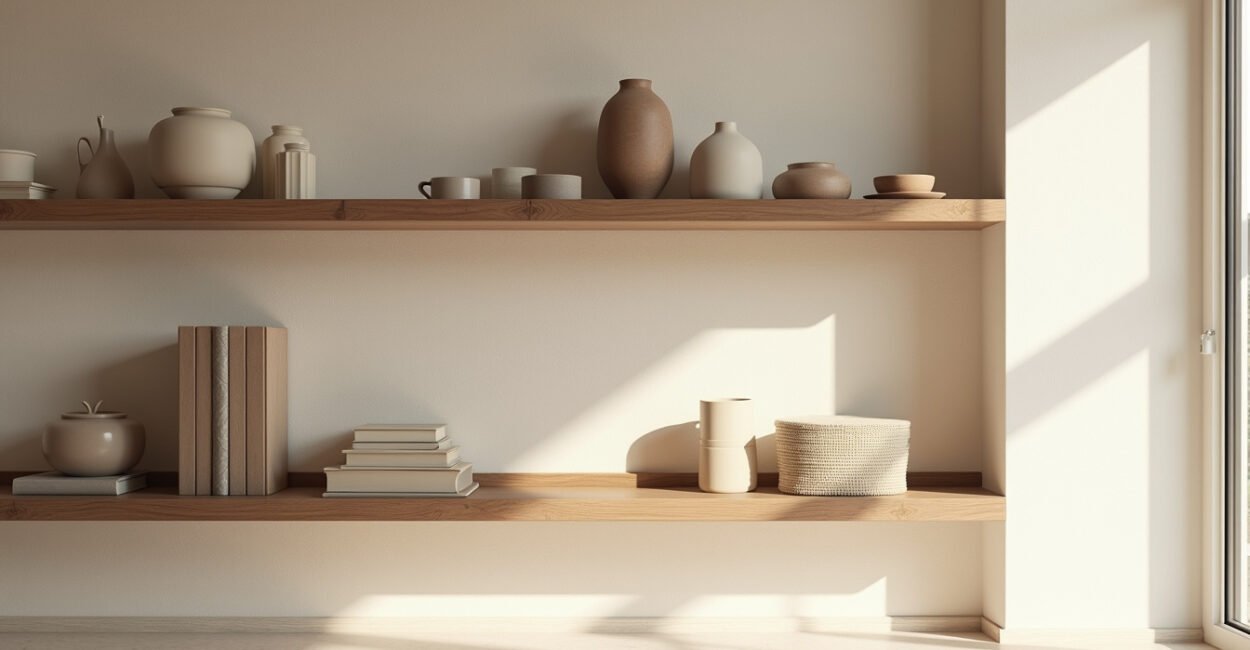
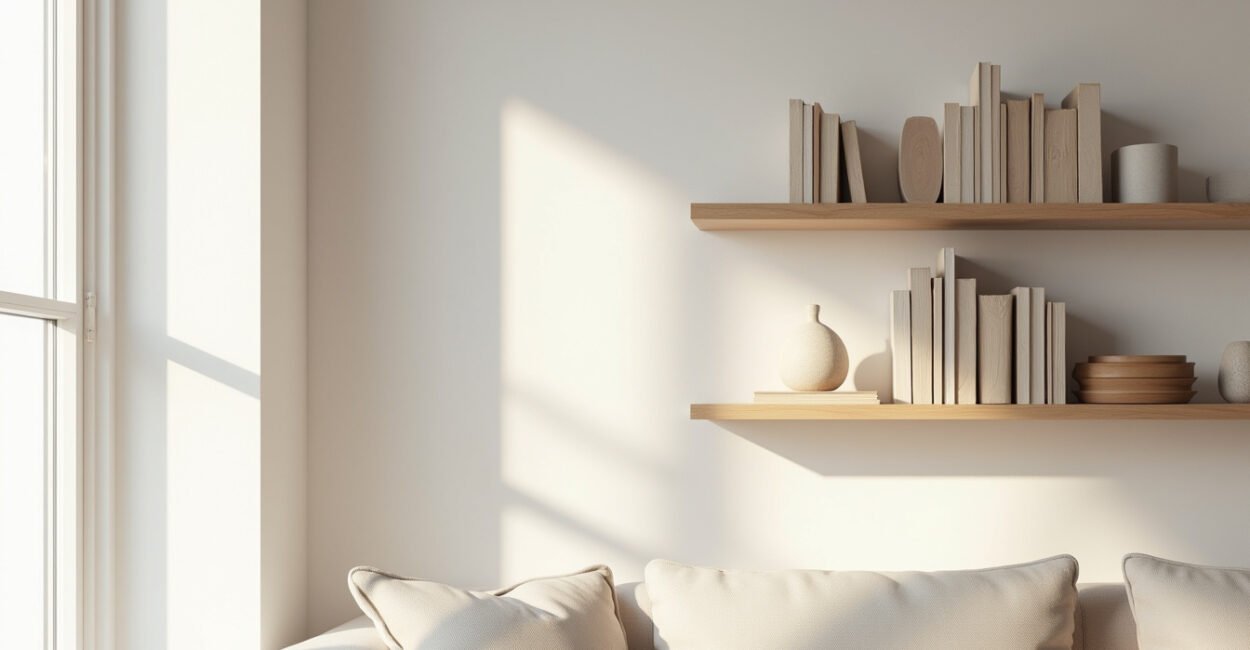
When floor space is scarce, storage belongs on the wall. Peg rails, slim shelves, wall grids, and hanging organizers can hold keys, mail, small plants, headphones, and daily carry items without creating another piece of furniture. The best versions look intentional rather than utilitarian. That means choosing consistent hardware and spacing items with restraint.
This is where apartment decor becomes genuinely smart. A wall-mounted solution can solve clutter and styling at the same time. A shelf with one book stack, one candle, and one framed print does more than a decorative object on a side table because it clears the floor and contributes to the room’s visual hierarchy.
Choose Hooks and Rails That Look Architectural
Hooks are often treated as last-resort utility pieces, but they can carry design weight when selected carefully. Brass hooks, black steel rails, and wooden peg systems can align with the rest of the room so they read as part of the architecture. This is a strong move near entries, kitchen corners, and bathroom doors where the wall needs to do real work.
The mistake is overloading a hook system with too many objects. One coat, one bag, one hat can look curated. Seven random items will always look messy, no matter how nice the hardware is. Good wall utility depends on visual discipline as much as product choice.
Combine Decor and Lighting When Possible
Wall sconces, plug-in lights, and clip-mounted reading lamps reduce lamp clutter and improve the room’s lighting layers. In small apartments, that matters because table surfaces disappear fast. Wall lighting can also turn a plain wall into a focal point without needing a large decorative display.
That said, not every apartment is wired for hardwired sconces, and plug-ins need cord management to look polished. If a light fixture requires visible cable runs, plan them like part of the design rather than as an afterthought. Cord covers, routing clips, and careful placement make the difference between intentional and improvised.
Budget DIY Projects That Still Look Professional
| Project | Approximate Cost | Skill Level | Best For | Renter Risk |
|---|---|---|---|---|
| Framed printable art | Low | Beginner | Living rooms, bedrooms | Very low |
| Picture ledge display | Low to medium | Beginner to intermediate | Rotating collections | Low if mounted correctly |
| Peel-and-stick accent panel | Low to medium | Beginner | Headboard walls, desks | Low if surface is suitable |
| Fabric wall hanging | Low | Beginner | Echo reduction, softness | Very low |
| Modular peg rail | Medium | Intermediate | Entries, kitchens, work nooks | Low to medium |
Printable Art and Thrifted Frames Give the Best Value
If the budget is tight, printable downloads paired with thrifted frames are still one of the strongest options. The art can be updated cheaply, and the frame can be repainted or recut with matting if the proportions are off. This approach works because it separates content from container. You can change the image without replacing the whole object.
That separation matters in apartments where style shifts over time. A renter might start with abstract line art and later move to photography or botanical prints. The frame system stays in place; the content changes around it. That is a far better long-term strategy than buying cheap, oversized novelty decor that ages fast.
Painted Plywood and Foam Board Can Mimic Custom Work
For a more custom look, painted plywood panels or foam board compositions can create the feel of built-ins or high-end wall art. These materials are cheap, light, and easy to cut into geometric forms. When mounted cleanly, they look more intentional than a lot of store-bought decor because they fit the wall size exactly.
The finish has to be neat. Uneven edges, visible glue, or poor paint coverage will expose the DIY nature immediately. A crisp edge, however, changes the whole outcome. Professional-looking DIY is rarely about expensive material; it is about clean execution and correct proportions.
Know When to Stop Adding
Budget projects often fail from over-decorating, not under-spending. Once a wall has a strong focal point, extra items should support it, not compete with it. In a small apartment, negative space is part of the design language. Leave some wall bare so the eye has a place to rest.
There is a limit to how much any DIY wall can carry. If the room already has patterned textiles, busy shelving, and colorful furniture, the wall decor should stay quieter. Specialists differ on exact ratios, but most agree on the principle: the more visual activity the room has elsewhere, the more restraint the walls need.
Room-by-Room Ideas for Studios, Bedrooms, and Entryways
Make the Bedroom Wall Feel Restful
In a bedroom, the wall behind the bed should lower visual tension. That usually means symmetry, soft textures, or a single centered statement. A pair of prints, a fabric panel, or a narrow ledge with low-contrast objects can work well. Avoid cluttering the headboard area with too many separate items, because that creates mental noise in a room meant for recovery.
Vertical alignment matters here. If the bed is low, a taller piece above it can restore balance. If the ceiling is low, keep the composition horizontal and restrained. The wall should support the bed, not compete with it.
Use the Entryway to Create a Strong First Impression
Entry walls need fast function. A mirror, hooks, and a small shelf cover most everyday needs while still looking polished. This is the ideal place to combine decor and utility because people use it every day, and clutter accumulates here first. A well-designed entry wall can make the whole apartment feel more organized.
One practical rule: keep the top half light and the lower half useful. Hooks near hand level, a mirror above them, and a tray shelf or mail ledge below tends to work better than a dense collage. That arrangement gives the space an architectural feeling and keeps circulation easy in narrow halls.
Let the Studio Wall Divide Functions Visually
In a studio, wall decor often doubles as zoning. A large art piece can define the sleeping zone, while a pinned textile or shelving unit can mark the work area. The point is to create visual cues that help the apartment read as separate spaces without installing physical partitions. That is how compact homes feel intentional rather than improvised.
For studios, wall height matters as much as wall width. Tall compositions can make a small footprint feel more vertical and open. Low, wide compositions help anchor living and dining zones. Use both strategically instead of repeating the same treatment throughout the whole apartment.
Implementation Checklist: How to Plan, Install, and Adjust Without Regret
Measure Before You Buy Anything
Measurement is the step most people skip and then regret. Before buying frames or shelves, measure wall width, furniture width, and available clearance. A decor piece that looks right in a product photo can overwhelm a narrow apartment wall. On the other hand, a piece that is too small will disappear.
Use painter’s tape to outline the intended size on the wall. That simple trick prevents expensive proportion errors. It also helps you see how the item relates to doors, windows, outlets, and switches before you commit. In apartment projects, the tape mockup is worth more than a dozen inspiration photos.
Install in Layers, Then Evaluate from Across the Room
Start with the largest anchor element first: the mirror, the main frame, the ledge, or the shelf. Then add secondary pieces only after viewing the wall from the room’s main entry point. A wall often looks different from arm’s length than it does from the sofa or the doorway. That broader view is the one that matters.
Who does this well usually works in stages. They hang the anchor, leave it for a day, then add the next layer with less emotional attachment. That pause avoids overfilling the wall. It also gives you time to notice glare, height issues, and balance problems before the installation becomes permanent.
Adjust for Light, Traffic, and Cleaning
A wall near a window behaves differently than one in a dark corner. Sun exposure can fade prints, weaken some adhesives, and create glare on glass. High-traffic areas need durable materials that do not snag bags or shoulders. Kitchens and bathrooms need moisture-aware choices. The same decor idea does not perform equally well in every room.
Cleaning matters too. Dust collects on ledges, woven hangings, and open shelving. If a design is hard to maintain, it stops looking good quickly. The best apartment wall decor is attractive on day one and still manageable three months later.
Próximos Passos Para Implementação
The strongest approach is to treat your apartment walls as part of the room’s structure, not as leftover space. Start with one wall that solves a clear problem: blankness behind the sofa, clutter near the entry, or dead space above a desk. Choose a system that matches the lease constraints, then build around proportion, function, and light. That sequence gives you a result that feels designed instead of patched together.
If you want the room to look more expensive, do less, but do it with more intention. One well-scaled anchor, one supporting texture, and one functional element usually outperform a crowded collage. The wall should make the apartment calmer, not busier. That is the standard worth aiming for.
For a cleaner execution, measure first, mock up with tape, and choose hardware based on weight and wall type rather than convenience. That process takes a little longer, but it protects your walls, your deposit, and the final look. In small apartments, good editing is the real design skill.
FAQ
What is the Safest Wall Decor Option for a Rental Apartment?
The safest options are lightweight, removable, and easy to realign or remove without paint damage. Framed prints with removable hanging hardware, fabric wall hangings, and picture ledges mounted with appropriate anchors are strong choices. Adhesive-only systems can work, but only on smooth, well-prepared surfaces and within the stated weight limits. For fragile paint or textured plaster, less aggressive mounting is usually the smarter call.
How Do I Make a Small Apartment Wall Look Bigger?
Use a larger anchor piece, keep spacing consistent, and avoid a cluttered cluster of tiny objects. Mirrors can help if they reflect light or an attractive view, but they do little if they reflect a dark corner. Vertical elements also make ceilings feel higher, while horizontal compositions help low, wide rooms feel balanced. The goal is visual clarity, not filling every inch.
Can I Hang Shelves in an Apartment Without Drilling?
Yes, but the shelf must be genuinely lightweight and the mounting system has to be designed for that use. Many no-drill options rely on adhesive, tension, or over-the-door systems, and each has a limit. If you plan to place books, ceramics, or anything with real weight on it, a no-drill shelf is usually the wrong tool. For heavier loads, proper anchors or stud mounting are the safer choice.
What Should I Avoid When Decorating Apartment Walls on a Budget?
Avoid buying lots of small items that have no visual relationship to each other. That route creates clutter and usually costs more than one better-planned wall composition. Also avoid oversized pieces that overpower narrow walls, and do not rely on trendy decor that cannot be removed cleanly. Budget success comes from scale, repetition, and restraint, not from buying the cheapest thing available.
How Do I Choose Between a Gallery Wall and One Large Piece?
Choose a gallery wall when you want variety, a collected feeling, or the ability to update individual pieces over time. Choose one large piece when the room needs calm, strong structure, or a cleaner focal point. In small apartments, one large work often reads better on a broad wall because it reduces visual fragmentation. Gallery walls work best when the frame system is disciplined and the spacing is deliberate.