 Skip to content
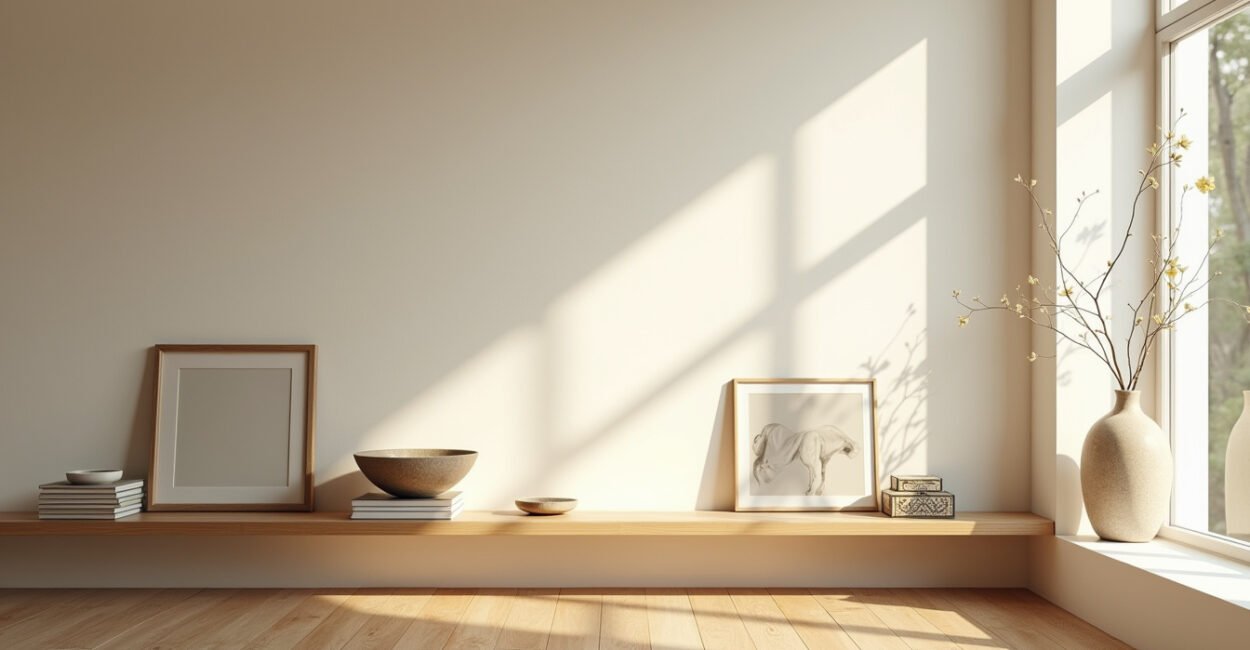
Minimal shelves look calm for one reason: every shelf accessory earns its spot.
When a shelf starts feeling “off,” the problem is usually not emptiness. It’s a few objects that fight the room instead of supporting it. The trick is to choose shelf accessories by shape, texture, and function so the shelf feels intentional, not decorated by accident.
Shelf Accessories That Quiet the Room, Not Compete with It
In minimalist design, a shelf accessory is any object placed for visual balance, storage, or daily use. That sounds simple, but the difference between a good piece and clutter is sharp: good shelf accessories have a reason to exist, and clutter only exists because there was space.
Think of the shelf as a sentence. The strongest accessories are the nouns and verbs; the clutter is the filler. A ceramic bowl, a small stack of books, or one framed print can anchor a shelf. A random candle, three tiny trinkets, and a novelty sign start turning the same shelf into noise.
If an object does not add shape, texture, or function, it is probably borrowing space instead of earning it.
The Shape Test: Why Some Pieces Feel Calm Instantly
Shape is the fastest way to control visual rhythm. Rounded shelf accessories soften hard edges. Tall vertical pieces stretch a low shelf upward. Flat horizontal objects stabilize a crowded wall. When you mix these forms with intention, the shelf looks curated without looking staged.
What usually goes wrong is repetition without contrast. Three similarly sized decor objects lined up like soldiers can feel stiff. A better mix might be one tall vase, one low stack of books, and one sculptural object with a different silhouette. That contrast gives your eye a place to rest.
Here’s the surprising part: a shelf can hold more by showing less. Two well-chosen accessories often look richer than five small ones because the negative space around them becomes part of the design.

Texture Beats Variety When the Shelf Starts Looking Flat
Texture is where minimalist shelves stop feeling sterile. Matte ceramic, warm wood, woven baskets, glass, stone, and linen each change the mood in a different way. Shelf accessories with texture create depth even when the color palette stays neutral.
That matters because minimalism is easy to flatten. If every object is smooth and glossy, the shelf can look cold. If every object is soft and rustic, it can drift into theme-park cozy. The sweet spot is contrast: one rough surface beside one polished surface, one opaque object beside one translucent one.
According to the National Institute of Standards and Technology, visual contrast helps people distinguish forms more quickly, which is one reason mixed materials feel more readable at a glance. The same idea shows up in interiors: texture makes a shelf feel composed instead of flat.
Function First: The Shelf Accessories You Actually Use
The most underrated shelf accessories are the ones that solve a small problem. A tray keeps keys from wandering. A bookend stops a stack from slumping. A box hides remotes, cords, or charging clutter. These pieces are not flashy, but they protect the shelf from becoming a dumping ground.
Function matters even more on shelves in real homes, not styled photos. In practice, what happens is simple: if a shelf has no job, other objects sneak onto it. That’s how “one decorative corner” turns into a catchall for mail, random cables, and the candle you stopped noticing months ago.
A practical rule helps here: choose one functional item, one textural item, and one visual anchor. That combination usually keeps shelf accessories useful without letting them multiply.
- Keep: books you actually read or use to add height.
- Keep: one container that hides small loose items.
- Keep: a vase, bowl, or sculpture with a clear silhouette.
- Skip: duplicate decor that does the same job twice.
- Skip: tiny objects that disappear from normal viewing distance.
What Creates Clutter Faster Than You Think
Clutter is not always messy. Sometimes it is just visually indecisive. Too many colors, too many finishes, too many small objects, and too many “maybe this belongs here” pieces can break the shelf’s calm in seconds.
Here’s a quick mini-story from real-life styling work: a client had a beautiful oak shelf that looked strangely tired. The issue was not the shelf. It was eight small shelf accessories crammed across two levels—mini frames, two candles, a tiny plant, a souvenir, and a ceramic animal. We removed four items, swapped the small pieces for one larger vase and a book stack, and the entire wall suddenly looked more expensive.
Clutter usually isn’t too much stuff. It’s too many things trying to matter at once.
There is one caveat. Some rooms need more storage than styling, and that changes the answer. A kitchen shelf, a kid’s room, or a home office can tolerate more practical shelf accessories than a living room display. The context decides the balance, not a rigid rule.
The Fast Edit: Keep, Skip, or Replace?
When you stand in front of a shelf, ask three questions. Does this object improve the shape of the shelf? Does it add a useful texture? Does it serve a function I will actually notice? If the answer is no three times, it belongs in the skip pile.
For a minimalist shelf, the best shelf accessories usually do one of four things: create height, add softness, introduce contrast, or hide chaos. That’s the whole game. Everything else is decoration for decoration’s sake.
And that brings us to the real decision: not whether the shelf looks full, but whether it looks finished. Full is easy. Finished takes judgment.
According to Architectural Digest, layered materials and restrained object counts are a consistent feature of strong shelf styling because they keep the eye moving without overwhelming the room. That matches what most people feel instinctively when a shelf “works.”
The best shelf is not the one with the most objects. It’s the one where every object has a reason to stay.
FAQ
What Are Shelf Accessories?
Shelf accessories are the objects you place on a shelf to add style, structure, or function. That can include books, vases, boxes, bowls, framed art, trays, or small sculptures. In a minimalist setting, the best shelf accessories are the ones that do more than sit there. They either organize something, shape the visual balance, or add texture that the room needs.
How Many Shelf Accessories Should I Use?
There is no fixed number, but fewer is usually better for a minimalist shelf. Start with two or three items per shelf and step back before adding more. If the shelf starts feeling crowded, remove one piece and see whether the composition improves. The goal is not to fill space. The goal is to make the space feel deliberate and easy to read.
What Should I Skip on a Minimalist Shelf?
Skip small objects that disappear visually, duplicate decor that repeats the same shape, and anything that feels like an afterthought. If a piece does not add shape, texture, or function, it usually belongs somewhere else. Tiny souvenirs can be charming, but on a shelf they often become visual static unless they are grouped with purpose.
How Do I Make Shelf Accessories Look Expensive?
Use contrast with restraint. Pair matte with glossy, soft with hard, tall with low, and open space with one strong focal point. Bigger pieces often look more refined than a cluster of mini items because they create cleaner lines. A shelf can feel elevated without being fancy if the materials look intentional and the colors stay consistent.
Can Shelf Accessories Be Practical and Decorative at the Same Time?
Yes, and that is usually the smartest choice. A box can hide clutter, a tray can organize small items, and books can provide height while still being useful. The strongest shelf accessories do not force you to choose between pretty and practical. They quietly do both, which is why they hold up better over time.


