Skip to content

Something in your feed just flipped: kitchens, living rooms, even bathrooms now favor airy, exposed storage. You’ve seen open shelves in a dozen pins and influencer shots—yet the reason this styling keeps sticking isn’t just aesthetics. Open shelves force a different kind of editing, and that’s the real design stunt: they expose your choices, not hide them. If you want the look without chaos, here’s how to style, swap, and buy smartly—fast.
Why Open Shelves Feel Like a Minimalist Revolution
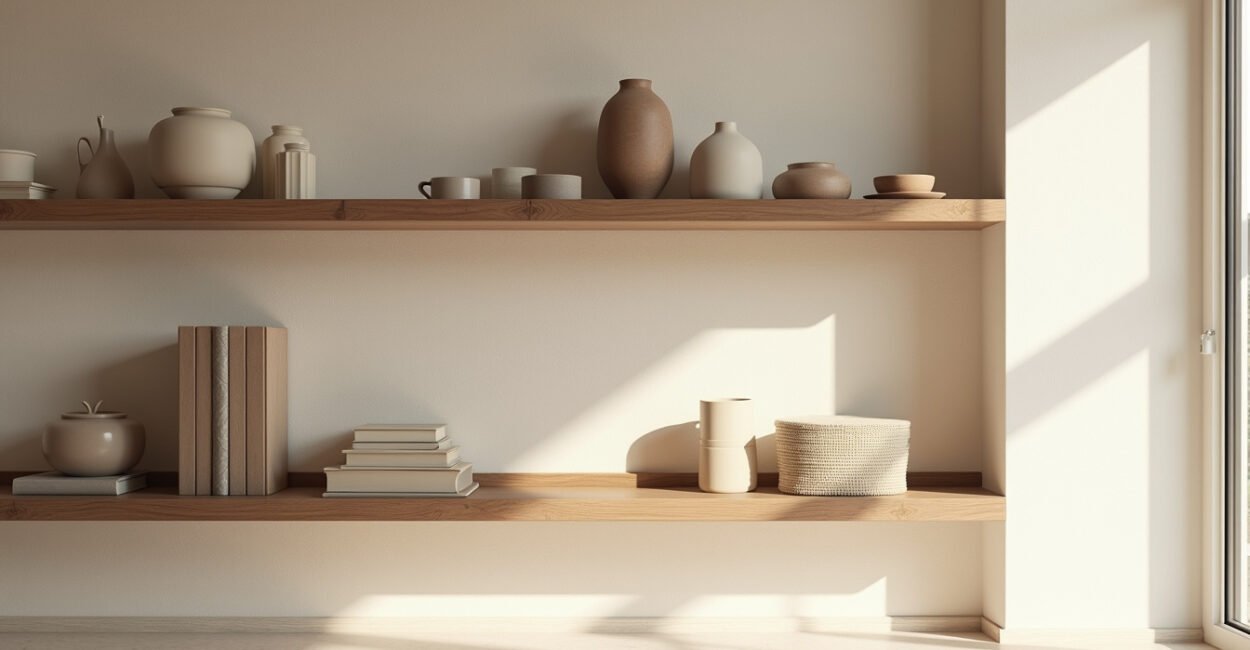
Open shelves make every object a design decision. Unlike closed cabinets that let clutter hide, exposed shelving rewards restraint. The visual economy—choosing what stays and what goes—creates calm the way a single art piece anchors a room. That’s why people switch: it’s not storage, it’s curation. A few curated mugs, a stack of plates, and one plant read cleaner than a crowded buffet of mismatched items. The result is intentionality, not minimalism for its own sake.
The Fresh Styling Rules Driving the Buzz
Rule 1: Limit to three material types per shelf wall. Rule 2: group items in odds (three or five). Rule 3: leave negative space like you’d leave breathing room in a photo. These feel like arbitrary rules until you see the room settle. The surprising part: texture beats color. Matte ceramics, wood grain, and a single metal accent read cohesive even if your color palette is modest. Small changes, big calm.

Quick Swaps That Stop Clutter Immediately
Swap mismatched objects for uniform containers. Replace a jumble of takeout boxes with two matching woven baskets. Trade old spice bottles for identical glass jars with labels. These swaps buy you invisible discipline—things still live on the shelf, but the eye can rest. A short checklist to try now:
- Match containers (jars, baskets, tins)
- Consolidate duplicates
- Designate a single “everyday” zone for items you use daily
What People Always Get Wrong (and How to Avoid It)
Big mistake: treating open shelves like overflow storage. The temptation is to shove everything you don’t want in drawers onto shelves. That creates visual noise and stress. Instead, decide the shelf’s job—display, daily use, or mood—and stick to it. Common errors:
- Overfilling shelves because “there’s empty space”
- Mixing too many colors and patterns
- Ignoring scale—small objects lost on wide shelves
Fix: remove 30% of items, then edit in layers: base items, groupings, and one per-shelf focal point.
A Surprising Before/after That Explains the Magic
Before: a closed cabinet cramped with mismatched dishes; after: the same dishes edited and arranged on open wood shelves, the kitchen feels twice as large. A client of mine cut items in half and added a single row of plants; guests noticed the room’s “air” before the new paint. The comparison isn’t just prettier photos—it’s how your brain interprets space when items are chosen rather than hidden. That cognitive change is the real design upgrade.
Affordable Pieces That Give the Look Today
You don’t need custom carpentry to get the effect. Key affordable buys: floating shelves in a warm wood tone, matching glass jars for pantry goods, and a few woven baskets. I recommend checking mainstream retailers for clean floating brackets and secondhand shops for solid wood planks that can be sanded and stained. Even a $40 shelf plus smart styling will outperform expensive shelving that’s cluttered.
For inspiration and practical how-tos, see guidance from design editors at Architectural Digest and material studies at Harvard Graduate School of Design.
How to Keep Open Shelves from Becoming a Maintenance Trap
Maintenance is editing with a schedule, not obsessive cleaning. Set a 10-minute weekly sweep to remove anything that doesn’t belong and to reposition one item. Use breathable containers for pantry goods and rotate decor seasonally so you’re never tempted to add more. If dust is your enemy, keep everyday items easy to grab and put away; reserve delicate or decorative pieces higher up. This turns upkeep into a small habit, not a full weekend project.
Open shelves are a test: they show what you value. That can be unsettling, but it forces better choices—and rooms that actually feel lived in, not just staged. If you treat them as curated spaces rather than functional dumping grounds, they’ll give you more calm than any closed-door cabinet ever could.
How Do I Start Styling Open Shelves If I’m Terrified of Showing Everything?
Begin small: pick one short wall or a single shelf and apply the 30% rule—remove almost a third of what lives there. Create three zones on that shelf: a functional zone (mug rack or spices), a decorative zone (one artwork or plant), and negative space. Use uniform containers for functional items so the eye reads them as one block. Over a few weekends, practice editing rather than hiding; the discipline is the point, and it’s a surprisingly forgiving process.
Will Open Shelves Make My Kitchen Dirtier or Increase Pests?
Open shelves don’t inherently attract pests—poor storage does. Glass jars with airtight lids for pantry goods, sealed canisters for flour and sugar, and routine cleaning reduce risk substantially. Dust is more visible, but it’s mostly cosmetic and manageable with a quick weekly wipe. If you live in a humid or pest-prone area, prioritize sealed containers and keep grains in the fridge if needed. The visual payoff of open shelves is worth slightly more upkeep, but it’s controlled upkeep.
Can Open Shelves Work in Small Apartments Without Looking Crowded?
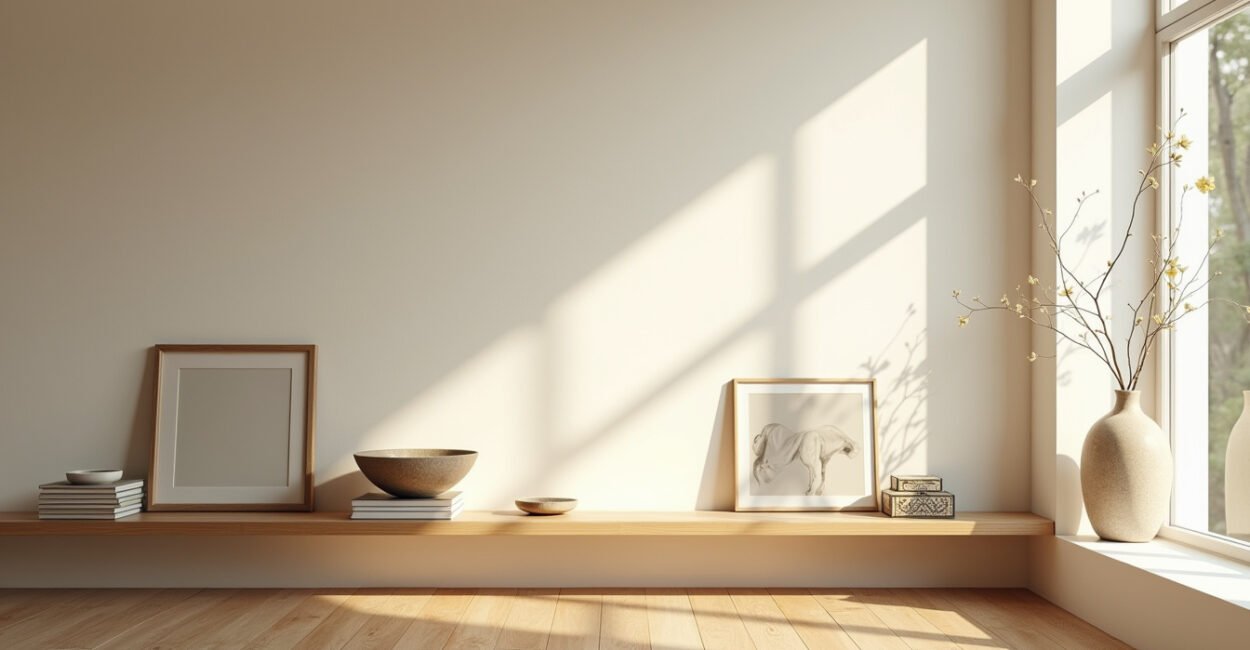
Yes. In small spaces, open shelves can create vertical interest and free up floor area. Keep shelves shallow (8–10 inches) to prevent a bulky feel and limit items per shelf to three groupings max. Use light-colored materials or thin metal brackets to avoid visual weight. Negative space is your best tool: allow breathing room above and between objects so each piece reads clearly. Done right, open shelving can make a small room feel more expansive, not cluttered.
What Are the Best Materials for Durable, Low-maintenance Open Shelving?
Choose solid wood or veneered plywood finished with a matte seal for warmth and durability; they tolerate daily use better than soft MDF. Metal brackets with a powder coat resist humidity in kitchens and bathrooms. Glass shelves are sleek but show fingerprints and require more cleaning. For budget options, look for solid pine planks you can stain and seal yourself—this balances cost and longevity. Properly finished wood often outperforms cheap particleboard over time.
How Do I Balance Function and Style When I Need Both?
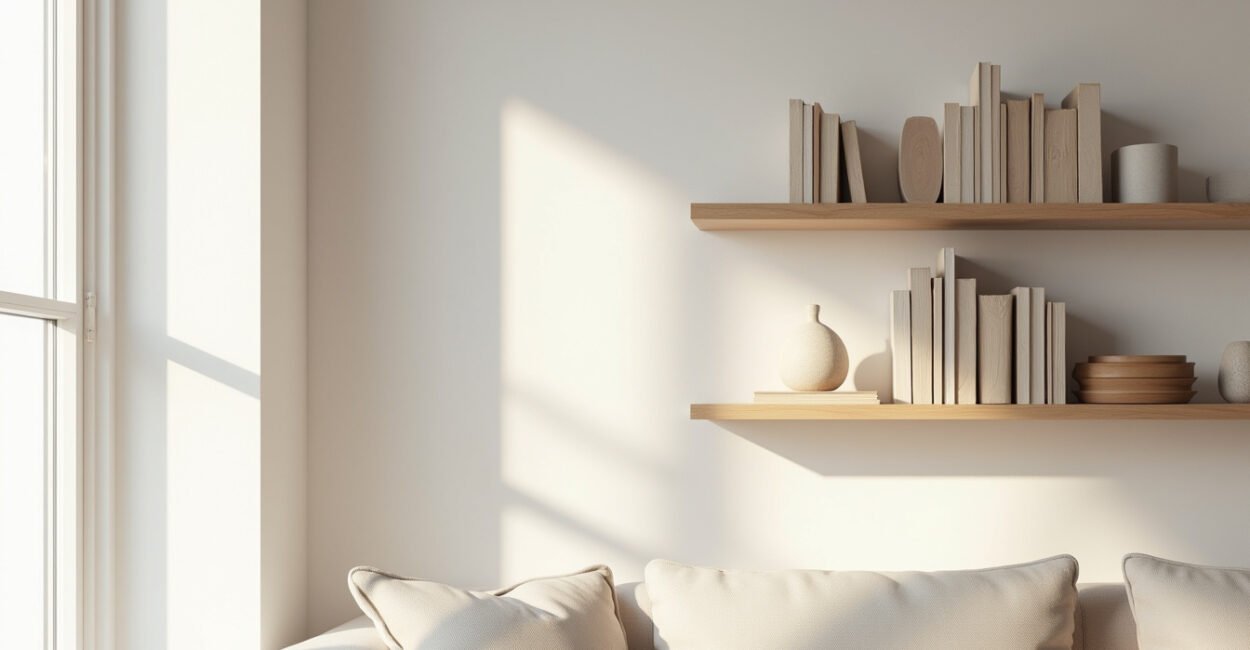
Start by zoning by function—daily use items at eye level, decorative or fragile pieces higher up. Use consistent containers for functional items so they read as intentional design rather than clutter. Anchor the arrangement with one or two tactile elements (a plant or woven basket) to add warmth. Think in layers: base layer (plates or books), middle layer (grouped objects), and top layer (one focal object). This system solves both practicality and visual cohesion without sacrificing either.