Skip to content

Lights flicker, the heater hums all night, and your electric bill arrives like a small betrayal. Smart energy monitoring is the gadget-powered stopgap that makes that betrayal visible in real time — which appliances are cash leaks, which behaviors cost you, and where to cut without freezing or sweating. In the next scrollable minutes you’ll see which apps and hardware actually save money, how they hook up to your home, and what return on investment you can realistically expect.
The Single Metric That Pays for the Whole System
Energy visibility converts into decisions—and decisions convert into dollars. The first time you see a real-time watt graph for your house, you stop guessing. Instead of “the heater seems expensive,” you get “the heater uses 3.2 kW for two hours after midnight, costing $0.90 per night.” That clarity forces low-friction changes: schedule shifts, smarter thermostat rules, or swapping a single appliance. Real customers report 10–25% savings after three months when they act on live data.
Which Devices Actually Track Consumption in Real Time (and Which Pretend)
Not all monitors are equal: clamp meters, whole-home CT systems, and smart plugs each solve different problems.
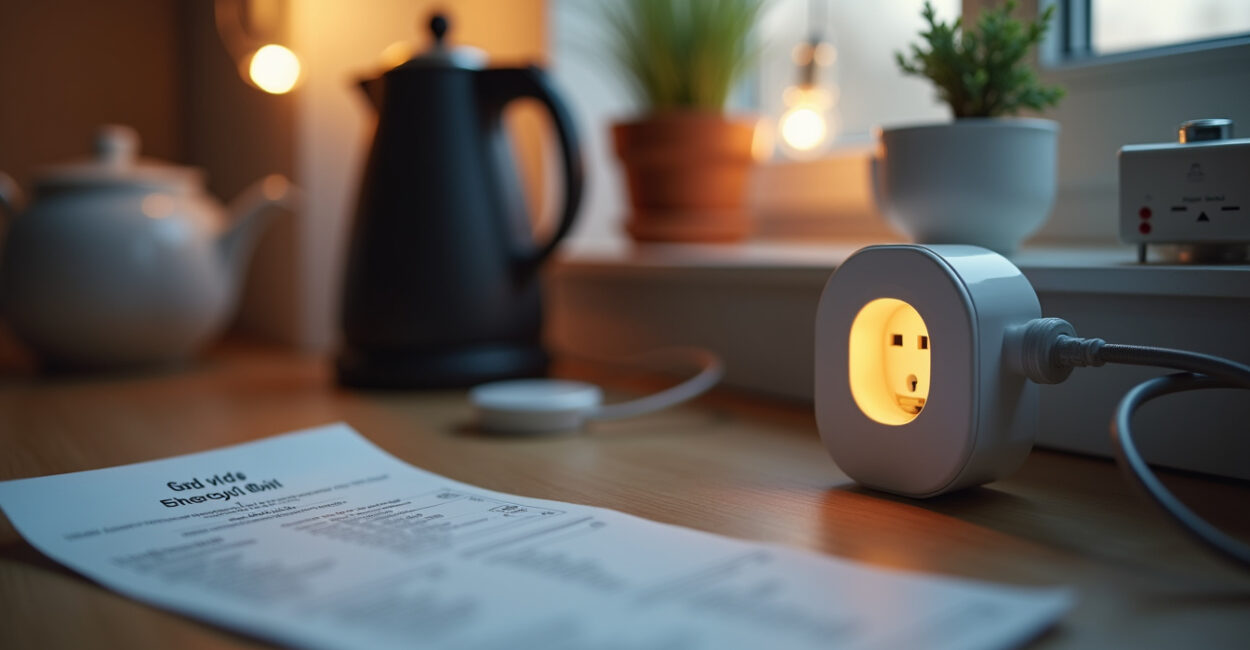
- Smart plugs (TP-Link Kasa, Wemo) — great for single-device tracking and automation.
- Clamp meters (Fluke, Etekcity) — portable and precise for spot checks.
- Whole-home CT systems (Sense, Emporia Vue) — continuous, circuit-level breakdowns and appliance-detection features.
Expectation vs. reality: some cheap “whole-home” sellers only estimate based on a single sensor; reputable systems use multiple CT clamps and machine learning to identify loads. If you want accuracy good enough to change behavior, choose a CT-based system or high-quality smart plugs for targeted loads.

How to Connect Everything Without Turning Your Breaker Box Into a Mess
Installation is 30% hardware, 70% wiring patience (and a good manual). Whole-home CT installs often require turning off the main breaker and placing clamps around service conductors—this is a job for an electrician if you’re not comfortable. Smart plugs are plug-and-play. Bridging everything: most modern systems use Wi‑Fi or a dedicated hub and integrate with Home Assistant, Alexa, or Google Home. Tip: map circuits before installation so the app’s circuit names match reality.
Apps That Turn Raw Watts Into Actionable Wins
Data is useless until the app translates it into a simple action. Look for apps that offer: live dashboards, historical comparisons, alerting (e.g., spike detection), and integrations with thermostats or smart plugs. Standouts include Sense (appliance detection), Emporia (budgeting and EV charging insights), and Home Assistant (custom automations). Use apps to create rules: turn off water heater booster during peak price windows or delay EV charging until overnight low rates.

Real-world ROI: How Long Before the System Pays for Itself?
Typical payback is 6–18 months depending on household behavior and equipment chosen. Quick math: a $300 smart-plug-plus-app setup that saves $25/month pays back in 12 months. A $500–$1,000 whole-home system that enables major schedule changes or appliance fixes can pay back in 6–12 months if it reduces heating/cooling or EV charging costs. Include avoided repairs (an appliance running abnormally) and time saved from manual auditing as part of your ROI—those are often undercounted benefits.
Common Mistakes People Make (and How to Avoid Them)
Biggest trap: buy hardware first, plan second.
- Assuming “real-time” equals “accurate” — verify measurement method (CT vs. estimation).
- Installing everything without labeling circuits — you’ll regret it when the app shows “Unknown 3.”
- Expecting instant 30% savings — behavior change takes nudges and automation.
- Neglecting integrations — a smart energy monitor is useless if it can’t switch a smart plug or thermostat.
One Surprising Comparison: Before/after a Simple Change
Replacing one fridge vs. behavior change: which saves more? A three-year-old inefficient fridge might use 500 kWh/year — replacing it reduces load continuously. But in a house where the real issue was a forgotten second fridge in the garage, simply unplugging it at night dropped consumption by 200 kWh/year at zero cost. The takeaway: hardware upgrades win long-term, but behavioral fixes and targeted automation are cheaper, faster, and often yield comparable short-term savings.
Smart energy monitoring isn’t a magic switch; it’s a visibility tool that forces better choices. Pick the right hardware for the problem you actually have, connect it clearly, and let simple automations do the heavy lifting. Your future self — and your bank account — will thank you.
Want third-party validation? See appliance-efficiency data from the U.S. Department of Energy and behavioral energy studies at major universities for how visibility drives reductions: U.S. Department of Energy and behavioral energy research.
FAQ
How Accurate Are Whole-home Monitors Compared to Utility Meters?
Whole-home monitors that use CT clamps can be quite accurate—often within 1–3% of a utility meter for total household usage—provided they’re installed correctly and calibrated. Accuracy drops when systems rely on single-point estimates or poor-quality sensors. For circuit-level precision, multiple clamps and a reputable vendor’s appliance-detection algorithms improve results. If you need billing-grade accuracy for dispute resolution, your utility’s meter remains the authoritative source; monitors are best for actionable trends and device-level insights.
Can Smart Energy Monitoring Actually Detect a Failing Appliance?
Yes. Many systems flag abnormal usage patterns: a heat pump that runs longer than usual, a fridge cycling more frequently, or a water heater drawing continuous power. These anomalies often show up as increased run time or higher peak power. Early detection can prevent costly breakdowns and reduce wasted energy. The monitor won’t fix the unit, but by catching deviations early you can schedule maintenance before efficiency drops further or a component fails completely.
Is Professional Installation Necessary for Whole-home Systems?
Professional installation is recommended for whole-home CT systems because the service panel involves high voltage and requires turning off the main breaker. An electrician ensures clamps are placed safely around the correct conductors and that neutral and phase issues don’t skew measurements. For renters or those uncomfortable with electrical panels, smart plugs and clamp meters are safer DIY alternatives that still provide meaningful insights without panel work.
Which is Better for Cost Savings: Smart Plugs or Whole-home Systems?
Both have roles. Smart plugs are inexpensive, quick to deploy, and perfect for targeting high-consumption devices like space heaters or supplementary fridges—great for immediate wins. Whole-home systems provide a continuous, holistic view and can find hidden drains you didn’t know existed, enabling broader optimizations and automation. If budget allows, starting with targeted smart plugs and later adding a whole-home monitor yields a layered approach that balances quick payback with deep insight.
How Much Data Do These Systems Store and Are There Privacy Concerns?
Storage varies by vendor: some retain detailed consumption histories on cloud servers, while others offer local-only options. Detailed data can reveal occupancy patterns (when you’re home, when devices run), which raises privacy concerns if shared insecurely. Choose vendors with clear privacy policies, end-to-end encryption, and options to store data locally or delete it. If privacy matters, prefer platforms that integrate with local home automation systems like Home Assistant or offer robust data controls.