Skip to content

Small apartments punish clutter, but they reward smart reuse. The best budget-friendly upcycled decor projects for small apartments do two things at once: they add style and solve a storage, lighting, or surface problem without taking up more room.
If you have ever looked at a stack of jars, an old chair, or a shipping box and thought, “that could be useful,” you already understand the logic here. Upcycling is the practice of turning an existing object into something more functional or more attractive, and in compact homes that matters because every object has to earn its footprint. This article focuses on fast projects you can finish in a day, with a clear eye on cost, scale, and what actually works in tight layouts.
O Que Você Precisa Saber
- In a small apartment, the best upcycled decor is usually dual-purpose: storage that looks good, lighting that saves surface space, or wall decor that also organizes.
- The biggest mistake is using oversized materials; visual lightness matters more than decorative complexity when square footage is limited.
- Neutral paint, removable adhesive hardware, and consistent finishes make recycled pieces look curated instead of random.
- One-day projects work best when they start with items you already own: glass jars, picture frames, crates, stools, and fabric scraps.
- In practice, the project that looks cheapest is not always the one with the lowest material cost; it is the one that avoids making the room feel crowded.
Budget-Friendly Upcycled Decor Projects for Small Apartments That Work in Real Life
The technical idea behind upcycling is straightforward: you preserve the structure of an object and change its function, finish, or context. In plain English, that means you do not need a full DIY workshop to make a room feel intentional. You need a few repeatable moves that fit a studio, one-bedroom, or micro-apartment without swallowing the room.
In small spaces, the winning projects are the ones that behave like furniture and decor at the same time. A wall-mounted crate shelf stores mail and perfumes. A thrifted frame becomes a jewelry board. A clean-lined jar cluster becomes kitchen storage that reads as design instead of “stuff.”
In a small apartment, good upcycling is less about making something new and more about making an object do one extra job without looking busy.
Choose Pieces That Are Visually Light
Transparent glass, open frames, narrow legs, and wall-mounted formats usually outperform bulky objects because they reduce visual weight. That is why a slim shelf made from reclaimed wood can look better than a heavy console table in a tight living room. The room feels larger when you leave floor area open and keep edges simple.
Start with What Already Exists
Glass pasta jars, candle jars, cardboard tubes, old belts, and fruit crates are some of the most reliable starting points. They are easy to clean, easy to cut or paint, and easy to place on shelves, counters, or walls. The best projects often begin not with a craft store run, but with a five-minute scan of what is already in the apartment.
Wall-Mounted Storage That Doubles as Decor
When floor space is scarce, walls become your best asset. This is where upcycled pieces earn their keep: they lift items off surfaces, reduce visual clutter, and create a finished look without requiring large furniture. The key is to keep the system shallow and aligned.
Framed Wire Grid for Notes and Accessories
An old frame plus hardware cloth or thin wire mesh can become a compact command center for keys, receipts, and lightweight accessories. Paint the frame matte black, white, or one muted accent color, then mount it near the entry. Add a small clip basket or two hooks if you need extra function.
Crate Shelf for Entryways and Kitchens
A single wood crate mounted horizontally works well as a shelf for mail, mugs, spice jars, or candles. Sand the edges, seal the surface, and use anchors rated for the wall type. If the wood is rough, keep the finish understated; a too-shiny stain often makes recycled wood look out of place in a compact apartment.
- Use one anchor point per light item and two or more for anything that carries weight.
- Keep the depth shallow, ideally under 8 to 10 inches for tight corridors.
- Group similar objects together so the wall reads as organized, not crowded.
For safer mounting guidance, the U.S. Consumer Product Safety Commission is a useful reference on household safety practices, especially when you are hanging anything above walking height. If you are mounting into plaster, drywall, or masonry, the wall type matters more than the decor idea itself.

Glass Jar and Tin Can Projects That Replace Store-Bought Organizers
Jars and cans are easy wins because they solve a real apartment problem: loose objects accumulate fast in kitchens, bathrooms, and workspaces. The point is not to hide them completely. The point is to standardize them so they look purposeful on a shelf or counter.
Bathroom Canisters with a Clean Finish
Remove labels, wrap the outside with jute, paint, or adhesive vinyl, and use the containers for cotton pads, swabs, or hair ties. If you want a more polished result, keep the set monochrome. Mixed finishes can look playful, but they also create visual noise in tiny bathrooms where every surface is visible.
Countertop Utensil Holder from a Large Jar
A large sauce jar or storage jar becomes a utensil holder with almost no effort. A coat of chalk paint or frosted glass spray can soften the look, but the real trick is consistency: pair it with one or two other containers that share the same color family. One jar is an object; three jars are a system.
Consistency is what makes recycled containers look designed, not improvised: matching finish, similar height, and a single use per cluster.
If you want to understand why reuse is more than a craft trend, the U.S. Environmental Protection Agency’s recycling guidance is a solid public resource. Upcycling reduces waste by extending an item’s life, but in apartment decor the bigger benefit is practical: fewer purchases, less storage, and less visual clutter.
Textiles and Soft Surfaces That Change the Room Fast
Fabric is one of the fastest ways to change a small apartment because it adds color and texture without adding bulk. An old curtain panel, shirt, tablecloth, or scarf can become a cushion cover, curtain tieback, or framed textile art. You get impact without introducing another piece of furniture.
Pillow Covers from Old Shirts or Curtains
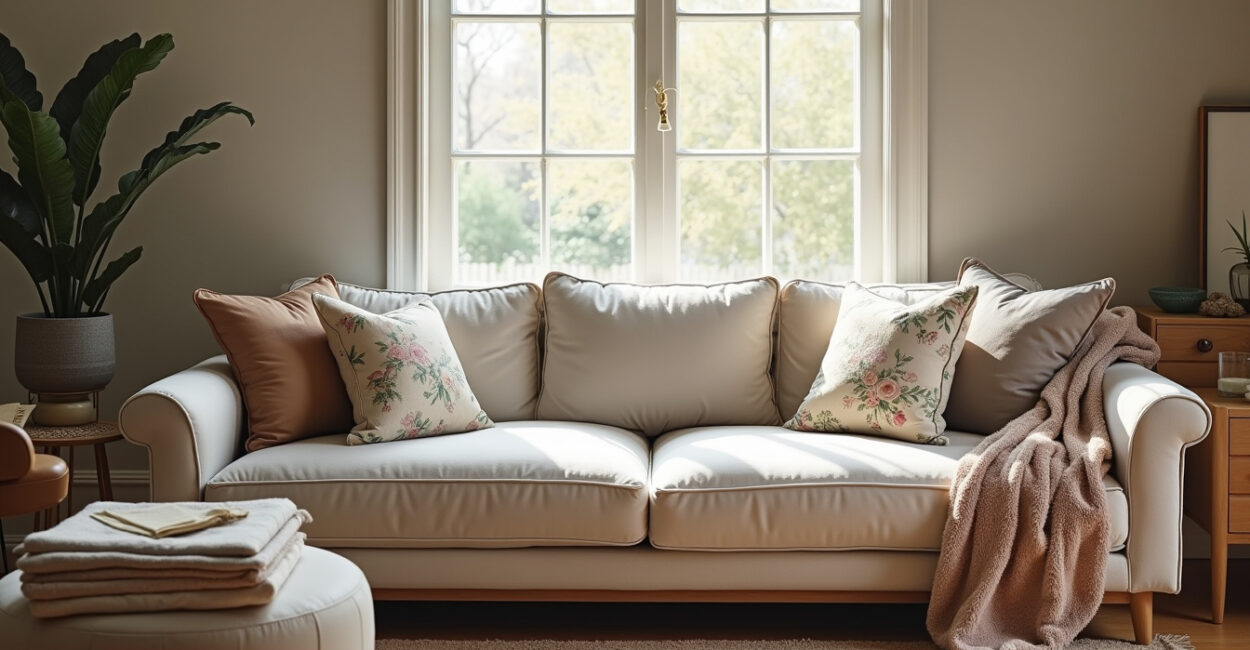
Button-down shirts with good fabric can become pillow covers with minimal sewing. Curtain offcuts work too, especially if the print is already refined. Keep the scale of the pattern in mind: large prints can overwhelm a small sofa, while smaller repeats often feel calmer in compact rooms.
Framed Fabric Panel as Wall Art
A thrifted frame and a piece of textile you already like can create art that feels custom. Pull the fabric taut over cardboard or foam board, then secure it inside the frame. This works especially well above a desk or reading chair because it adds texture without adding depth.
Here is a practical example. A renter in a 430-square-foot apartment used a worn linen tablecloth, cut it into two pillow covers, and hung the leftovers in a secondhand frame above the bed. The room looked more finished in one afternoon, and she did not buy a single decorative accessory. The result worked because the pieces matched the apartment’s scale and color palette.
Thrifted Furniture Updates That Feel Intentional, Not Homemade
Not every thrift find deserves a makeover. The pieces worth upcycling are the ones with good bones: stable frames, straight lines, and a size that actually fits the room. In small apartments, one compact accent chair or side table can matter more than several decorative objects.
Repainted Side Table with a Matte Finish
A small wooden side table can be transformed with sanding, primer, and a matte paint finish. Matte finishes tend to read more modern in tiny spaces because they avoid the glare that glossy surfaces can create under strong indoor light. If the room already has a lot of shine, a matte piece adds balance.
Chair Refinish with a Seat Swap
Old dining chairs often need nothing more than tightening, a new seat cover, and a fresh coat of paint or stain. If the seat fabric is dated but the frame is solid, replacing the upholstery gives you a cleaner result than buying a new chair of lower quality.
| Project Type | Best Use | Space Benefit | Typical Cost |
|---|---|---|---|
| Wall-mounted crate shelf | Entry, kitchen | Frees floor space | Low |
| Jar organizers | Bathroom, countertop | Reduces loose clutter | Very low |
| Fabric wall art | Bedroom, desk area | Adds texture without bulk | Low |
| Painted side table | Living room, bedside | Improves function and style | Low to moderate |
One-Day Project Plan for Fast Results
Speed matters because unfinished projects become clutter. If you want visible improvement in a single day, limit yourself to one category: storage, wall decor, or soft furnishings. Mixing too many project types in one weekend usually creates a pile of half-finished parts and a bigger mess than you started with.
A Simple Timeline That Actually Works
- Morning: Collect 3 to 5 items and clean them thoroughly.
- Late morning: Measure the space before cutting, drilling, or painting.
- Afternoon: Paint, assemble, or wrap the pieces.
- Evening: Install or place the items and remove anything that now feels redundant.
That last step matters. Small apartments usually need subtraction as much as decoration. After one project goes in, something else should go out, even if it is only a duplicate basket, a spare frame, or a decorative object that no longer serves the room.
Where These Projects Fail
Not every upcycled piece belongs in every apartment. High-humidity bathrooms can warp unfinished wood. Narrow hallways can make protruding wall shelves impractical. And if the apartment already has busy flooring or bold cabinets, adding too many recycled finishes can make the room feel fragmented. This is where good judgment matters more than enthusiasm.
The fastest way to make a small apartment feel curated is to repeat finishes on purpose; the fastest way to make it feel crowded is to treat every object as a separate idea.
How to Keep the Look Curated over Time
The real challenge is not making one attractive project. It is keeping the apartment coherent after the first few successes. A curated space usually relies on repeated cues: two or three colors, a small set of materials, and pieces that share a similar level of visual weight. That is the difference between a home that feels edited and one that feels pieced together.
Use a simple filter before you keep or display anything: does it store, support, or soften the room? If the answer is no, the object should probably leave the visible zone. For layout and space-planning ideas, the space-saving coverage in Architectural Digest often shows how pros make compact rooms feel intentional without filling every corner.
The practical rule: in a small apartment, upcycled decor should be useful enough to justify its presence and quiet enough to let the room breathe.
Próximos Passos
Pick one surface, one wall, or one category of clutter and build from there. The smartest approach is to start with a project that solves a problem you already feel every day: a messy entry table, a crowded counter, or a blank wall that could carry storage. Once that first piece works, repeat the same finish and material once or twice so the apartment starts to look designed on purpose.
If you want the strongest result, test one project this week, then evaluate it after three days of normal use. That is the real standard for apartment decor: not whether it looks good in a photo, but whether it still looks good when life happens around it.
FAQ
What Makes an Upcycled Decor Project Good for a Small Apartment?
A good project solves a practical problem while staying visually light. In a small apartment, that usually means wall-mounted storage, compact organizers, or decor that also serves a function. The best pieces reduce clutter instead of adding more objects to manage. If a project needs a lot of floor space, special tools, or constant upkeep, it is usually a poor fit for compact living.
How Much Should I Spend on a Budget Upcycling Project?
For most one-day projects, the material cost can stay very low if you start with items you already own. Paint, adhesive hooks, sandpaper, and basic hardware often cost less than buying new decor, especially for jars, frames, and shelves. The real budget saver is reuse, not bargain hunting. If a project requires a long shopping list, it stops being a true budget upcycle and starts becoming a regular DIY build.
What Items Are Easiest to Upcycle for Apartment Decor?
Glass jars, picture frames, crates, old stools, tins, and fabric scraps are the easiest because they are versatile and easy to clean. They also fit well in tight spaces, which makes them useful for kitchens, bathrooms, and entryways. Choose items with simple shapes and solid structure. Those are easier to repaint, mount, or repurpose without creating a bulky result that overwhelms the room.
How Do I Make Upcycled Decor Look Intentional Instead of Messy?
Use a small number of finishes and repeat them. A matte black hook, a white frame, and one natural wood tone can look cohesive even if the items came from different places. Avoid mixing too many colors, textures, or project styles in one room. In practice, intentional decor comes from editing: keeping the pieces that relate to each other and removing the ones that break the visual rhythm.
Are Upcycled Projects Safe for Renters?
Many are, but the safety depends on how you install them and what materials you use. Removable hooks, freestanding pieces, and lightweight wall decor are usually renter-friendly. Heavy shelves, drilled mounts, or unfinished wood in damp spaces need more caution. Always check your lease, use proper anchors, and avoid anything that could damage walls, block exits, or create moisture problems in bathrooms and kitchens.