Skip to content
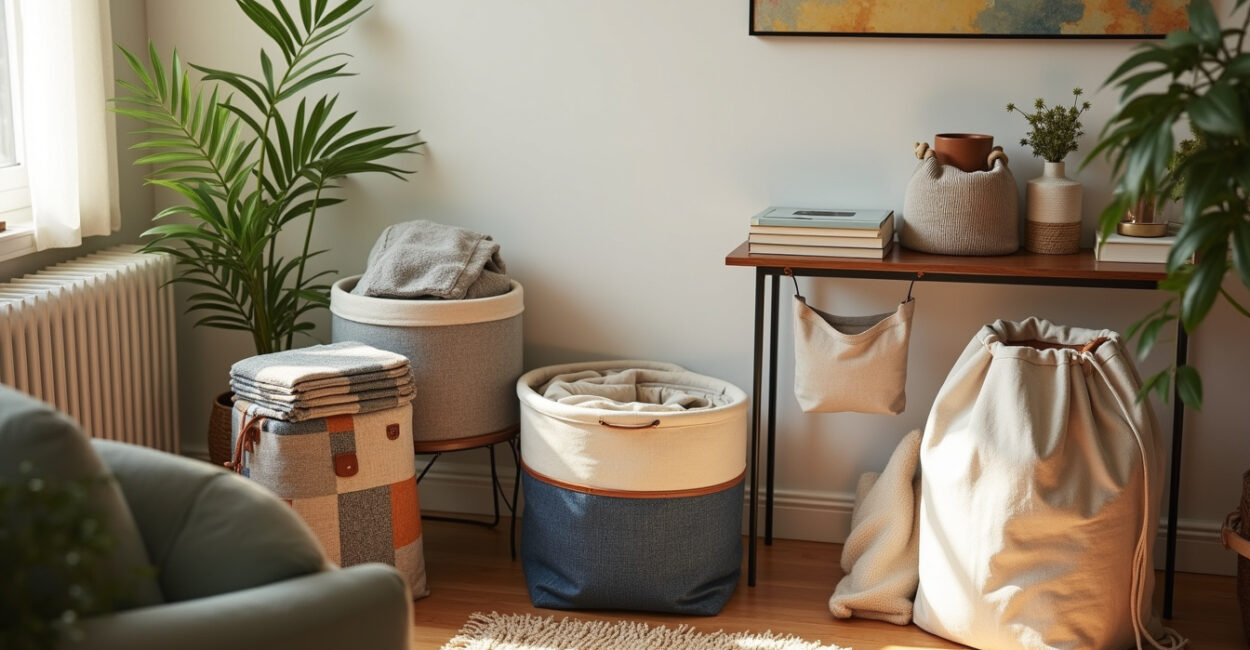
These repurposed fabric storage ideas for small homes solve the real problem: clutter that needs to work hard and still look good.
If your space is tight, the difference between “messy” and “edited” is often one well-made basket, bin, or wrap. The trick is choosing fabric-based storage that stays upright, keeps its shape, and doesn’t sag after a week of use.
That’s what makes these ideas feel elevated. They’re not just cute containers. They’re practical pieces with the right lining, structure, and closure so they keep doing their job long after the first photo.
Why Repurposed Fabric Storage Ideas for Small Homes Work So Well
Technically, repurposed fabric storage is any container, bin, pouch, or organizer made from reused textiles and adapted for household storage. In plain English: you’re turning fabric that already exists into something that hides clutter and earns its place.
For small homes, that matters because fabric storage tends to be lighter than wood, softer than plastic, and easier to squeeze into odd corners. It also brings warmth to rooms that can start to feel hard-edged fast. The best repurposed fabric storage ideas for small homes do one thing especially well: they make storage feel like part of the decor, not an apology for not having a closet.
The real win is not just saving space — it’s making the storage calm enough that you actually keep using it.
1. Denim Bins That Hold Their Shape Without Looking Bulky
Old jeans make surprisingly sturdy storage bins. The denim gives them body, while the seams and waistbands act like built-in reinforcement. That means less slouching, less collapsing, and fewer bins that turn into sad fabric puddles.
To keep them neat, line the inside with interfacing or a second fabric layer. If you want them to sit properly on a shelf, add a rigid base from cardboard wrapped in scrap cotton or canvas. This is one of the repurposed fabric storage ideas for small homes that feels most durable because denim already brings structure.
- Best for: scarves, cables, toys, toiletries
- What keeps it sturdy: thick fabric, boxed corners, reinforced base
- What keeps it useful: open top or fold-over edge for easy grabbing
And yes, denim works better than you’d think against visual clutter. It reads tailored instead of crafty. The next idea takes that same idea of structure, but makes it softer and more flexible.

2. Linen Drawer Dividers Made from Old Tablecloths
Old tablecloths and linen napkins can become drawer dividers that feel far more polished than store-bought plastic inserts. Cut them into long bands, fold the edges inward, and stitch simple channels so the dividers hold their shape. Linen has enough body to stay crisp, especially if you double it.
In practice, what happens is that your drawer stops becoming a single graveyard of loose items. Socks stay sorted. Chargers stop tangling. Cosmetic tubes stop rolling under everything else. That’s why repurposed fabric storage ideas for small homes are so effective: they reduce friction every time you open a drawer.
Small homes don’t need more storage. They need better friction.
3. Pillowcase Hanging Bins for the Back of a Door
A pillowcase with a structured bottom can become a hanging bin for doors, laundry corners, or closet backs. The trick is not the pillowcase itself; it’s the support. Add a wooden dowel, stiff top seam, and stitched pockets so the whole piece hangs straight instead of twisting.
This version is perfect for renters because it uses vertical space without committing to hardware-heavy solutions. I’ve seen this work especially well in studio apartments where every square inch matters. The lower pocket can hold magazines, the middle one toiletries, and the top one random items that usually end up on counters.
It also proves a useful point: repurposed fabric storage ideas for small homes are strongest when they borrow structure from something else. Without that, fabric tends to droop. With it, the whole thing feels intentional.
4. Quilt-Scrap Caddies That Make Open Shelving Look Finished
Open shelving can look messy fast. Quilt-scrap caddies fix that by turning exposed piles into grouped, attractive blocks of color. Use layered cotton scraps, then add batting or interfacing to help each caddy stand up on its own. If the sides are too flimsy, the whole piece loses its job by week two.
Here’s the surprise: these are often more functional than rigid bins because they collapse when empty. That makes them ideal for seasonal storage or occasional use. They’re also one of the best repurposed fabric storage ideas for small homes if you want the room to feel softer, not busier.
Before: a shelf full of loose objects. After: three fabric blocks that look like design choices.
5. T-Shirt Rope Baskets That Hide the Mess and the Noise
Old T-shirts can be cut into strips and braided or coiled into rope baskets. If you stitch tightly as you build, the walls become strong enough for blankets, pet supplies, or folded accessories. Cotton jersey gives you a little stretch, which helps during construction, but it needs tight stitching to stay neat.
The common mistake is making the basket too loose. That’s when it wobbles and leans. The fix is simple: use thicker strips, keep the stitches close, and stop before the basket gets too tall for the base. This is one of those repurposed fabric storage ideas for small homes that looks casual but needs discipline underneath.
Good storage looks relaxed. Great storage is engineered.
According to the U.S. EPA’s recycling guidance, reuse and repurpose are key parts of extending the life of textiles before they become waste. And the National Park Service’s sustainability resources also emphasize reuse as a practical way to reduce what gets thrown away. That’s the hidden value here: you’re not just organizing, you’re slowing waste.
6. Curtain-Scrap Closet Cubes with Clean Edges
Heavy curtain fabric is one of the best materials for closet cubes because it already has weight and drape. Fold it around a simple frame or rigid insert, stitch the corners, and finish the edges with bias tape or hem tape so the cube doesn’t unravel. Clean edges matter more than decoration here.
These cubes are ideal for stacked closets where you want uniformity without buying a matching set. They’re also a smart fix when your storage needs keep changing. One week they hold winter hats, the next they hold guest towels. That flexibility is why repurposed fabric storage ideas for small homes can outperform prettier but less adaptable alternatives.
Uniformity is underrated in small spaces. It makes a room feel larger before you add a single inch.
7. Fabric-Wrapped Lidded Boxes That Feel More Expensive Than They Are
If you have old shoeboxes or rigid gift boxes, wrap them in upholstery scraps, upholstery-weight canvas, or even thrifted drapery fabric. The box gives you structure; the fabric gives you style. Add a fabric pull tab or ribbon loop on the lid, and it starts to feel custom.
This is the most “elevated” option in the group because it hides the original object completely. The key is glueing or stitching the corners tightly so they don’t peel and using a lid that fits snugly. Loose lids make the whole piece feel temporary. Tight lids make it look finished.
That’s the final lesson in repurposed fabric storage ideas for small homes: the details do the heavy lifting. A neat edge, a reinforced base, a lid that sits flat — those are the things people notice, even if they can’t name them.
What to Avoid If You Want These Pieces to Last
Most fabric storage fails for the same few reasons: the fabric is too thin, the base is too soft, or the seams aren’t reinforced. A pretty bin that collapses under a stack of sweaters isn’t storage; it’s a future mess.
- Don’t skip interfacing when the piece needs shape.
- Don’t use slippery fabric for bins that must stand upright.
- Don’t make handles without bar-tacking or extra stitching.
- Don’t assume glue alone will hold weight-bearing seams.
There’s also a trust issue here. A storage piece that looks fragile gets ignored. A piece that feels solid gets used daily. That difference is the whole game.
If you build for structure first and style second, the result usually looks better anyway.
The best storage doesn’t announce itself. It just quietly makes your home feel like it has room to breathe.
FAQ
What Fabrics Are Best for Repurposed Storage Projects?
Thicker fabrics usually work best: denim, canvas, upholstery scraps, curtain fabric, and tightly woven cotton hold shape better than loose knits. If you want a softer look, you can still use lighter fabric, but pair it with interfacing, batting, or a rigid insert. That extra support is what keeps the storage piece from sagging after a few uses.
How Do I Keep Fabric Storage from Looking Messy?
Focus on shape, not decoration. Straight seams, reinforced corners, and consistent sizing make a much bigger difference than fancy trims. Neutral tones or coordinated scraps also help repurposed fabric storage ideas for small homes feel intentional instead of improvised.
Can I Make Fabric Storage Without Sewing?
Yes, but it works best for lighter-duty pieces. Fabric glue, fusible hem tape, and wrapped boxes can get you close, especially for decorative storage. If the item will hold weight or be opened often, at least a few stitched seams will make it last much longer.
What Keeps a Fabric Bin Sturdy over Time?
A firm base, reinforced seams, and fabric with enough body. If the bottom is weak, the bin will bow no matter how nice the outside looks. Adding interfacing or a removable insert is one of the simplest ways to make repurposed fabric storage ideas for small homes feel reliable day after day.
How Do I Choose the Right Project for a Tiny Space?
Start with the location, not the craft. Door backs, under-shelf space, drawer interiors, and open shelves all call for different shapes. The best choice is the one that fits the space tightly enough to look built-in, but flexibly enough to move when your needs change.