Skip to content
Old fabric can beat new decor on price, texture, and charm — but only if you know where it quietly fails.
Repurposed Fabric Vs. Buying New Decor in 2026: The Real Tradeoff
Here’s the short version: repurposed fabric wins when you want character on a budget, and new decor wins when you need consistency, strength, or zero hassle. That’s the whole fight. Not ideology. Not aesthetics alone. Just cost, durability, and how much risk you want to carry into your living room.
In repurposed fabric versus buying new decor, the surprise is that “used” does not automatically mean “cheap-looking,” and “new” does not automatically mean “better-made.” In 2026, with shipping costs still poking at retail prices and more people mixing vintage with modern interiors, the smartest homes are not choosing one camp. They’re choosing by job.
Think pillow covers, curtains, table runners, slipcovers, wall hangings, chair accents. Some of those jobs forgive flaws. Others expose every weak seam. That difference decides almost everything.
Where Reused Fabric Quietly Saves You Real Money
Price is where repurposed fabric versus buying new decor stops being a debate and becomes math. A thrifted curtain panel, a rescued linen tablecloth, or a leftover upholstery remnant can cost a fraction of a new designer textile. If you only need fabric for a small decorative surface, the savings can be dramatic.
But the real savings are not just at checkout. They show up when you need a one-off solution: a throw pillow for the guest room, a bench cover for a narrow entryway, a seasonal table runner, or a lampshade wrap. New decor often forces you to pay for a full retail system. Reused fabric lets you pay for the exact inches you’ll actually see.
The cheapest decor is often the piece you already have access to. That’s why people who sew, upholster, or DIY regularly tend to see the market differently. They are not buying “fabric”; they are buying usable surface area.
If you want a broader pricing reality check, the U.S. Bureau of Labor Statistics Consumer Price Index is useful for understanding how household goods pricing has moved over time. It won’t tell you what your drape should cost, but it does explain why new home goods keep feeling heavier on the wallet.

Durability: When New Still Has the Upper Hand
Durability is where repurposed fabric versus buying new decor gets honest. Reused fabric can be beautiful, but age leaves fingerprints: thinning fibers, faded dye, stretched weave, tiny tears, mystery stains, and past washing damage you may not notice until it’s too late.
New fabric usually wins when the piece will be handled a lot. Dining chair seats, kid-heavy family sofas, pet zones, and washable curtains near sunlight all punish weak material. If you need predictable abrasion resistance or colorfastness, new still makes sense.
That said, not every new item is built well. Cheap retail decor can look fresh and fail fast. A flimsy imported pillow cover may pill in weeks, while a reclaimed upholstery textile with strong weave can survive years. Age is not the same thing as weakness.
Viability depends on condition, not sentiment. If the fabric frays when you tug it, smells permanently musty, or has hidden damage in the folds, the bargain turns into waste. And once you’ve invested time in cutting and sewing, bad base material gets expensive in a hurry.
Style: Why Reused Fabric Often Feels More Expensive
New decor can be polished. Repurposed fabric can be memorable. Those are not the same thing. A lot of modern interiors look flat because everything is too new, too matched, too clean in the wrong way. Reused fabric solves that by bringing pattern depth, softened color, and the kind of visual irregularity designers spend money trying to fake.
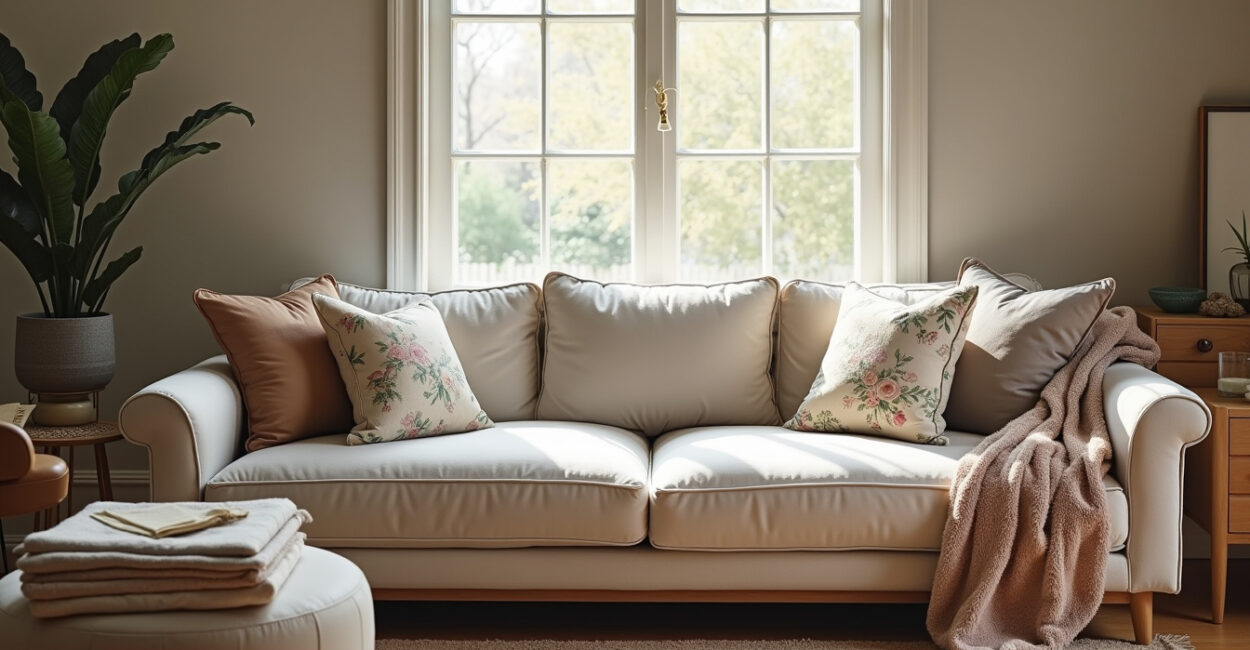
I’ve seen a plain room come alive with one old wool blanket turned into cushion covers. The room didn’t get “more stuff.” It got texture. That is the sneaky advantage of repurposed fabric versus buying new decor: you can create a layered look without buying a showroom package.
Still, new decor makes sense when you need a specific color story or a precise finish. If your room is highly minimalist, hyper-modern, or already visually busy, an old floral curtain or faded damask can feel out of place. Style is not just about beauty. It’s about fit.
The most expensive-looking room is not the most expensive room.
The Hidden Risk: Mismatch, Stains, and the Time Tax
The biggest mistake with repurposed fabric versus buying new decor is thinking money is the only variable. Time has a price tag too. Sorting, washing, deconstructing, measuring, de-smelling, and resewing can eat an entire weekend. If you enjoy the process, that’s part of the value. If you don’t, it becomes labor you never planned to pay.
- Hidden stains that show under bright light
- Uneven fading after the first wash
- Fabric that shrinks after cutting
- Patterns that clash once installed
- Seams that fail because the weave is tired
New decor avoids most of that friction. You buy it, hang it, use it. That speed matters when you’re staging a home, refreshing a rental, or fixing a room before guests arrive. New is often the smarter choice when time is the real budget.
For practical textile care and fiber guidance, the National Park Service’s textile preservation notes offer a useful reminder: older fabrics need careful handling because fiber degradation is real, even when the piece still looks fine at first glance.
What to Buy New, What to Reuse, and What to Never Guess On
This is where the decision gets clean. In repurposed fabric versus buying new decor, reuse tends to win in low-stress, low-wear, high-style projects. New tends to win where performance, hygiene, and uniformity matter more than charm.
| Best for Repurposed Fabric | Best for Buying New |
|---|---|
| Throw pillows | Dining chairs |
| Wall art and textile panels | High-use upholstery |
| Table runners | Sun-exposed curtains |
| Accent drapes | Kids’ and pet zones |
There is also a middle lane. If you find unused deadstock fabric, the line between reused and new gets blurry. That’s why context matters. A bolt of leftover mill fabric can be better than a mass-market new textile, while a worn vintage sheet can be worse than both.
Don’t ask whether the fabric is old or new. Ask whether it can survive the job you’re giving it.
The Smartest 2026 Strategy: Mix, Don’t Pick a Side
The best homes in 2026 are not loyal to a label. They are selective. They pair a reused fabric statement piece with a new base layer, or they buy new for the heavy-duty items and repurpose for the details. That mix gives you cost control without making the room look improvised.
Here’s a small real-world pattern: a homeowner finds a gorgeous old linen drape at a resale shop. It’s too short for the window but perfect for two lumbar pillow covers. She buys new blackout panels for function, then uses the linen for texture. The room ends up looking curated, not assembled from leftovers. That’s the win.
This approach also protects your mistakes. If one reused item fails, the room still works because the critical pieces are new. If every item is new, you may get consistency but lose personality. If every item is reused, you may save money but create maintenance headaches.
That balance is the point. Not purity. Not thrift for its own sake.
So Where the Money, Style, and Sanity Actually Land
Repurposed fabric versus buying new decor is not a moral choice. It’s a design decision with a budget attached. Reused fabric wins when you want lower cost, richer texture, and a look that feels lived-in instead of packaged. New decor wins when you need predictable wear, clean sizing, and less work.
That may sound ordinary, but it changes how you shop. The next time you see a perfect thrifted textile, don’t ask, “Is it old?” Ask, “What job can it do better than new?” That question saves more money than any trend ever will.
The smartest rooms are built by people who know when to rescue beauty and when to buy certainty.
FAQ
Is Repurposed Fabric Always Cheaper Than Buying New Decor?
Not always. The sticker price is usually lower, but the real cost can rise if you need heavy cleaning, repairs, special tools, or extra time to cut and sew it. If the fabric is already in great condition and suits the project, repurposed fabric can be dramatically cheaper. If it needs restoration, new decor may actually be the better bargain.
What Kinds of Decor Work Best with Reused Fabric?
Items with low wear and a big visual payoff are ideal: pillows, runners, lightweight drapes, wall hangings, and accent covers. These pieces let the fabric shine without being abused every day. If you choose a textile with a strong weave and a clean finish, repurposed fabric versus buying new decor often leans heavily in favor of reuse for these smaller jobs.
When Should I Definitely Buy New Instead?
Buy new when the piece must handle frequent contact, strong sunlight, or frequent washing. Dining chair seats, sofa upholstery, children’s rooms, and pet-heavy areas are where durability matters more than thrift. New decor also makes sense if you need exact measurements, uniform color, or a fast install with no surprises.
How Can I Tell If Old Fabric is Still Usable?
Check the weave, edges, and smell before you commit. Hold it up to light for thinning spots, look for permanent stains, and tug gently to see whether seams or fibers split. If the fabric feels brittle, sheds, or shrinks badly after a test wash, skip it. A good-looking piece can still be too weak for real use.
Can Repurposed Fabric Look High-end?
Yes, and that is one of its best advantages. Old linen, wool, jacquard, and well-made cotton often have depth that mass-produced decor lacks. The trick is editing: use the fabric where its texture or pattern can stand out, and pair it with clean, modern elements. That contrast is what makes the room look intentional instead of improvised.