Skip to content

A single empty jar can do more for your home than most people expect. The best repurposed glass jar crafts ideas turn what looks like trash into storage, decor, and giftable pieces that feel intentional instead of homemade in the “unfinished” sense. The trick is not complexity; it is cleanup, proportion, and a few smart finishing choices.
This guide gives you practical glass jar crafts you can actually make, not just admire. You will find beginner-friendly projects for every room, styling methods that make jars look polished, prep and safety checks that matter, and gift ideas that feel thoughtful without requiring special tools. The focus is on useful pieces you can finish in an afternoon and keep using.
In a Nutshell
- Glass jars become better decor when you treat them like containers with design rules, not random leftovers.
- Matte paint, clean labels, twine, and fabric bands create the biggest visual upgrade with the least effort.
- Food jars can safely become kitchen storage, but chipped rims, cracked glass, and weak adhesive are dealbreakers.
- The most useful DIY jar crafts solve a real problem first: clutter, gifting, display, or organization.
- Repurposed jars look most expensive when you repeat one color family across a room instead of mixing everything at once.
Repurposed Glass Jar Crafts Ideas for Decor, Storage, and Gifts
Repurposed glass jar crafts ideas are small projects that turn clean glass jars into functional home items such as vases, organizers, candle holders, and gift containers. The best versions use simple materials, keep the jar’s shape visible, and solve a real need, which is why they often look better than store-bought decor.
What Makes a Jar Worth Reusing
Not every jar deserves a second life. Straight-sided jars with intact lids are the easiest to repurpose because they stack, label, and seal well. Jars with unusual shapes work better as decor than storage, while wide-mouth mason jars are the most forgiving for beginners. In practice, the shape matters more than the brand.
Why Reusing Glass Feels Practical, Not Trendy
Glass is durable, washable, and infinitely reusable when the surface stays intact. The U.S. Environmental Protection Agency’s recycling basics explain why reusing material before discarding it reduces waste at the source. That is the real appeal here: you are not making clutter look crafty; you are extending the useful life of something you already own.
What separates a polished jar craft from a messy one is not the project itself — it is how cleanly the jar is prepped, finished, and matched to its final use.
Easy Glass Jar Craft Ideas for Home Decor
If you want quick visual impact, start with decor. Painted glass jars, candle holders, and bud vases are the easiest entry points because they rely on color and proportion, not technical skill. A small cluster of decorated glass jars on a shelf can change the feel of a room faster than one oversized statement piece.
Painted Glass Jars That Look Intentional
Use chalk paint, spray paint, or frosted glass spray if you want a softer finish. Matte white, warm beige, sage, and black are the safest choices because they work in most interiors. If you are using jars for flowers, leave some of the glass clear so stems still show. A fully painted jar can look heavy; a partially painted one often feels lighter and more modern.
Jar Candle Holders and Lanterns
Mason jar crafts work especially well for candles because the glass contains wax drips and gives the flame a simple frame. Drop a tea light inside, wrap the outside with jute, or add a wire handle for a lantern look. If you want a softer glow, frost the glass with removable spray instead of paint. That keeps the piece reusable later.
Mini Vase Groups for Shelves and Tables
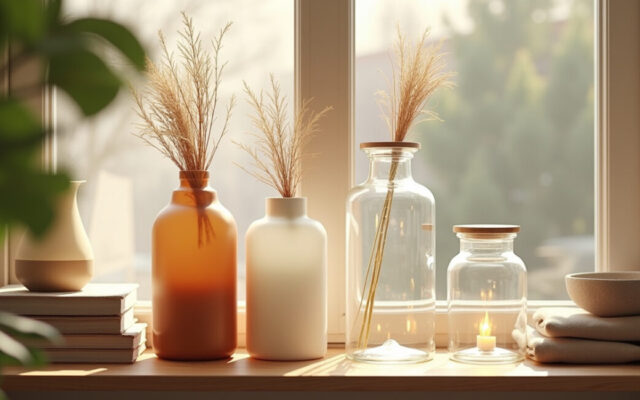
Three jars of different heights usually look better than one large jar alone. Group them on a tray with a few stems, dried grasses, or seasonal branches. This is one of the easiest DIY jar crafts because the composition does most of the work. For a more finished result, repeat one visual element across all three jars, such as twine, labels, or a single paint color.
For more room-based styling ideas that carry the same “make old things look elevated” mindset, see why repurposed decor keeps showing up in eco-friendly homes.

Practical Glass Jar Storage Ideas for Kitchen, Bathroom, and Office
Glass jar storage works because you can see what is inside, which reduces duplicates and forgotten supplies. Clear jars are best for dry goods, cotton rounds, buttons, pens, or pantry staples. If you need privacy, use a label, opaque paint band, or a fabric cover. These jar organization ideas are strongest when they are grouped by category instead of scattered around the room.
Kitchen Storage That Actually Gets Used
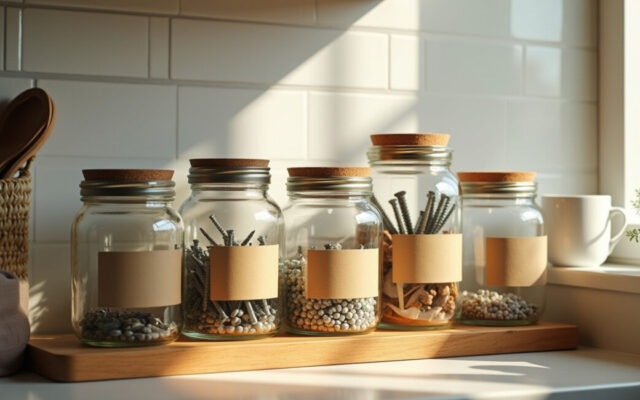
Use repurposed glass jars for pasta, rice, lentils, spice blends, tea bags, and baking add-ins. Wide-mouth jars are the easiest to scoop from, and matching lids make shelves look cleaner. If you store food, choose jars without lingering odor or residue, and do not rely on decorative glue or fabric near the mouth of the jar. Practical beats pretty here.
Bathroom and Vanity Organization
Small jars are ideal for cotton swabs, bath salts, hair ties, floss picks, and makeup brushes. If humidity is an issue, choose lids that close tightly and avoid paper labels unless you seal them. Frosted or painted glass jars work well in bathrooms because they hide visual clutter while still keeping the surface light. A small tray makes the whole arrangement feel deliberate.
Office and Craft-Supply Storage
Jars keep pens, clips, scissors, ribbon, and washi tape visible and easy to grab. This is where recycled jar crafts become surprisingly useful: you can sort supplies by color or frequency of use. One jar for “everyday,” another for “backup,” and a third for “seasonal” is often enough to tame a desk. The point is access, not abundance.
| Jar Type | Best Use | Why It Works |
|---|---|---|
| Wide-mouth mason jar | Pantry items, office supplies | Easy to fill, label, and clean |
| Straight-sided sauce jar | Bathroom storage, small craft items | Stacks neatly and takes paint well |
| Small jam jar | Spices, buttons, gift fillers | Compact and perfect for small quantities |
Giftable Glass Jar Crafts for Holidays and Special Occasions
Glass jar gift ideas work because the container becomes part of the present. A jar can hold treats, bath products, seed packets, cocktail mixes, or handmade notes, and the recipient still has a container afterward. The best gifts feel specific to the person, not generic. That is what makes them memorable.
Food Gifts That Travel Well
Layered cookie mix, brownie mix, soup mix, and hot chocolate toppings are classic because they are easy to assemble and easy to use. Dry ingredients should stay completely dry, and the jar should be filled tightly enough that layers do not collapse in transit. Add a card with instructions, not just a decorative tag. A beautiful jar without directions is only half a gift.
Non-Food Gifts That Feel Personal
Fill a jar with bath salts, herbal soak blends, tea sachets, love notes, or small self-care items. For birthdays and teacher gifts, a jar can also hold pens, sticky notes, or desk snacks. This is where decorated glass jars become more than packaging: they become keepsakes. A simple lid cover, ribbon, and handwritten label are often enough.
For a similar approach to practical, eco-friendly project planning, the ideas in these elevated storage projects translate well to small gift packaging too.
Simple Styling Techniques: Paint, Labels, Twine, Fabric, and Lids
Most polished jar projects rely on the same five finishes: paint, labels, twine, fabric, and lid upgrades. You do not need all five on every project. In fact, using too many at once can make the jar look crowded. The cleanest designs usually repeat one or two finishes and leave the rest simple.
Paint That Changes the Mood
Frosted spray gives a soft, airy look; matte paint adds weight and contrast; metallic accents make jars feel more formal. If you want a long-lasting finish, apply thin coats and let each coat dry fully. Thick paint chips faster and hides the jar’s shape. Painted glass jars are most successful when the finish matches the room’s palette instead of competing with it.
Labels That Improve Function
Labels solve two problems: they tell you what is inside and make the jar look planned. Use kraft paper tags, waterproof label paper, or printed label strips for a cleaner result. Handwritten labels can be charming, but only if they are consistent in size and placement. A crooked label on one jar can make an entire shelf look unfinished.
Twine, Fabric, and Lid Details
Twine adds texture, fabric softens the look, and lid covers hide utilitarian metal tops. Burlap works for rustic decor, but cotton or linen looks more refined in modern spaces. If you are using adhesive, test it first. Some glues fog clear glass or leave marks that are hard to remove. That small test saves a lot of frustration.
When a jar craft looks expensive, it is usually because the maker edited ruthlessly: one finish, one label style, and one clear purpose.
How to Prep, Clean, and Safety-Check Glass Jars Before Crafting
Before any craft starts, the jar must be clean, dry, and structurally sound. Remove labels with warm soapy water, then use oil or a adhesive remover for sticky residue. Wash the jar inside and out, dry it completely, and inspect the rim for chips. If the glass is cracked or the opening is damaged, do not use it for storage or candles.
The Clean-Up Sequence That Works
- Soak the jar in warm water to loosen paper labels.
- Scrub off residue with a sponge and dish soap.
- Use rubbing alcohol or adhesive remover on the sticky film.
- Dry the jar fully before painting, labeling, or gluing.
Safety Rules That Are Easy to Ignore
Do not use chipped glass for anything handled often. A tiny chip can cut fingers during washing or filling. For candles, keep flammable embellishments away from heat, and never seal a flame inside a fully enclosed jar without ventilation. The U.S. Consumer Product Safety Commission’s safety guidance is a useful reminder that decorative items still need basic hazard checks.
One Place Where the Rule Changes
Not every jar needs the same prep. If you are making a purely decorative piece, a minor cosmetic flaw may be fine. If you are storing food, bath products, or anything heated, the jar has to be cleaner and sturdier. That is where some recycled jar crafts fail: they look good on day one, then chip, peel, or smell odd after regular use.
Room-by-Room Ways to Use Repurposed Jars
The easiest way to keep jar projects useful is to assign them a room before you craft. A jar that is perfect for the kitchen may be awkward on a bedside table. Matching the jar to the room prevents one more orphaned decor item. That is also why repurposed glass jars tend to stay in circulation instead of getting tucked into a cabinet and forgotten.
Kitchen
Use jars for dry storage, utensils, loose tea, and countertop ingredients. Add simple labels and keep the color palette restrained so the shelves do not start to look busy. A cluster of similar jars near the coffee station can also organize spoons, sugar packets, and filters.
Bathroom
Use smaller jars for cotton pads, bath salts, floss, or travel-size items. Frosted finishes and clean lids work best here because they reduce visual noise. If humidity is high, skip paper embellishments and use waterproof labeling instead.
Office, Entryway, and Kids’ Spaces
Desks need open jars for pens and clips. Entryways can use a jar for keys, spare change, or mail clips. In kids’ spaces, jars are useful for tiny art supplies, but only if the lids are secure and the contents are age-appropriate. That extra sorting keeps the system realistic.
For a broader eco-home framing, the same mindset appears in other repurposed home projects that balance function and style without adding clutter.
Tips to Make Your Jar Crafts Look Polished and Last Longer
Polished jar crafts usually come down to consistency. Use one font for labels, one color family for paint, and one finish type per room whenever possible. If you mix rustic twine, metallic paint, and patterned fabric all at once, the result can feel busy rather than curated. Strong styling is more about restraint than decoration.
Keep the Shape Visible
Glass looks best when you do not hide all of it. A partial paint band, a clear window, or a labeled center strip lets the container breathe. Full coverage can work, but only when the finish is flawless and the shape itself is strong.
Choose Materials That Age Well
Hot glue is fine for light embellishments, but stronger adhesives are better for durable pieces. Seal labels if the jar will be washed. Use washable twine or fabric when the jar might touch food areas. If you want a piece to last, think about cleaning before you think about decoration.
Use One Design Rule Per Room
Repeat a label style in the pantry, a paint finish in the bathroom, and a tied accent in the office. That repetition makes the home feel organized, not decorated at random. It is also the easiest way to make several jars look like a set without buying a matching bundle.
Next step: Pick one room, gather three clean jars of similar size, and make one coordinated set before starting anything else. That small test will show you which finishes you actually like and which ones look better in theory than in your house. Build from there instead of collecting supplies first.
FAQ
What Can I Make with Empty Glass Jars?
Empty glass jars can become storage containers, candle holders, mini vases, pantry organizers, gift jars, and desk supply holders. The best projects depend on the jar’s shape and lid, because wide-mouth jars are easier for storage while slimmer jars often work better for decor. If the glass is intact, the options are wide open. If the rim is chipped, stick to low-contact decorative uses only.
How Do You Clean and Prepare Glass Jars for Crafting?
Start by soaking off labels in warm water, then scrub away glue with dish soap, rubbing alcohol, or an adhesive remover. Dry the jar completely before painting or labeling, because moisture can ruin adhesion. Check the rim and sides for chips or cracks, especially if you plan to use the jar for food or candles. A clean jar is not just prettier; it is safer and more durable.
What Are the Easiest Glass Jar Craft Ideas for Beginners?
The easiest beginner projects are painted jars, simple vases, candle holders, and labeled storage jars. These use basic supplies and do not require cutting glass or special equipment. If you want the fastest success, start with a jar, a single finish like twine or matte paint, and one clear purpose. Beginner-friendly glass jar crafts usually look best when they stay simple and repeatable.
How Can I Use Repurposed Glass Jars for Storage and Decor at the Same Time?
Choose jars that are attractive enough to leave out on display, then give them a clear category such as pantry staples, bath items, or office supplies. A matching label system helps the jars look intentional, while a tray or shelf grouping keeps them from feeling scattered. That is the sweet spot for repurposed glass jars: they should solve a storage problem and still look like part of the room.
What Are Some Creative Ways to Turn Jars Into Gifts?
Fill jars with dry food mixes, bath salts, tea, stationery, or small themed items that match the recipient’s interests. The jar becomes part of the gift, so finish it with a neat label, ribbon, or fabric cover that feels personal. Include instructions if the contents need assembly or use. A thoughtful jar gift feels complete because it is useful after the contents are gone.